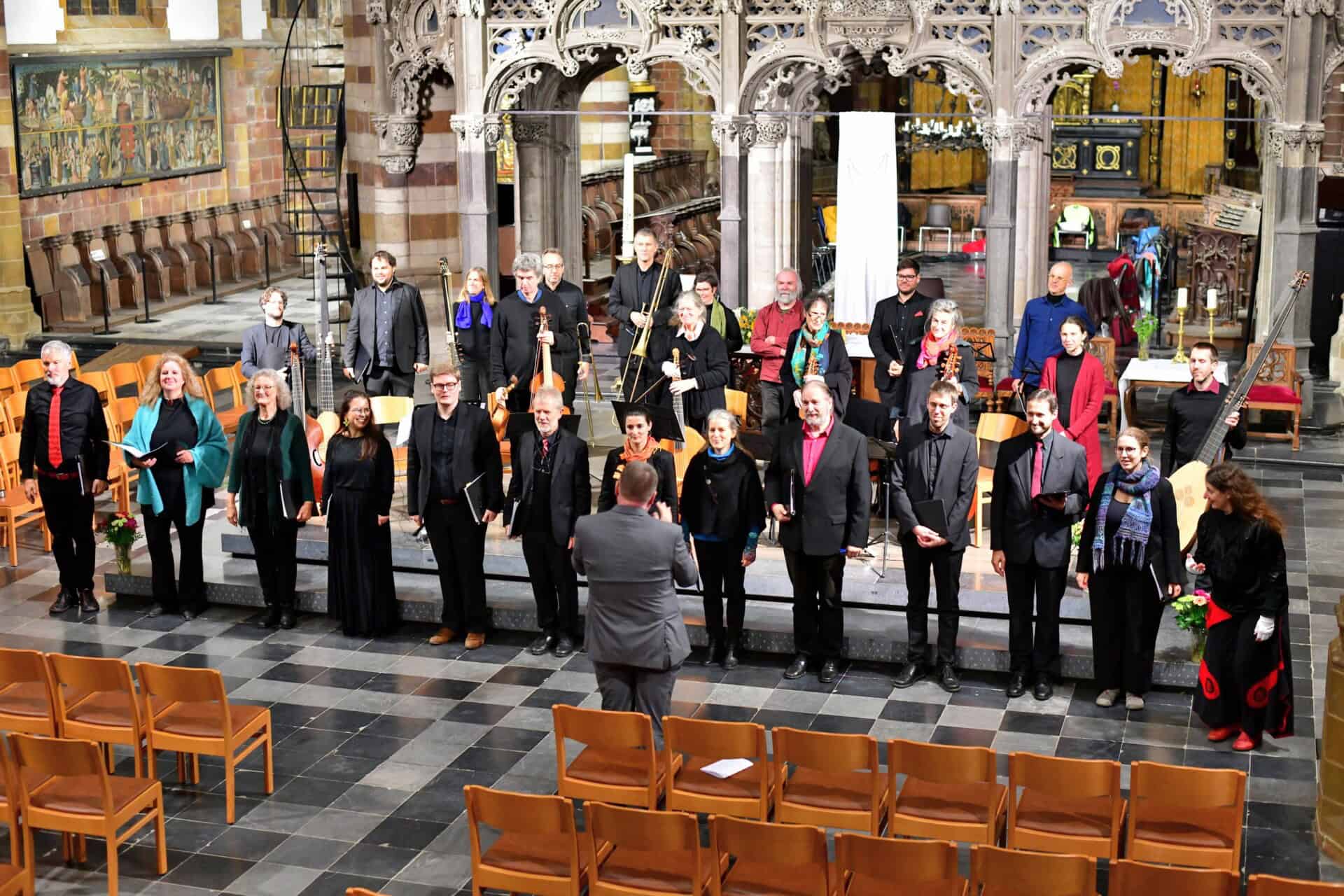
Klassiek Centraal recently had the opportunity to interview Koen G.J. Vlaeyen, chairman of the Musica Fura ensemble. What follows is a glimpse into the beautiful story and unique dynamics of Musica Fura, an ensemble that passionately brings the music of yesteryear to life.
Experiences and Origins
How did you come together as an ensemble, and what brought you together in the first place? The ensemble was formed in the late 1970s. It started with early music workshops that took place annually at the Abbey of Marche-Les-Dames between 1972 and 1979. Through encounters with other musicians, my brother Johan founded the ensemble. At the start, the group consisted of five people.What was your first joint performance, and how did you experience it?
Our first performances date back to 1978. We were asked several times to entertain the annual member meetings of various organizations, including at Beloeil Castle, dressed in period costumes. Needless to say, this was a unique experience for us! After these special occasions, we began organizing our own concerts, initially on a small scale in and around Tervuren.
Which classical composer inspired you the most in shaping your ensemble?
Not anyone in particular. In the early years, we were especially active in a broad Renaissance repertoire with vocal music and Renaissance instruments such as viola da gamba, lute, recorder, trombone, and percussion. We also occasionally ventured into early Baroque.
What was the turning point in your career that led to the success you're experiencing now?
After several years of inactivity, I revived Musica Fura around 2010 to breathe new life into a new project. In 2008, I happened to come across the facsimile of the collection
Polyhymnia Caduceatrix & Panegyrica
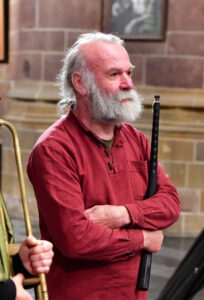
After several years of silence, I reactivated Musica Fura around 2010 to breathe new life into a fresh project. In 2008, I happened to stumble upon a facsimile of the collection Polyhymnia Caduceatrix & Panegyrica by Michael Praetorius, published in 1619. It comprises 40 works for 2 to 21 and more voices. By studying the work, I came to the conclusion that it was certainly worth bringing back to the public. Michael Praetorius himself carefully described how he wished the works to be performed. However, it requires a large ensemble of around 30 musicians. After several years of preparation, selecting the works and creating the scores, we organized our first concert with a selection from the Polyhymnia in Tervuren. It was an immediate success, a packed church with an enthusiastic audience.
Career and Repertoire
How do you decide which repertoire you perform? Is there a specific reason why you choose certain pieces?We have decided to further explore the Polyhymnia. This is magnificent music that is relatively unknown. And we notice that the public really enjoys our performance of it! We don't know everything, but we have a strong suspicion that some works from that period have never been performed.How has your repertoire evolved over the years, and how has this shaped you as an ensemble?
In our early years, we were mainly active in the repertoire of the 15th and 16th centuries. Over the years, we have increasingly focused on the early 17th century. This is the period between the Renaissance and the Baroque. It is a period in which much experimentation took place with new forms of expression in musical language. That's why it is so interesting for us.
Are there specific composers or works that continually challenge or inspire you?
Since discovering the Polyhymnia by Michael Praetorius, we have decided to continue working on it. This collection remains a very rich source of musical ideas and it is particularly interesting to put the written instructions into practice. Besides that, there are certainly composers such as the Polish composer Marcin Mielczewski or the Czech Samuel Capricornus who have written very interesting music. We have already performed music by both of them in smaller projects.e How do you approach the interpretation of classical pieces? Do you share a common vision or do discussions take place?e The core of Musica Fura consists, besides myself, of Christine Lejeune who conducts the ensemble. Together we prepare the works through mutual consultation and taking into account the given instructions. In a project with a handful of musicians, you can indeed ask for more input from others. With a project involving a group of 30 musicians, that is virtually impossible.
Collaboration and Dynamics
How would you describe the dynamics within the ensemble? How does this dynamic influence your music?
We have a number of criteria that our musicians must meet if they want to be included in the ensemble. They must of course be good musicians, but also nice people. We also make no distinction based on age, background, or sexual orientation. The youngest participant is 28 years old, the oldest just turned 90. This means the ensemble is also a group of friends, which makes working together much easier and gives the audience an extra dimension to the performance.What do you do to strengthen the bond within the group, both musically and personally?The selection of musicians is an important element in this regard, but also small things like offering tea and cookies during rehearsal breaks strengthens the bond between musicians. It gives them the opportunity to get to know each other better during a relaxed chat.
Does each of you have a specific role within the ensemble, beyond playing your instrument?
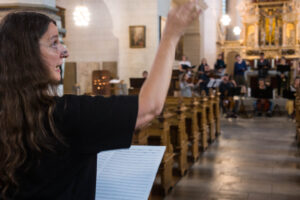
Besides Christine Lejeune and myself, the other members of the ensemble have mainly a performing role. We always have a listening ear and take into account as much as possible the feedback we receive from the group. In projects with a smaller number of musicians, the input of each musician is more important.
Challenges and Success Stories
What was the greatest challenge you as an ensemble have overcome?
What do you do to strengthen the bond between you, both musically and personally?
The choice of musicians is an important element in this regard, but also small gestures like offering tea and cookies during rehearsal breaks strengthen the bond between musicians. It gives them the opportunity to get to know each other better during a relaxed chat.
Do each of you have a specific role within the ensemble, aside from playing your instrument?
Besides Christine Lejeune and myself, the other ensemble members primarily have a performing role. We always keep our ears open and take into account as much as possible the feedback we receive from the group. In projects with fewer musicians, each musician's contribution becomes more important.
Challenges and Success Stories
What was the biggest challenge you faced as an ensemble?
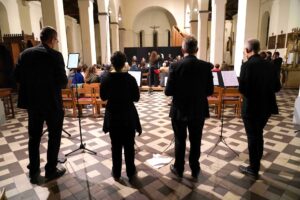
One of Michael Praetorius's key instructions is to present this music spatially, which means we have four groups of musicians—one in front, one in back, and two on the sides. The conductor stands in the middle. Most musicians aren't accustomed to this setup, so they have to learn to play not by ear but solely by following the conductor's beat. We're so used to it now that it happens naturally, as long as the distances don't get too large. Ideally, there's about 25 meters between the front and back.
Can you describe a moment when you as an ensemble were truly in harmony, both musically and emotionally?Because we work spatially, we surround the audience with our music. There have been many moments when everything comes together so beautifully and you feel that the entire ensemble and the audience are moved by it. And through those perfectly written harmonies, the church building itself becomes a resonating chamber, which enriches the effects even more. These are the moments when, after a performance, people tell us that our way of performing transcends the purely musical level.
Have you ever doubted the future of the ensemble? If so, how did you deal with it?
It remains a constant financial challenge to stage projects of this scale, especially when we do it independently. Then we have to find creative solutions to make the financial picture work.
 What was one of your most memorable performances and why does it stand out so much?
For me, the second concert tour to Germany remains a memorable moment. We were invited by the Praetorius Gesellschaft from Creuzburg to perform as the "Festival Concert" at their annual "Praetorius Tage." The concert took place in the Nikolaikirche in Creuzburg, the church where Michael Praetorius was baptized. That alone was a great honor. After the concert, we were treated to an extended, overwhelming applause. The next day, we performed another concert at the Marienkirche in Wolfenbüttel, the city where Michael Praetorius worked and the church where he is buried.
Future and Ambitions
What are your musical goals for the coming years?
The Polyhymnia comprises 40 works, totaling about 6 hours of music. We feel that this music is so beautiful yet so little known. That's why we want to explore the work further, and we also intend to release the Polyhymnia in its entirety on CD.
How do you see the future of classical music, and what is the role of your ensemble in it?
We believe there will always be demand for performances by an ensemble that brings music without amplification.
Influence and Legacy
How do you think your music touches the audience? Do you often receive feedback from listeners, and how does it influence you?
We feel that the audience greatly appreciates our specific way of performing, and they express this through their applause and individual feedback. This proves to us that this way of performance really resonates and endures.What would you like young musicians to learn from your path and experiences?
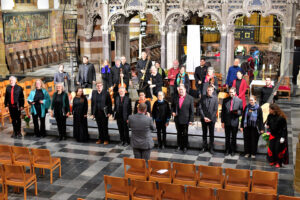 One of our priorities is involving young talent in our productions to give them their first stage experience in a large-scale project. Over the years, we've seen a number of them grow into accomplished musicians.
How has working in an ensemble shaped you personally and musically?
It teaches you a lot—both in small groups and in larger ones—about communicating with people, sharing your energy with them so they want to follow you in your project. Musically, it also helps you evolve; you develop your instrument further, but in a different way than purely as a soloist. You also stay in contact with the other musicians. In vocal music, as an instrumentist you also learn to "play" the text, not just the notes.
Musica Fura is an ensemble that works on a project basis. The lineup therefore depends on what the project requires. In its largest configuration, the ensemble consists of:
– 5 sopranos
– 3 altos
– 3 tenors
– 3 altos
– 3 tenors
– 3 basses
– 3 violas da gamba
– 1 violone
– 2 cornets
– 3 trombones
– 3 theorbos
– 1 organ continuo
– 1 conductor
Would you like more information or to get in touch with the ensemble? You can do so via the links below: