In 2008 I attended a seminar with Jeroen D'hoe at the Lemmens Institute in Leuven on The Great American Songbook. Since my youth, I've been captivated by those songs from all those musicals, whether in their many beautiful jazz versions or not. Since then, one ear of mine listens to jazz and pop, the other to classical music. Now this "classical" composer, which D'hoe certainly is, has written a book about pop. And what a book it is. True to form, he presented it in a special way, with a full-fledged show at Leuven's municipal theater. There you could admire him the way I did in his classes: always sharp and clear, thoughtful yet with brilliant flair, at the piano and flanked by young pop artists who brought his talk show (really a "TED talk") to life.
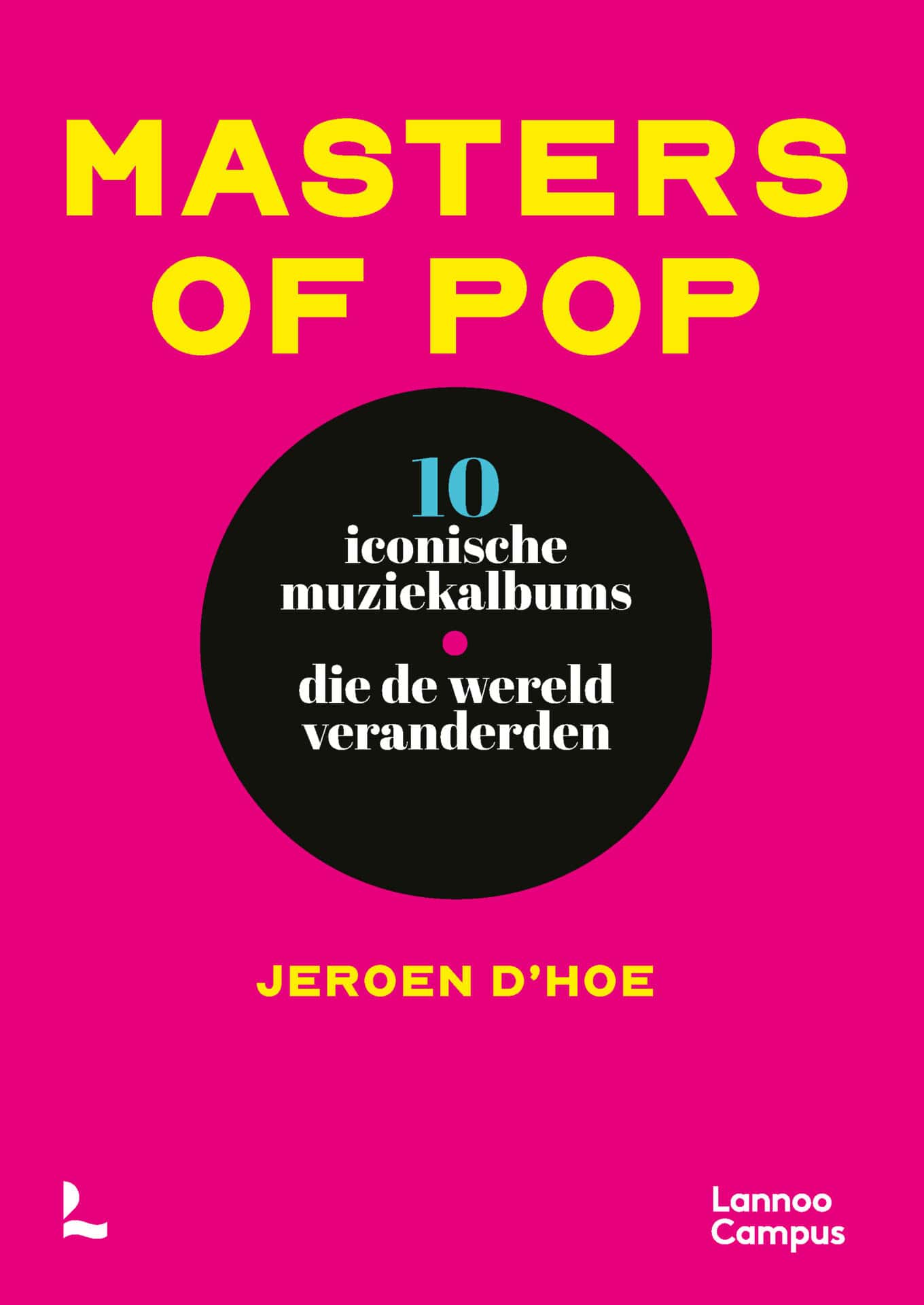
The entire book breathes that same atmosphere. Structured from beginning to end, academic and playful. It's overwhelming in its research, with text analyses ("verse," "bridge," "chorus"...) and musical analyses (chords, composition techniques, the "AABA" structure, sampling...). Not really a history of pop music, no, he does it more originally. How that music came to be should emerge from his story about The Masters of Pop: 10 Iconic Pop Albums That Changed the World. And there are more than a few of these "earworms" whose "hook" never lets go of you.

But don't be mistaken: this isn't just a book for musicologists. Throughout the entire book, even with special layouts to mark the way, D'hoe places all of this in the evolving social context. That's what's so valuable about this work. An eye-opener for anyone who didn't know that every generation has had, has, and will have its pop music. That the book is lavishly illustrated goes without saying. And those who want to know more can browse through the many pages of footnotes and the bibliography. Professors should give students more like this—academics who also inhabit their own world. You hear the author teaching, and it reads like a documentary.
He finds the foundations of this music in Broadway musicals as they were created in the New York music publishing houses of Tin Pan Alley and in Black blues. The first is contained in the innovative prototype of the American musical Show Boat, the second case study becomes the album of blues legend Muddy Waters. You're almost shocked by the amount of knowledge D'hoe unearths here about these pillars on which pop music rests. And it continues with the next chapters. On Rock 'n' roll, for instance, that fifty-fifty mix of white (country) and Black (rhythm & blues) music genres. D'hoe writes about two subsequent albums by none other than those two pop pioneers Elvis Presley and Chuck Berry, both breakers of racial barriers. Moreover, the vibrant music on those two albums also meant a Copernican revolution socially and culturally: with that rebellious Rock 'n' roll, teenagers and adolescents in the fifties revolted against existing gender roles, sexual norms, and the race relations of the established order. "For the first time, they belonged and mattered," writes D'hoe, and the music industry realized this before their parents did.
Another groundbreaking pop album? One by The Beatles. And what one! Tired of exhausting worldwide concert tours, the foursome preferred to return to the recording studio and emerged with a truly innovative album. A "kaleidoscope of sounds and genres" is how D'hoe describes their Sgt. Pepper's Lonely Hearts Club Band. It became a miraculous success. "Never heard before" is a valid explanation for this success—it was different and sounded different. How? The author tells this with information, anecdotes, and analyses from the many sources he consulted to clarify it. He sketches in detail how every song on that album came to be. He seems to be sitting in the recording studio himself, mixing. But you also immediately enjoy the musical playfulness and the crazy fun that the fab four had right there.
Of course, when profiling the many pop singer-songwriters and writer-performers, he couldn't overlook Bob Dylan. It's extremely fascinating to read how a young folkie like Dylan rose to become a Nobel Prize winner in literature and became a model for all those other singer-songwriters of his era. He far surpassed his own idols and predecessors like Woody Guthrie and Pete Seeger, whom he had thoroughly studied. Again and again you read that abundance of knowledge, with constantly illuminating musicological analyses, both compositionally, production-technically, and textually. And what also makes the book so engaging is that it's constantly embedded in that special Zeitgeist.
 Another artistic milestone finds its place as an iconic album. It's Trio, by the country trio Linda Ronstadt, Emmylou Harris, and Dolly Parton. It meant a complete reappraisal of traditional country music, and D'hoe describes extensively why, with stories about its origins, sequels, and impact. A seventh album that D'hoe holds very dear is Paul Simon's Graceland. After his last folk-rock album with Art Garfunkel, the introspective Simon sought new, more diverse musical styles, exploring international genres which also brought him to strongly rhythmic South African dance music. And especially toward a reversed "songwriting process": first a rhythmic base track, only then a melody. Two things make this album so important for the development of Western pop music: it popularized world music and used new composition and production techniques.
In a final section, D'hoe first sketches the evolution (from 1850 to 1950) of what was long known as "negro spirituals" toward gospel songs with vocal harmony groups (Golden Gate Quartet...) and then follows the entire transition "from the church to the dance floor" as he aptly puts it. With soul, rhythm and blues or R&B, disco, funk, house, and ultimately hip-hop.
Beautiful also again the analyses around the iconic song Respectt from an album by Aretha Franklin. And then about the House dance music from Chicago, the explosion of disco from New York, the Motown hit factory from Detroit ending at a real revelation, the gender-norm-bending rap by Lauryn Hill: "Guys ….you better watch out" / Girls, …you better watch out" from her massive hit Doo Wop (That thing). D'hoe calls some of his icons' musical discoveries brilliant, but you could just as easily call his finding brilliant—the way he's managed to document all of this so skillfully.
You can of course question and dispute all those choices (I only came across ABBA once, and Michael Jackson just once too…) but there's a vision in this work that commands admiration. And most importantly, it's based on an awesome knowledge of the subject matter. It's written with a seriousness that for a long time was the exclusive privilege of writing about "classical" music. But pop music desperately needed a narrative that would elevate it to a fully-fledged genre, to the level of art music. Quite rightly, his pop music course at KU Leuven has since been incorporated into the master's thesis in Cultural Studies.