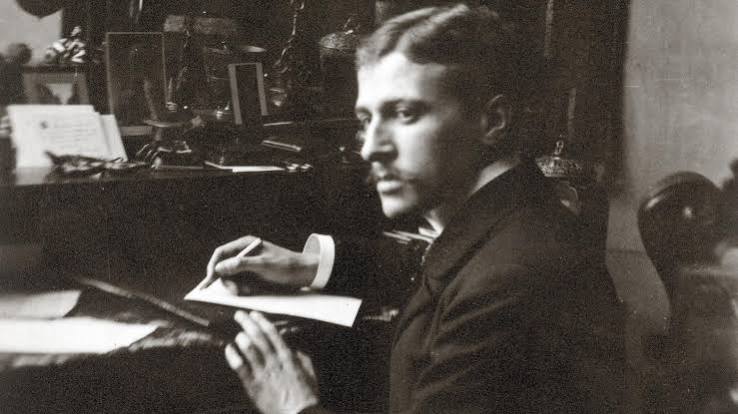
There are theatrical texts that don't lose their cultural significance through age, but through overuse. Everyman by Hugo von Hofmannsthal (1874–1929) is a striking example of this. What was once intended as a contemporary revival of the medieval morality play grew throughout the twentieth century into an almost sacred tradition within the Salzburg Festival. The annual performances in Cathedral Square have not only elevated the play, but simultaneously fixed it: from living text to ritual, from theater to institution.
Precisely here lies today's challenge. When a work becomes too firmly anchored in ceremony and heritage, it risks losing its direct impact. The German Jedermann Theater has been trying to break open that mechanism for several years now. Led by actor and director Nicolai Tegeler, the company tours with a traveling open-air production across squares and historical sites in Germany and Austria. Rather than the festival venue taking center stage, the public space itself becomes the focus once more.
This choice is more than practical or aesthetic. It touches on the very origins of the genre. Everyman is rooted in the tradition of morality plays, in which mankind literally stood among the people and experienced mortality not within a closed theatrical context, but in a shared public reality. Hofmannsthal's 1911 adaptation gave that tradition a symbolist and religious intensity, while retaining its existential core: humanity confronted with death, discovering how ultimately relative wealth, status, and social pretense prove to be.
The traveling Jedermann Theater restores precisely that tension between immediacy and metaphysics. It deliberately avoids both the rhetoric of conceptual director's theater and the temptation of nostalgic heritage performance. Instead, it opts for a sober, text-focused approach in which rhythm, clarity, and performance quality take center stage. The result is a form of people's theater that doesn't simplify the text, but rather—by letting it sound just as direct and unprotected as in a medieval marketplace—actually deepens it.
Also striking is the flexible ensemble structure. The production works with rotating casts in which experienced actors from theater and television alternate with one another. Names such as André Eisermann, Erol Sander, Thomas Thieme, and Wolfgang Bahro give the project a recognizable artistic signature, without making the whole thing feel fragmented. On the contrary: precisely those varying playing styles strengthen the vitality of the performance.
What makes this staging particularly remarkable is the seriousness and clarity with which the existential and religious dimension of the text is approached anew. Not as dogma or historical curiosity, but as a theatrical question. In a theater climate that often balances between ironic distance and social relevance, this Everyman notably chooses directness. As a result, Hofmannsthal's language once again has room to resonate unfiltered.
And therein lies the contemporary relevance of the play. Behind the allegorical figures and the historical setting lurks a thematic concern that has scarcely lost its edge: the vulnerability of an existence increasingly determined by possession, achievement, and visibility. When all those certainties fall away, what ultimately remains is only the question of what we have truly lived.
That the Jedermann Theater brings this text back to squares and open-air locations is therefore more than an artistic choice. It is an attempt to situate theater anew as a shared experience, outside the protected context of festivals and cultural institutions. Not as monument, but as living confrontation—precisely where this genre once originated: among the people.
Werner De Smet attended a performance last year for Klassiek Centraal and was so moved by it that he's going back again this August (""). In anticipation of the new staging, he spoke with director Nicolai Tegeler ("") and Julian Weigend (""), who has played the role of Everyman since the project's inception.https://klassiek-centraal.be/jedermann-in-weimar-tussen-sterfelijkheid-en-stilte/Performances in Weimar from August 12 through 15, as well as in Bremen on August 4 and in Coburg, Graz, and Bayreuth.https://klassiek-centraal.be/jedermann-in-weimar-nicolai-tegeler-zoekt-de-mens-achter-het-monument/Austrian Archiveshttps://klassiek-centraal.be/weimar-is-geen-decor-het-is-een-gesprekspartner-julian-weigend-over-jedermann-eeuwige-vragen-en-de-kracht-van-een-marktplein/There are theatrical texts that don't lose their cultural significance through age, but through overuse. Everyman by Hugo von Hofmannsthal (1874–1929) is a striking example of this. What was once intended as a contemporary revival of the medieval morality play grew throughout the twentieth century into an almost sacred…
Performances in Weimar from August 12-15, plus performances in Bremen on August 4, and in Coburg, Graz, and Bayreuth.