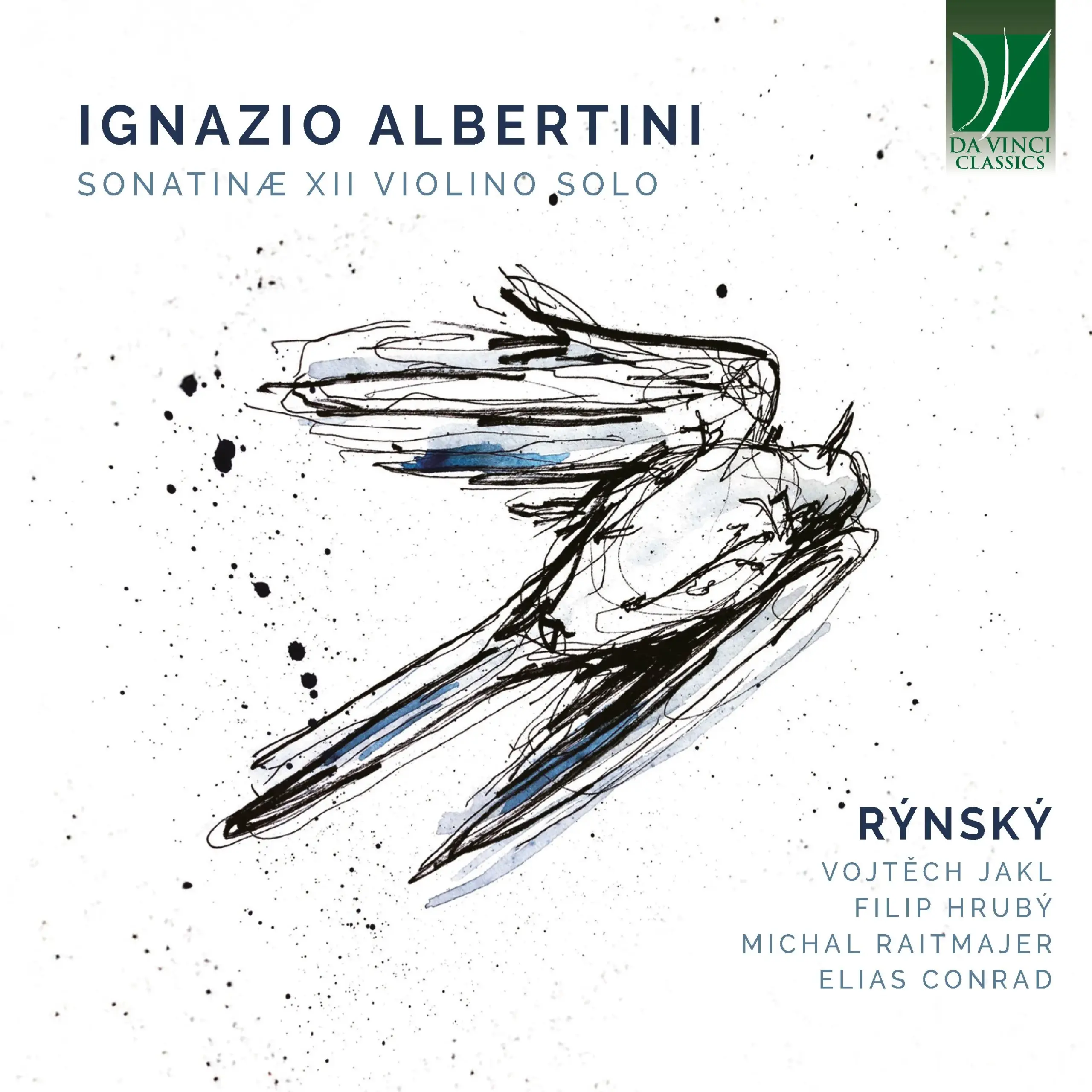
A composer known solely for the manner of his death usually tells us little about how he lived. Ignazio Albertini was stabbed to death in Vienna on September 22, 1685, and that single fact long overshadowed his memory. Who was the man before the knife? An Italian, presumably from Milan, who moved in the circles of Johann Heinrich Schmelzer and once—as emerges from a letter by the Prince-Bishop of Olomouc—had committed some transgression for which influential friends ran interference. A few years later, Albertini resurfaces in the archives, this time in Kroměříž, where he is hired as a temporary replacement for Heinrich Ignaz Franz Biber and dismissed after a few months due to "offensive conduct." What exactly happened, we don't know. Yet more was preserved than just that riddle and the dramatic end: a collection of twelve sonatas for violin and basso continuo, printed only seven years after his death, possibly delayed by the cost of the copper engraving work.
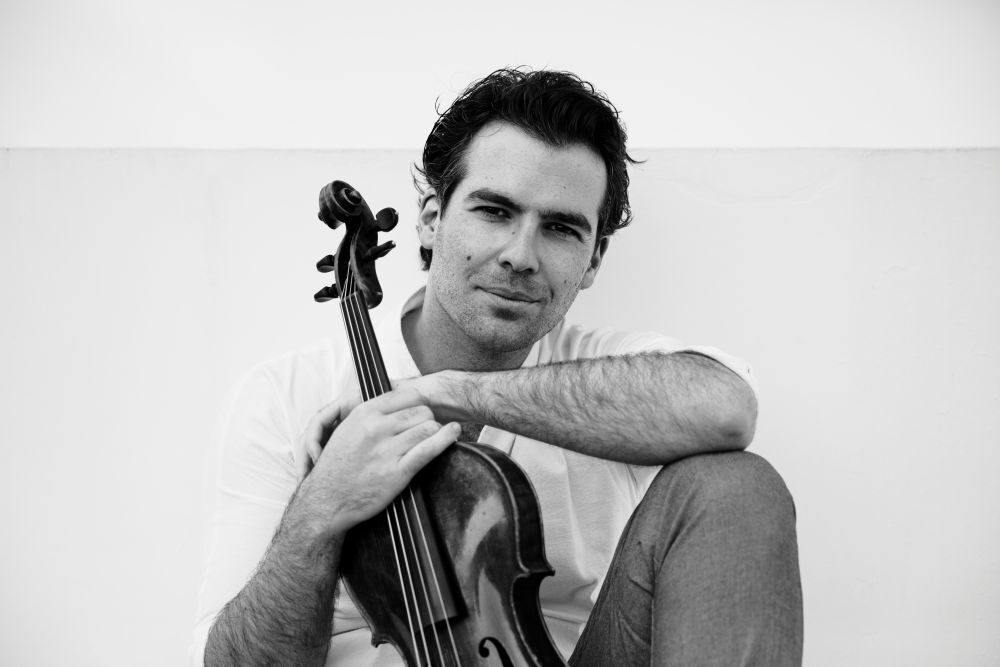
The fact that these twelve sonatas now exist as a complete cycle on CD is itself an event deserving more attention than the anecdote about his death. There was already a commendable partial recording with Hélène Schmitt and Jörg-Andreas Bötticher, but a complete recording of all twelve sonatas was missing until now. The Czech-German ensemble Rýnský, trained at the Schola Cantorum Basiliensis and specialized in the stylus phantasticus from Bohemian, German and Austrian archives, tackles the job thoroughly. This stylus phantasticus —whimsical, rhetorically charged and averse to fixed forms—also forms the natural habitat of this music. Violinist Vojtěch Jakl plays on an instrument built after an Amati from 1560 and a Stainer from 1679—a double musical provenance that aptly reflects Albertini's own position between two worlds: the North Italian virtuosity of Marini, Castello and Uccellini on the one hand, and Viennese architecture and contrapuntal solidity on the other.
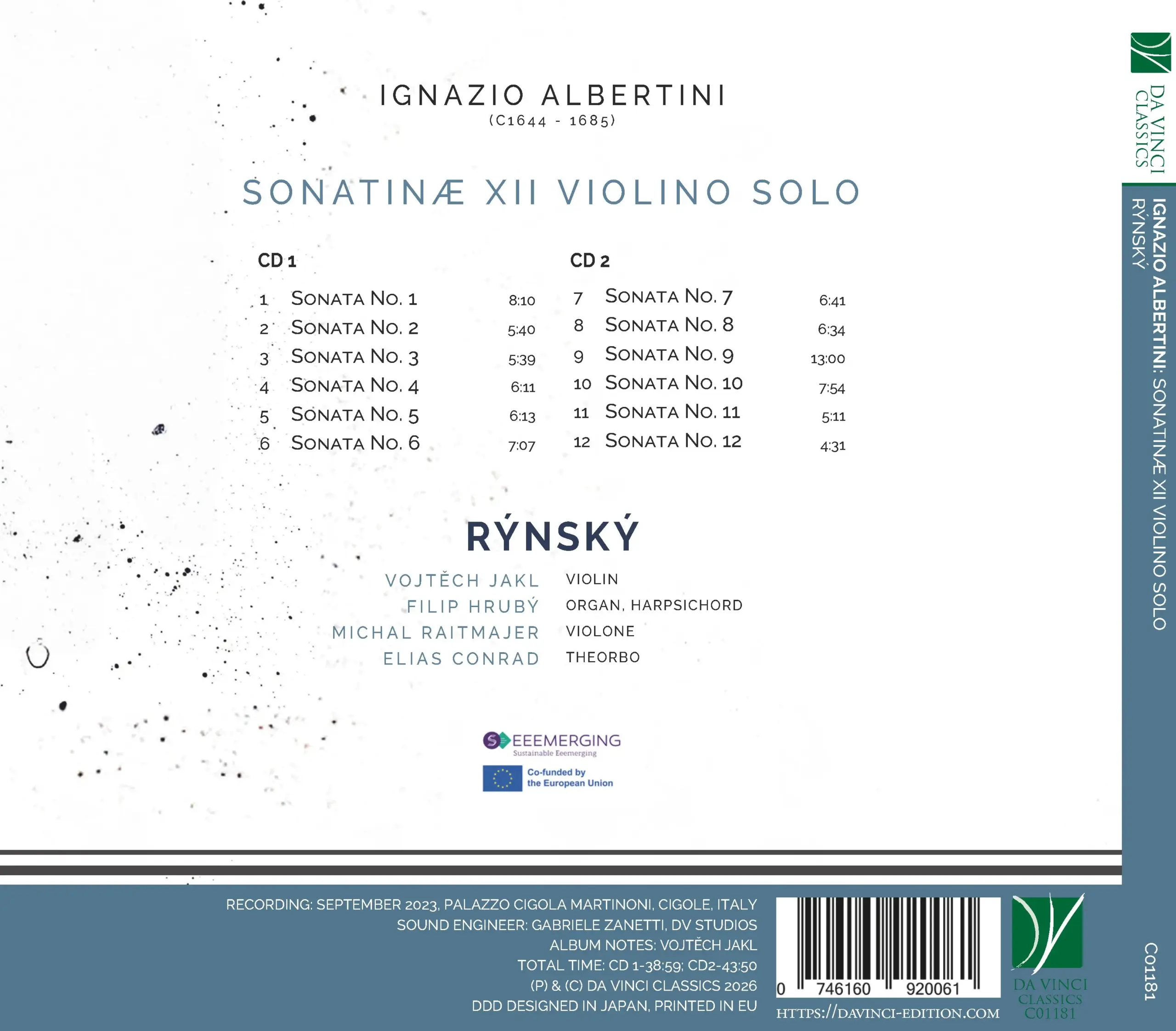
What strikes you on first hearing is how little Albertini adheres to a fixed scheme. No two sonatas seem alike in structure; adagios open and close most movements, but the intervening architecture follows the logic of a speaker rather than a builder. Moreover, Albertini writes music where virtuosity never becomes an end in itself. The technical challenges always serve the rhetoric: unexpected harmonic turns, sharp contrasts and whimsical shifts in affect keep the listener constantly engaged. No sonata simply follows the pattern of the previous one; each time Albertini takes an unexpected direction. Precisely because the sonata form is not yet fixed here, this music breathes a freedom that later in the Baroque often gives way to greater formal regularity. Precisely for this reason, this complete recording, amounting to an hour and a half of music, remains remarkably compelling: despite the extensive cycle, there is scarcely a moment of fatigue or predictability. The ninth sonata, with its passacaglia theme that appears as a canon at the fifth and returns, is the intellectual high point of the cycle—Jakl handles the double stops and contrapuntal layers with a precision that never becomes dry; quite the contrary: the tension between rigor and freedom finds just the right space to breathe here. The sixth sonata is its counterpart: more lyrical, more song-like, with a cantabile that almost makes the violin become a human voice. The concluding twelfth sonata lets Albertini once more unfold all his compositional imagination, as if he consciously ends his collection with a demonstration of mastery. Jakl's playing distinguishes itself through a clear, fluid tone and natural rhetorical eloquence, allowing even the most virtuosic passages to breathe musically.
The accompaniment is at least as interesting as the solo part. Filip Hrubý, Michal Raitmajer and Elias Conrad treat the continuo not as a subservient accompaniment, but as an equal conversational partner. The continuo breathes, as it were, along with the violin, supports where needed and regularly takes a turn itself, without ever overwhelming the soloist. That constant interplay, with organ here, harpsichord there, and a theorbo that sometimes withdraws and then is emphatically present again, gives each sonata its own tonal color within an otherwise coherent whole and avoids precisely the danger that threatens such expansive complete recordings: wear through repetition. The recording itself is clear and intimate, with an acoustic that provides sufficient space without letting details drown in reverberation: you can almost hear the bow scraping across the string, and even the smallest registration changes in the continuo group come through beautifully, while Jakl's violin retains its warmth and brilliance even in the most virtuosic passages.
Is this then the discovery of a neglected genius? Not quite: Albertini remains a composer of a single, posthumously published collection, but in these twelve sonatas he demonstrates a distinctly personal voice, balancing between Italian rhetoric and German order. Precisely this refusal to remain within a fixed sonata schema makes this recording worthwhile. Rýnský plays without museum-like detachment, with a historically informed approach that nonetheless leaves room for improvisatory freedom—and that is ultimately the finest tribute to a composer about whom we know so little. In the company of Schmelzer and Biber, Albertini sounds anything but an epigone, but as a composer with a clearly individual voice. For precisely this reason, this release has captivated me from beginning to end.
Whoever opens themselves to this music discovers not a forgotten master who rewrites music history, but a composer whose imaginative power proves far greater than his limited legacy would suggest. Albertini's sonatas are intelligent without becoming cerebral, virtuosic without showing off, and above all genuinely gripping. Rýnský plays them with such conviction and imagination that this complete recording is not only a musical discovery, but above all an invitation to listen to this music again and again.