
Opera Zuid's initiative to program Chabrier's rarely performed opéra bouffe is commendable. However, the production struggles with the delicate balance between comedy and wit, certainly one of the reasons why this work is so rarely staged.
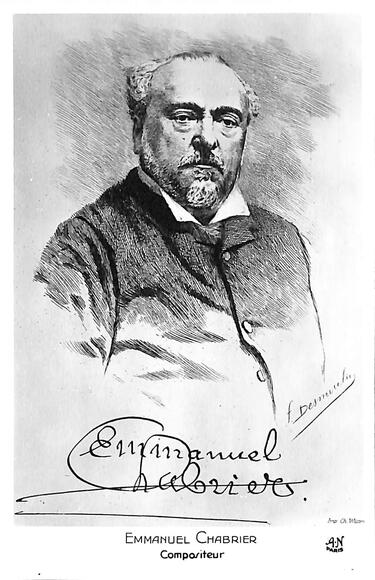 Emmanuel Chabrier (1841-1894) hailed from the Auvergne region. He moved to Paris with his parents, where he had the opportunity to immerse himself in the artistic scene of late 19th-century Paris. Between his law studies, Chabrier took violin lessons and studied harmony, fugue, and counterpoint. He befriended Paul Verlaine and Édouard Manet, and through them met librettists Eugène Leterrier and Albert Vanloo. They presented Chabrier with their latest libretto. Chabrier saw an opportunity not only to celebrate his sense of humor but also his passion for flowing melodies, and he seized the chance with both hands. Eventually, he convinced the management of Les Bouffes-Parisiens, and "L'Étoile" premiered on November 28, 1877. The success was modest, and the opera only truly gained traction after a performance at the Opéra Comique in Paris in 1941. It was Chabrier's first completed opera. Later works followed, including Gwendoline (premiered at the Muntschouwburg in Brussels in April 1886) and Le Roi malgré lui. However, we still cannot speak of it as a permanent fixture in the repertoire.
A Light-Hearted Tale
The story revolves around a king who is not so much corrupt as unstable and primarily a dreamer. His name "Ouf" makes it clear when reversed what his defining character trait is—namely "fou" (mad). Chabrier hid amusing meanings in all the other characters' names as well. Each year, King Ouf has a subject executed. He chooses someone he claims has insulted him and deserves death for this lèse-majesté. This year's victim is the unsuspecting market vendor Lazuli. He falls in love with "Princess" Laoula, a lovely young woman who hasn't quite figured out life yet, as her name reveals: "là ou là" (here or there). She shows up as part of an allegedly "diplomatic entourage." The Lazuli-Laoula relationship has a distinctly burlesque course, including a pseudo-drowning of Lazuli. But when the court astrologer Sirocco makes clear that according to the stars, the king's fate is linked to Lazuli's, the execution is called off, and Lazuli is even allowed to marry Princess Laoula. Ouf, everyone's saved!
Sharp Wit Falls Short
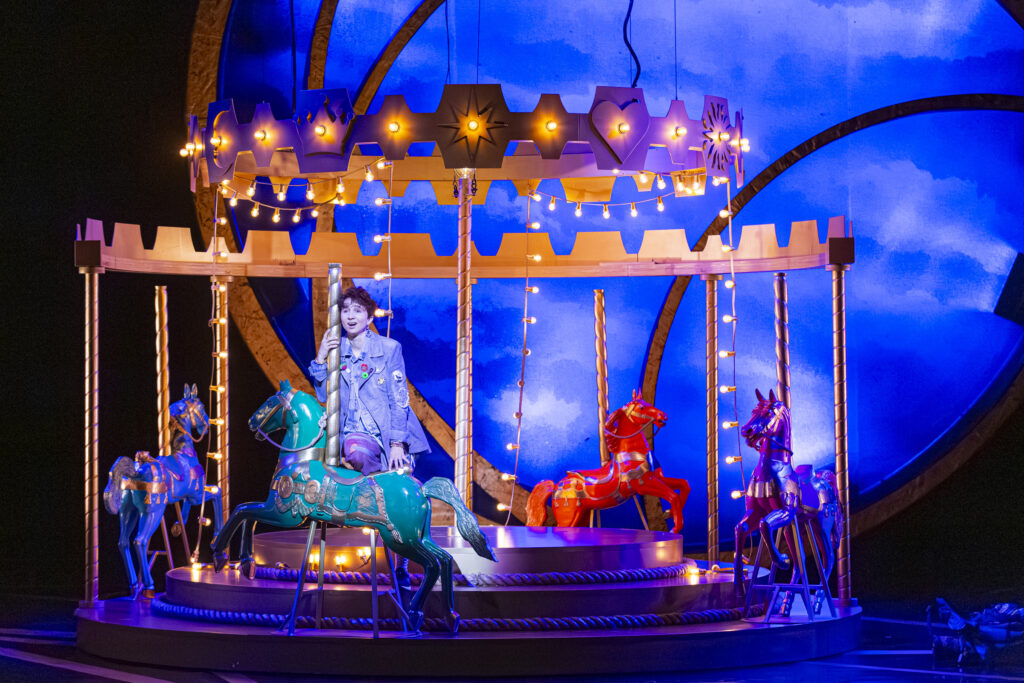
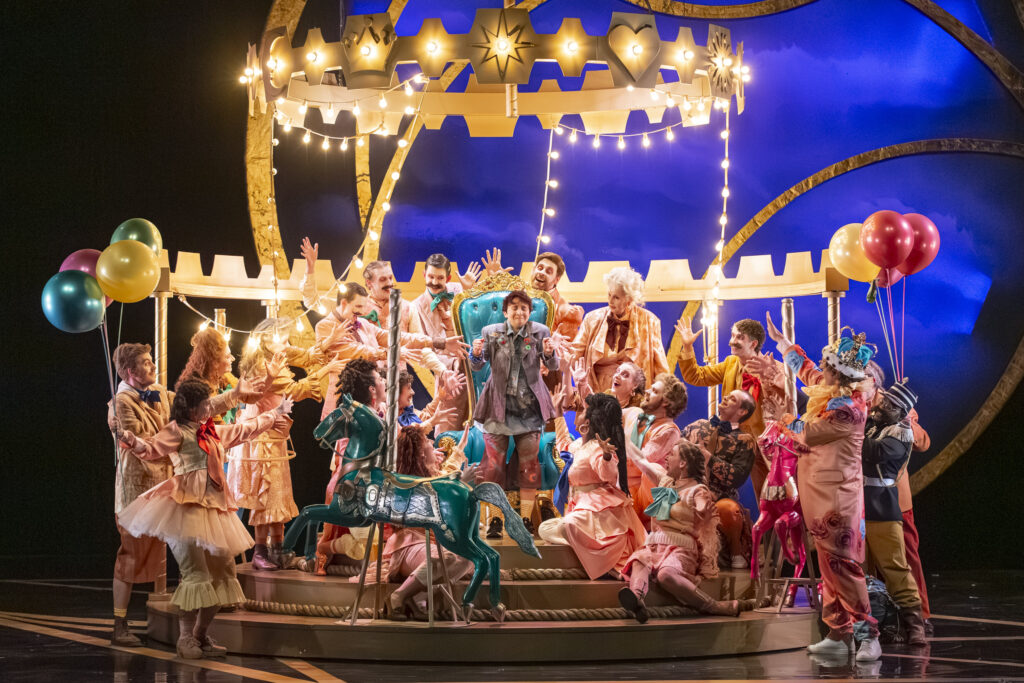
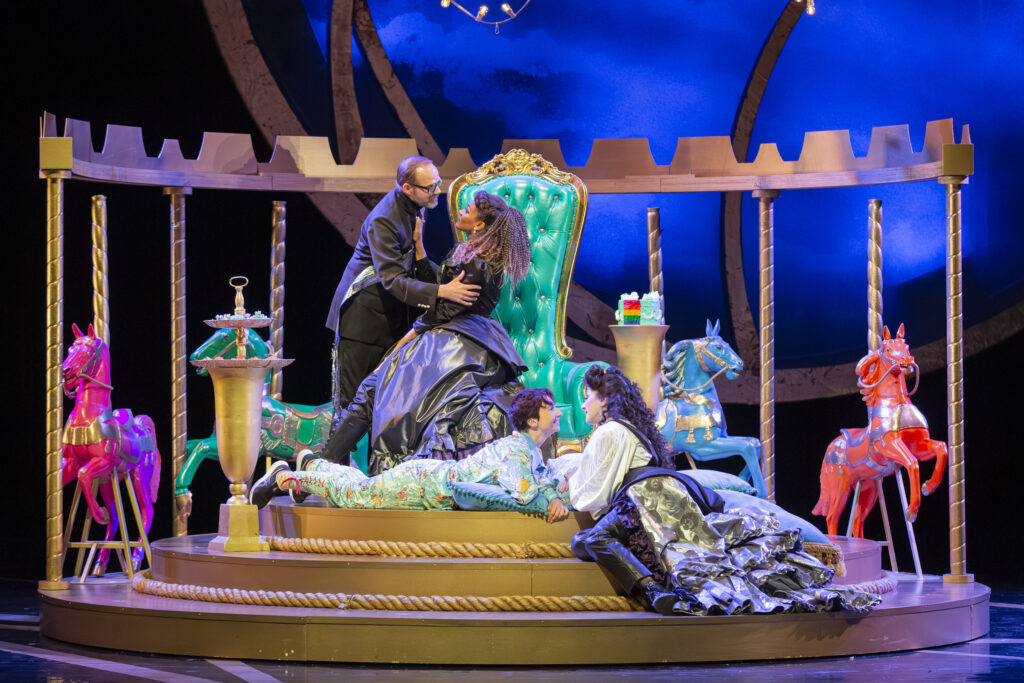
As is often the case in comic works, subplots create funny confusion and surprising twists, and "L'Étoile" is no exception. Unfortunately, Matthew Eberhardt's direction lacked the fantasy and properly calibrated satirical assessment of situations. The set shows a fairly realistic carousel with hobby horses and a grand throne for Ouf, against a "lazuli"-blue sky backdrop, but it comes across more like a scene from a children's fairy tale than as an unreal setting for a parody. Satire on the "establishment" regularly descends into ridiculous scenes rather than wit—for example, the scene with the "torture device" for skewering where the execution was to take place. Giving the stargazer Sirocco the appearance of a stereotypical figure was a somewhat successful parody given his deceptive acts. The vendor Lazuli's stall has some playfulness, but the scenes with the princesses and the entire entourage of Hérisson de Porc-Epic lack amusing surprises, leading to tedium over time. In the second act, the humor works somewhat better, including the admittedly long "chartreuse" passage where Ouf and Sirocco display "little stars." I also fail to see the added value of Waut Koeken's adapted dialogue. The direction fails to capture the absurdity of the story and misses the line between ambiguity and dumb gags.
Musically Demanding
Of course, you need singers for such an opera who perform spontaneously and lively, and a vibrant orchestra is a given. Unfortunately, here too there are shortcomings. Erik Silk stepped into the royal robes of Ouf, but I'm afraid they didn't quite fit him. His performance came across as forced, which certainly affected his vocal delivery. I suspect this singer feels more at home in a serious role. Martijn Sanders convincingly brought the ambiguous role of Sirocco to the stage both vocally and as an actor. Anna Emelianova undoubtedly stole the show. She sang her princess role with a light high soprano and shone in the coloratura passages. Brenda Poupard was convincing as the sometimes naive, sometimes melancholic Lazuli, with a beautiful "Romance de l'étoile." Her voice sounds fluid and has a lovely timbre, but unfortunately she doesn't project well into the hall. This brings me to a general observation about the acoustics of the Parktheater. Although it's a beautiful theater, the acoustics for this type of musical performance are far from ideal. The Philzuid orchestra gives their all under Nicolas Krüger's baton with this swirling operetta music, but the rhythmic bravura and especially the lyrical melodies don't carry from the orchestra pit into the hall. The cheerful choral fragments of the Theater Choir Opera Zuid provide a bright note. Chabrier's L'Étoile is certainly worth discovering, but this production immediately highlights the pressure points of this operetta repertoire.