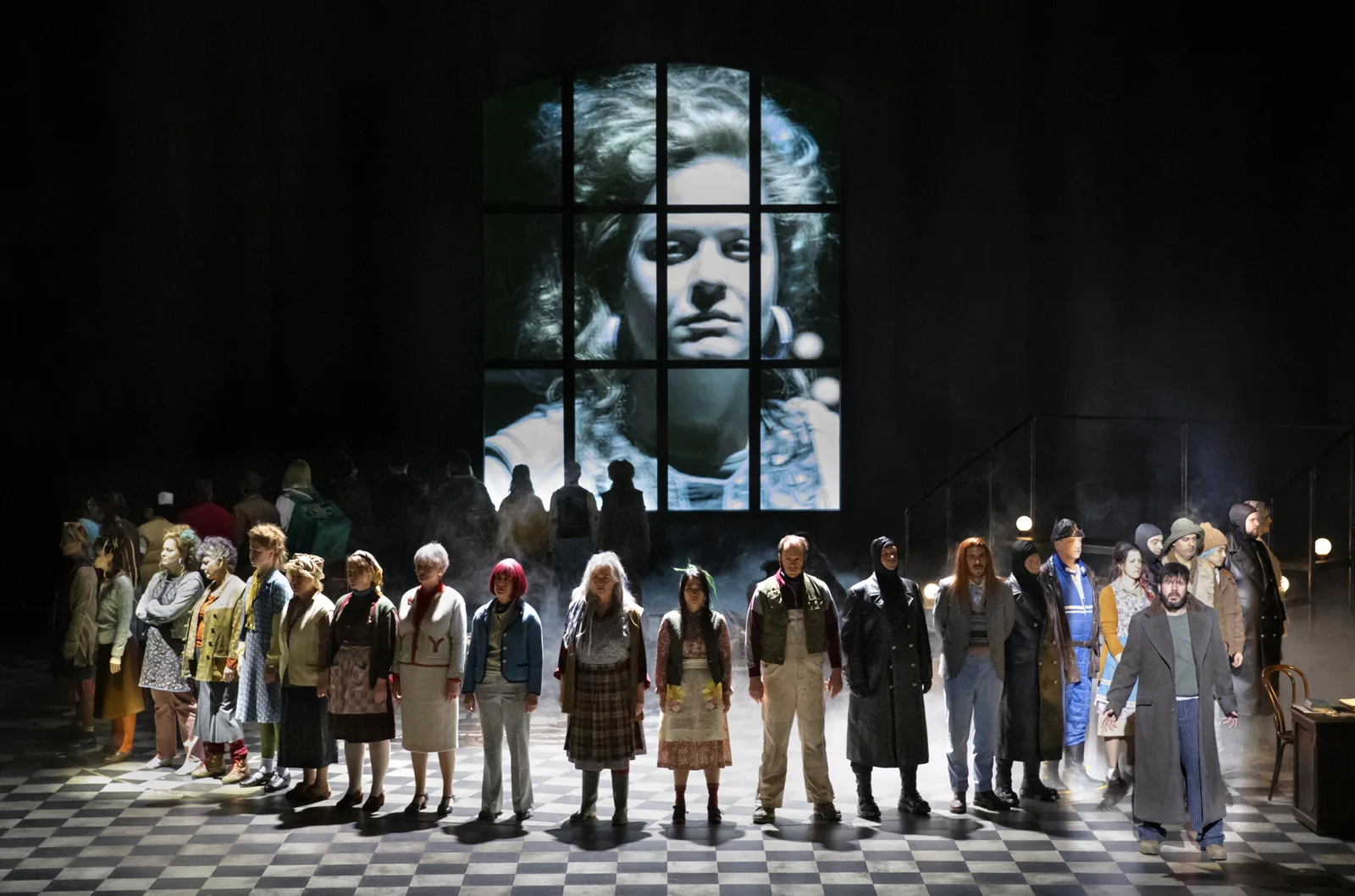
The haunting opera Brodeck begins and ends with the statement "My name is Brodeck... and I have nothing to do with this." The words from the libretto, based on the novel Brodeck's Report by French writer Philippe Claudel, perfectly capture the atmosphere that permeates the opera. Don't expect a literal account from this production by Opera Ballet Vlaanderen (OBV), under the direction of conductor Marit Strindlund and in collaboration with director Fabrice Murgia. "Show, don't tell is the essence of what you will witness. There are too few words to describe what Brodeck brings to the stage. But an attempt will certainly be made.
This world premiere was performed with a magnificent cast consisting of baritone Damien Pass (Brodeck), soprano Elisa Soster (Emélia), alto Helena Rasker (Fédorine), tenor Thomas Blondelle (Göbbler/Peiper), baritone Kris Belligh (Schloss), bass-baritone Werner van Mechelen (Orschwir) and bass Tijl Faveyts (Büller/Ulli). As a contrasting figure to this vocal powerhouse, we find theater actor Josse De Pauw as the pivot of the story: the (murdered) Anderer.
Now that the introduction is finally over, let's begin.
Claudel's Brodeck brought to life
The opera Brodeck is a fusion of Philippe Claudel's narrative and the graphic novel by Manu Larcenet. The former provided the content, and the latter proved to be the final necessary motivation—visually speaking—for the composer. What we received was a relentless, unfolding confrontation with human nature: complex, often devastating, and filled with (un)justified fear and aggression. It is not a story, but rather an introduction to human psychology (set to music). OBV also brings the narrative into present-day reality with the description "After all, Brodeck raises questions that dominate the news today: about guilt and responsibility, collective memory, xenophobia and oppression."*
Particularly the principle of collective memory in this musical is exceptionally interesting. While most operas deal with individual inner quests—for example, Wim Hendricks's The Convert (2022) –, and full ensemble productions (Verdi's famous Falstaff 1893), Janssens' enters as a collective. A fitting description is the principle of the Brodeck hivemind – a swarm of hyperactive bees that attacks every outsider. Do they attack the Anderer? Or Brodeck? Can anyone become a victim of this? The answer lies in our own past, and it's this that now also stirs conflict within us as spectators. (Over)living
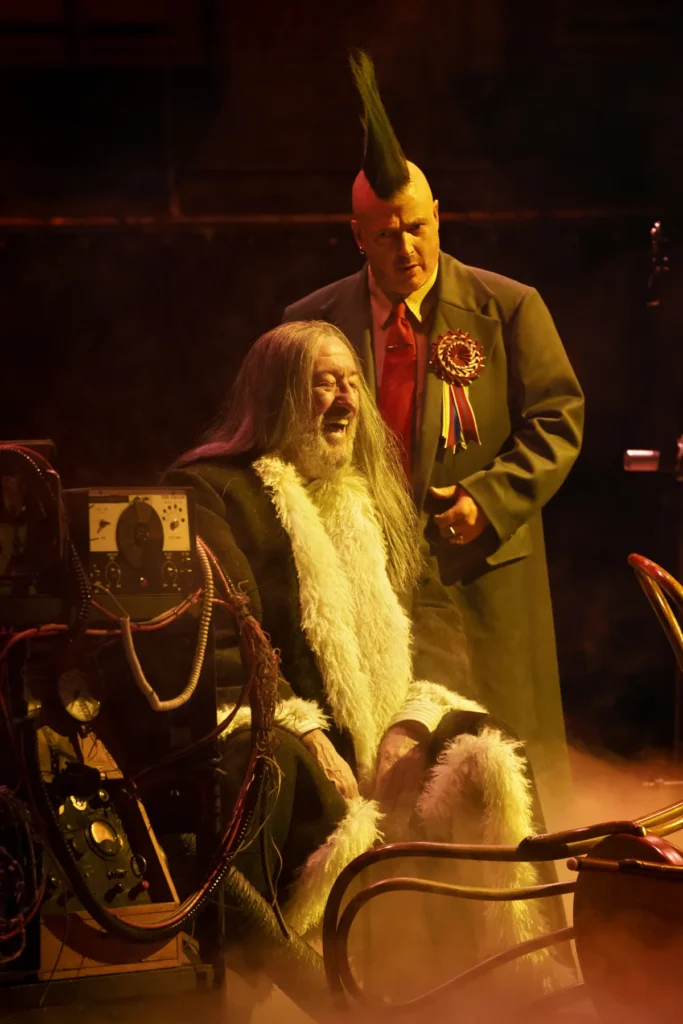

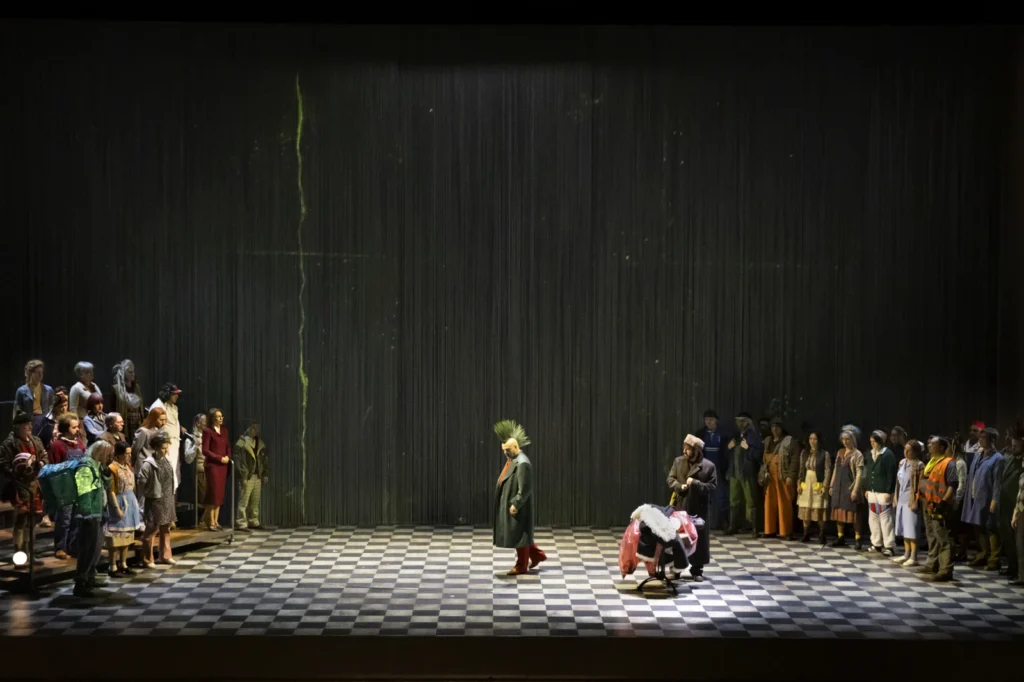
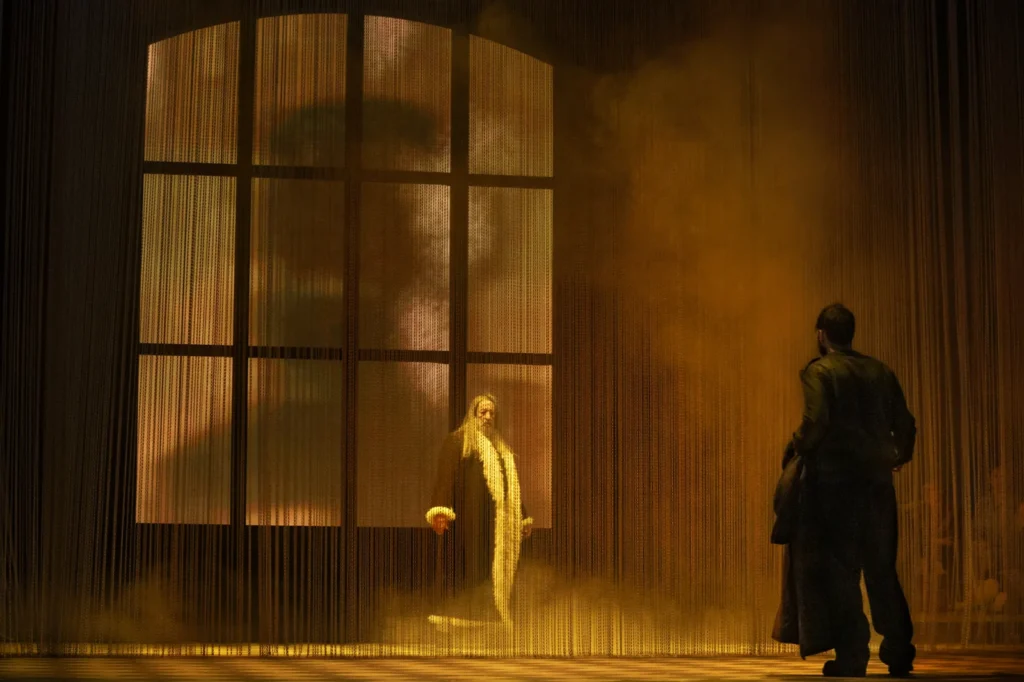
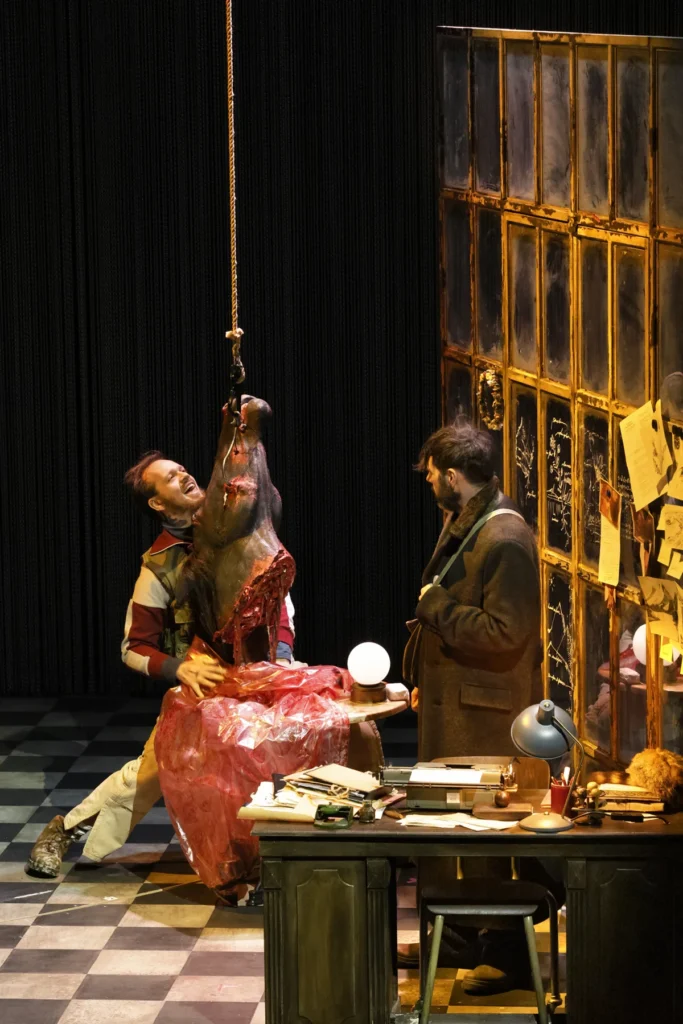
So as not to get lost in the survival mechanism caused by conflict and war, I want to say only this: humans are herd animals, and this herd goes far to protect itself. Throughout the opera, you also feel the boundary of how accepted the main character is by his "village," or conversely, not. The Anderer is, correctly, a mirror for everyone present. Everyone is a victim, in a sense, but there are certainly also plenty of perpetrators.
The Anderer is murdered. Brodeck – himself a stranger – must put this into words in a report. The strangers bring an imaginary mirror with them in which the villagers – and perhaps even the audience – actually don't want to look.
For a psychological grappling with the self, the collective, and the past, I would certainly recommend reading Philippe Claudel's
Le Rapport de Brodeck (I'm going to read it myself now too.) But what we're here for is Daan Janssens' interpretation. Because content must ultimately be transformed into music: what does the story sound like – now finally translated from the written word (Claudel) and the visual medium (Larcenet) – according to the composer's creative process? I want to note, in closing this first exposition, that the transition to different media always brings a new translation with it. Things are lost – suggestions, ideas, and even words – but new things always come too. For a living, passionate author like Claudel, handing over his work for translation is almost literally: "when the work is translated, it's actually the work of the new 'author' (Janssens)."**
To give a preview for the second part: according to the composer, it
ended as a "Wagnerian translation."*** In other words: tension, cinematic emotion, and leitmotifs. These principles were, ultimately, realized – more about that in Brodeck Exposition 2 * Quoted from OBV, P.
resskit Brodeck OBV** Paraphrased from Philippe Claudel,, 2024.
Press conference Brodeck – OBV *** Paraphrased from Daan Janssens,, 09/02/2024.
by Daan Janssens (2023). *** Paraphrased from Daan Janssens,, 09/02/2024.
—
WHAT: Brodeck Cast: Daan Janssens (composer and librettist) Marit Strindlund (conductor), Fabrice Murgia (director and librettist), Philippe Claudel (author), Susan De Ceuster/Gay Huygen (child actor), Jose De Pauw (actor), Jean-Pierre Baudson (voice actor), Damien Pass, Elisa Soster, Helena Rasker, Thomas Blondelle, Kris Belligh, Werner van Mechelen, Tijl Faveyts, Symphonic Orchestra Opera Ballet Vlaanderen, Choir Opera Ballet Vlaanderen, Children's Choir Opera Ballet Vlaanderen.
WHOProduction: Opera Ballet Vlaanderen, Antwerp.
WHEREDates: February 9, 2024 through February 20, 2024 (OBV Antwerp) and February 29, 2024 through March 3, 2024 (OBV Ghent); seen on February 9, 2024.
WHENRun dates: February 9 through February 20, 2024 (OBV Antwerp) and February 29 through March 3, 2024 (OBV Ghent); viewed on February 9, 2024.