An amateur orchestra with class
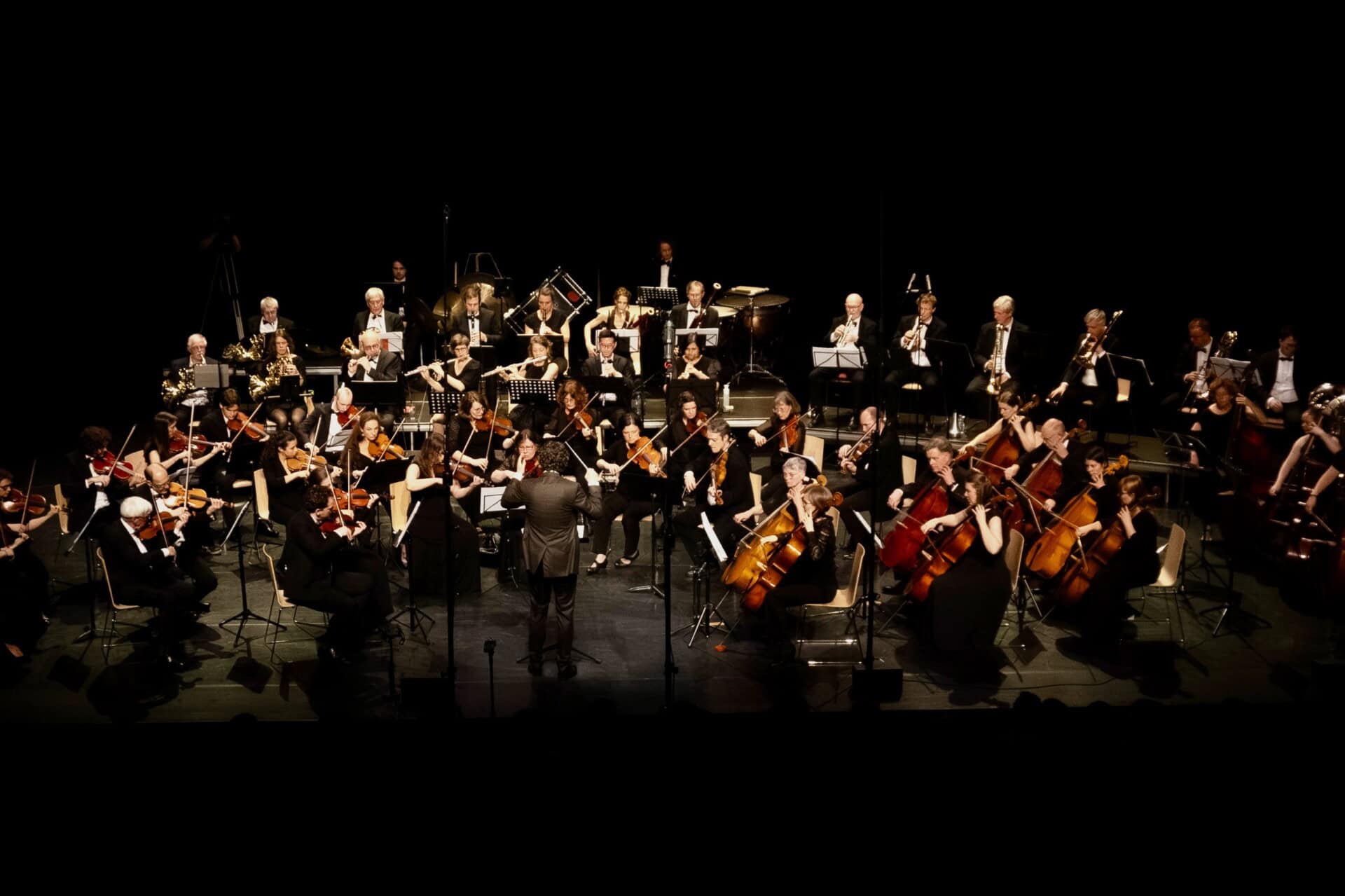
It's always exciting to attend a concert by an amateur orchestra. How will it sound, what mishaps will occur, how many wrong notes, which section will fall out of tune? Sonores Symphony Orchestra from Ghent has been around for more than twenty years with about fifty musicians "who have made classical music their passion rather than their profession," as stated in the beautiful program booklet. The soloist on June 21 in Merelbeke is the promising young violinist Dora Oliva Devoghel. The concert is named after her: "Dora!".
Besides Tchaikovsky's violin concerto, they perform two works by Borodin, In the Steppes of Central Asia and his Second Symphony in B minor.
From the opening minutes of the steppes, I can tell this is going to be good. The raw sound material isn't polished like you'd hear from a professional orchestra, the strings sometimes sound a bit metallic, the cellos lack stable intonation here and there, but in terms of structure, tonal development, and phrasing you can feel that conductor Joeri Van Hove has his troops well in hand. A magnificent woodwind section, almost without a single intonation mishap—something that even happens in professional orchestras. An orchestra with real class. The conductor works without a baton and doesn't even stand on a podium. He has a somewhat elastic gesture, using his upper and lower body, as if conducting with his stomach at times.
Age difference
The age difference in a professional orchestra is roughly forty years, between twenty-five and sixty-five. At Sonores, both young people and seniors perform, and the age difference is a full seventy years! The youngest is a girl of ten (the conductor's daughter) and the oldest at this concert was eighty. Afterwards I speak with the spirited eighty-year-old horn player. He plays in five orchestras due to the shortage of horn players, an instrument that also demands a great deal of physical stamina from musicians.
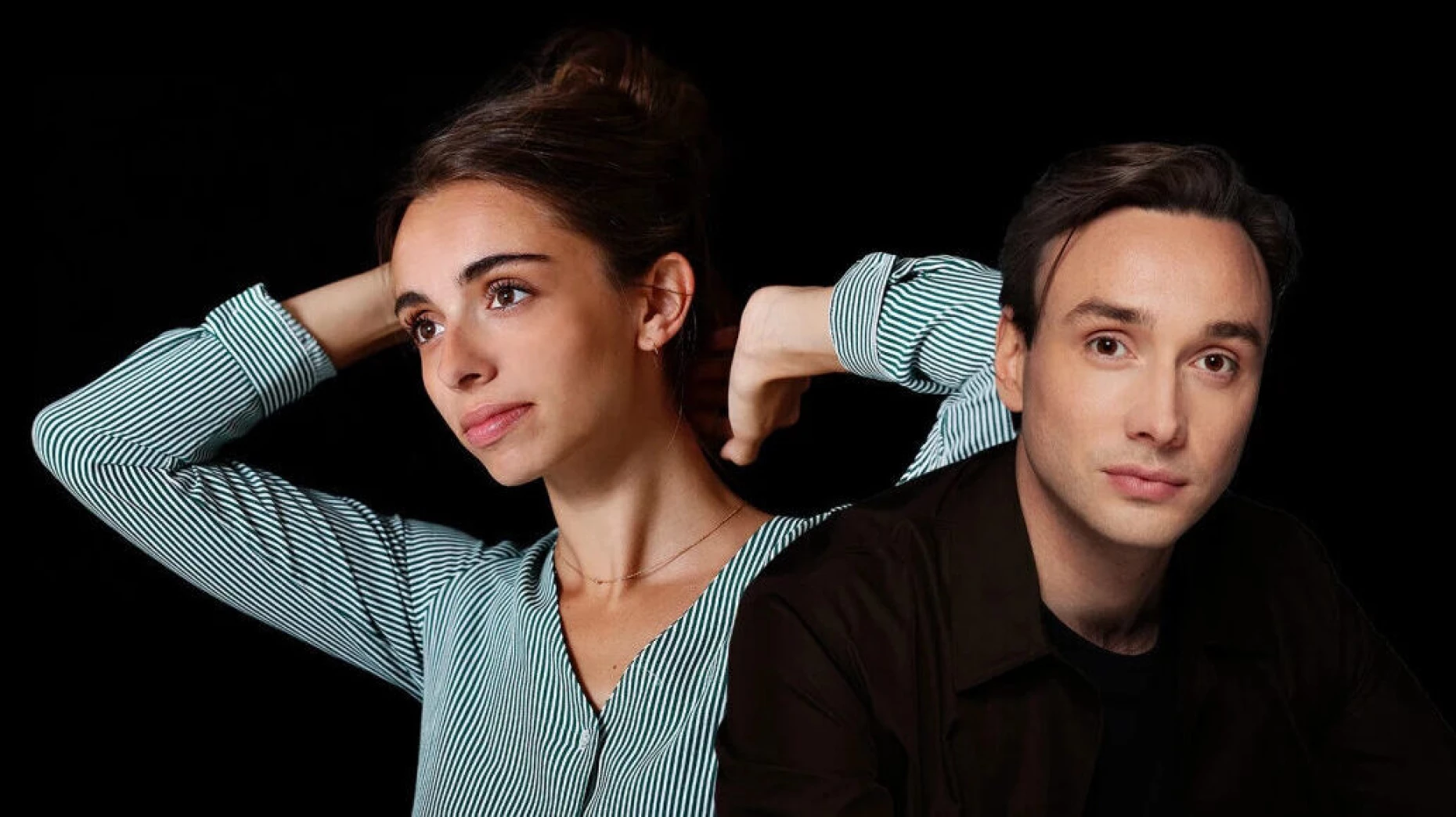
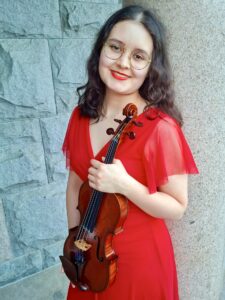 Violinist Dora Oliva Devoghel is a promising young violinist, just 21 years old, with a Belgian mother and a Venezuelan father. She was only fourteen when she was already admitted to the class of Ning Kam at the Brussels Conservatory, after which she went to the Yehudi Menuhin School in England. From an early age, Dora began collecting prizes. At 13 she won third prize at the Leonid Kogan competition for young violinists in Brussels, came second at the Vieuxtemps Competition and in 2018 she won first prize and the audience prize at the Breughel music competition in Brussels (category B). In 2022 she won first prize for the second time at the Breughel music competition (cat.C). Last year she had to choose between Juilliard in New York or the New England Conservatory in Boston to continue her studies. She was admitted to both top institutions, which says something.
Continuing her studies
She chooses Boston, where she will study further with Donald Weilerstein, whom some may still remember as first violinist of the Cleveland Quartet. In 1963 he came in twelfth (thus last) place in the Elisabeth Competition. Last but not least, his long career speaks for itself. Dora receives support from SWUK Flanders, Stichting Robus, and a scholarship from the Latin Grammy Cultural Foundation. Nevertheless, studying in the US remains very expensive, so she started a crowdfunding campaign on gofundme.com
With a creamy vibrato she begins the concert; some tempos could perhaps have been a bit more brisk, I thought, but she plays with great restraint and maturity. The presenter had asked not to applaud between movements in the introduction. But why wouldn't you clap after the first movement of Tchaikovsky's violin concerto? The final chord invites it. A first thunderous applause.
The accompaniment of this concerto by the orchestra is no easy feat. The dialogue with the soloist and the many tempo changes must be kept firmly in hand by the conductor. In the second movement I hear a jazzy twist in the clarinet's reply to the solo violin. An original touch, which characterizes this orchestra. With the woodwinds, it's barely noticeable that they're not professionals.
Passionate
It's not because they're not active full-time as musicians that they haven't received professional training. Clarinetist An Beazar is a good example. In addition to being a musician, she's an engineer and entrepreneur; she was selected by the VRT as a 'tough woman,' an expert to provide commentary in the media. After a second thunderous applause at the end of the violin concerto, Dora plays the famous "Por una Cabeza" by Carlos Gardel (arr. by Augustin Hadelich), the well-known tango composer alongside Piazzollalla. The cherry on top. She also has a younger brother and sister who also play in the orchestra, Leandro and Selena. On July 18 and 19 she performs a recital with them in Ghent's Sint-Coletakerk and in the Ryelandtzaal in Bruges.
Not only the orchestra members, but Aleksandr Borodin was also versatile. Besides being a composer, he was also a chemist with music as a hobby. His second symphony is often performed, also by amateur orchestras. His massive chords and rougher orchestral sound have a more Slavic quality than the more refined Tchaikovsky. More brass instruments come into play as well. Three trombones and a harpist join in. Actually, the term amateur orchestra does Sonores a disservice. Amateur is too negative a word. They are all passionate musicians.