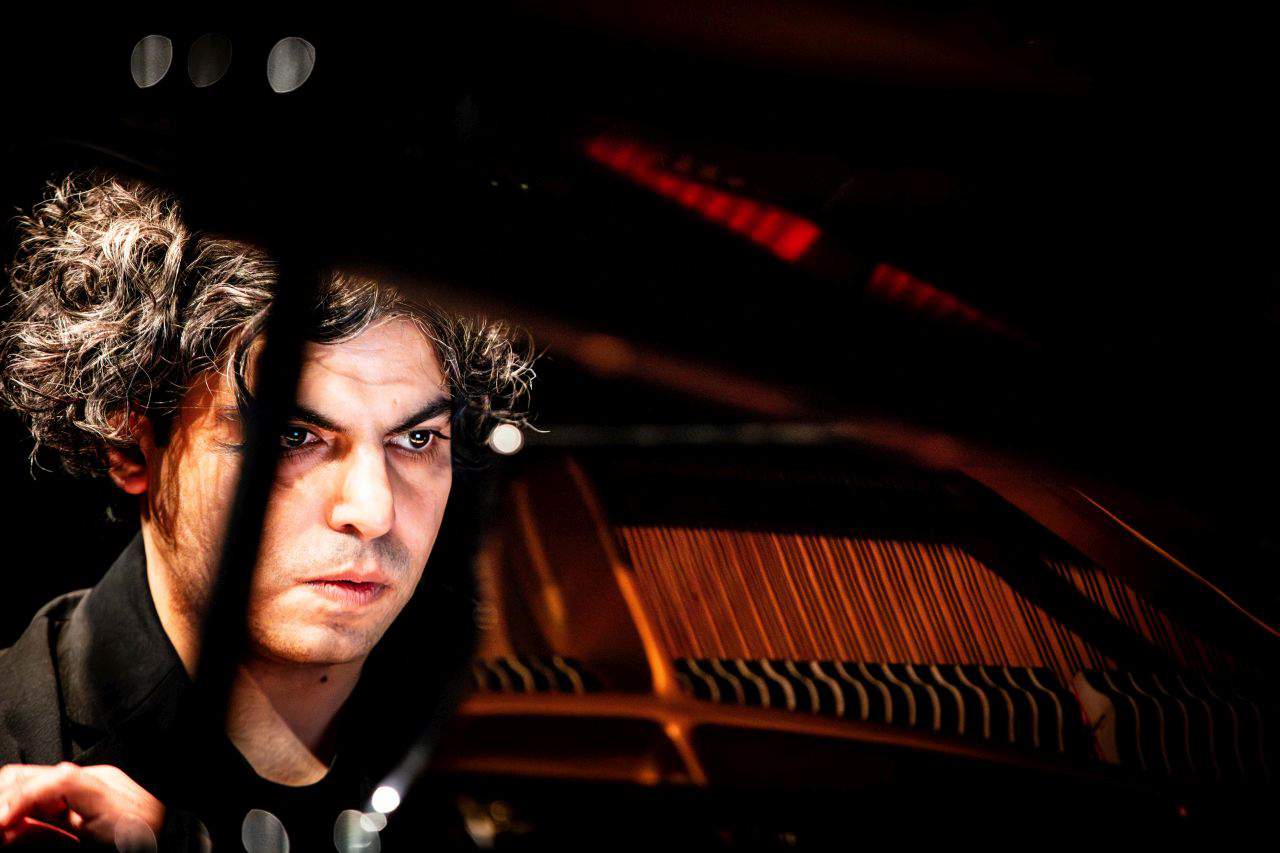
Transit Festival – an established fixture for twenty-first-century compositions – opened its first evening with two performances. One of them was Phillip Venables' intriguing Answer Machine Tape, 1987 (2022), performed by pianist Zubin Kanga. A mixed media performance that takes you back to the not-so-distant past: the New York Art Scande of the 1980s. Humanity and musicality intertwine in these snapshots played on piano with MIDI detection – snapshots to view together now.
Venables, Kanga and Wojnarowicz
Phillip Venables and Zubin Kanga collaborated to transform what appear to be mundane answering machine recordings from artist and AIDS activist David Wojnarowicz from 1987 into music. During the performance, the audience hears brief phone calls from people in David's circle: friends, gallery owners, family, and so on. The subject is photographer Peter Hujar – David's former partner and dear friend. Peter died in 1987 – during the recording of these tapes – from AIDS.
In 2024, we can scarcely imagine the fear and fragility that this epidemic – even with COVID-19 still fresh in our memory – brought forth. In the 1980s and 1990s, this autoimmune disease carried not only a virtual death sentence but also tremendous stigma for marginalized groups, particularly the gay community. The HIV/AIDS crisis – the fear surrounding gay culture – was unfortunately very real and remains a painful stain on our history. Remember that these recordings capture genuine emotional moments within the lives of David, Peter, and those around them. Nothing here is contrived; the narrative hasn't been manipulated. This is real. This is human intimacy presented in its purest form. We have the chance to hear voices from the past. This is the first fact that makes this composition so deeply moving.
"Call me back... it's John..."
The piece is performed through piano with MIDI detection, MaxMSP, and software synthesis – in simple terms, the classical element of a played piano is connected with its environment and sound synthesis. The result is that as the piano plays, you see text moving across the screen. You hear sounds from the piano, but you associate them – purely through the typed text – with the response of an old typewriter (theding). Your senses become entangled during the performance with the piano playing, the text on screen, and the voices – like ghosts emerging from a bottle – that you hear through the recorded messages. Over all of this hovers the inevitable outcome (Peter's death) and the human emotion it stirred in 1987. Life goes on, galleries keep calling, concerts continue to be performed, yet at the same time people pause to remember their friends and loved ones through a simple, brief phone call.
A life in text, image and sound
The combination of senses is what makes the composition Answer Machine Tape, 1987 so intriguing. You're aware that you're listening to something real, something that actually happened, something that has touched and moved people. Meanwhile, you see the cadences of someone's voice, the typical intonations and emphasis—like the much-dreaded "um" that we're all guilty of now and then—that occur during a conversation. Banalities are uttered ("I called for a sec, but it was nothing really, see you in a bit"), emotions ("please call me back"), and all sorts of things we expect from brief snapshots.* Then comes the piano. It has unique tone combinations that resonate, ones you almost start to anticipate. The (piano) tone of the answering machine, the melody of a simple "hello" and "answer me" —the piano moves in tandem with the voices. Through the MIDI, the piano plays along like a typewriter. The words are written on the piano, as it were.


Answer Machine Tape, 1987 is not a composition that combines tricks just for the sake of it as a mere experiment. It clearly tells a musically coherent story. Zubin Kanga becomes a writer. His writings appear visibly on screen. The image follows the spoken messages. The piano playing follows the emotion of a conversation or the spoken cadence of someone's unique voice. This period from David's life is brought back to life as a film, with a musical piano voice underneath. It plays with our perception of musicality.
A quiet contemplation from the past and a musical meditation on the human. These are the words with which I Answer Machine Tape, 1987 want to describe and likewise want to conclude contemplatively.
* Paraphrased based on texts from the performance.