
Pianist and composer Brecht Valckenaers, born in the 21st century and passionate about the music of the previous century, seems to be the embodiment of Festival 20-21 and Transit. For this edition, artistic director Pieter Bergé tasked him withe Musica ricercata adapting it to his own style and presenting it to the audience in a highly personal way. The career of composer György Ligeti (1923 – 2006) had barely begun when he already found himself at a dead end. He survived the labor camp where he was forced to wear a yellow armband because of his Jewish heritage, but his father, brother, uncle and aunt did not return alive from Bergen-Belsen, Auschwitz and Mauthausen.
1951
Shortly after the Nazi regime, Hungary came under a new oppressor: Stalinism. At 27, Ligeti taught at the Franz Liszt Academy in Budapest, but the political climate was so repressive that he barely knew what his contemporaries Stockhausen or Boulez were working on elsewhere.
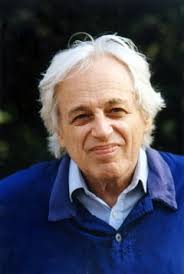
To avoid writing music for party propaganda, he buried himself in scholarly research into folk music, as Bartók and Kodály had done before him. In 1956, like 200,000 others, he would choose the great exodus. Hidden on a train beneath a pile of mail sacks, he undertook a life-threatening escape to the West that led him to Vienna, Cologne, Darmstadt and Paris, never to return to Budapest or his birthplace in Transylvania.
Ex Nihilo
In 1951 I began to experiment with very simple structures of rhythms and sonorities as if to build up a 'new music' from nothing. What can I do with a single note? With its octave? With an interval? With two intervals? With certain rhythmic relationships?
György Ligeti.
Musica ricercata is an eleven-part cycle in which Ligeti searches for a new language, almost from nothing, sometimes doing a great deal with very little material. In part I, he uses only two notes: the A in all possible places on the keyboard and at the very end twice D as a kind of resolution. For part II he chooses three (different) notes, part III four notes and so on… to end with all 12 notes in part XI. As sparingly as he uses the notes, so lavishly does he play with combining the most diverse rhythms and experiments fully with texture, dynamics and emotional expression.
In only two parts does Ligeti reference other composers. Part IX is an in memoriam for Béla Bartók whom he admired and from whom he tried to break away. The final part XI, which is structured as a kind of fugue, is a tribute to the Italian composer and virtuoso keyboard player Girolami Frescobaldi (1583-1643) who brought the ricercar, the forerunner of the fugue, to its height. Ligeti kept the score of his 'dangerous' experiment in a drawer; Musica ricercata was created in 1969 in the Swedish town of Sundsvall.
From five pages
2024
the ink is still wet. A native of Leuven, born in the 21st century and passionate about the music of the previous century, pianist and composer Brecht Valckenaers seems to be the very embodiment of Festival 20-21 and Transit. For this edition, artistic director Pieter Bergé tasked him with In 1951 I began to experiment with very simple structures of rhythms and sonorities as if to build up a 'new music' from nothing. What can I do with a single note? With its octave? With an interval? With two intervals? With certain rhythmic relationships? The series of compositional studies, as Ligeti himself called them, were not intended as a final product or concert program where the parts logically flow from one another. In Brecht Valckenaers' performance, that fragmentary character disappears through the addition of both five of his own interludes and five connecting fragments by Lachenmann, Kurtág, Crumb, Cowell and Bartók. 26 minutes of études grow into an organic concert piece of 70 minutes. Few festivals would give such a young but promising musician so much freedom and responsibility, and would venture such an adventure.e CDW adapting it to his own style and presenting it to the audience in a highly personal way. The career of composer György Ligeti (1923 – 2006) had barely begun when he already found himself at a dead end. He survived the labor camp where he was forced to wear a yellow armband because of his Jewish heritage, but his father, brother, uncle and aunt did not return alive from Bergen-Belsen, Auschwitz and Mauthausen.
The series of composition studies, as Ligeti himself called them, were not intended as a finished product or concert program where the parts logically flow from one another. In Brecht Valckenaers' interpretation, that fragmentary character disappears through the addition of both five of his own interludes and five connecting fragments by Lachenmann, Kurtág, Crumb, Cowell, and Bartók. 26 minutes of etudes expand into an organic concert piece of 70 minutes. Few festivals would give such a young yet promising musician so much freedom and responsibility, or dare to embark on such an adventure.
CDW You're even younger than Ligeti was when he wrote his Musica ricercata—how does it feel to receive such a wonderful commission?
BV "Without comparing myself to Ligeti, but as a composer I find myself in a somewhat similar place—I'm also very much in search mode. In my five studies, I try to push my own boundaries to the extreme. Especially in the realm of rhythm, which is a primary obsession of mine—in a past life I was a drummer. I like to use different rhythms and time signatures simultaneously, where the left hand really doesn't want to know what the right hand is doing. In my etude Distorting Time ", it's as if the music warps and distorts time itself, like a funhouse mirror in a hall of mirrors. Well, sometimes the explanation and notation are far more complicated than the actual sounding result."
CDW How did you choose fitting music by five other composers?
BV "Oh, it took me several months of extensive listening and careful deliberation. In the end, I arrived at five fragments in which a composer approaches or rediscovers the piano as an instrument in a very clear way, ex nihilo. Henry Cowell works with clusters played with arms across the keyboard, György Kurtág literally asks in his introduction (excerpt from Játékok) to approach the piano unselfconsciously, like a child. And then George Crumb—that's a playground where you can explore the piano's possibilities in highly unorthodox ways, yet always musically, in service of the music."
By listening so much, I've learned an enormous amount about twentieth-century music. Actually, I'm very pleased with the natural transitions I've created. Where Ligeti's piece ends, I continue seamlessly with something of my own or someone else's—the three narrative threads flow organically into each other, as if I've laid out a musical puzzle that culminates in a collage concert."e In 1993, a documentary filmmaker showed current film footage of Ligeti's birthplace in Romania, of which he remembered remarkably little, but to his great astonishment, the composer immediately recalled the sound of the bells.
CDW "'C'est fou! The bells are still exactly the same.'" In your Ex Nihilo version, there are quite a few bells as well. "Certainly, bells are in a sense a subtheme throughout the concert. You can hear them in
BV Glockenturm Ein Kinderspiel from by Helmut Lachenmann and in György Kurtág's homage (Ligeti's closest friend) to their shared composition teacher Sándor Veress. But also in my final etude and in Ligeti's homage to Bartók, the bells ring." American filmmaker Stanley Kubrick opened the door to the big, international audience for Ligeti and rightfully deserves to be called his ambassador and great admirer. In the soundtrack of
2001: A Space Odyssey (1968), he used no fewer than four fragments of Ligeti's music—without permission, it should be noted— Requiem, Lux Aeterna, Atmosphères, and Aventures . Mesto, rigido e cerimoniale, Part II from Musica ricercata, which Ligeti described as a 'knife in Stalin's heart,' absolutely contributes to the oppressive atmosphere in the erotic thrillerEyes Wide Shut (1999). Whether most cinema-goers read the credits and take an interest in the composers is another question. If you ask us, the collage concert Ex Nihilo is in turn an absolute homage to György Ligeti." Brecht Valckenaers
(b. 2000) Received at age 15 (©2000) Received at age 15e He gained access to the Young Conservatory in Antwerp, where he was taken under the wing by Nicolas Callot and Wietse Beels. He studied piano with Nikolaas Kende, Eliso Virsaladze, and Claudio Martínez Mehner, among others. He received composition lessons from Pieter Schuermans, Boudewijn Cox, and Alain Craens. In 2024-25, he is completing his studies at the Hochschule für Musik in Basel.
Brecht has won several first prizes in competitions such as the Steinway Piano Competition, the Cantabile Piano Competition, and the Andrée Charlier Piano Competition. In 2023, he won second prizes at the Breughel Piano Competition and the EPTA Piano Competition, where he also received the award for best Belgian composition with one of his works.
For tickets and info: https://www.festival2021.be/ or check out the event in our Concert Schedule