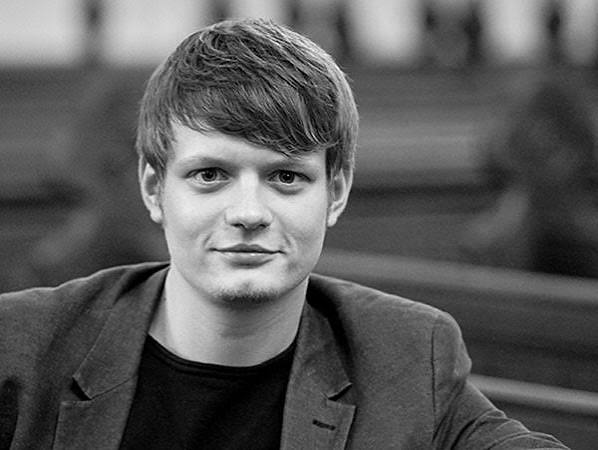
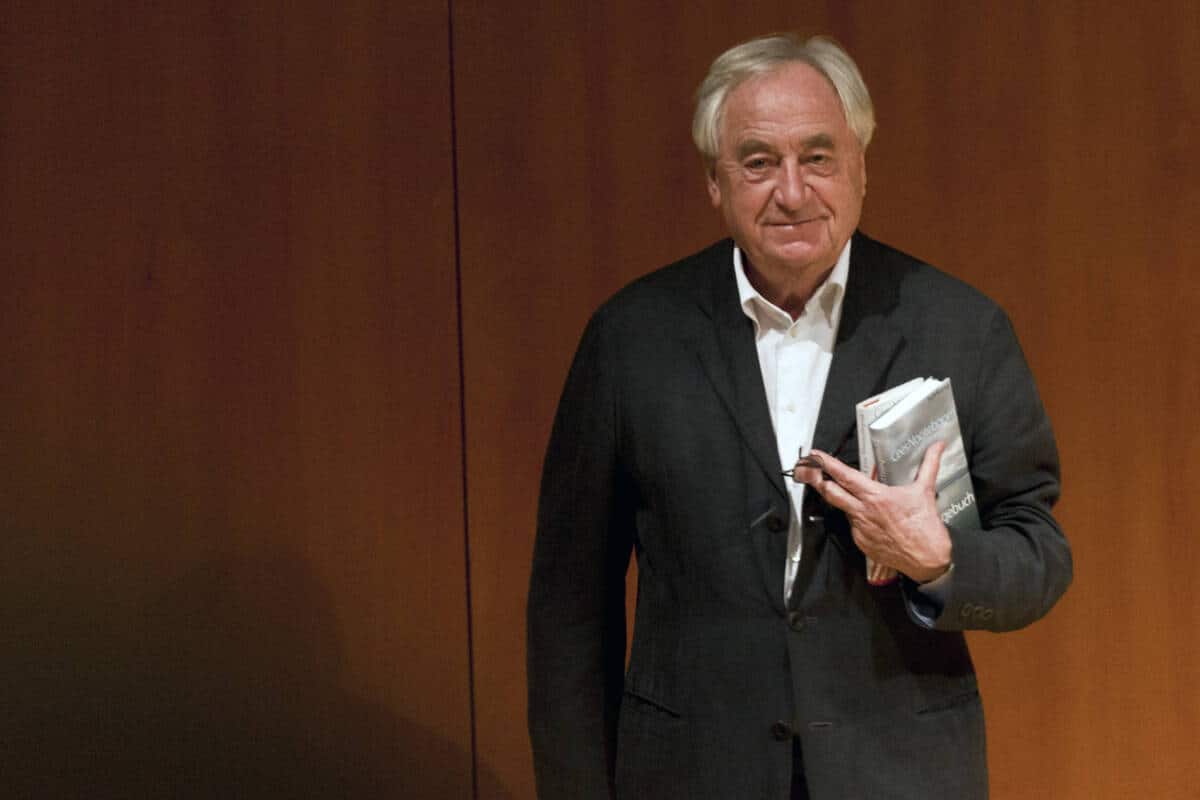
On July 31st, Cees Nooteboom turned 90. As one of the most renowned Dutch writers, he has written numerous novels, travel stories, essays and poetry collections and received many prestigious awards. For half a lifetime he has also frequently stayed at his house on the Spanish island of Menorca. In Germany he is perhaps even better known than here. When Nooteboom writes about art, I especially remember his many essays on visual art, film and architecture. Tiepolo, Hopper, Zurbarán and many others—Nooteboom always makes us look at art in a surprising way.
On the Puzzle of Words, Tones and Voices was published last year and, for once, is not about seeing but about listening. These are pieces he published between 2002 and 2010 in Prelude, the magazine of Amsterdam's Concertgebouw. Only a few of the pieces are concert reviews; mostly they are short anecdotal pieces in which he philosophizes and muses about classical music, famous musicians and composers, and also about novels in which music plays a role.
The Most Difficult and the Highest
One of the pieces is an ode to Simon Vestdijk, in which Nooteboom lets slip that writing about music is the most difficult form of writing that exists. Amateur musicians who form a string quartet together and play music unselfishly, he finds to be "the highest thing there is"… Perhaps it is because he regards it as so difficult and lofty that he has devoted far fewer words to it in his long life than to the visual arts. Often it concerns the powerlessness to express music in words. About the wonder, the confusion or the magic that music can evoke. Not only in the concert hall, but also within the walls of his house in Menorca.
Classics ranging from the Flemish Polyphonists through Mozart to Mahler and Bruckner pass in review, and also remarkably many twentieth-century composers such as Schoenberg, Ligeti, Elliott Carter, Stockhausen or Kagel. Although he admits he cannot read musical notation and listens in a descriptive, sentimental and also literary way, a fine connoisseur emerges in this little book. The cello is his favorite instrument, as we also discover.
His novella The Next Story (1991) Nooteboom wrote with Shostakovich's Preludes Op. 34 as accompanying music in the background. Is that allowed? he wonders. In any case, Harry Mulisch didn't allow it—music as accompaniment to writing is an insult to music. It shows the respect Nooteboom has for music as great art. This little book is proof of that. It offers a fascinating glimpse into the musing poetic soul of the greatest still-living Dutch writer.
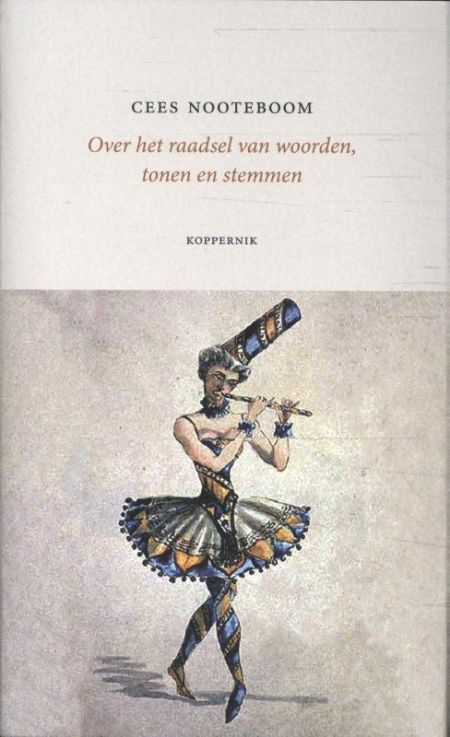 WHO: Cees Nooteboom
WHAT: On the Puzzle of Words, Tones and Voices
PUBLICATIONS: Koppernik Publishing BV