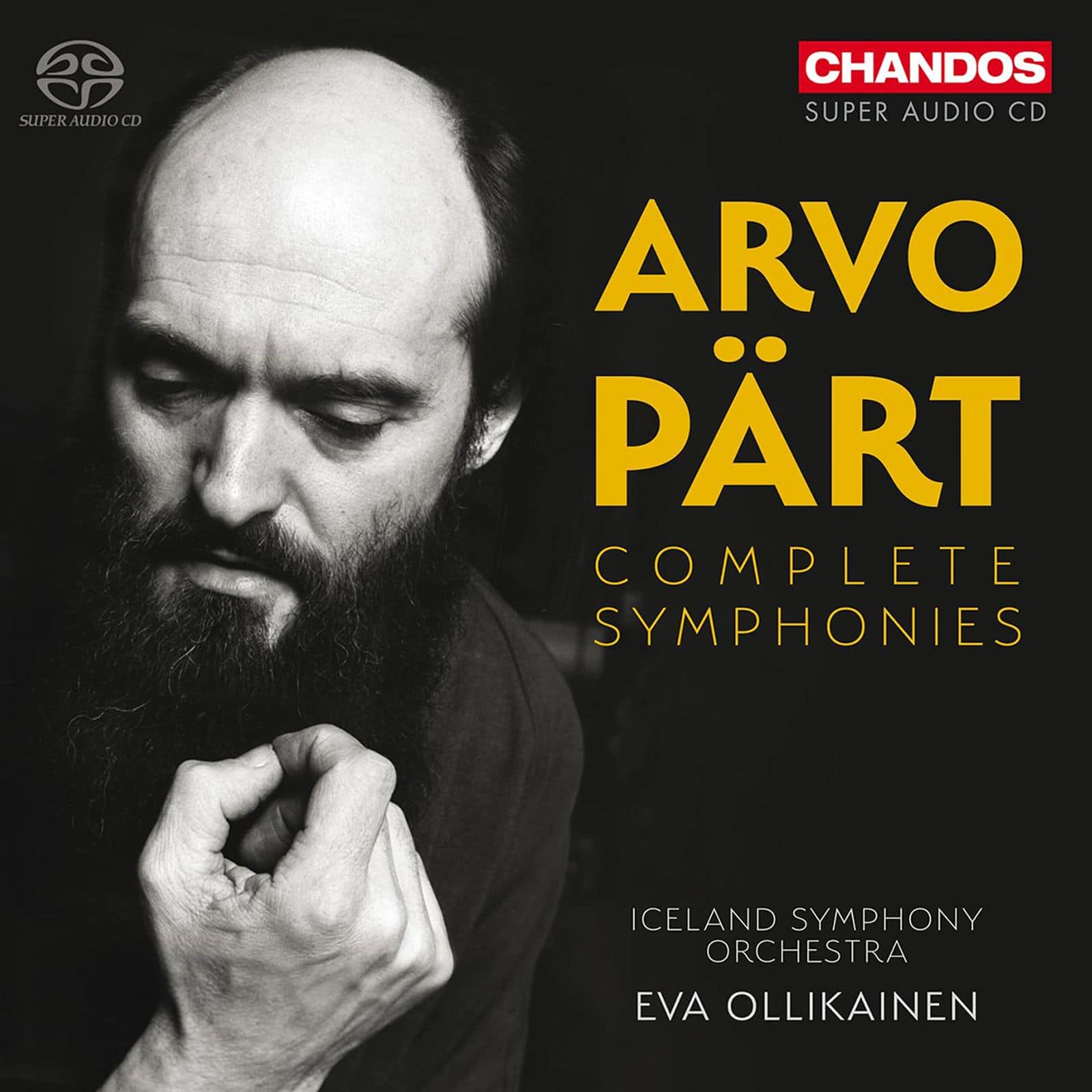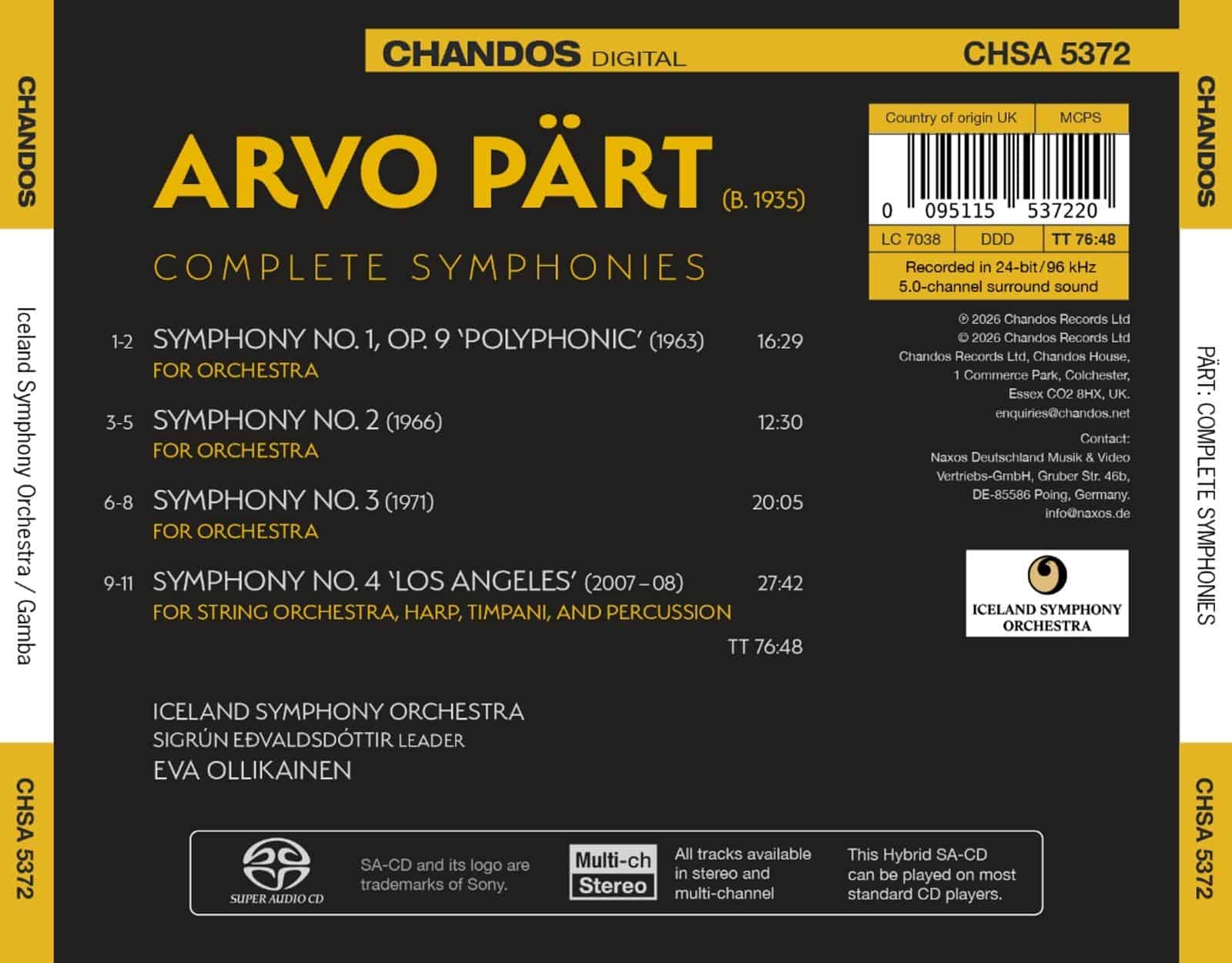
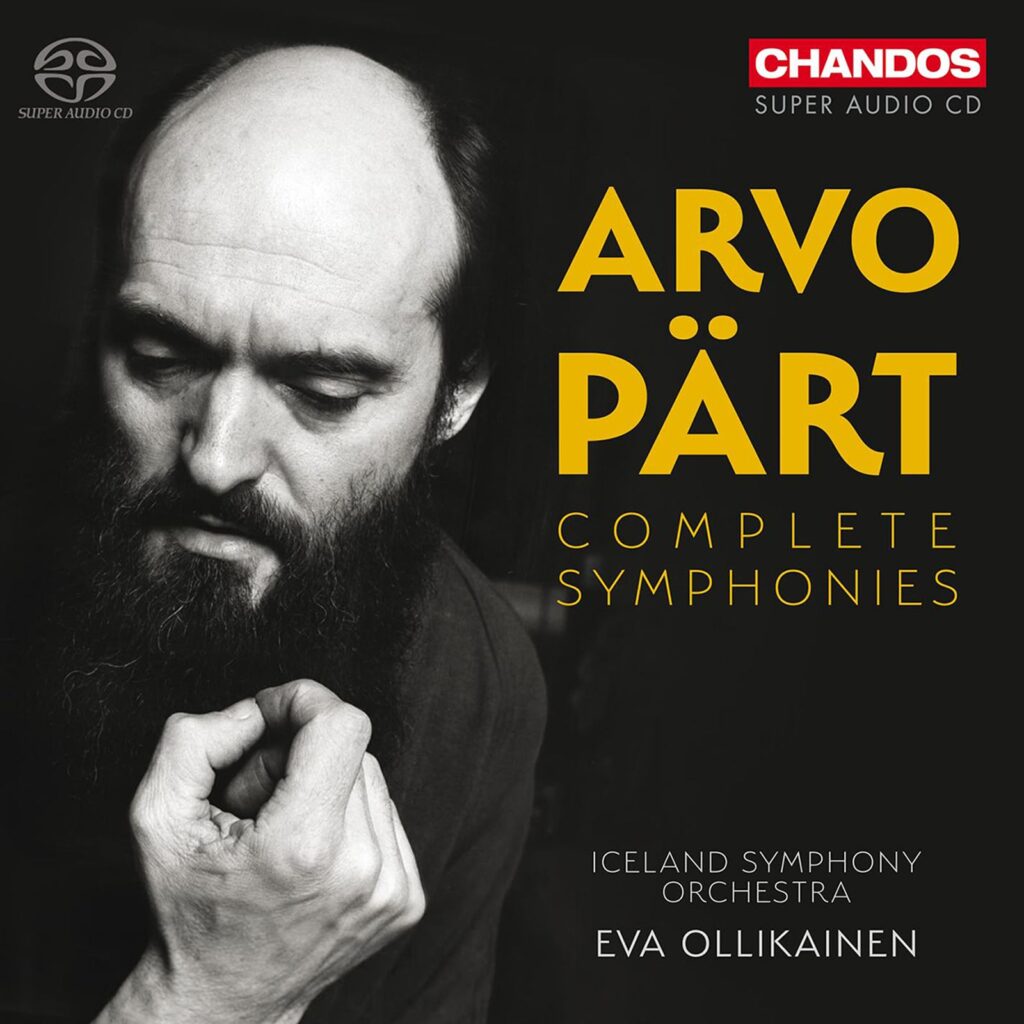
Arvo Pärt's four symphonies were composed over the course of forty-five years and have little or nothing in common with one another—four separate works representing his output at different points in his creative career. The First Symphony was composed in 1963, shortly after Pärt completed his studies at the Tallinn Conservatory. Its two-part structure is reminiscent of the Baroque—canons and prelude and fugue—but the harmonic language is extremely progressive, showing clear traces of twelve-tone serialism. The Second Symphony from 1966, in three movements, again employs a combination of serialism and textures reminiscent of Penderecki and the Polish school. The Third Symphony (1971), also in three movements, reflects the time Pärt spent studying medieval chant and music in the late 1960s. Symphony No. 4 "Los Angeles" was composed much later (2007-2008) and is stylistically directly inspired by sacred music. Pärt modeled it on two major litanies of the Orthodox Church: the Canon of Repentance and the Canon to the Holy Guardian Angel. This latter work, unusually composed for strings, harp, timpani, and percussion, is also divided into three movements.