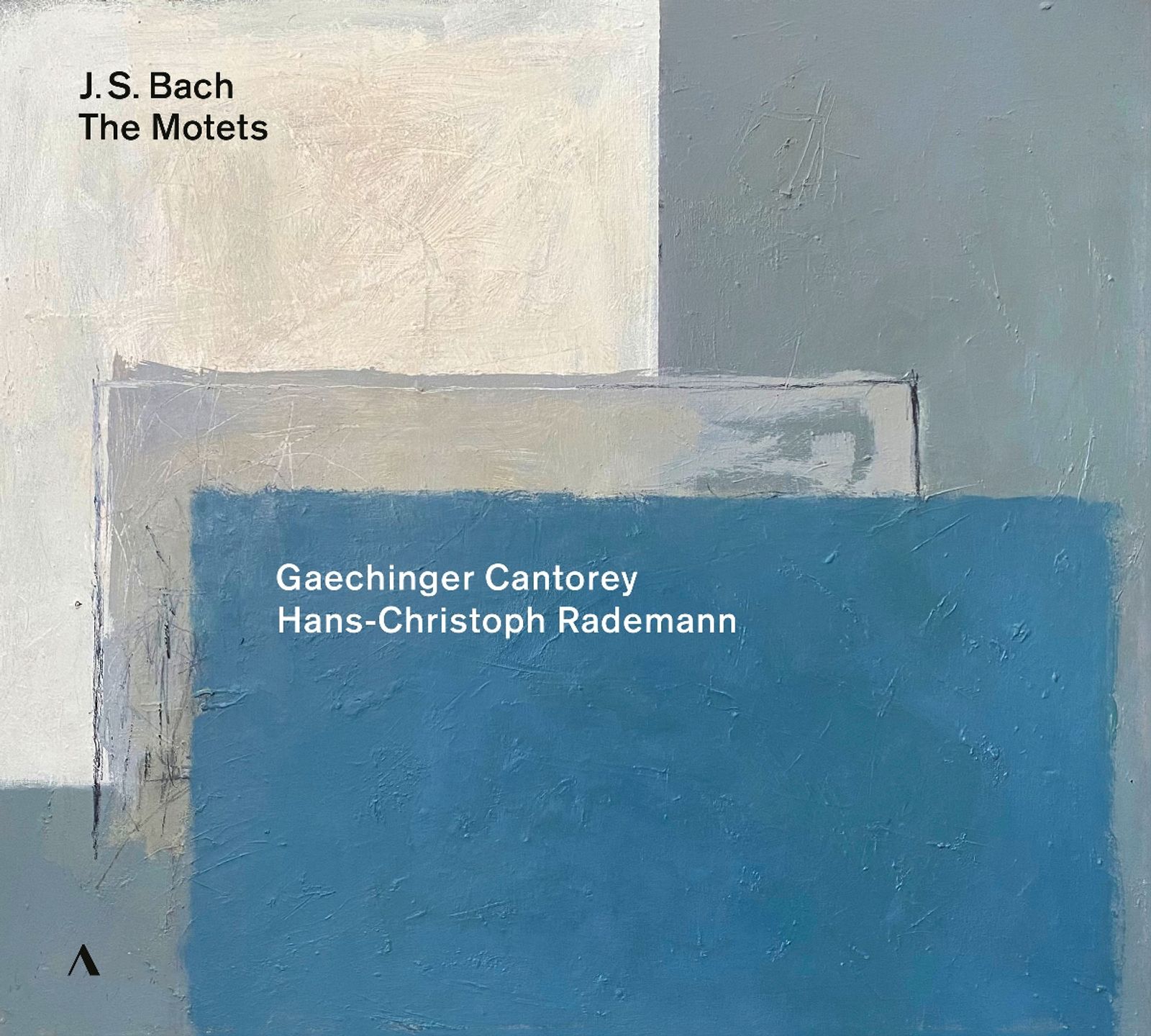
The six motets BWV 225-230 are among the most demanding works Johann Sebastian Bach (1685-1750) wrote for choir: densely polyphonic weaving, in which the text – often from the Bible or from the Lutheran tradition – repeatedly determines the direction of the music. A good performance must therefore be able to do two things at once: master the technical complexity of the counterpoint and let the text speak. It is precisely in this that this new recording by the Gaechinger Cantorey under the direction of Hans-Christoph Rademann is convincing.
What immediately stands out, and what holds up throughout the entire CD, is the diction: it remains exemplary from beginning to end. Anyone who is fluent in German hardly needs the CD booklet to follow the text, because the words come across naturally. That booklet is there, by the way, and it is worthwhile: it contains an in-depth discussion of the content and the complete texts, useful material for anyone who wishes to delve further into the background of these motets.
The recording itself is crystal clear from the first to the last note. All the different choral voices can be heard with perfect intonation – nothing blurs, nothing drowns in the mass – and the instrumental accompaniment forms a fine, supporting foundation beneath them without ever pushing to the foreground.
What makes this recording so special across all six motets, however, is the way word and music constantly interlock. Nowhere is there any bravado: the performance remains intimate, thoughtful and deeply felt, so that Bach's textual vision consistently comes across powerfully and the Lutheran spirit that speaks from these works is given full scope.
From exuberance to stillness
Singet dem Herrn ein neues Lied sets the tone immediately. The opening is so infectious that you almost have to restrain yourself from singing along. Yet just as effortlessly the choir lets that exuberance go: the middle section is delivered with great sensitivity, almost as a solo ("Wie sich der Herr erbarmet"), a moment of stillness in the midst of the celebration. After this contemplative moment, joy returns in "Lobet", with a remarkably transparent, clearly intelligible fugue on "Alles, was Odem hat". In this way, the direction of this recording becomes clear right away.
Der Geist hilft unsrer Schwachheit auf takes on a very different character. It is built up thoughtfully, with a calmly interwoven texture of voices, full of conviction – perhaps a little slower than I am used to hearing, but precisely through that vision all the more penetrating. This is especially palpable in "Wir wissen nicht, was wir beten sollen": the human uncertainty in those words is given full room to speak, without the choir pressing them heavily. The restraint here works deepening rather than slowing.
With Jesu, meine Freude follows the most extensive work on the CD. Larger choral contributions alternate with solo passages, so that the nearly twenty minutes never feel long. Here too the text remains clearly intelligible, and the empathy stands out in particular – not to mention the pure voices, which hold their own in every register. I find the accents on "Trotz" especially masterful: that single word forms a genuine turning point compared to the preceding sections, and precisely because of that it carries so much weight. Equally moving is the movement "Gute Nacht": sorrowfully sung, yet never heavy-handed, and therefore particularly poignant.
Trust and longing
Fürchte dich nicht then sounds gentle in this performance, almost like a soft reassurance. The text could tempt one toward a heavier approach, but here what sounds above all is the promise itself: "Ich stärke dich, ich helfe dir auch" – with a natural warmth that does not feel forced.
Komm, Jesu, komm is perhaps the most astonishing moment of the CD: how those "komm" entries each time sound different, each time with a slightly different charge, almost like silver bells. The hope for that coming speaks here with great simplicity. Then follows a moving "Die Kraft verschwind't", followed by a resigned, almost whispered "Ich sehne mich". And then, as if a page is being turned, a very playful "Komm, komm" – this contrast alone shows how well Bach can play with a single word, and how well Rademann lets the choir shine here.
Finally, Lobet den Herrn alle Heiden sounds very festive, yet never excessively exuberant. The rhythm is brisk, the energy great, but everything remains controlled – a fine, unpretentious conclusion after all the reflection and longing that preceded it.
A place among the greats
This recording can hold its own alongside important recordings of these motets. The Gaechinger Cantorey convinces not only through technical purity, but above all because that clarity always serves word and music. Rademann lets the voices breathe, gives the texts full room, and at the same time avoids making Bach heavy or solemn. It is precisely this combination of balance, intimacy and expressive power that makes this new release so compelling.