


In a packed Carolus Borromeuskerk, Vox Luminis performed under the direction of Lionel Meunier with Monteverdi's Vespers. The large crowd clearly looked forward to a captivating, baroque and especially lavish evening. These vespers are indeed known as such: wherever they are performed, the concert hall or church is guaranteed to be packed, and this is no different at Laus Polyphoniae.
Monteverdi's Vespro della Beata Vergine is par excellence a composition that finds itself somewhere between Renaissance polyphony and the early baroque. It is furthermore common knowledge that Monteverdi did not write these vespers so much for purely liturgical use, but also as a kind of musical calling card for a position in Rome. He therefore drew upon all his knowledge, skill and craftsmanship. The result is music of the most exuberant kind, with an intense musical rendering of the psalms and beautiful instrumental intermezzos. An evening to sit on the edge of your seat.
Vox Luminis performed with an ensemble of eighteen singers and seventeen instrumentalists. The stage in the Carolus Borromeuskerk was thus well filled.
This music has been with me for a very long time. Since my youth I have been captivated by Monteverdi, both his prima pratica and his seconda pratica. I was already enthusiastic about the richness, grandeur and spaciousness of his music and by the performance of the Monteverdi Choir (Gardiner 1990) in the San Marco in Venice. Many dozens of recordings and concerts have followed since. I can therefore well imagine that for performers it is often a matter of seeking a balance between a rather traditional performance and an interpretation that adds something new.
In my view, Meunier chose this time mainly for a traditional performance. And there is absolutely nothing wrong with that.
The Monteverdi Vespers is such a concert where you simply know that the opening notes must set the tone. That is logical, because a vesper begins with Deus in adiutorium meum intende: a text that with a loud voice sets the whole story in motion. That was the case here too. The ensemble sounded from the start convincing, confident and sustained.
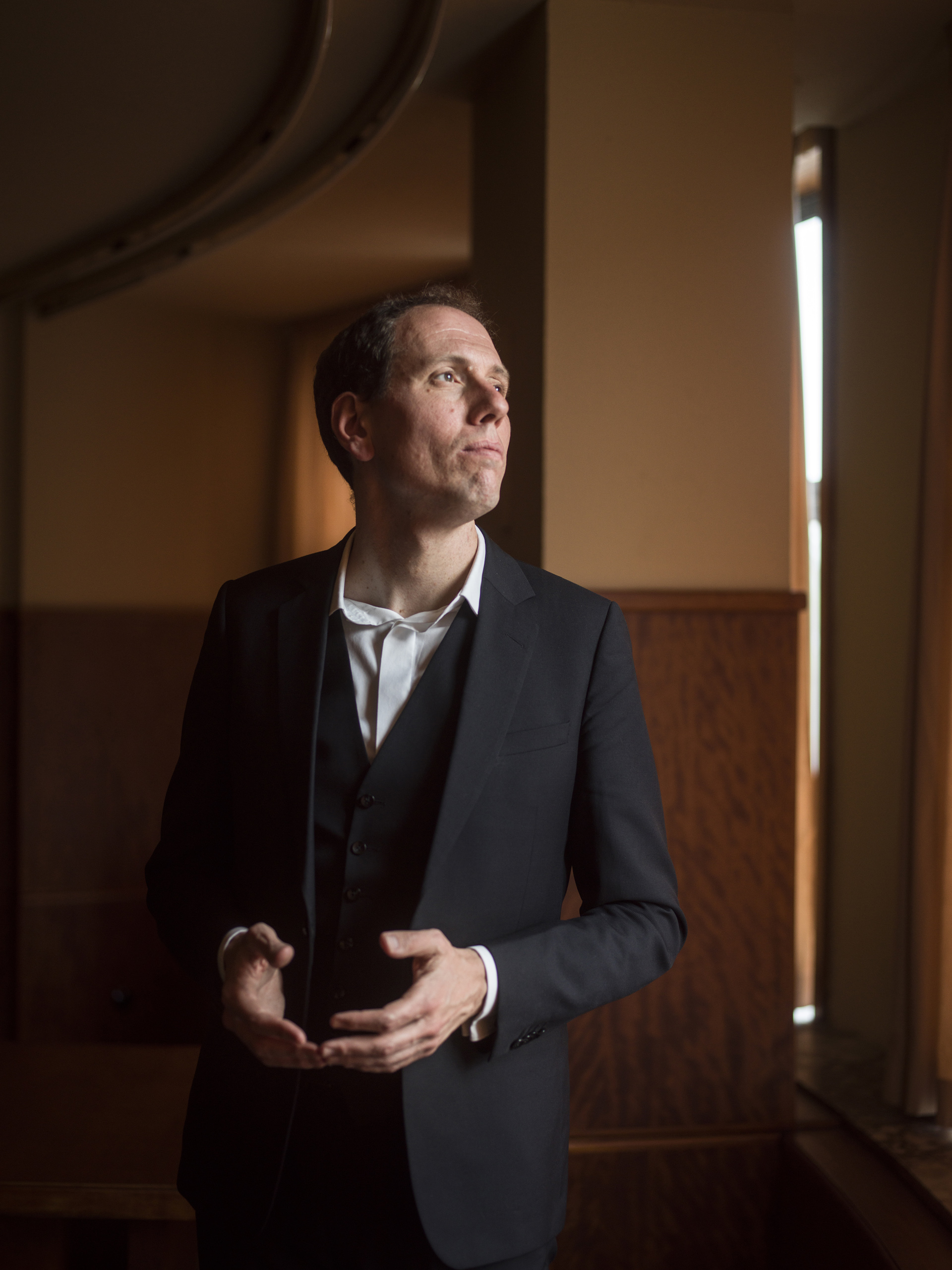 Typical of Vox Luminis is that there is no conductor standing in front. Meunier chooses to give direction, when necessary, from the back row. That is not always obvious. You noticed that, for example, with the theorbo player, who regularly had to contort himself in awkward positions to catch some direction from Meunier. Yet I understand Meunier very well: he wants to sing above all. He is also undoubtedly one of the most mature voices of the ensemble.
His conducting style is very organic. With the score in his hands, he embodies the music. His direction comes only occasionally through a clear arm gesture, but mainly through the posture and expression of his body, which he tries to share with his fellow musicians. In short: the music is led from within.
Perhaps I am particularly sensitive to this because the impressive psalms of Monteverdi are so deeply encoded in my head. A rhythmic difference or a dynamic choice immediately stands out. That is why I noticed that in some places a noticeably slower tempo was chosen than I am used to. For example in Dixit Dominus (tuos) and later in Laudate pueri Dominum (suscitans).
What ran like a red thread through the entire concert was the full sound. I actually like that. A performance of the vespers with a choir that just hums along is not done. In this case that full, rich sound was present in the choral sections from beginning to end.
But sometimes that fullness also led to a slight form of tonal monotony. The psalms of Monteverdi are of course spectacle from beginning to end. But I think the spectacle can also lie in not only seeking dynamics in volume within a psalm, but also a thoroughgoing interpretive approach to the word. And I must be honest: by placing such strong emphasis on the fullness of sound, some nuance was lost in my opinion. If that nuance had been more strongly brought out, it could have given the concert an even richer palette of emotions.
In itself these may be minor quibbles, because the singing was of course of a high level. And I do not want to claim that there were no moments of stillness. In Dixit Dominus (de torrente), for example, I really felt that emphasis was placed on a softer, more interpretive approach.
A first highlight for me was Nigra sum, the solo piece that Monteverdi clearly wrote with his opera-brain. The tenor who sang it did so with a full, sustained voice. You saw and felt that he possessed the music, and at the same time that the music possessed him. He immersed himself completely in the piece and continually displayed a certain virtuosity.
It is not an easy piece to perform, but at the same time there was also a great humanity to it. The tenor strived not so much for the perfection of the performance, but also for the interpretation towards the audience. And that worked completely. His virtuosity came fully to the fore in surge et propera, but his humanity perhaps came most to the fore in the final sentence, in which he displayed a certain fragility at the text about the coming of the time to prune. Mighty!
The psalm that followed thereafter, Laudate pueri, brought back that Venetian grandeur. But here too there was a moment when silence or stillness did its work. At the moment when the dissonances that Monteverdi incorporated into his music came strongly to the fore, you suddenly heard a different side of the singers.
The soprano solos, on the other hand, did not always convince. Pulchra es started rather weakly. Perhaps the soprano simply did not have her best day. You couldn't necessarily see it, because the connection with the audience was absolutely there, but I missed the sparkle in the voice.
In Laetatus sum the basso ostinato at the start lacked some definition for me. And perhaps that is due to the absence of direction at the front: sometimes it takes a few seconds for everything to click into place. It's precisely those few seconds that can be essential for the start of Laetatus sum.
Amid all those choral movements, Duo Seraphim was a second highlight. The three tenors sang excellently. It was not the best performance of Duo Seraphim I have ever heard, but it was a very heartfelt one. The psalm Nisi Dominus that followed brought back the pronounced full sound, but with a certain dancing quality in Sicut sagittae. And so I actually saw something in each section that makes you think: ah, that's different, that's nice. That also confirmed my idea: if they had applied that more consistently as a common thread throughout the entire work, the concert would have gained even more vocal richness and surprise.
The absolute highlight of the evening came for me afterwards with Audi coelum. I literally wrote "Bravo" next to it in my notes.
The tenor who sang Audi coelum literally starts, almost visually, with a plea to heaven. A beautiful start, with a tenor who possesses the convincing timbre to sing this piece and moreover knows very well what he is singing. He conveyed that in a very heartfelt, accessible and fragile way to the audience.
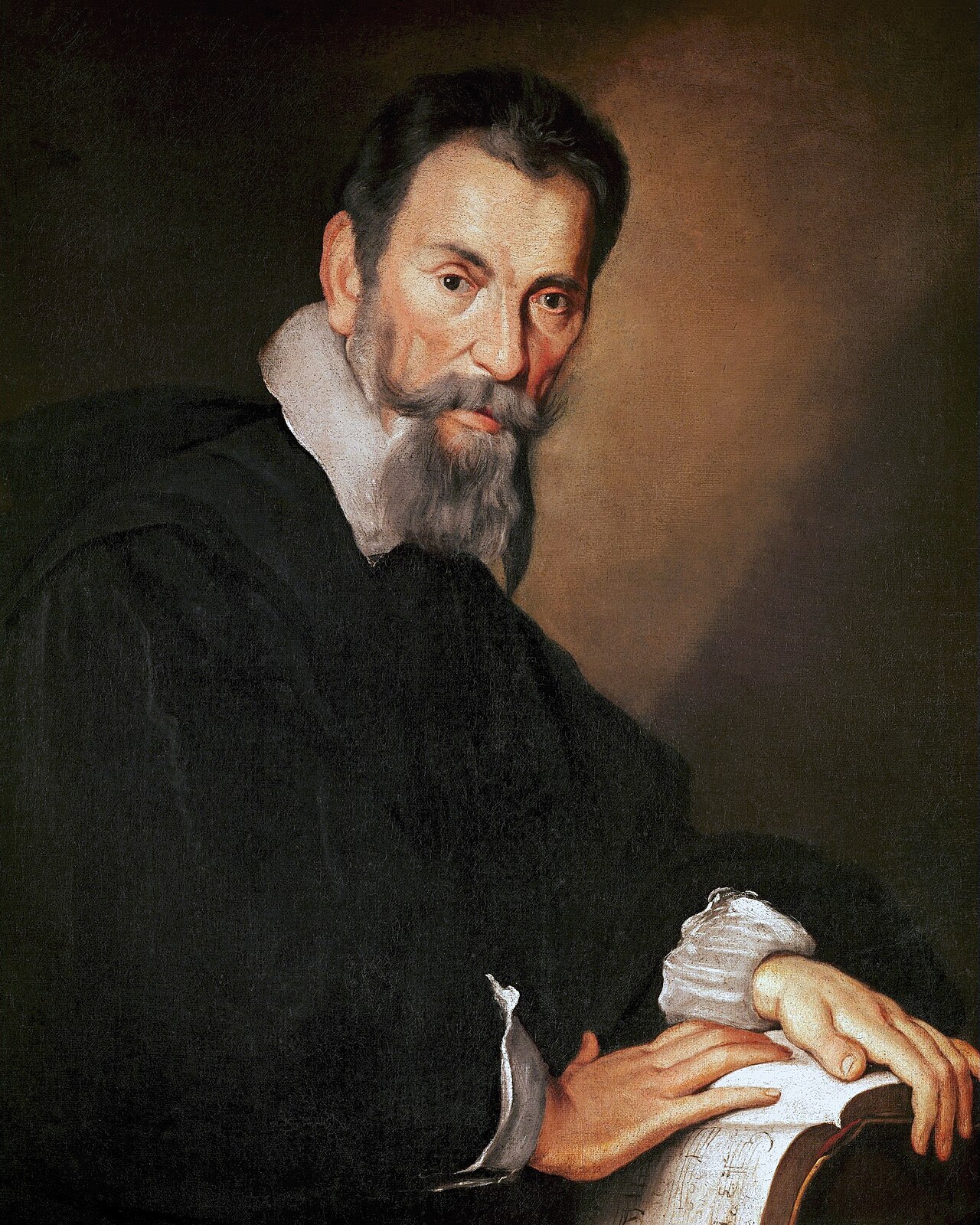 And then of course there is what Monteverdi does with this piece: text and echo. Sublime. The echo, which you initially think only repeats, actually acquires its own text and its own message. And then the masterful moment when the choir returns in full force with "Omnes!".
Lauda Jerusalem was taken in a controlled manner. It is clear that there was no search for excessive spectacle here. Beautifully sung, fluently delivered.
In Sonata sopra Sancta Maria the instrumental ensemble was given carte blanche to prove its abilities. And it did so fully. The complete color palette that Monteverdi had provided was picked up by the instrumentalists, while the soprano sang the cantus firmus in a particularly convincing and gentle manner.
And then I thought: that sounds so beautiful. Because while the soprano sounded somewhat sharp in the previous piece, here there was suddenly a completely different tonal color present.
Ave maris stella is for me one of the most polyphonic sections of the entire Vespers. It was brought forth excellently and the different stanzas were each interpreted in a different way. It was a piece that sounded beautiful and thus provided an excellent introduction to the Magnificat.
Monteverdi's Magnificat is a piece in which many combinations of voices are used. This also created considerable movement on stage. This is not in itself disturbing, although it may seem a bit strange for listeners who followed the concert at home, since the program was broadcast live.
At beatam me dicent the cornetti players switched their instruments for recorders. It again gave that different color and different approach. The intimacy with Ecce enim ex hoc also came across. And there I can really only repeat my message: that was so beautiful… I would gladly have more of that.
In the final Gloria Patri et Filio Monteverdi pulls out all the stops one more time, including his echo effect again. And there the ensemble could and rightfully let that full sound resound as the final notes.
The last note rippled through the Carolus Borromeuskerk, undoubtedly reaching out to the square outside. And then it remained silent for several long seconds, as if the audience needed to recover from this musical peak, from this bath of sound, from these beautiful notes from the San Marco!
And then it burst into deafening applause that developed into a standing ovation. I can understand the enthusiasm of the audience. And I share it too.
What Meunier and Vox Luminis brought this evening was a performance that would not be out of place at the site of creation itself, in the San Marco in Venice. Meunier chose a direct, powerful approach and an interpretation of the vespers based on the fullness of sound. That worked very convincingly and provided a very beautiful performance that will stay with me for a long time as monumental and a bath of sound, but not necessarily as the most nuanced.
WHEN? WHERE? WHAT?
Friday 28 August 2026 / Laus Polyphoniae 2026
20u Carolus Borromeuskerk / Vox Luminis
Photos: Leslie Artamonow, Johan Jacobs, AMUZ