

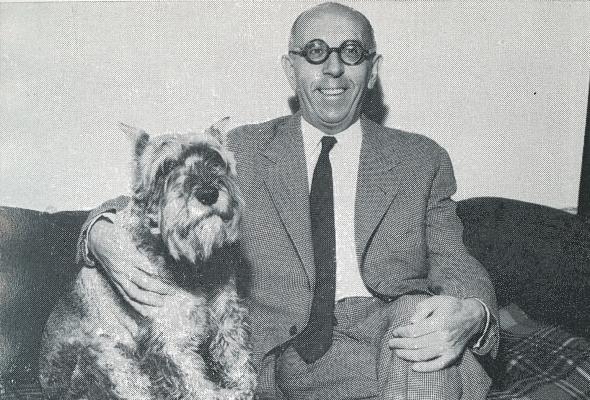
Marcel Poot is an intriguing figure in the Belgian music landscape whose influence extends far beyond his music alone. In the second half of the 20th century, he also played an important role in the Queen Elisabeth Competition and founded a professional association for composers in Belgium. But first and foremost, he remains a renowned composer of his own country.
The musical legend of Marcel Poot
Marcel Poot grew up as the son of Jan Poot, a playwright and director of the Royal Flemish Theatre in Brussels, surrounded by the various arts. At a young age, Marcel Poot played clarinet in the Vilvoorde wind orchestra. He also took organ lessons. Poot continued his musical studies in Brussels, Antwerp and Paris where he studied with, among others, Lodewijk Mortelmans, Paul Gilson and Paul Dukas.
After his studies, Poot founded in 1925, together with eight other fellow students, the group De Synthetisten (Les Synthétistes) around the master Paul Gilson. This Belgian group is comparable to the Groupe des Six (with among others Francis Poulenc and Darius Milhaud) that emerged in France in the 1920s. These young composers worked together to improve Belgium's conservative musical life with innovative compositions. From 1939, Poot was affiliated with the Royal Conservatoire in Brussels where he taught counterpoint and harmony.
In 1960, Marcel Poot founded the Union of Belgian Composers (or Union des Compositeurs Belges). This professional association aims to improve the visibility of Belgian composers and promote the work of member composers. Marcel Poot was chairman of this union until 1972, after which he was succeeded by Antwerpian Willem Pelemans.
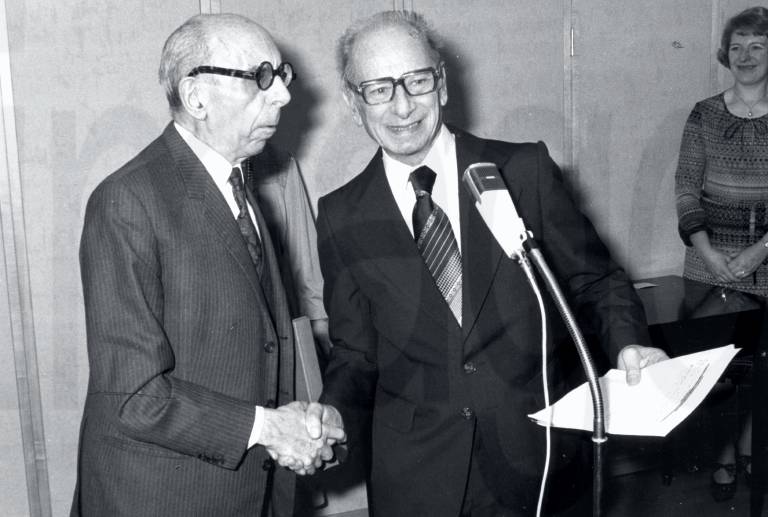
Poot and the renowned Queen Elisabeth Competition share a special bond. In 1960 he composed the set work for the piano edition and between 1963 and 1980 he was chairman of the jury. During his period as chairman, he composed several commissioned works for this competition.
In 1984 the composer received the title of baron for his cultural achievements.
The seven symphonies
Marcel Poot's symphonies break through the dogma that has loomed over the heads of many composers since Beethoven: you don't have to compose nine symphonies to be a good symphonist. In his first symphony, which Poot wrote as a young composer in 1929, he discovers the genre. He explores its possibilities. Various influences (such as Maurice Ravel, Richard Strauss and not least jazz) resound throughout the orchestra. Yet the distinctive style of Marcel Poot is already audible in this early work. The symphony has a lively and optimistic character with moments of drama, lyricism and romanticism driven by playful, rhythmic spontaneity. The BRTN Philharmonic Orchestra conducted by Hans Rotman offers the first recording of this remarkable symphony.
These characteristics return in greater contrasts in Symphony No. 2 (1938). Humour and tone colour are two other characteristics of Poot's style that come to the fore beautifully in this symphony. The second theme in the first movement ("Allegro risoluto", cd1 track 4) is the old nursery rhyme Klein, klein kleuterke and is first presented by the oboe on top of a bed of violas. The melody is then taken over by other instrumental groups, divided into smaller fragments, after which motifs from the first theme and the nursery rhyme are played off against each other. The recordings on this cd are historical. Belgian conductor Franz André, to whom Marcel Poot dedicated the symphony, originally released the symphony together with the Belgian National Radio Symphony Orchestra under the Telefunken label.
After an expressive "Lento", Symphony No. 3 (1952) begins with a rhythmic first theme. Dance rhythms are also the pulsating force throughout the other two movements. As in his first symphony, clear influences are also audible in this third. The influence of Le sacre du Printemps by Igor Stravinsky is clearly heard in the final movement where a heavily accented rhythm opens the movement in a continuously changing metre. The programme notes describe this third symphony as Poot's last exploration of the genre while the four remaining symphonies are by an "older Poot" with a mature style. This symphony in the performance of the Moscow Symphony Orchestra conducted by Frédéric Devreese had appeared on cd before in the Marco Polo series Anthology of Flemish Music in 1996.
Symphony No. 4 (1970) and Symphony No. 5 (1974) are both characterised by the use of powerful rhythmic motifs with great contrasts between faster and slower movements. As in Poot's preceding symphonies, he makes use of classical forms and structures. The finale of his fifth symphony is, however, an exception to this. Instead of a classical form, he reverts to the baroque ritornello form in which eight tutti and solo passages alternate.
For his Symphonie nr. 6 (1978) Poot returns to the classical structure with two faster outer movements and a slower middle section. Power and tonal color are again very important in this symphony. Unisons in the melody accompanied by accents from the percussion are the driving force in the first movement. These energetic passages are alternated with lyrical phrases to increase the contrast. The wind instruments are very important for the color of this symphony. The first movement is colored by the woodwinds accompanied by the strings, while in the second movement the brass instruments set the mood. Color becomes even more important in Symphonie nr. 7 (1982). The rigid classical formal structures break open and take on a freer and more organic structure with tonal color, rhythmic motives and pseudo-imitation as protagonists.
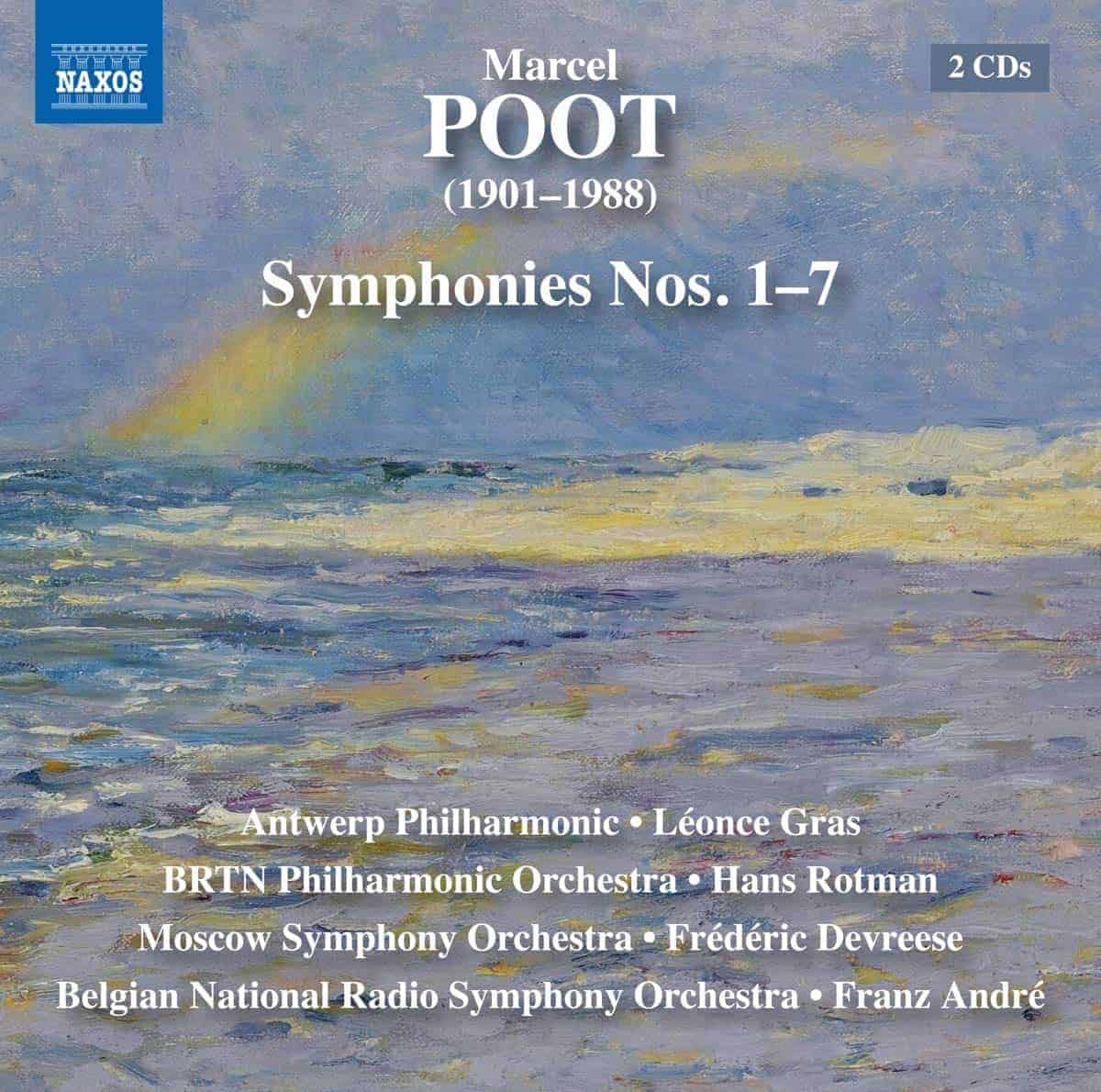
By means of these symphonies this double cd illustrates Marcel Poot's search for a personal style. The impressionist landscape by Belgian painter Anna Boch fits perfectly with the atmosphere and is therefore a beautiful choice for the album illustration.
4.1/5
WHO: BRTN Philharmonic Orchestra conducted by Hans Rotman (cd1 track 1-3), Belgian National Radio Symphony Orchestra conducted by Franz André (cd1 track 4-6), Moscow Symphony Orchestra conducted by Frédéric Devreese (cd1 track 7-9 & cd2 track 4-12), Antwerp Philharmonic conducted by Léonce Gras (cd2 track 1-3)
WHAT: Marcel Poot (1901–1988): Symphonies Nos. 1–7
RELEASES: NAXOS 8.574292-93
ORDER: JPC