

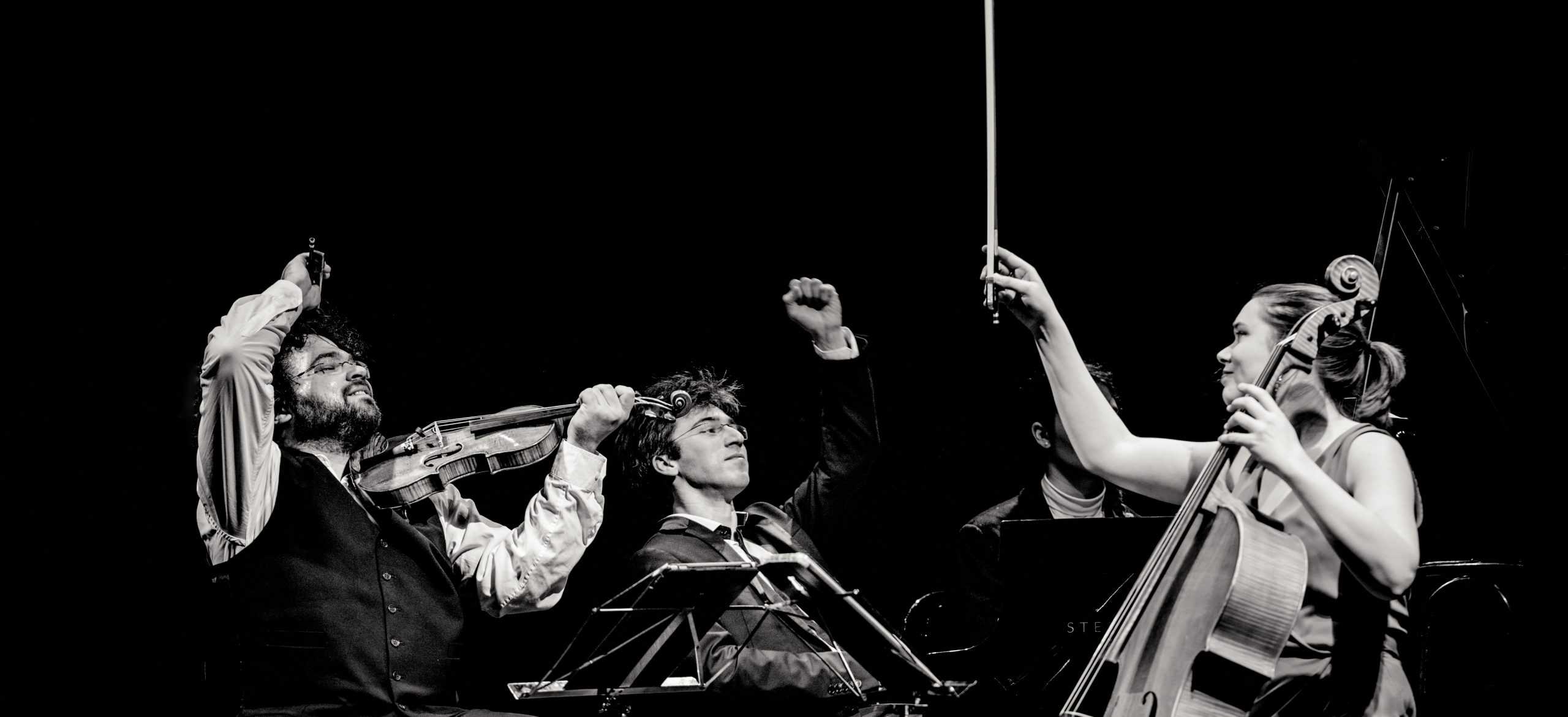
The trio performed at the prestigious Wigmore Hall this past weekend and earlier this month made its debut at the BBC Proms in Glasgow. In both cases, Joseph Haydn was also on the programme, the composer of whom Trio Gaspard is recording all piano trios. The first cd of this complete edition for Chandos Records sounds very promising and already whets the appetite for more.
Since its founding in 2010, Joseph Haydn (1732-1809) has held a central position in the repertoire of Trio Gaspard. This multinational piano trio, a combination consisting of Greek-Albanian violinist Jonian Ilias Kadesha, British cellist Vashti Mimosa Hunter, and German-English pianist Nicholas Rimmer, is unambiguously a fan of the Austrian founder of the genre. In an interview with the Luxembourg website Pizzicato, the trio makes clear what makes Haydn so special to them: "Wir finden, dass der Genuss von Haydns Musik sich mit jedem Hören erhöht, die Bizarrheit und Surrealität werden offensichtlicher, seine Pointen schärfer und seine Witze absurder. Man glaubt es kaum, aber Haydn war ein Rebell!"
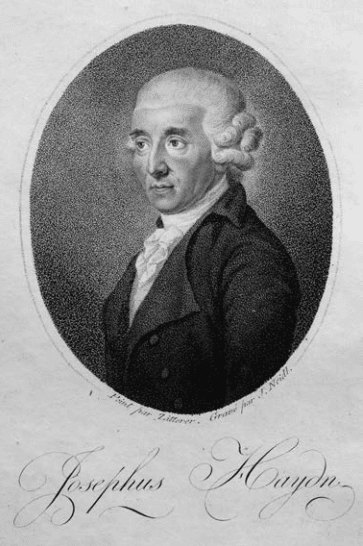
A rebellious attitude is indeed not the first thing you would associate with the usually affable Haydn. There are undoubtedly composers who caused greater upheaval in the history of classical music. But Haydn certainly played a pioneering role as the man who thoroughly explored and deepened the possibilities of both the string quartet and the piano trio. Or, to be more precise, the sonata for pianoforte with the accompaniment of violin and cello, as the genre was still called in the 18th century. Although Rimmer himself dismisses this role of primus inter pares of the piano as a 'myth'. "It quickly becomes obvious that all three instruments in the ensemble have much more fluctuating and complex roles to play than may appear to be the case at first glance", as it says in the cd booklet. This is certainly the case in the selection of five relatively late trios that are pressed onto this first volume, dating from 1785 and 1794-1795.
À la hongroise
With this complete edition of the thirty-nine piano trios, Trio Gaspard deliberately does not proceed in a chronological manner. And the groups of three in which Haydn usually had his piano trios published are also not taken into account. "Instead we have aimed to create an interesting and contrasted 'programme' of trios for each volume, so that it can be listened to in a single, satisfying sitting." In addition, each recording will also contain a brand new work by a contemporary composer. Someone who is inspired by one of the pieces on the cd. On this debut is Johannes Fischer (°1981), a German percussionist who uses the ritornello – the refrain – from the "Andante" of Haydn's trio in D (Hob. XV: 7) for his
. He puts this short passage in a loop and brings small changes and expansions with each repetition, causing the music to gradually drift away from the original ("Andante, precise and relentless"). In this way, the piece can also be performed backwards. But whichever direction one chooses, the result remains repetitive and will therefore, presumably, work more on the nerves of many than be experienced as a pleasant encore. Very curious to see what other musicians and composers such as Helena Winkelman, Olli Mustonen and Patricia Kopatchinskaja will come up with …How different it is when Trio Gaspard tackles the real work! With the piano trio in A (Hob. XV: 18), written by Haydn during his second visit to London (1794-1795), the ensemble immediately sets the tone. In the lively "Allegro moderato" – by far the longest movement, as is customary for the first movements of these works – not only is there singing to the heavens, but the agogics in the development also contribute to the vitality of the discourse. The somewhat gloomy yet beautifully intoned "Andante" paves the way for a playful finale à la hongroise full of joie de vivre, witty accents and gracefully trilled notes. This catchy Allegro is very much reminiscent of the rondo ("Presto") from Haydn's best-known piano trio, the so-called 'Gypsy Trio' (Hob. XV: 25), which you can listen to below and will of course be featured later in the series. It is proof, and not the last, that this oeuvre harbours many more earworms.
Increasing listening pleasure
What follows are the two brothers – or sisters, if you will – of that so very popular Gypsy Trio, published together as opus 73 in October 1795 by the British publisher Longman & Broderip. Haydn dedicated this musical triumvirate to the widow Rebecca Schroeter (1751-1826), his London pupil and muse. From the impeccable phrasing of the moving opening movement ("Allegro"), via the brief yet serious and strictly rhythmed Andante – "une sorte de convoi funèbre à la Mahler", as French musicologist Marc Vignal writes in the CD booklet – to the somewhat misleading resignation of the three-part finale with its agitated intermezzo ("Allegro ma dolce"): thanks to the many plot twists, the piano trio in D (Hob. XV: 24) effortlessly holds the listener's attention. So does the following trio in F sharp (Hob. XV: 26), a very rare key in Haydn's chamber music output. With a minimum of means, Haydn takes a journey through all manner of keys in the winding first movement ("Allegro"). Trio Gaspard opts for a remarkably sluggish opening: a successful approach to gradually intensify the animosity thereafter. The "Adagio" forms a beautiful point of rest. The elegant piano part is performed with great finesse and enlivened, while the strings each go their own way. Haydn closes with a traditional minuet that, apart from the strikingly lovely mood of the trio, places a resolute organ point in the coda.
The two piano trios that follow, in D and E flat, are of earlier make (Hob. XV: 7 and 10). Both were published in spring 1786 as part of a triptych. The continuously cheerful variation series with which the trio in D opens ("Andante") inspired not only Johannes Fischer, but also shows Trio Gaspard at its most joyful. Also in the exuberant finale, by the way ("Allegro assai"), which excels in self-confidence and – like the intervening "Andante" – in striking articulation. The two-part piano trio in E flat is perhaps the work in which Haydn most presents himself as a rebel. Thus the "Presto" is full of surprises, and repeatedly misleads both musicians and listeners. Trio Gaspard embraces Haydn's at times surreal rebellion with the necessary deliberation and a good dose of panache. In doing so, it underscores its own conviction that period instruments are not necessary to penetrate this music. And that listening pleasure indeed increases with each hearing.
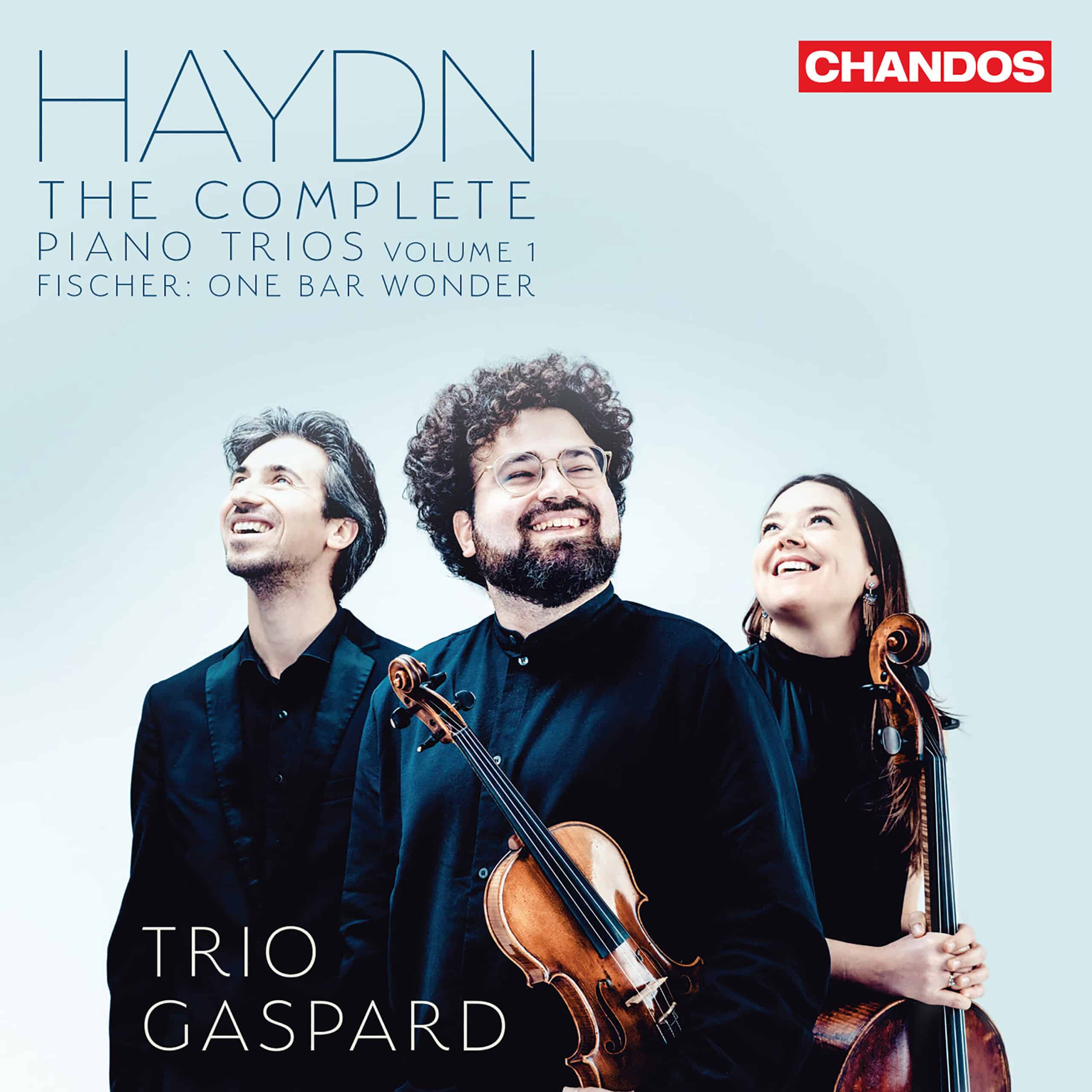 5/5
5/5
- WHO: Trio Gaspard (Jonian Ilias Kadesha [violin], Vashti Mimosa Hunter [cello], Nicholas Rimmer [piano])
- WHAT: Haydn. The complete piano trios. Volume 1. Piano trios nos. 20, 23, 32, 38 and 40 (Hob. XV: 7, 10, 18, 24 and 26), Johannes Julius Fischer (°1981) – one bar wonder (Hob. XV: 7 remixed)
- LABEL: Chandos Records, CHAN 20244 (1 cd)
- PHOTO: © Andrej Grilc
- ORDER: JPC