

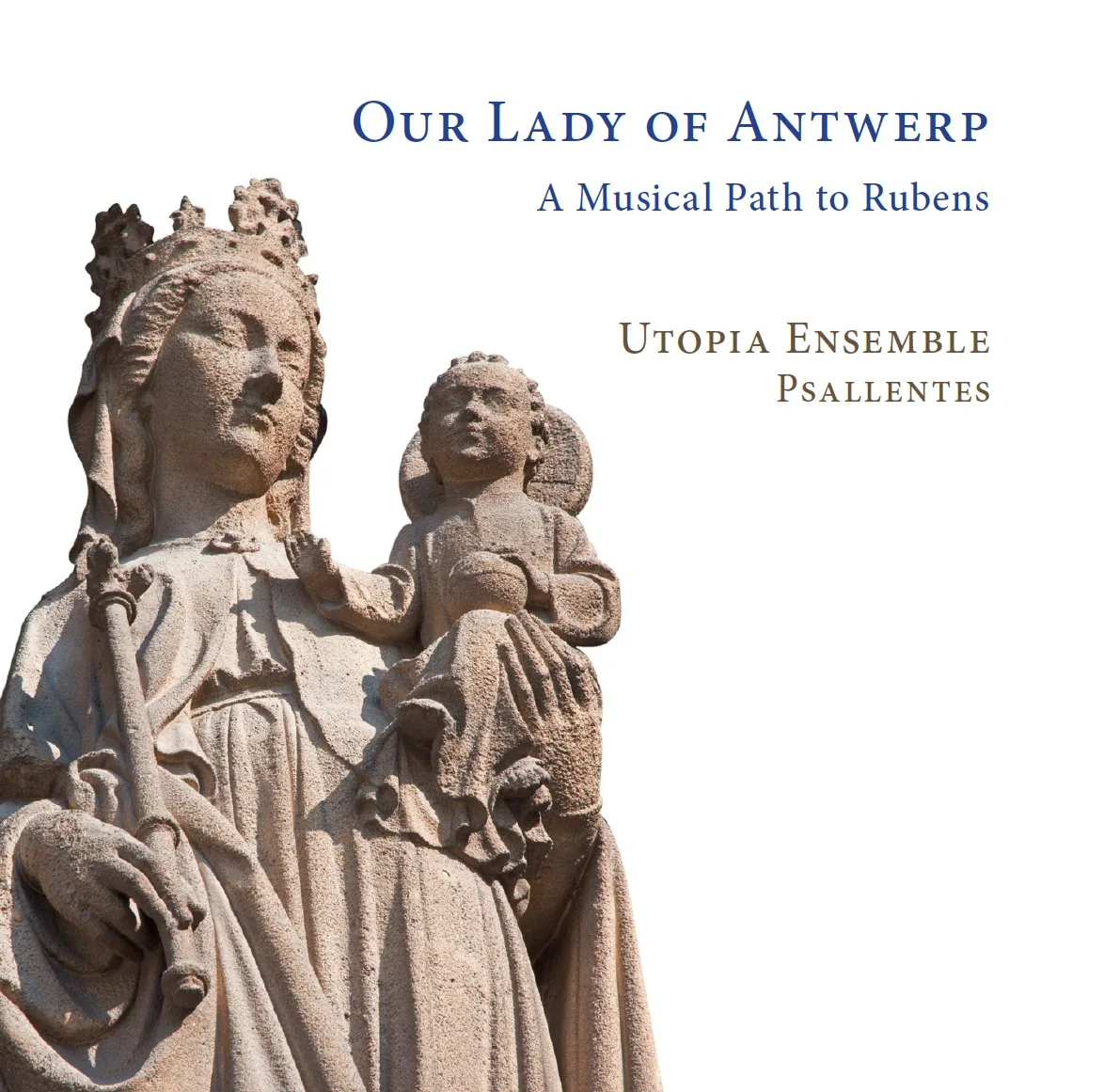
You notice it: I write "the Cathedral" (after all, there is only one Cathedral in Belgium), because I am just as enthusiastic about the building where I spent a large part of my youth as about the cd that now lies here in pre-release for me.
We know Utopia from their top performance at Laus Polyphoniae 2026. This cd not only continues that musically perfect line, but also adds an important historical dimension to it. The earliest choir masters of the Antwerp Cathedral pass in review. I am particularly pleased about this, because I cannot recall that anywhere there is a recording that examines this period so chronologically. Well-known names such as Jacob Obrecht, Jacobus Barbireau and Peter Philips are alternated with less frequently performed composers such as Noel Bauldeweyn, Antoine Barbé, Geert van Turnhout and Matthias Pottier. In this way, an interesting musical timeline emerges that allows the listener to experience how Flemish polyphony developed over more than two centuries.
The alternation between the polyphonic works of Utopia Ensemble and the Gregorian chants of Psallentes proves to be particularly successful. These Gregorian interventions do not function as simple interludes, but create a liturgical framework within which the multi-voice singing gains extra relief. Perhaps admirers of Gregorian chant, accustomed to the monks of Solesmes, will raise their eyebrows at such freshness and drive from the ladies of Psallentes. Listen with a different ear, however, and you will quickly be won over by this interpretation. Let us be especially glad that these professional singers, together with Hendrik Vanden Abeele, are tackling this crucial repertoire.
And then there are the motets, which are a pleasure to listen to from beginning to end and often also constitute a true revelation. I find it difficult to single out one work as an example from all this vocal richness. Let it then be Ave virgo speciosa by Séverin Cornet. A relatively short motet, beautifully composed, immediately accessible and sustained by a text that perfectly matches the Marian character of the program. All these elements are brought into ideal balance by Utopia: nothing is overstated, but nothing disappears into the background either. The performance is natural, convincing and sustained, exactly as this music demands. The result is simply blissful to listen to. The Holy Virgin herself would undoubtedly have appreciated it.
A voice from the past, that of the Cathedral, comes to life again. The various mass movements come from various masters and thus form a varied whole. I wondered for a moment why Geert van Turnhout is represented with a secular madrigal amidst all this liturgical music. Possibly because so little of his work has been preserved, you know about religious wars. But actually, that question is irrelevant. The opening work by Johannes Pullois is in itself a fascinating mixture of motet and chanson, something in which these composers were true masters. Utopia sets the bar high and keeps it at that height throughout the entire recording. The voices blend effortlessly and the transparency is maintained, even in the most complex passages.
The recording quality also deserves praise. It seems as if it was recorded from some distance away. That gives a nice overall picture without losing the definition and transparency of the individual voices. It is a successful combination of the acoustics of Gothic vaults and the directness of a seat in the front row of a concert hall.
As I wrote at the beginning: my enthusiasm has multiple reasons. There could well be more projects like this. Knowledge of these scores and their performance practice has long since disappeared into archives and into a collective ecclesiastical memory that has largely forgotten this tradition. All the more pleasant is it that Utopia and Psallentes bring this music back to life. In this way, old music becomes a new experience again.
Finally, something about the title of the project, because there is also a nice idea in it. Our Lady of Antwerp immediately sounds more international than our soft and familiar "Onzelievevrouwke". And A Musical Path to Rubens is spot on, because all this music certainly formed part of the cultural and spiritual atmosphere in which Rubens lived and worked. This cd deserves international attention. Because Psallentes and Utopia are among the absolute international top, but also because the Cathedral deserves that attention more than ever.
On Sunday, September 27, you can go to the CD release concert in Antwerp Cathedral