Our opera houses have been complaining for years about a lack of funds. A few million in subsidies are swallowed up by the three opera houses in Belgium, but 'it is never enough,' and we have absolute understanding for that. Cooking costs money, and high-quality culinary cooking costs a lot of money. Good food sells itself, but it must be paid for. It works, with large, medium-sized and clearly also minimal budgets, or even with personal contributions to help cover the costs, in the hope that something will come back. The latter unexpectedly worked for the founders and opera fans behind the opera organisation set up two years ago, whose goal is to bring opera where you rarely to never get to hear and see it, a stone's throw away from the opera houses in Antwerp, Ghent (if it ever reopens), Brussels and Liège.
Without passion it is not possible to achieve what Hadrien Baudot ('ordinary' working man, opera lover and tenor soloist) and Senne Martens (director since recently) achieved with the concept that the Belgian Opera and Operetta Organisation stands for, and with its very first production they achieved a remarkable success. They sold 2,800 tickets in Heist-Op-Den-Berg, Oudergem, Namur and Leuven (2 x). Almost five sold-out halls. A good outcome to cover their own contribution and who knows, to be able to set aside a small extra for a next production. Bring it on!
Amateurs and professionals with the same passion bring Opera, with a capital O...
So the two opera fans wanted to programme an opera, all well and good, but you have to find singers, an orchestra, a chorus, a conductor, a director – oh no, not that one, because he is a co-founder of the association – set builders, lighting, costumes and so much more. And then venues, and cautiously hoping that the authorities, local and higher up, might be willing to support your project. The latter only worked in Leuven.
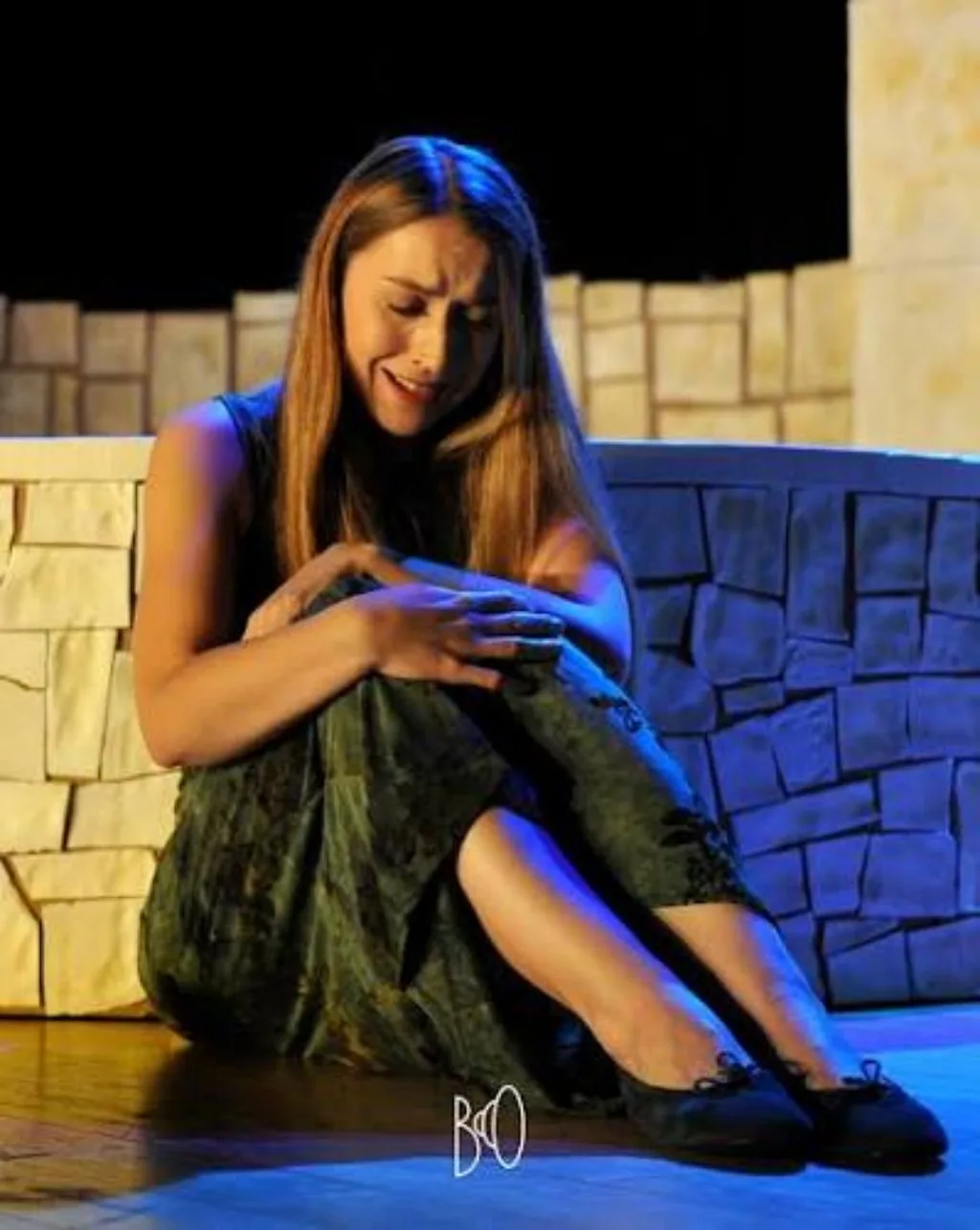
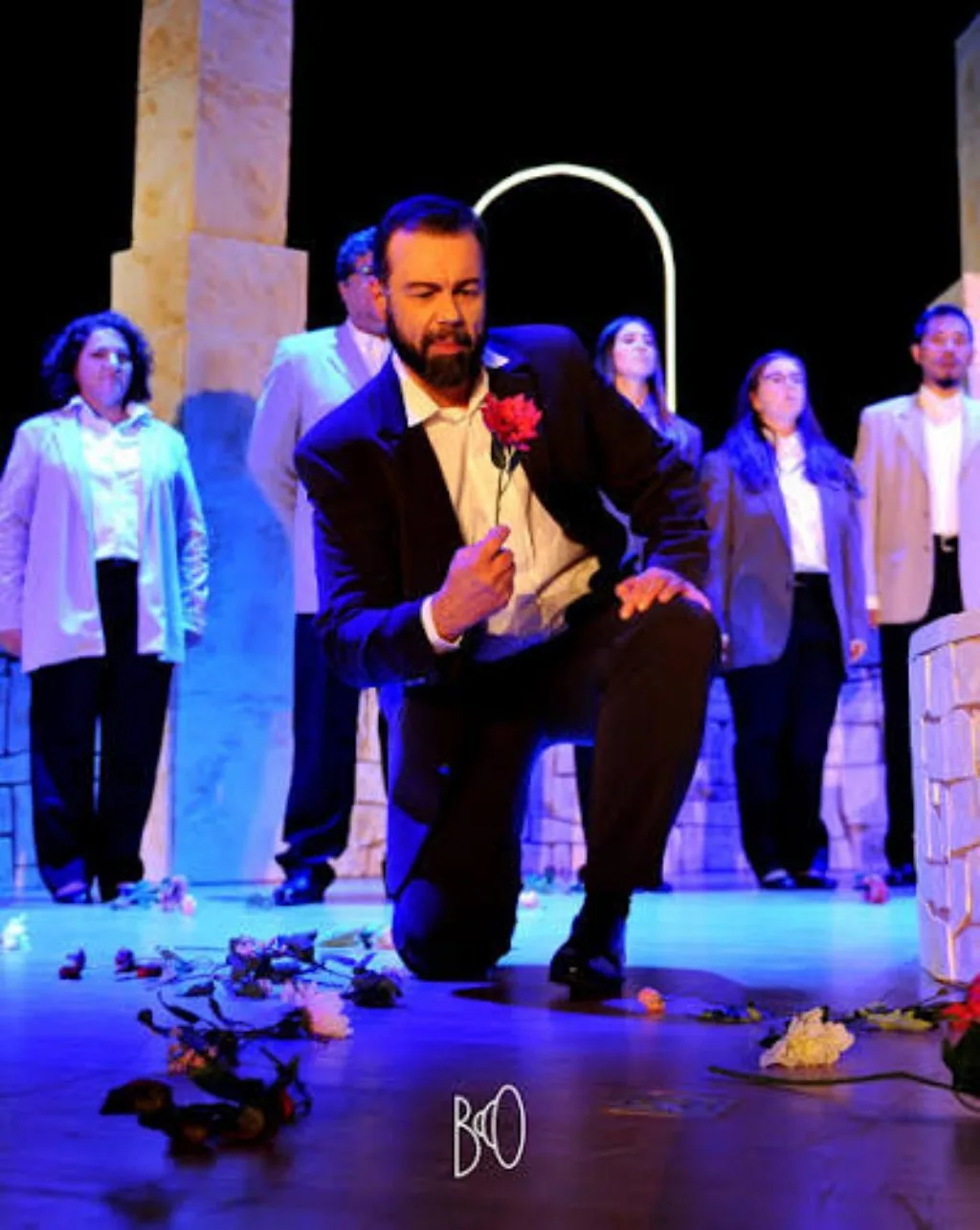
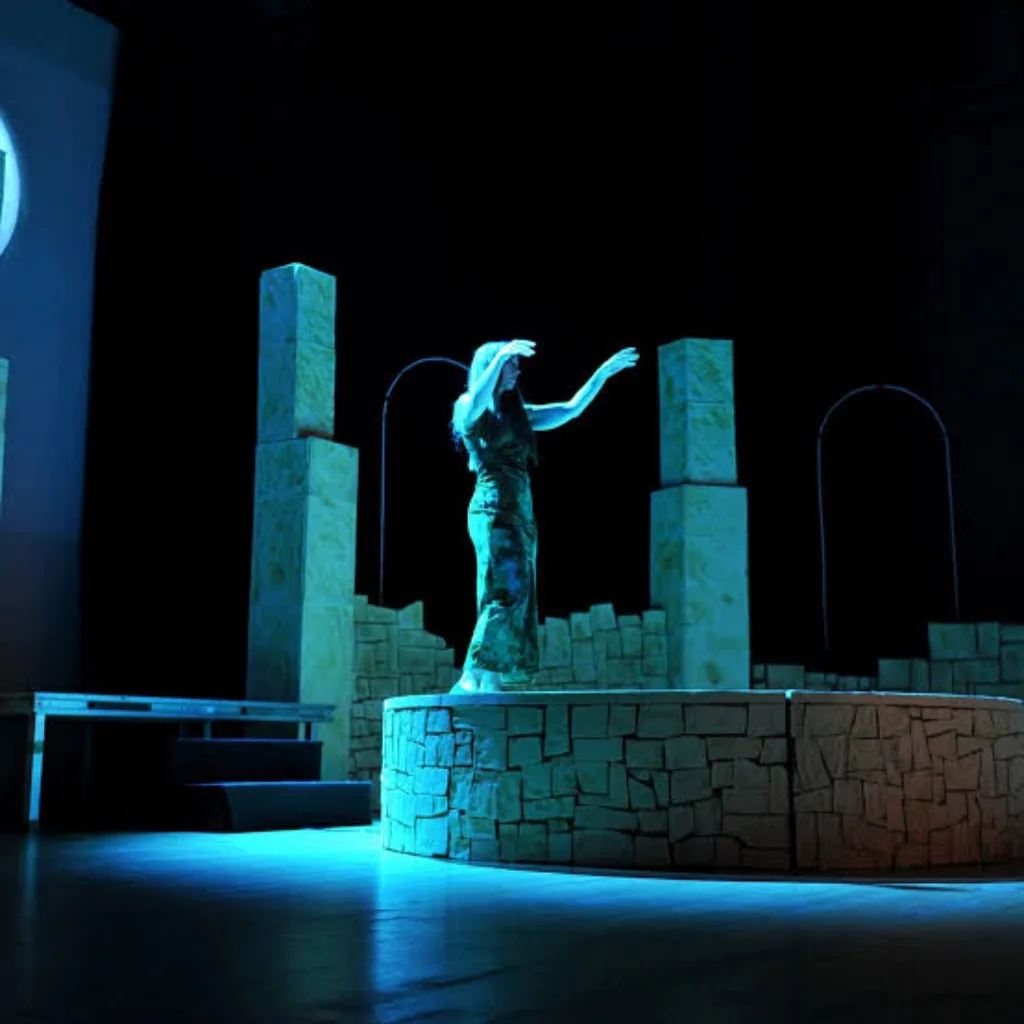
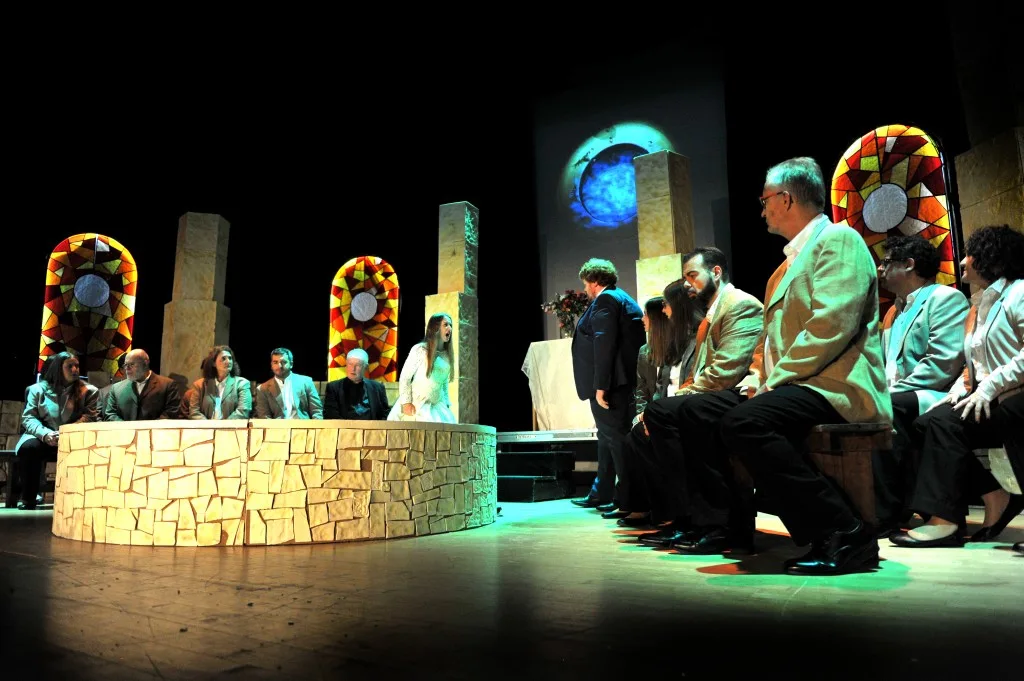
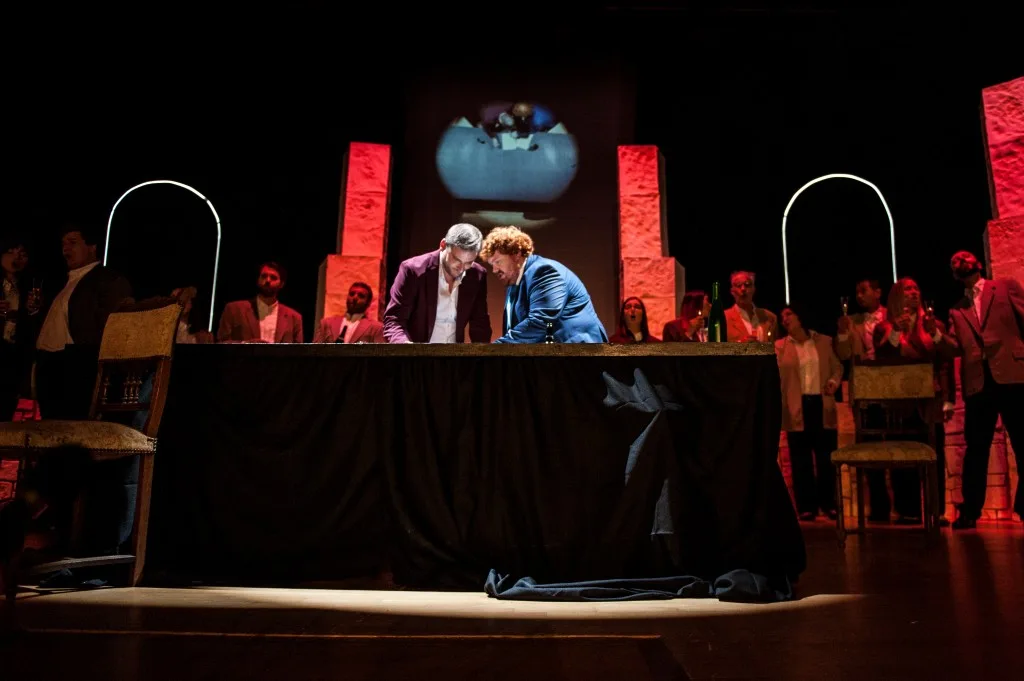
In a casual chat with Hadrien and Senne we learn that they both made the set themselves, because yes, "how else?", and spent hours cutting polystyrene blocks into the shape of sandstone that had to look somewhat weathered, so they scorched the edges a little brown. From this came small walls, turrets and a fountain (without water) as the central point on the stage around which everything takes place. A simple set, beautiful, well balanced: you can see a castle in it, an enclosing wall of an old castle too, and the fountain is not merely a fountain. From above it is projected onto a screen in the middle at the back of the stage, forming an all-seeing eye that watches everything and bears witness to the enormous love drama, the political intrigue, the domineering masculinity against which female submission is decisive, a woman who wants to free herself from the yoke and a man who is tired of all forms of tyranny, envy, hatred and other ignoble conduct thanks to the true, alas unattainable love. Literature through the centuries is full of such stories, and so is history. Wars have been fought over them, murders and other ugly violence took place, and sadly the latter still happens far too much.
It is bizarre, really, that all those horrors have led to moving writings, plays and operas. One of these is Lucia di Lammermoor, composed by Verdi's great model and predecessor Gaetano Donizetti (1797-1848). With this opera the composer succeeded in ennobling dramatic suffering, as it were, into something uplifting, so that the gates of heaven open of their own accord. That is quite something. Whatever the case, it was enjoyable from start to finish, at times particularly poignant, dramaturgically sober and therefore all the more emphatic, in an opera that moved some in the audience to rub their eyes dry.
Sick singer, really?
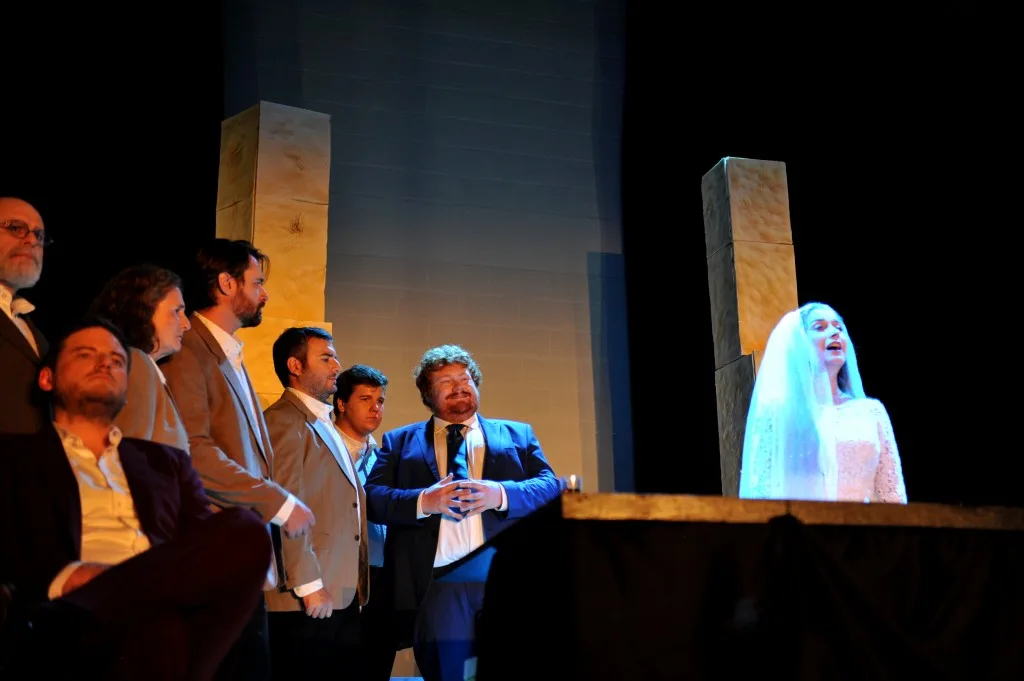
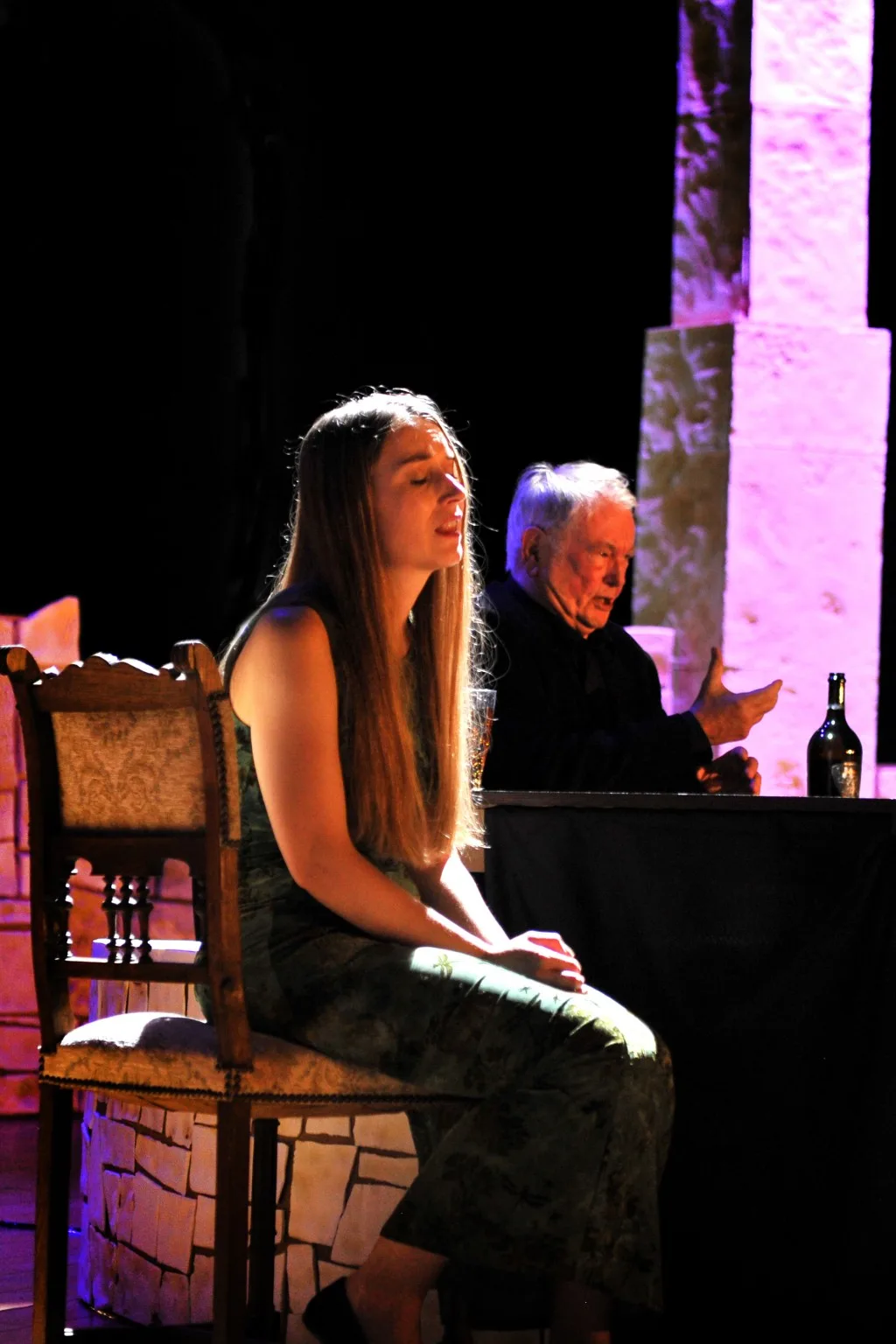
Afterwards there were people who did not believe that the leading role was sung by the scheduled Emma Posman, because at the start it was announced that she was ill and had trouble with her voice. With amazement these people noted that it was indeed the one and only real Emma, who could talk fluently with some effort. Her voice, dear me! Despite that affliction that had been plaguing her since the morning, she managed, thanks to a Higher Power or whatever, to portray a Lucia that I hereby absolutely recommend to all opera houses. The timbre, the agility, the softness and the volume, the technique and everything a creamy soprano should have, Emma has, and beyond that she is above all extremely musical, living her role in depth. You get a Lucia who radiates calm, even in her madness – the bizarre happiness that gives the impression she is in the middle of a psychosis and suffers from schizophrenia, caused by the forced break with her beloved and the marriage imposed to secure her brother's political power. What a moving performance, musically impossible to improve, acting equally perfect. I am writing this a day after the performance and am still deeply impressed.
More voices that charm
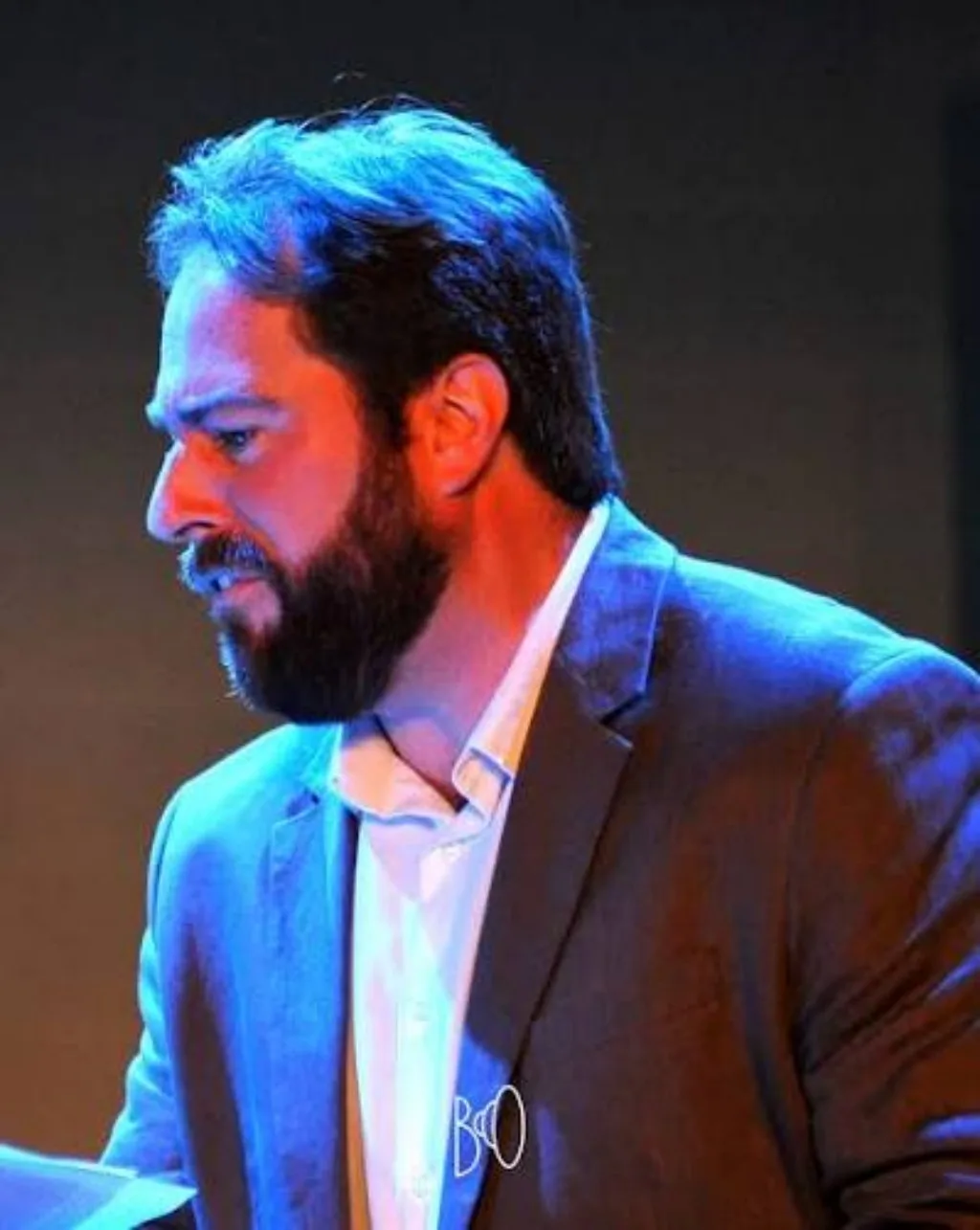
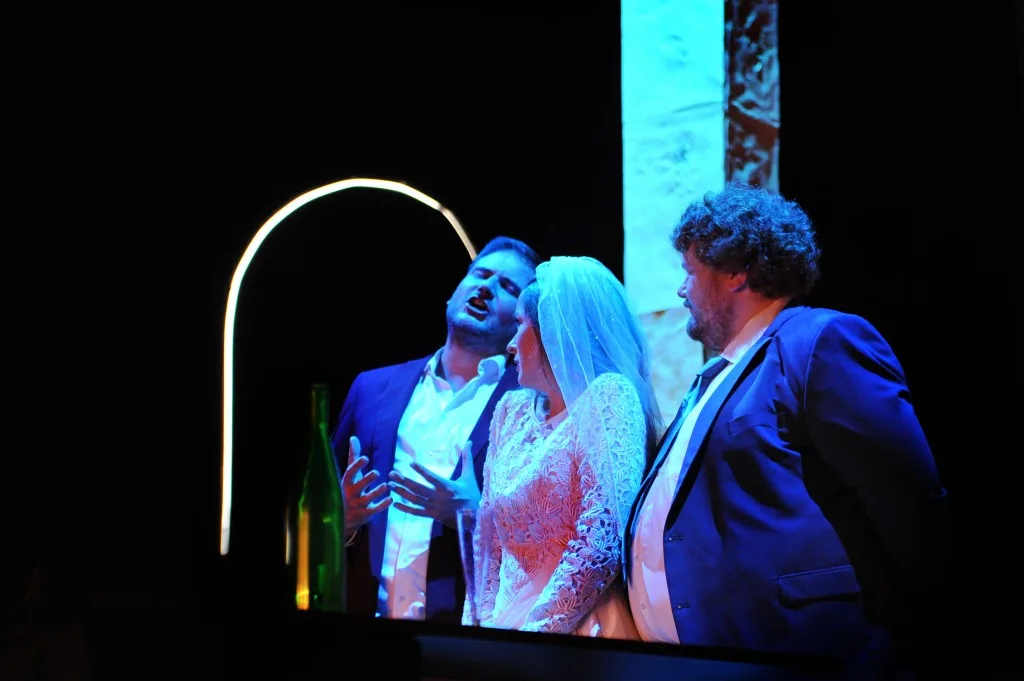
Besides Emma Posman, there was also the initiator of the project, the tenor Hadrien Baudot, who at times reached the quality of a heroic tenor. Whether he surpassed himself in the emotion of his role as the rejected lover, which clearly touched him deeply, I do not know. In any case, he sang excellently, with control and power, and acted accordingly, and it would not surprise me if, should some opera managers and talent scouts have seen this, he were offered roles in the Italian romantic repertoire. Equally strong was the still only 28-year-old baritone Jean Denis Piette, with a powerful bass colour and full-fledged volume. A clever role interpreter, actor and singer. He brings the whole palette of colours that fits perfectly with his role of manipulator and opportunist, a dominant brother without feelings. The experienced bass Marcel Vanaud, who gladly supported the young enterprise in its setup, delivered a understanding and forceful priest's role with a voice that commands respect. Motherly warm sounded Inez Carsauw with her good-hearted mezzo. Her role in this opera is modest, but important in standing by Lucia.
The other smaller roles did not immediately fulfil the great expectations, but they by no means disturbed the whole. The chorus pulled out all the stops and sounded particularly convincing, very Italian with good articulation. It blended with the orchestra - ConForte Symphonic from Zemst, consisting of 'amateurs' supported by a few (semi-)professionals, which only got better as the performance progressed. I have once attended operas in our own country with an orchestra that did not do any better, to put it very politely. So you see that dedication, commitment, whether voluntary or not, but with passion and conviction, can pay off. All of this was perfectly led in musicality and tempi by the Scottish-Italian conductor Dario Salvi.
Look forward together with us to the next production. Which, who, where and when is still an open question, but I hope together with everyone who is enthralled by this young organisation in particular and by opera in general that it will not take too long.