

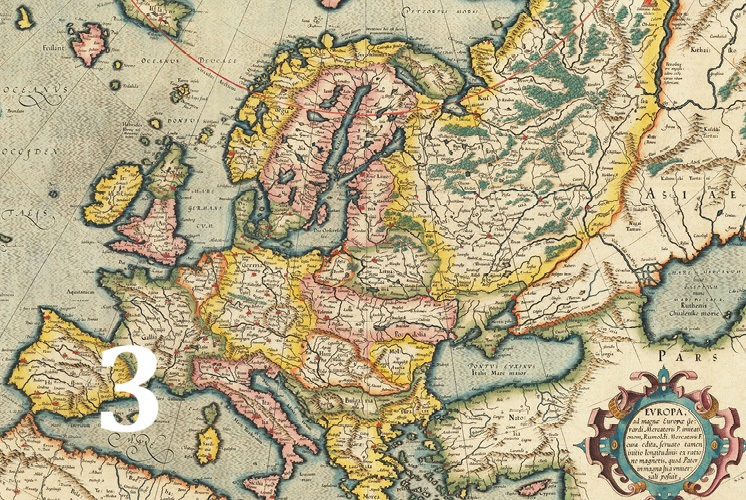
Exactly two months from now, on 27 August, the three final days of Laus Polyphoniae 2026 begin: the annual high mass of early music in Flanders. This year's theme is Polyphonic Europe circa 1600. In three instalments I will take you through the programme, here and there with a personal touch.
Laus Polyphoniae – final days
Laus Polyphoniae officially came into being in 1994, as a logical sequel to Antwerpen93, when polyphony was first deliberately promoted as a cultural "brand". And there's immediately a small personal note to add: I was there at the time as a student volunteer, armed with a stack of paper tickets – it was still an era without QR codes and scanners – and thus had the unique opportunity to watch the cream of the international music world pass by up close.Some dreamed of pop stars then (and there was nothing wrong with that), but give me in that period the Gabrieli Consort, Weser-Renaissance or Concerto Italiano. That kind of heroes, so to speak.
Today, in 2026, Laus Polyphoniae still stands proudly, in full glory and with undiminished ambition, and this proves itself once again in the final festival days.
Thursday: trendsetters avant la lettre
The concert day begins as by now customary at 1 p.m., with a programme that forms as it were the "soundtrack" to the story of trendsetters and followers — terms not used around 1600, but whose concept is particularly recognizable. Flanders, and Antwerp in particular, developed into a flourishing music market, where music was printed, reprinted and distributed. It was, in other words, a place where ideas spread faster than today some digital files – although the latter seems hard to believe.
In the evening Capella Mariana takes us to the illustrious court of Emperor Rudolf II in Prague, which like Antwerp was a cosmopolitan hub. The names of the composers who were active there may not ring a bell today – unless you also own an exceptional collection of obscure LP recordings from the 1950s and 60s with Bohemian baroque and polyphony – but that makes the discovery all the more interesting.
I'm particularly looking forward to the Mass of Harant, and also to the way that music is brought into dialogue with work by Lassus and De Monte. With six singers on stage we can expect a sound that is both transparent and flexible, with enough tension to hold attention effortlessly.
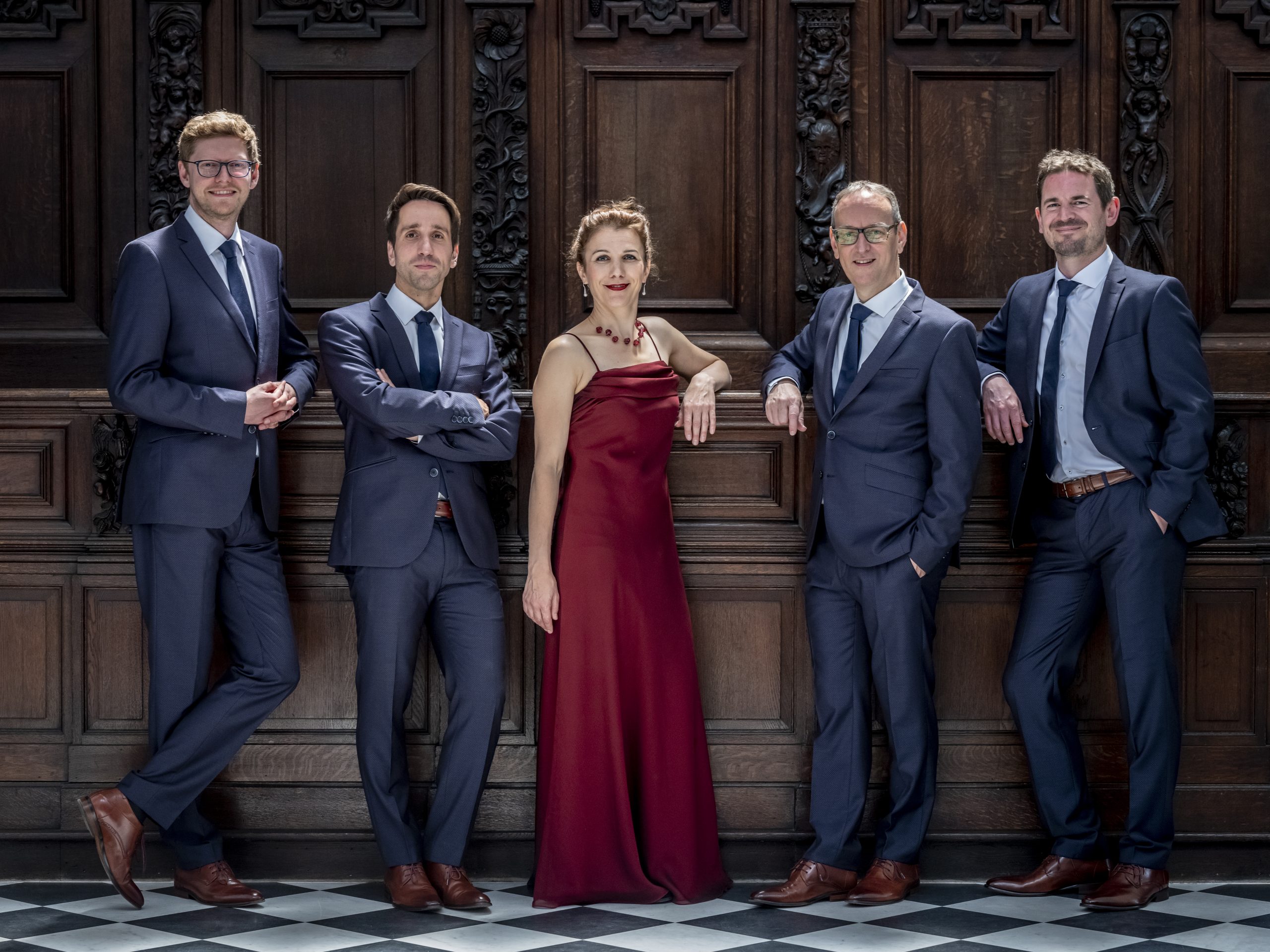 The evening is concluded late in Sint-Joriskerk by "our" Utopia. I admit it: a little bit of chauvinism rears its head. Their interpretation of Lassus, and in particular the Lamentations, has something special about it. The music itself has meanwhile become firmly anchored in my head, but they manage each time to give it a new dimension.
Do they sing it as it "really" sounded in the sixteenth century? We will never know for sure, but somehow it feels as if this music here, through Flemish voices, lands just a bit more naturally – if only because I find it hard to imagine how a Spaniard sings Lassus… though I catch myself at the same time thinking that that might just be pure nonsense.
Friday: no rest, but top level
Friday 28 August has "only" two concerts, which on paper seems almost like a mercy for the by now slightly tired festival-goer. In reality it's simply two absolute highlights.
At 1 p.m. New York Polyphony brings works by Hassler and Handl. The Missa super Dixit Maria appears on the repertoire of many choirs, but I'm fairly confident that these four gentlemen will give it a completely unique interpretation, effortlessly combining southern suppleness with a more northern clarity.
And then the evening concert, where I can without shame return to an earlier title above these articles: nec plus ultra. The Vespers of Monteverdi, performed by Vox Luminis, really little needs to be added to that. The concert is not by chance sold out, because this combination guarantees a kind of musical fireworks that is at once breathtakingly refined and overwhelmingly lavish.
Monteverdi's Vespers remain a masterpiece in which liturgy and an almost operatic drama come together. Once written as a calling card, but today still able to fill churches and halls with ease. This is precisely the kind of concert that defines a festival of this calibre.
Saturday: farewell with perspective
And then there is the inevitable last day.
The summer school concert deserves a special mention each year. Every year I promise myself to take part in it sometime. "Perhaps after my retirement!", I say then. But fortunately there are plenty of others who procrastinate less and throw themselves into it wholeheartedly. What the participants achieve in such a short time remains remarkably impressive, as does the way the instructors guide them through it.
For the very youngest there is an activity the same day at Steinerschool Hibernia, where music is brought to life in a playful way. The image of children being taken along on a sonorous "raft" by an ever-changing world is not only beautiful, but also hopeful: this is how the seeds are sown for a next generation of listeners – and thus for future editions of Laus Polyphoniae.
 In the evening, the festival moves to its grand finale in style, with The Gesualdo Six, recently described by De Standaard as "the cathedral choir in pocket format". I'll admit it: my weakness for English choral music is great, and I prefer to hear it performed by English singers. There is much to debate about performance practice, styles and historical accuracy, but when they sing this music, something that has been happening in their tradition for centuries, it simply feels very right.
Au revoir!
A more than worthy conclusion to yet another impressive edition. It must become increasingly difficult for the organisation each year to maintain that high bar, let alone raise it, and yet they manage to do so repeatedly, thanks to an intelligent combination of theme, repertoire and performers.
I'm already looking forward to 2027. But first: let's especially enjoy what we have, here and now. I hope this little series has only whetted your appetite.
click here for info and tickets