


When you get this book in your hands, you don't immediately start reading. Or perhaps you do first read the foreword by Joost Maegerman, director of the Antwerp Symphony Orchestra. It contains a very beautiful sentence and I can't resist quoting it: "All musicians have their own instrument, but the concert hall is the instrument of the entire orchestra". Beautiful, isn't it? But the history of this concert hall is presented in such an attractive and luxurious edition that you immediately want to start leafing through and looking at all those photos of the orchestra, the hall and of course the conductors Elim Chan and Philippe Herreweghe, interspersed throughout the entire work. And preceded by a separate photo essay by Michiel Hendryckx with impressions referring to "significant" places from this history. And also packed with reproductions of historical documents, posters, monuments, portraits, old programmes, prints, and all of it impressively designed, with a ribbon bookmark because you won't read this book all at once.
[caption id="" align="alignleft" width="200"]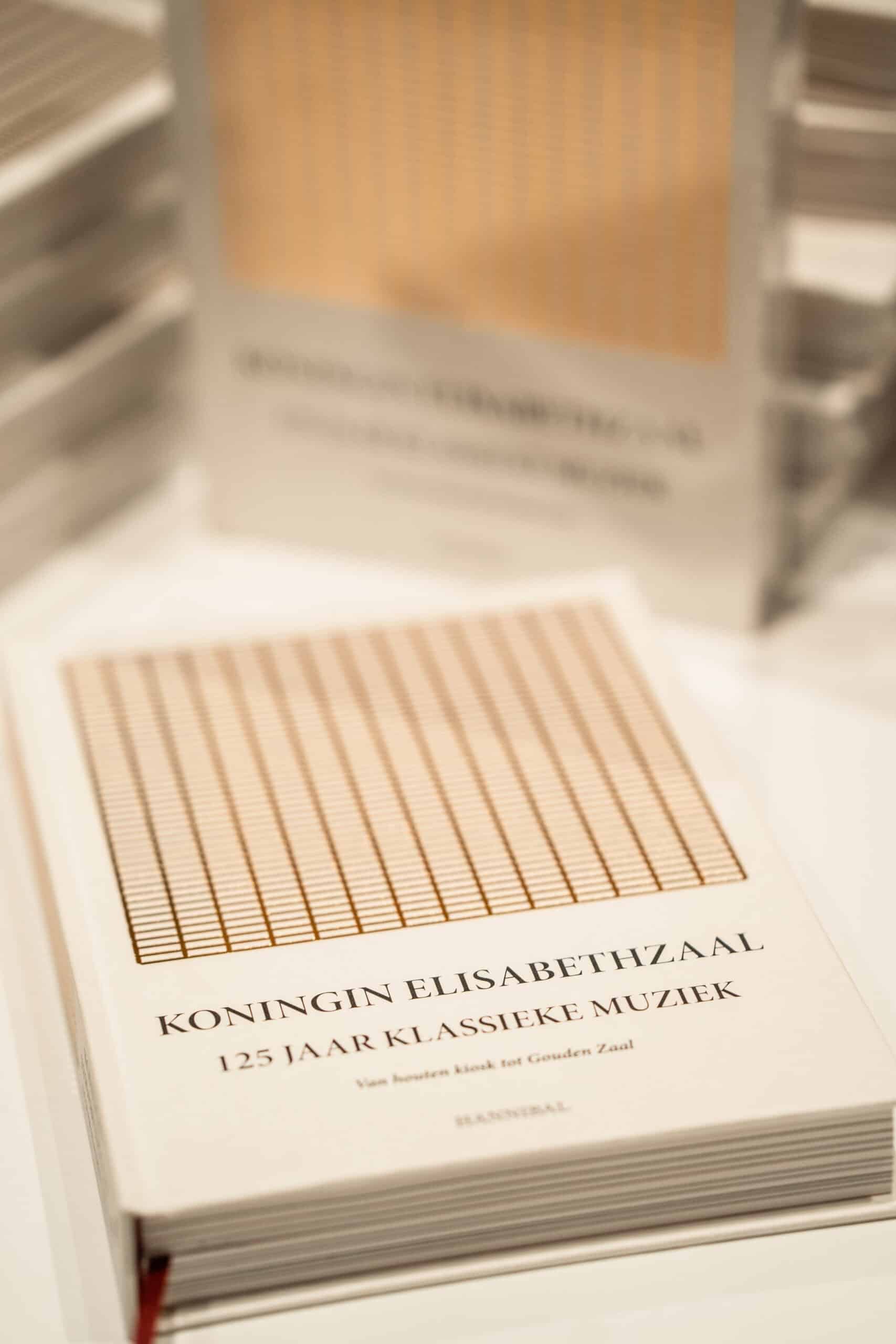 © Vicent Callot[/caption]
That same word "impressive" can certainly also be used for the nine chapters about 125 years of Elisabethzaal and about "the city around the hall" and "the hall in the city." History aplenty then, from concert life in the 19th century, Belle Époque, Interwar period and wartime and now. Lovers of how it was and how it became will more than satisfy their curiosity. And this history begins long before what Antwerp residents now know as De Harmonie or the new city reception desk. It all starts with the founding of the Société Royale d'Harmonie d'Anvers in 1914 and with the construction of their new premises in 1846 on Mechelsesteinweg. A selection of Antwerp's musical life in the Belle Époque is presented in vivid detail by Jan De Wilde through the many concerts with, among other things, creations by Benoit (De Schelde, De Oorlog, De Rubenscantate), a Liszt and Wagner festival, the inauguration of the Flemish Opera. Hedwige Baeck-Schilders describes how concert life continues in wartime and notes how many works by Flemish composers were performed in those times. Another curious phenomenon you read about in Hans Boers' contribution on sponsorship. After the First World War, the important German colony in Antwerp had shrunk considerably and so had their patronage. Before that war, there were about a thousand members of the Royal Harmony Society, a third of whom were of German origin…Another little-known fact also comes up. From 1915 to 1936, you could visit the Festival Hall of the Zoo for Cinema Zoölogie! In the pages about the Interwar period, you naturally come across the names of, among others, Flor Alpaerts, Lodewijk Mortelmans and Lodewijk De Vocht, Jef Van Hoof, Jan Blockx. Mahler and Richard Strauss also came there to conduct.
The book also contains the story of the orchestras that played in that Festival Hall. And how it all evolved from the "house orchestra" of the Royal Society for Zoology to the Philharmonie and the current resident orchestra Antwerp Symphony Orchestra, and how the programming changed. At the end, there's also the "case study" on how the new hall came about. "From wooden kiosk to Golden Hall" is indeed the subtitle of the book. But the entire book itself also deserves the name of "case study", given how thoroughly all these many aspects of 125 years of classical music in Antwerp are addressed here.
In a final chapter, the current director advocates for Elisabethzaal as the home of his resident orchestra. And he describes how, once as a young musician, he had the impression of having ended up in a dusty city theater, but can now enter into "that shoebox shape as in the iconic Vienna Musikverein", the new golden Elisabethzaal. Joost Maegerman has even more praise for the hall, its sound colour and quality. He gets goosebumps just thinking about it: "that the main concert of Laus Polyphoniae would take place in a Queen Elisabeth Hall filled to the rafters." Curious what the people at AMUZ would think of that. Rightly so, the director wants more collaboration between the orchestra and the hall to preserve the classical music offering in the city. A unique role. And in this he receives full support from the director of Antwerp Zoo, the Royal Society for Zoology, who was allowed to introduce this concluding chapter.
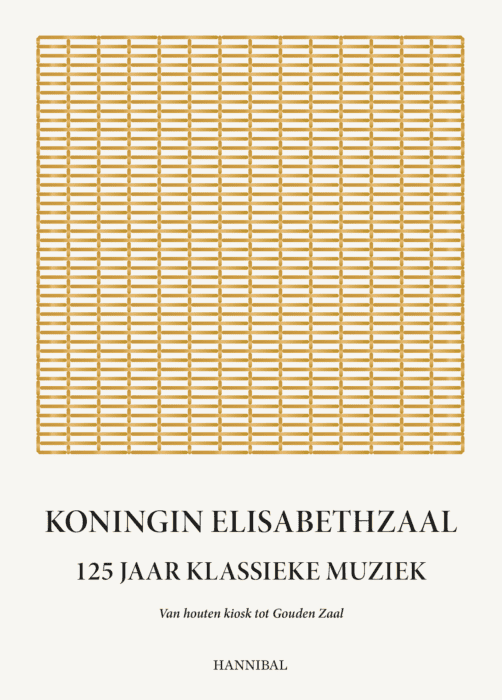
WHAT: Queen Elisabethzaal. 125 years of classical music. From wooden kiosk to Golden Hall
WHO: Hedwige Baeck-Schilders, et al.
PUBLISHER: Hannibal, 223 p.