

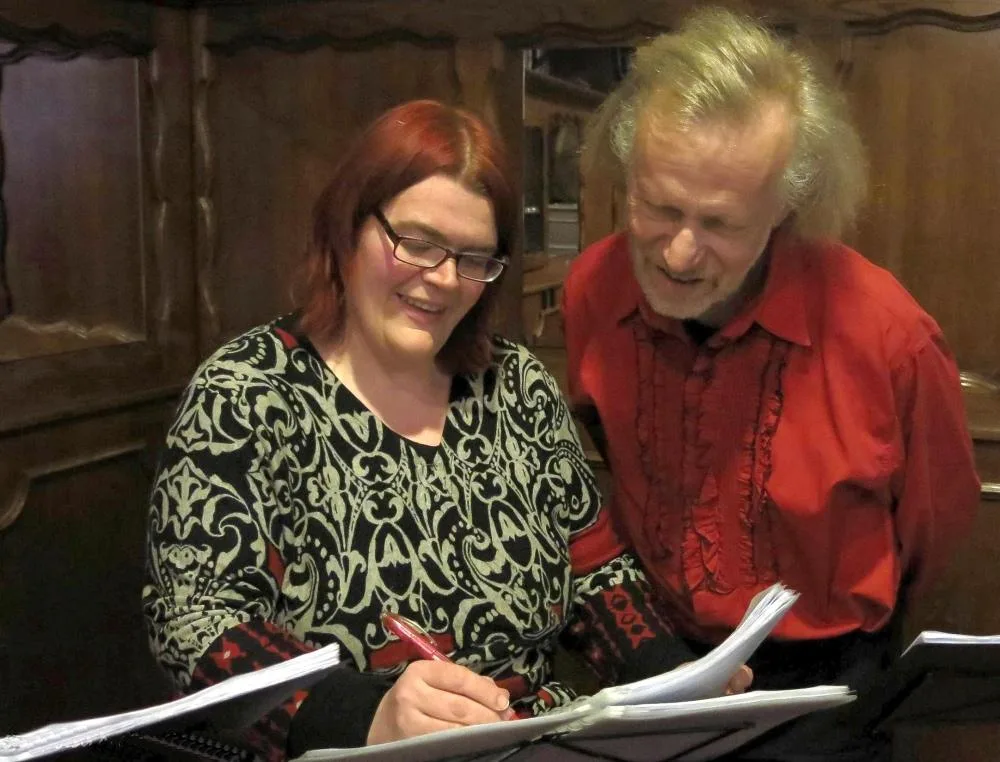
Stella found her way through polyphonic folk music and her love of history. Jan, on the other hand, has been active for years as a singer, instrumentalist, conductor and researcher of early music. His transcription work on the masses of George de La Hèle from the Plantijn-Moretus collection illustrates his thorough knowledge of the repertoire.
From these two different perspectives, they looked back on an intense week of Laus Polyphoniae.
A late discovery
Remarkably, Jan only discovered the festival relatively late.
"Our first joint edition was in 2019", he says. "I had of course known about Laus Polyphoniae for longer, but I was active for years within the Halewijn Foundation. As long as those summer courses continued to function at a high level, I had little reason to look elsewhere. Through friends, I was eventually pointed to the Summer School of AMUZ. My first participation immediately felt like a revelation, but at the same time also like coming home."
Stella adds.
"Jan was mainly busy singing, composing, teaching music and leading ensembles at that time. Because of that, he overlooked the festival for years, despite his enormous passion for early music."
Two different paths to the same music
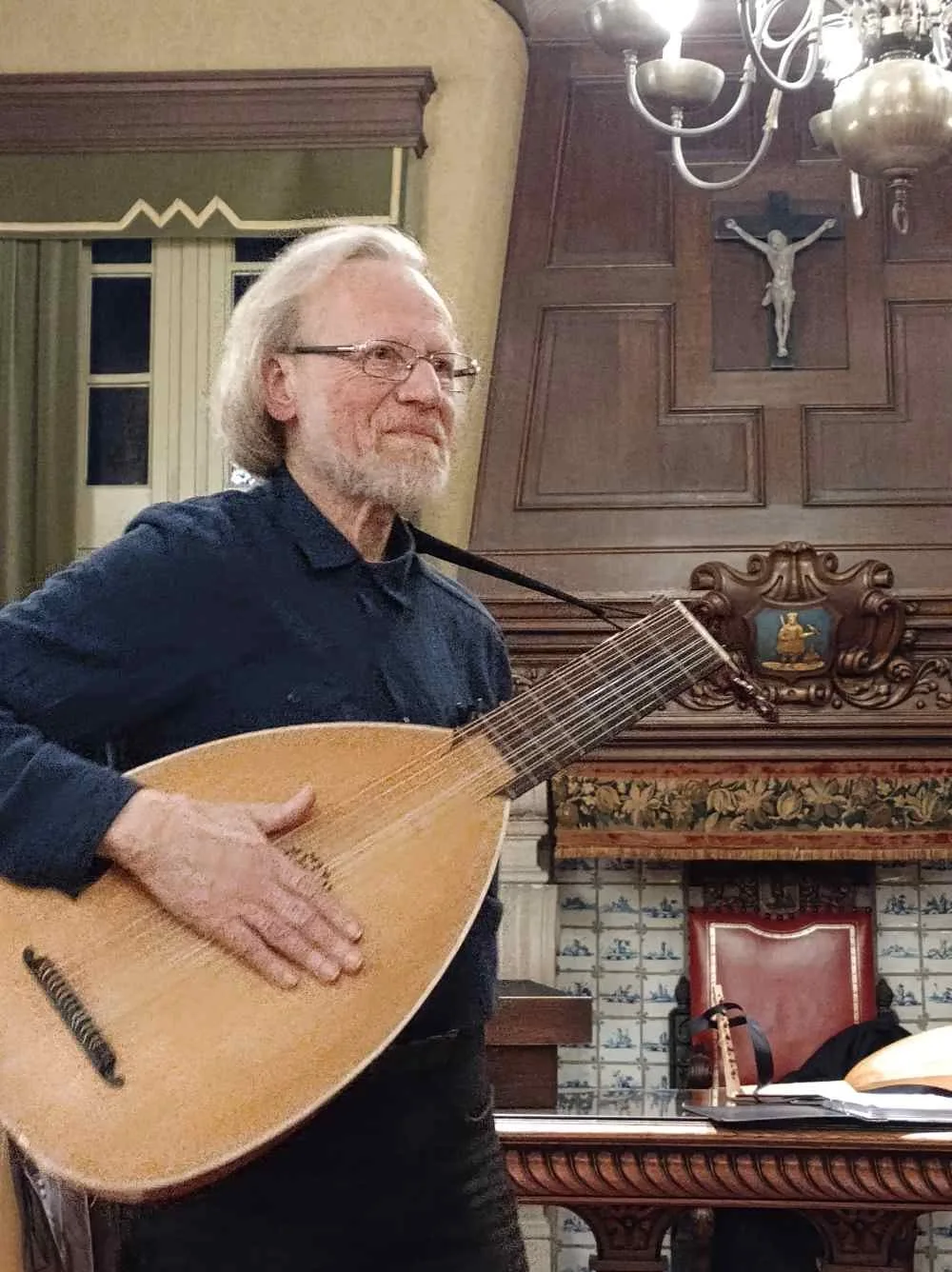 Their love for early music also originated in different ways.
Jan was attracted by musical notation and composition techniques.
"I have always been fascinated by how music was written, how it evolved and how performers deal with it. From that interest, I naturally came to polyphony."
For Stella, it all started with folk or folk music.
"I originally knew nothing about Franco-Flemish polyphony, but polyphonic singing has always moved me. Especially in Scandinavian and Eastern European singing traditions, you hear the beauty of voices creating something together. Jan often listens to harmonies and structures. I tend to listen to voice colours, sonorities and meanings. We find each other most in smaller polyphonic ensembles with one singer per part, without or with non-predominant instruments. And that's how we often end up with the same music. Jan takes me along in early music, but is meanwhile himself also enthusiastic about folk and interesting crossovers."
Three words for Laus Polyphoniae
When asked to sum up the 2026 edition in three words, Jan doesn't need to think long.
Necessary. Compelling. Imperfect.
"Necessary because this music must continue to live. Compelling because different ensembles reinvent the same repertoire again and again. And imperfect because music is ultimately something living. Perfection does not exist. Fortunately, because it is precisely that which keeps it intriguing and makes me want to keep going to concerts."
Stella chooses a different angle.
Intense. Transparent. Restrained.
"It was a particularly intense week. Moreover, I noticed that the polyphonic music from the end of the 16th century sounds more transparent than before. It remains music with counterpoint and all voices sound equal, but the text becomes more important and more intelligible. The exaggerated stretching of syllables disappears, making the music often quieter. At the same time, this edition was strikingly religious or somber in tone and often quite restrained or melancholic in atmosphere."
Utopia as the absolute highlight
Both agree remarkably on one concert.
The concert by Utopia with the Lamentations was Jan's highlight of the festival.
"The expression came directly from the text. No exaggerated theatricality was needed. Everything worked."
Stella also names Utopia her favourite.
"The ensemble clicks together more beautifully than ever before. The power and intensity during the performance made a huge impact."
In addition, she was particularly surprised by Huelgas Ensemble with the psalms of Claude Le Jeune.
"That concert was full of variety, dynamics and colour, played with variations in instrumentation, voice combinations and arrangements. It felt fresh and lively. I find it intriguing that the old and experienced Paul Van Nevel does not stick to the previously trusted performance practice, but dares to take the experiment."
Another discovery was the young French ensemble Près de Votre Oreille.
"That was English music by, among others, Dowland, performed by young musicians with sparkling energy and a fine sense of beauty. The combination of voices and instruments worked beautifully."
Other moments that linger
For Stella, apart from the concerts, especially the documentary about Orlando di Lasso continued to resonate.
"That was an impressive film that portrayed his life and the spirit of the times in a very human and accessible way."
Furthermore, one singer repeatedly caught her attention: British bass Jimmy Holliday.
"I heard him sing in three ensembles that week. Already in the large choir of Tenebrae he caught my attention. What struck me most was how much calm and joy he exuded. You could see a kind man who visibly enjoyed the repertoire and every note he sang."
For Jan, one of the highlights was in the Summer School.
"The discovery of composer Robert Fayrfax was a revelation for me. His music is incredibly inventive. He combines complex structures with a naturalness that feels almost miraculous."
Not everything convinced
Of course there were also moments that were less appealing.
Stella had high expectations of Ensemble Irini, because the programme aligned with Byzantine traditions that captivate her.
"I was hoping for a more authentic Byzantine singing style. Because of that, the choir fell short of my expectations."
Jan, on the other hand, had mixed feelings about the Dowland programme by Scherzi Musicali.
"Perhaps we expected too much from it. The lute quartet played excellently, but some loud singers didn't convince me. Moreover, I like repertoire that is less well-known. I often enjoy unexpected discoveries more than the great classics."
Learning to listen, learning to read
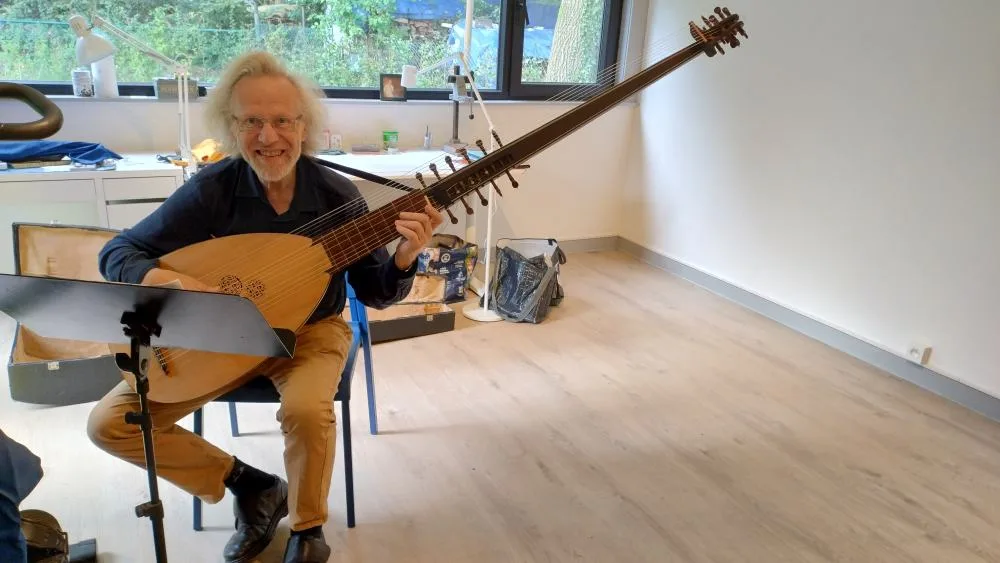
One of the most striking insights came to Jan from working with historical sources.
"People often think that transcribing amounts to rewriting, but that's not right. Old notation systems contain complex rules and exceptions. During the Summer School you sing directly from historical sources and sometimes discover interpretation problems that remain hidden in modern editions."
For Stella, the festival above all confirmed her fascination with the evolution of polyphony.
"You hear the music becoming more transparent. Text and music come closer together, while it still remains polyphony. I found that fascinating to discover."
More than just concerts
Although they also visit other festivals, Laus Polyphoniae remains a special place for both of them.
"It's nearby, but more importantly: the focus here is really on early music," says Stella. "At other festivals there's often baroque added or performances are programmed excessively to make the music sound popular. That appeals to me less."
Next year they are looking forward to, among other things, Passie van de Stemmen in Leuven, where a Spanish Ensemble with a programme honouring the 500th anniversary of the birth of Philip II with music from the Flemish and Spanish court chapels has caught their attention.
What would you like to see on the programme next year?
Jan doesn't need to think long.
« Nuper Rosarum Flores » by Guillaume Dufay. That is an absolute masterpiece and would fit perfectly within Laus Polyphoniae in the time of Philip the Good."
Stella dreams of a performance by Ratas del Viejo Mundo, the internationally renowned early music ensemble around lutenist Floris De Rycker, with among others mezzo-soprano Soetkin Baptist.
And of course Graindelavoix is also welcome to return.
"I love voices and interpretations with their own character," she says. "Graindelavoix dares to make those individual colours audible."
Jan smiles. I also love the wilfulness of Graindelavoix, but can also greatly appreciate the tight consonance of, for example, Capella Pratensis.
"That's exactly what's beautiful," Stella concludes. "Both Graindelavoix and Capella Pratensis have a very own artistic identity. Those different approaches make the landscape of early music rich."
A festival that keeps surprising
After fifteen concerts, a Summer School and countless conversations about music, one conclusion stands firm.
For Jan and Stella, Laus Polyphoniae is much more than a concert series. It is an intense music festival that closes the summer, a place where history, research, performance practice and listening pleasure come together. Where new discoveries go hand in hand with centuries-old music. And where both connoisseurs and curious newcomers can repeatedly find something unexpected.
Or as Jan sums it up: "This music forms the basis of a large part of our musical tradition."
And as Stella adds: "Many people would love it if they once get to know it."
Both are now already looking forward to the next edition about the time of Burgundian Philip the Good. And to be honest: so are we.