On Wednesday evening, the three-day online dance festival centered on the company Voetvolk of dancer-choreographer Lisbeth Gruwez and composer/musician Maarten van Cauwenberghe kicked off. Three dazzling evenings with six performances. Besides ‘Piano Works Debussy’, which Gruwez presents over two evenings together with pianist Claire Chevallier, the program also features numerous sidekicks, talented dancers with whom Voetvolk has previously collaborated. Klassiek Centraal picked out Lisbeth Gruwez's solo.
Lisbeth Gruwez
This unique dancer has already built an impressive career. A woman of artistic relevance and swagger. After her classical ballet training, she found freedom in contemporary dance. She trained at P.A.R.T.S., but headstrong as she was, she went her own way after just one year. She found her artistic direction more at Ultima Vez, the company of Wim Vandekeybus.
In 1999 she chose Jan Fabre. She became, in a sense, his muse. The two inspired each other for the productions ‘As long as the world needs a warrior’s soul’, ‘Je suis sang’ and the much-talked-about solo ‘Quando l’uomo principale è una donna’, in which she rolls naked in olive oil and turns her androgynous body into a glistening sculpture that slithers, spins and whirls across the stage. In this way she became one of Fabre’s famous ‘warriors of beauty’.
But being someone's muse can also become tiresome. A woman with her qualities wants to chart her own course. Lisbeth Gruwez developed into an autonomous dancer/choreographer. Together with sound artist Maarten Van Cauwenberghe, with whom she had already worked at Fabre's, she founded her own dance company, Voetvolk, in 2007. Initially she danced herself; later they created, among others, ‘It’s going to get worse and worse, my friend’ and ‘Lisbeth Gruwez dances Bob Dylan’… In 2018 she showed herself to be a strong choreographer in ‘The Sea Within’, which premiered at TAZ with a select group of dancers from various continents and with different artistic backgrounds.
The work of Gruwez and Van Cauwenberghe always rests on the dialogue between dance and sound design, always performed live. For the first time in her career, Gruwez now turns to classical music, specifically the piano music of Claude Debussy. For the Frenchman, the piano was a musical palette. Music makes Lisbeth Gruwez think spatially. In this respect, ‘Piano Works Debussy’ is a special dialogue between the classical and a contemporary framework. The Franco-Belgian pianist Claire Chevallier is very active as a soloist and in performances with chamber music ensembles or orchestras.
‘Piano Works Debussy’
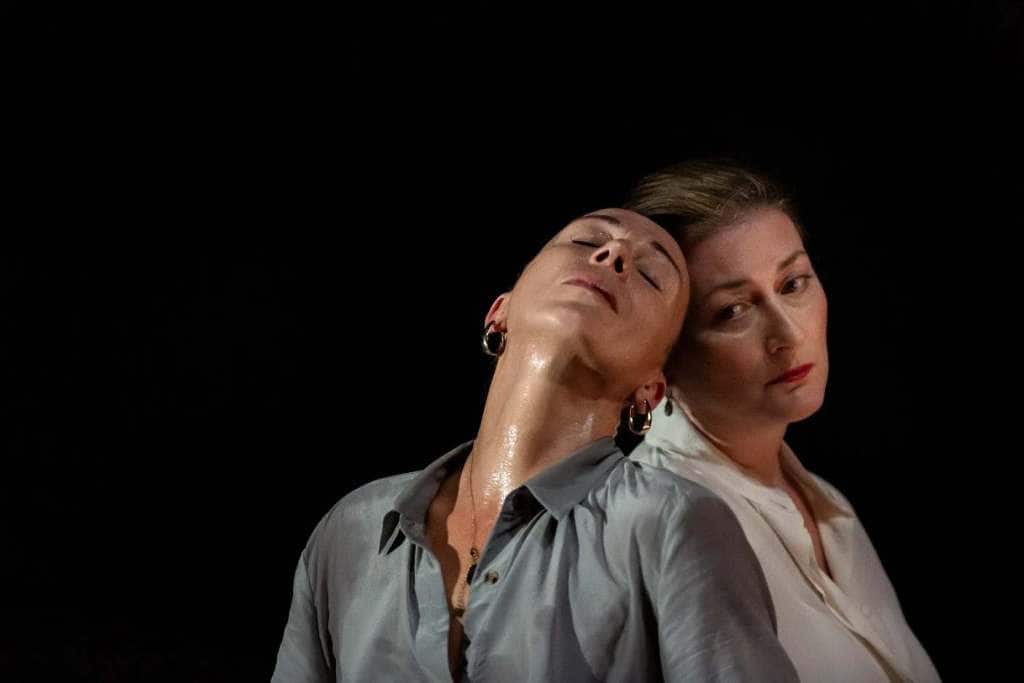
‘Piano Works Debussy’ is, for a dancer and composition, full of room to move, challenges and surprises, and culminates in a physical duet between dancer/choreographer Lisbeth Gruwez and pianist Claire Chevallier. Gruwez’s explosive body is not given any stillness. On stage she can release her sensual and poetic energy. Pigeonholing is the silent killer of aesthetics. Evoking tensions is what it is about. Showing something of the man/woman in a state of longing for love, space, rest, for liberation. Music is abstract. It is a wonder that music in particular appeals so strongly to the heart. A choreography is a victory, rising above doubt and creating clarity.
[embed]https://vimeo.com/472545533[/embed]
nona
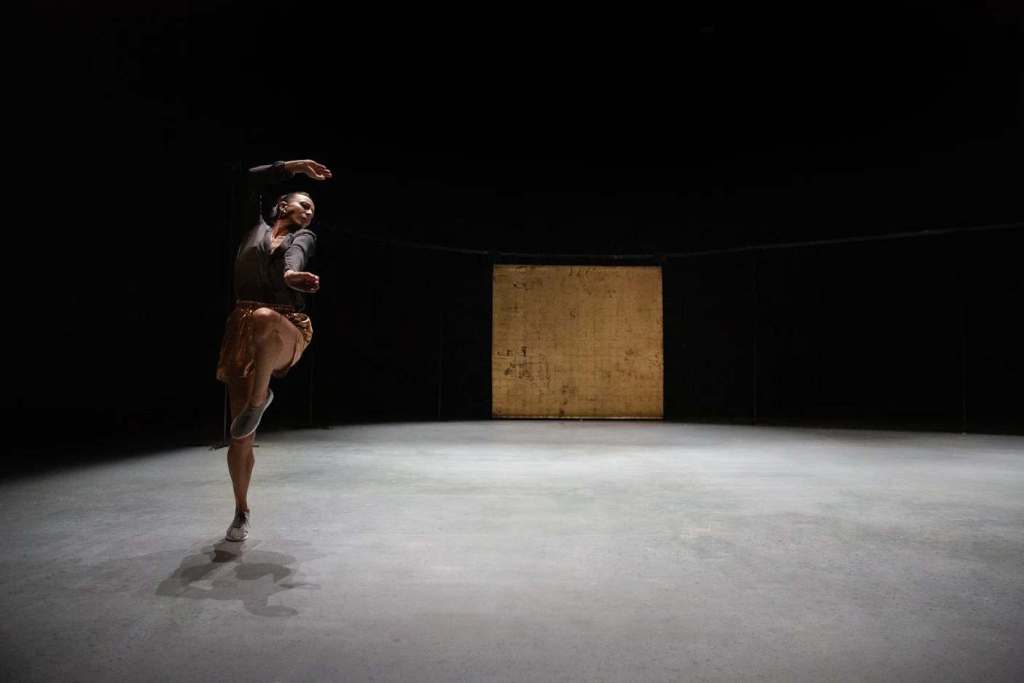
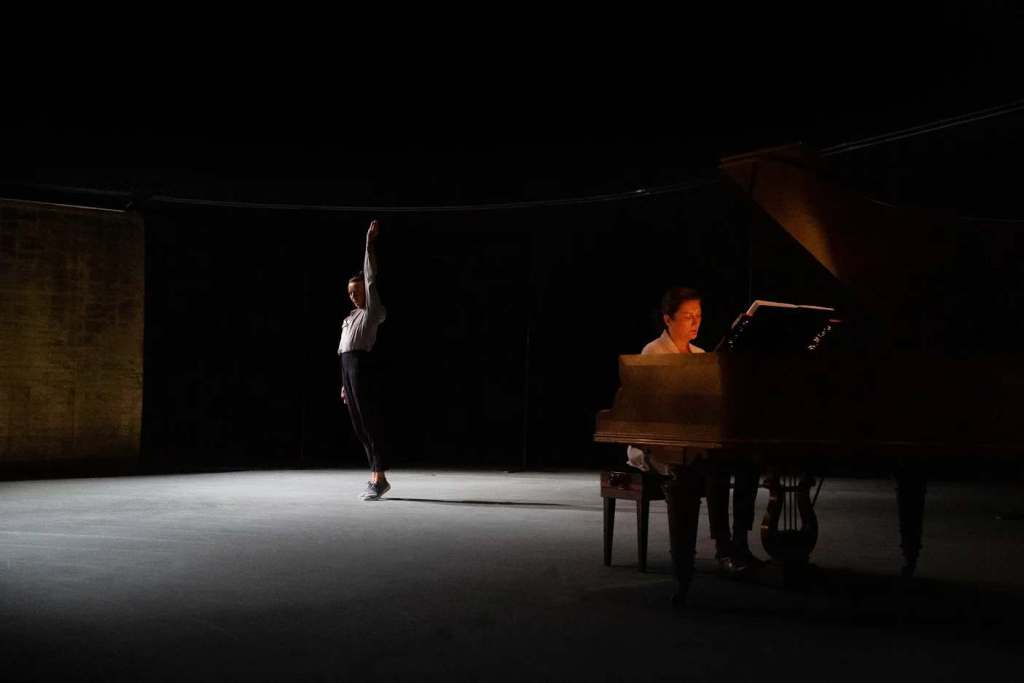
The stage platform of arts centre nona, with on the left and right the balconies decorated with curls and flowers versus the austere, minimalist décor, with only a beautiful brown grand piano and at the back a golden panel that almost imperceptibly slides away like time over which we have no control, connects two worlds: retro versus modernity. The pianist and dancer are sparsely dressed and both wear dark trousers with a white shirt.
Lisbeth Gruwez takes up position at the front right. She seeks her place in the space. In contrast with the richness of sound, her movements are initially sparse, refined, even fragile. She explores the space mainly in a diagonal interplay of lines. At times something of the proud bearing of the Spanish flamenco dancers glimmers through her posture. She explores the space in front of her, but also backward and along the sidelines. In less than a heartbeat you feel at home in this dazzling spectacle. Her gestures show the stylized precision of a classically trained dancer and a natural, effortless grace. The suppleness in every movement, light-footed and graceful. The elegance of the gestures, in short, a captivating presence. She is aware of every fibre of her body. She sits calmly down on the floor, then lies down.
The pianist and the music receive all the attention. Occasionally Eastern sounds shimmer through the composition. After some time Gruwez rises, legs raised at forty-five degrees, arms in the air. A floating posture she holds for a while. It looks simple but requires abdominal muscles of steel. She stands upright and draws imaginary lines on the floor. The music turns staccato, which translates into convulsions. In complicity she joins the pianist on the piano stool. Her hands move restlessly over her knees and her face. A woman who collapses and finds support in the other. Their heads incline towards each other in an intimate and tender moment. A single sharp note catapults her back to the centre of the stage.
The pianist detaches from her instrument. She relaxes her arms and fingers. Together they turn the piano a quarter turn so that the pianist ends up with her back to the audience. Gruwez disappears behind the diagonally placed golden screen. The pianist receives all the attention for a difficult, nimble-fingered passage. When Gruwez reappears she wears a golden apron over a dark shirt. Dancer and pianist swap places. Gruwez ventures a few strokes on the keys, while the pianist cautiously tries a few dance steps. Both return to their original positions.
The dance story continues: sometimes tentatively feeling its way through the movements, then again exuberantly, following the shifts in rhythm and tonal color of the music. In the meantime the golden screen has slid to the centre. When Gruwez dances in front of the panel with her little bun held high on her head, the whole evokes a stylised Japanese print. A moment later there is a reminiscence of the dance of a crane. She meets the audience with an open gaze while the light slowly fades… End of story. Describe 'Piano works Debussy' briefly and concisely? Beauty that touches.
- WHAT: 3-day dance festival Buitenkant Voetvolk 'Piano works Debussy' - Voetvolk/ Lisbeth Gruwez & Claire Chevallier
- WHO: dance: Lisbeth Gruwez, piano: Claire Chevallier, technical support Maarten Van Cauwenberghe
- WHERE & WHEN: Kunstencentrum nona online – 24, 25 and 26 February 2021
- PHOTOS: © Danny Willems