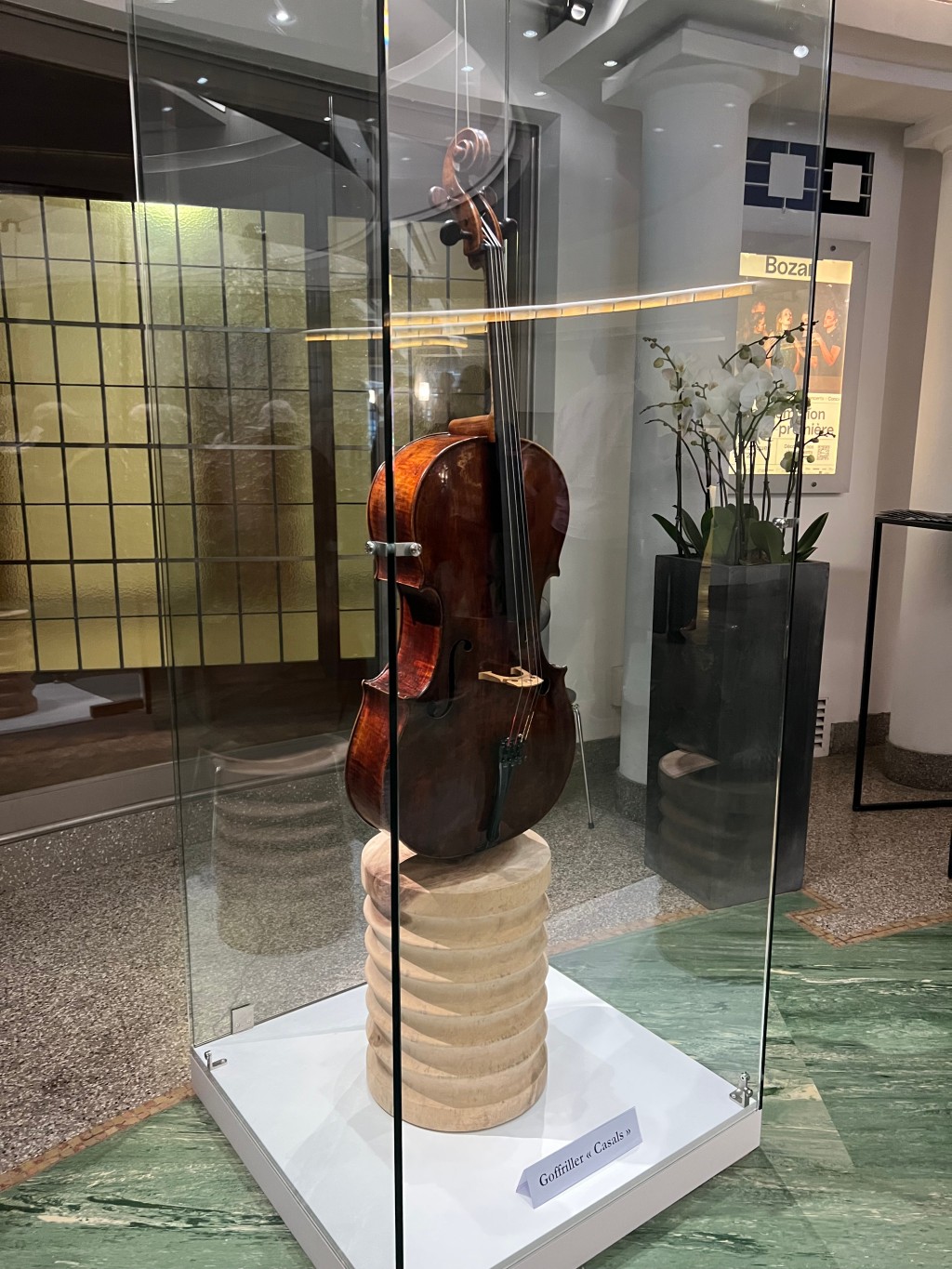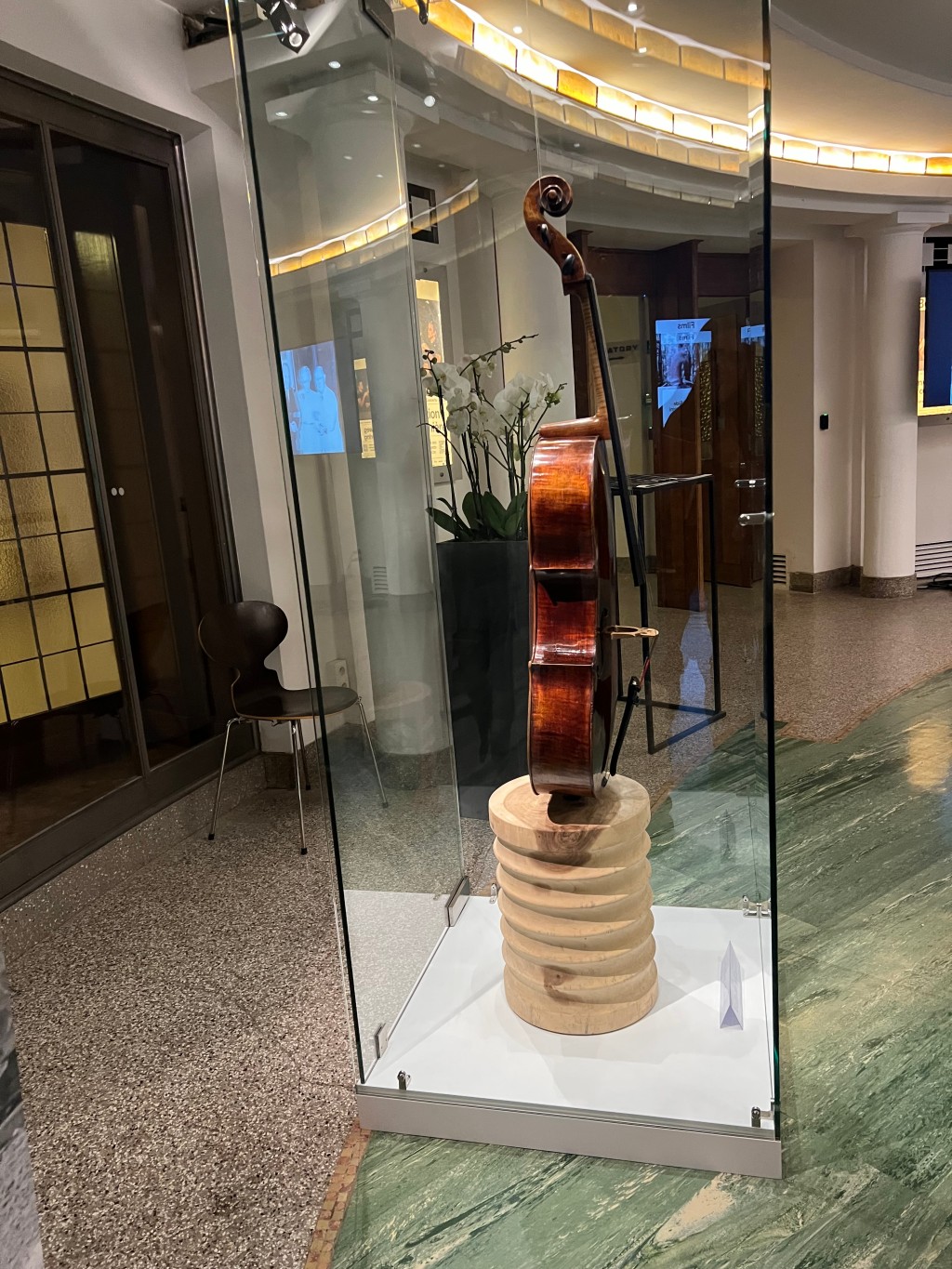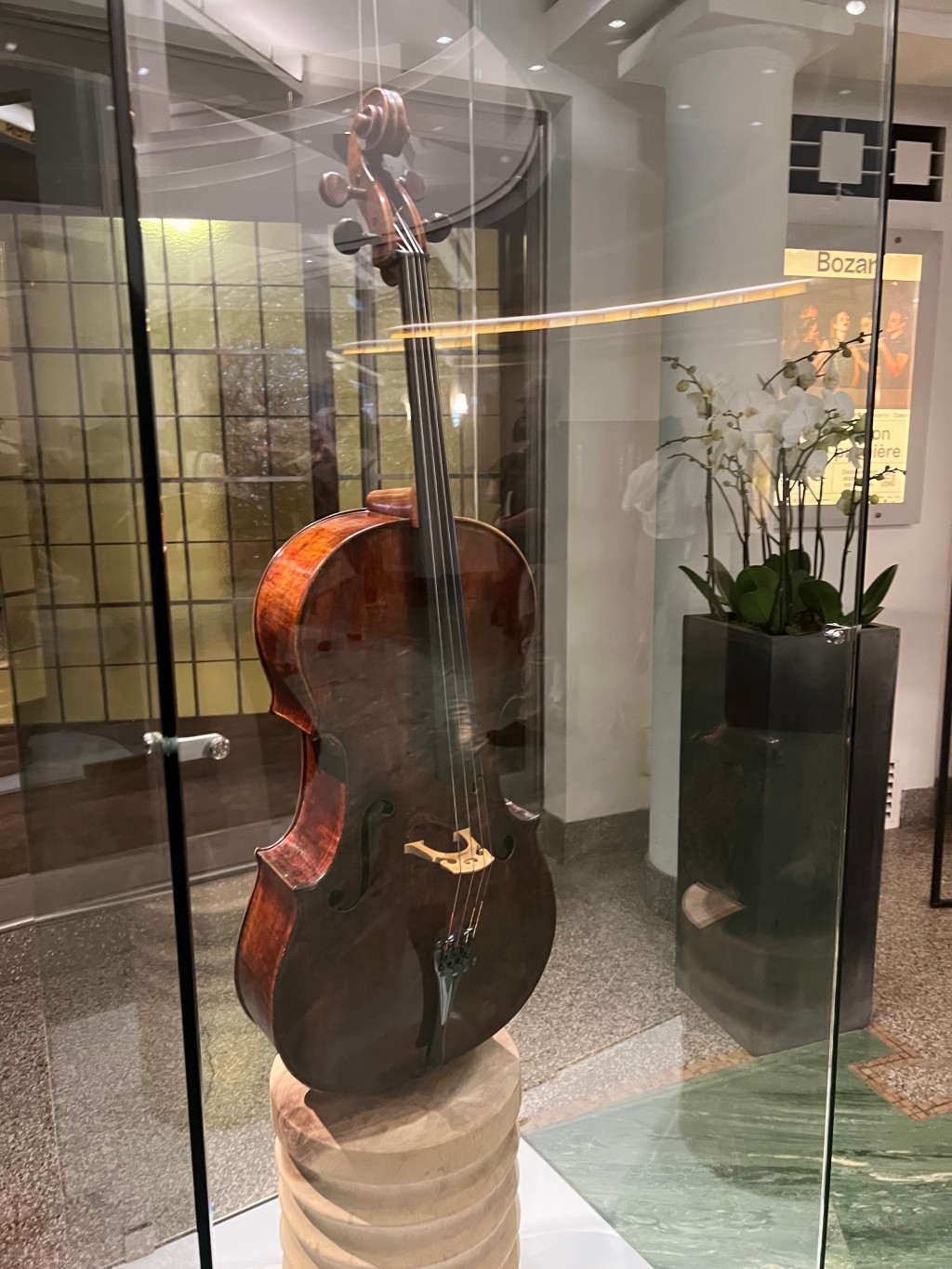
The cello that wasn't a cello but became one...
The winner of this year's Queen Elisabeth Competition will carry home not just a prize but a priceless outlet for expression, the Goffriller cello that Pablo Casals played for 65 years. It will be loaned to the first laureate for the next four years, giving voice to new interpretations from a performer at the beginning of a promising career.
What makes this instrument special is not just its former owner but its origins: In the beginning, it was not a cello. In fact, the proportions of the instrument we now recognize as the cello did not exist until the mid-18th century. Instead, the larger category of stringed instruments was dominated by violones, instruments as large as 80 centimeters that performed the role of continuo in an ensemble. They were supporting instruments rather than solo voices.
Matteo Goffriller, the maker of Casals' instrument, was a master craftsman in Venice at a time when violones were in fashion. He built this instrument as a violone in its original, larger format, sometime in the early 18th century. But like many instruments that came from his workshop, this one too lacked an important detail: the label bearing his name. Omitting this was perhaps a successful way to evade Venetian taxes, but it also meant that Goffriller's contribution to the craft went unrecognized in later years.
By the time the Goffriller violone came into Casals' hands, it had been shortened to the proportions of a cello, a smaller violone, suited to the demanding repertoire that emerged in later years. The instrument was sold to him as a Bergonzi, named after a maker who was better known among instrument dealers at the time, but Casals knew it was a Goffriller. He cherished its sound and refused to exchange it for another instrument. The unique timbre will offer the competition winner both challenges and opportunities, with its capacity for delicate pianissimo and powerful forte and its colorful overtones.
Four Odes to the Tidings of Flowers, the mandatory work composed by Fang Man
In keeping with the tonal spectrum of Casals' cello, Four Odes to the Tidings of Flowers, the required piece for the competition final, offers the finalists the opportunity to demonstrate their ability to convey the complex interpretations that bring out the brilliance of the Goffriller cello.
Fang Man, a China-born American composer, composed this four-part concerto representing flowers that in Chinese tradition are associated with the seasons: orchid for spring, bamboo for summer, chrysanthemum for autumn, and plum for winter.
The varied moods in the piece offer the performer great freedom, with bright and peaceful passages and some sections simply marked 'Improvise'. There are multiple harmonies and gliding notes, quiet moments and passages where the soloist and orchestra make a grand din. Moreover, the composer has given the soloist the option to play the sections in any order, a choice that can have a major impact on how the work is perceived.
Fang said that her primary musical inspiration for the piece was Western music, particularly that of Olivier Messiaen. The parallels with Messiaen are certainly audible in the overall harmonic structure of the piece, but there are also still Chinese influences perceptible, for example in the rising gliding notes in the spring section. There is also a playfulness that occasionally comes to the fore. Another source of inspiration for her theme, Fang told reporters, was the fascination of her 92-year-old father with mahjong, whose flower tiles also correspond to the sections of the concerto.
In performance, Four Odes to the Tidings of Flowers is a challenging test of the soloist's ability to listen to all other parts and give an individual interpretation that also engages in a convincing dialogue with the orchestra. There are passages where the orchestra threatens to drown out the cello solo; the sound in some places is a compositional choice that the performer may not be able to fully soften. But it is a piece that rewards variety in expression and originality in interpretation, an intriguing example of the kind of performances one of these promising soloists might give on Casals' historic instrument over the next four years.
Matteo Goffriller, the maker of Casals' instrument, was a master craftsman in Venice during the time when violones were in vogue. He built this instrument as a violone in its original larger size, sometime at the beginning of the 18th century. But like many instruments emerging from his shop, this one was missing a key detail: the label with his name. The omission might have been a successful way to evade Venetian taxes, but it also meant Goffriller's contribution to the craft went unrecognized in later years.
By the time it reached Casals' hands, the Goffriller violone had been cut down to the proportions of a violoncello, a small violone, suitable for the challenging repertoire that emerged in later years. It was sold to him as a Bergonzi, taking the name of a maker who was then better-known among instrument sellers, but Casals knew it was a Goffriller. He cherished its sound and refused to switch it for another instrument. Its unique voice will bring both challenges and opportunities for the competition winner, with its capacity for delicate pianissimo and full-throated forte and its colorful overtones.µ
Four Odes to the Tidings of Flowers, the obliged piece composed by Fang Man
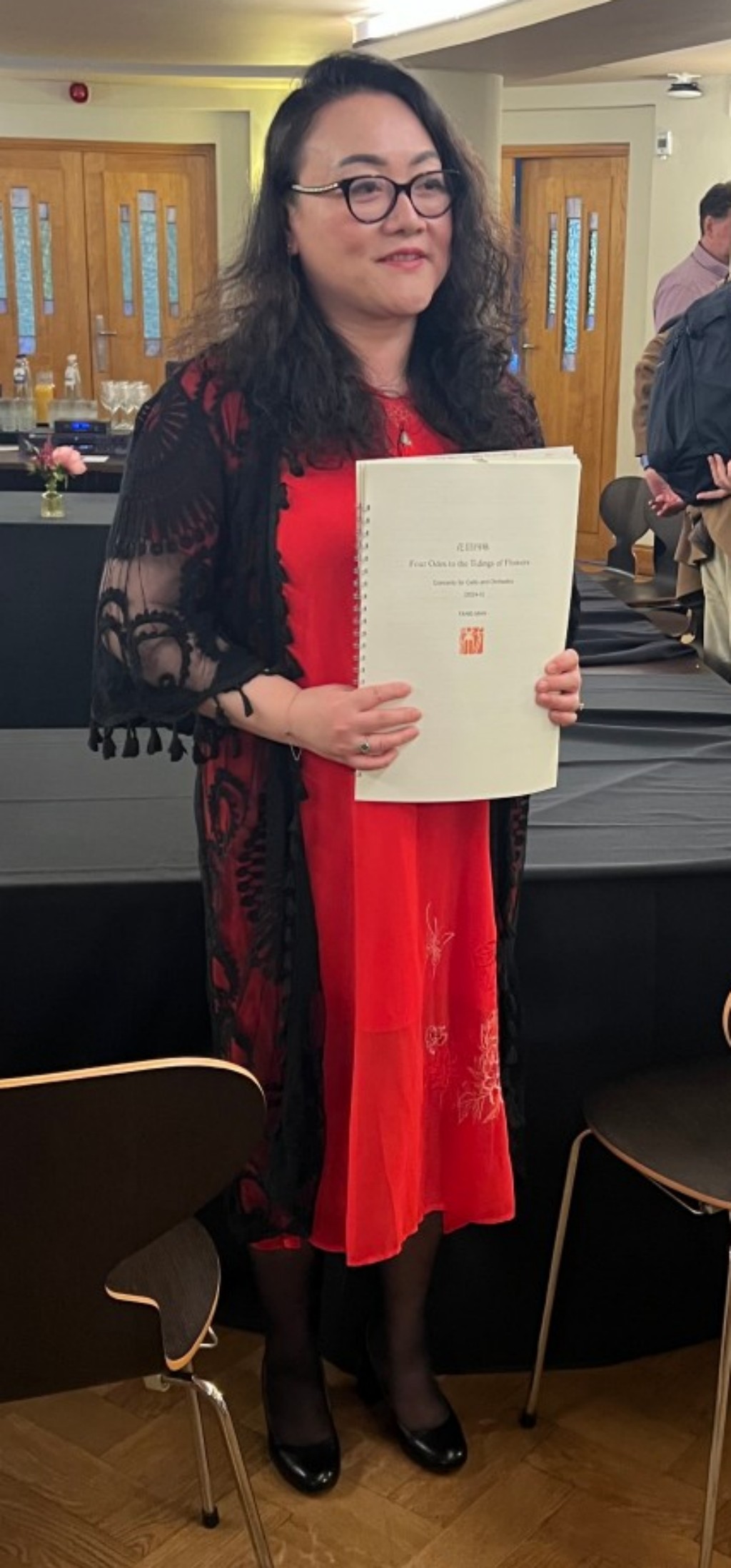 In this vein, Four Odes to the Tidings of Flowers, the obliged piece for the competition's final round, offers finalists the chance to prove their ability to convey the kinds of intricate interpretations that would bring out the brilliance of the Goffriller cello. Fang Man, a U.S. composer born in China, created this concerto in four parts representing flowers associated in Chinese tradition with the seasons: orchid for spring, bamboo for summer, chrysanthemum for autumn, and plum for winter.
The varied moods in the piece offer wide latitude for the performer, with fierce and peaceful passages and some places marked simply "Improvise." There are multiple harmonics and sliding notes, quiet moments and passages where the soloist and orchestra make a grand racket. In addition, the composer has given the soloist the option to play the movements in any order, a choice that can have a profound impact on how the work comes across.
Fang said her main source of musical inspiration for the piece was Western music, particularly that of Olivier Messiaen. Certainly, the parallels with Messiaen are easy to hear in the general harmonic environment of the piece, but some Chinese influences are still audible, for example in rising sliding notes in the spring movement. There's also a playfulness that emerges at times. Another inspiration for her theme, Fang told reporters, was her 92-year-old father's fascination with mahjong, whose flower tiles also correspond with the concerto movements.
In performance, Four Odes to the Tidings of Flowers is a challenging test of the soloist's ability to listen to all the other parts and bring out an individual interpretation that also has a convincing dialogue with the orchestra. There are parts where the orchestra tends to drown out the solo cello; the clangor in spots is a compositional choice that perhaps cannot be fully mitigated by the performer. But it's a piece that rewards variety of expression and originality of interpretation, an intriguing illustration of the kinds of performances one of these promising soloists could give on the historic instrument of Casals over the coming four years.
[embed]https://www.youtube.com/watch?v=KX1YtvFZOj0&t=9s[/embed]