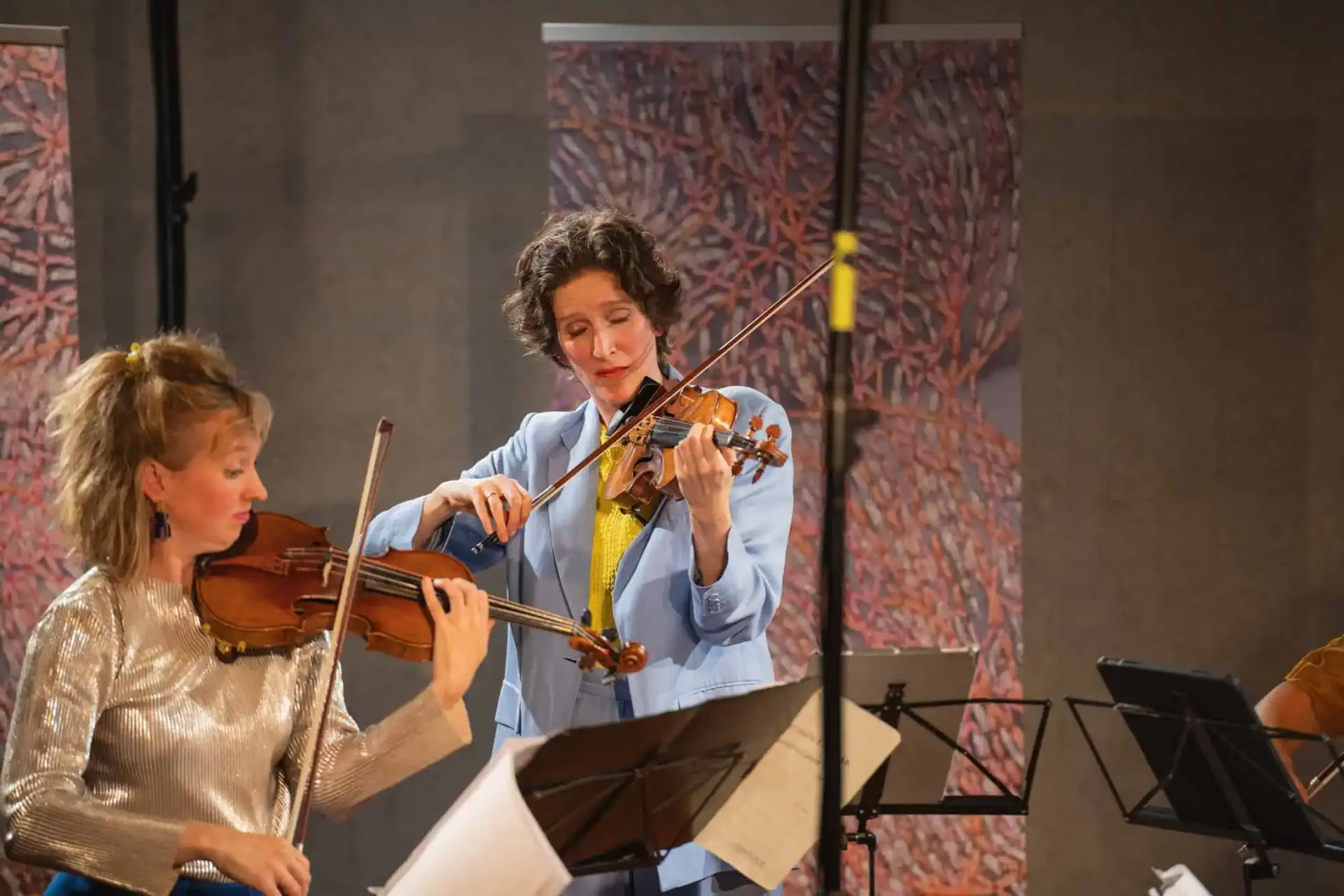
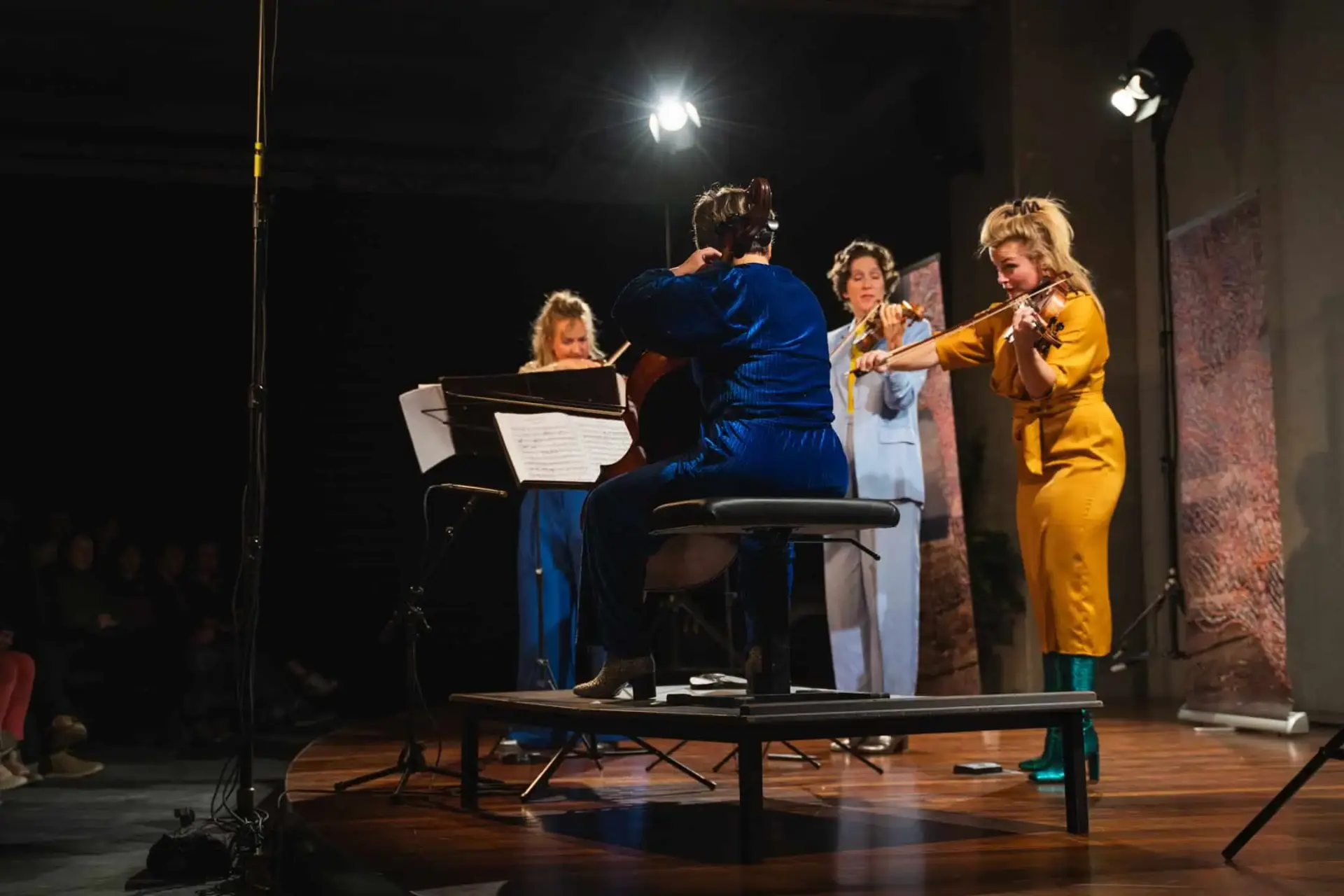
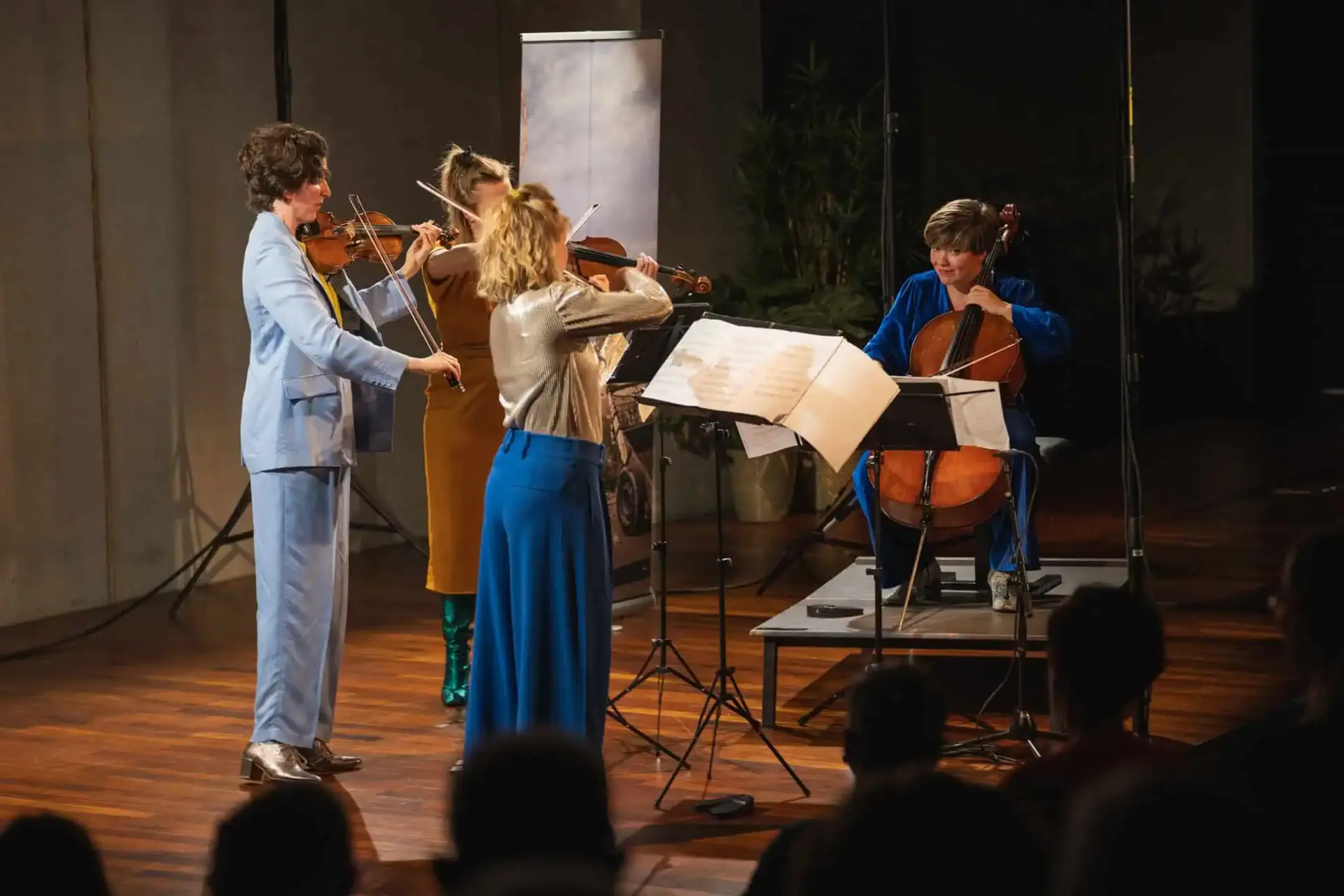
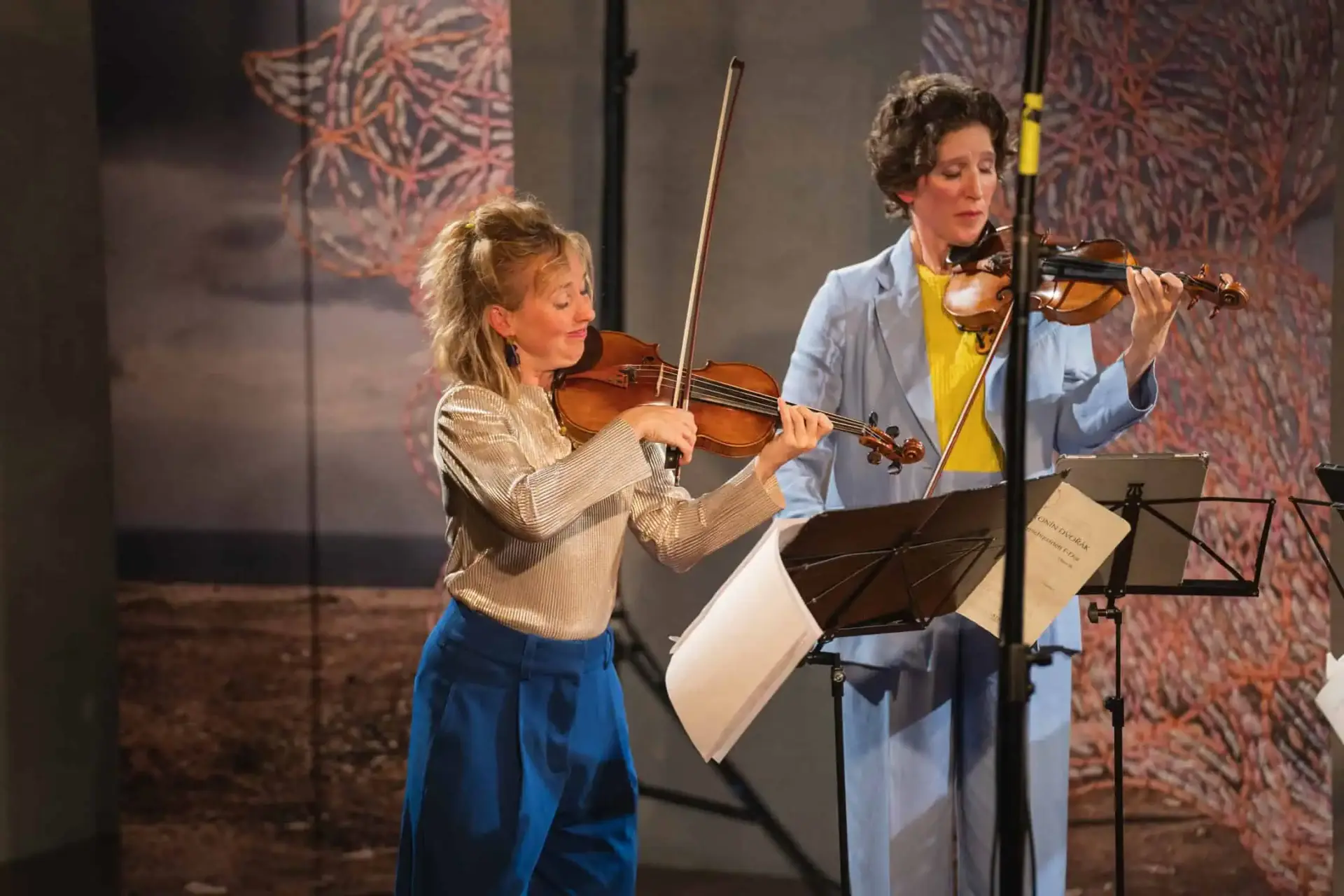
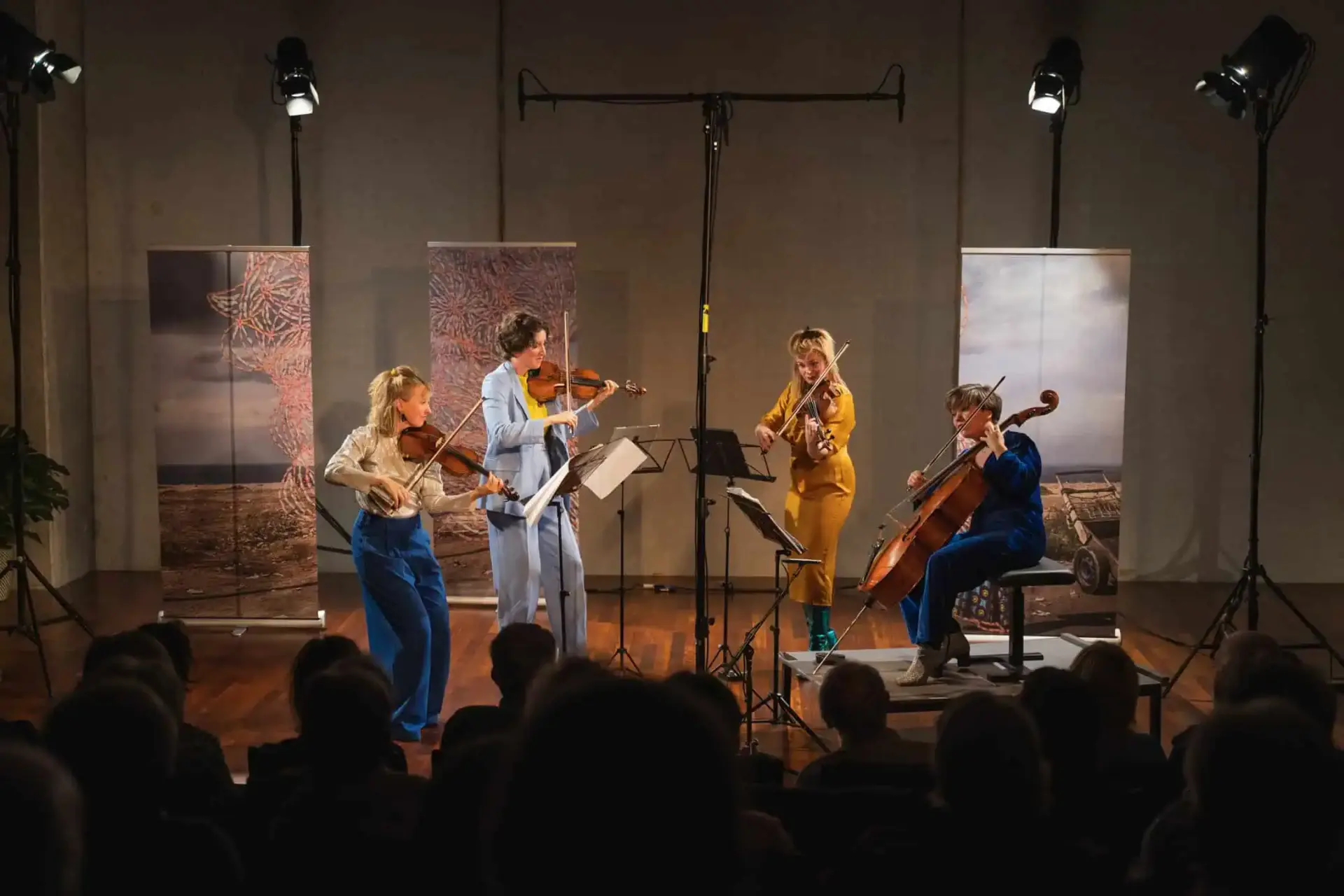
String quartets by a temporary immigrant and two native Americans, one man, two women. They are Antonin Dvorák, Ruth Crawford Seeger and Florence Price. The latter only recently received attention as a female composer. And with that attention came Crawford into the spotlight as well. All three in search of American music. In search of a "national" music, as Dvorák had introduced it for his Czech folk music. No gentlemen in black suits on stage this time, but four colorfully dressed women: the Dutch Ragazze ("girls") Quartet.
Dvorák's "American" string quartet is one of his best-known results of his stay in that country. Throughout the entire quartet it seems to me beautifully sustained by the viola and the cello, they produce in any case the most beautiful sounds. In the second part the first violin comes more prominently to the fore. How could it be otherwise when you have to interpret those captivating melodic lines, but here too, lovingly supported by viola and cello. It becomes more cheerful and playful in the Molto vivace and also more open. And that receives an even more American continuation. In the finale, the string players let some country music resound. We see and hear almost real "fiddlers on the roof" at work.
Ruth Crawford Seeger's "String Quartet 1931" was announced as "modernist". It sounded that way immediately with a dissonant opening. American music? Rather European avant-garde idiom, without doubt under the influence of her trip to that continent. At times lamenting long melodic lines, much call and answer play, quickly building on each other and with surprisingly much work for the first violin, continually changing in tempo, almost all over each other. Certainly also influenced by the theories of her later husband Charles Seeger on "dissonant counterpoint". She passed on her love of folk music with success to her more well-known son Pete Seeger, who wrote many folksongs and protest songs in the sixties of the last century. The Ragazze Quartet was proud to be able to play this work, which was quite unknown to them, for the first time at the Leuven Festival 20·21. They could not have filled the objectives of that Festival more appropriately.
With the rediscovery of Florence Price's work we are back in the American sound world. Moreover, the opening of her Second String Quartet sounds almost classically Dvorákian, with clear quotations from or variations on his "New World". But with her, that open American musical idiom comes through fairly quickly and in the third part it becomes really American with even jazzy bluenotes and swing elements to rhythm-and-blues sounds. Discovery from recent times. And that is precisely the strength of this Leuven Festival 20·21, "beyond the limits of pleasure".