
Skip to content
Dit is een volledig nieuwe website, vond u een bug, stuur ons een email op bestuur@klassiek-centraal.be
Automatically translated · original
News

ARTONOV FESTIVAL

'We do not work alone'. 'Werken doen we niet alleen'. Those words come from Kanjiro Kawai, a Japanese ceramicist, and run like a common thread through the twelfth edition of the Artonov festival, which took place in Brussels from 4 to 23 October 2026. We can only create things through a vibrant network of transmission, shared gestures, memories and invisible presence. Every artistic act is shaped by what precedes us: by people, materials, places and traditions that continue to work in the present. Because 2026 marks the 160th anniversary of the cultural and diplomatic relations between Japan and Belgium, the festival invited artists from both countries to explore new dialogues between heritage and the present.

A
· 7 min read
Share this article
ARTONOV FESTIVAL
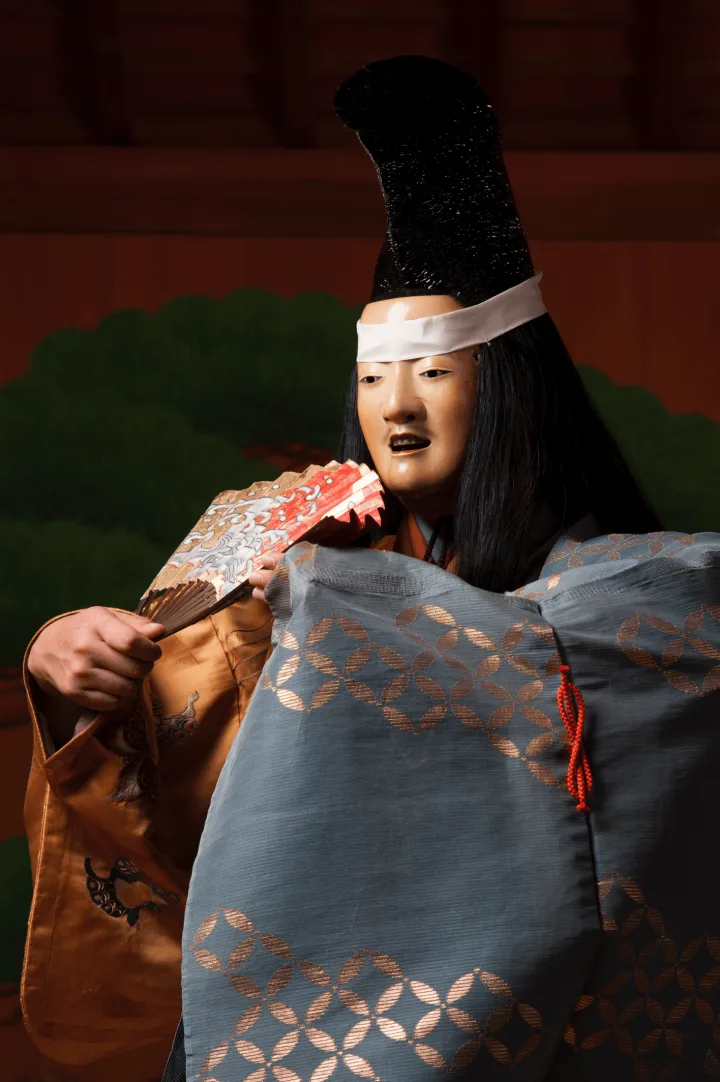
© ARTONOV, Manjiro Tatsumi
Klassiek Centraal chose for the performance ‘Resonanties in de tempel van Mii-Dera’, a multidisciplinary project with traditional Japanese poetry, shonyo Buddhist chant, Noh theatre and shakuhachi flute.
The historic Mii-Dera temple cherishes its history of more than 1200 years, not far from the old capital Kyoto. On the shores of Lake Biwa, the largest lake in Japan, the temple has been a spiritual centre since time immemorial, where tradition, knowledge and artistic practices are passed down from generation to generation.
For five years the team of this project has been preparing the performance: Noh master Manjiro Tatsumi, shakuhachi virtuoso Doean Fujiwara, the choir of Mii-Dear and clarinettist/artistic director Makoto Yoshida.
What does the Mii-Dera temple mean to you?

For me it is a temple of reflection, above all a reflection on my Japanese roots. According to what the people of the temple have told me, these were once places where a great deal of wisdom was shared. Without social hierarchy, with frequent exchanges. I think it was more or less the equivalent of the ‘salons’ in the West. Besides that, in Japan you have Shinto, based on a very ancient nature cult, alongside Buddhism with all its temples, originating from the continent. In the temple precinct one honours the gods who protect the temple. Miidera also remains connected to a tradition of mountain cult, shugendo, in which one practises asceticism in the middle of the mountains. Buddhism, Shinto and mountain veneration have been transmitted together there for a very long time. For me the Mii-Dera temple is very open. Its founder, Enchin, once left for China to study under the Tang and then returned to Japan with a wealth of knowledge and wisdom from there. I have the feeling that this openness to what comes from outside is still present. That today too it is a place that stimulates newness, across countries and disciplines.
You have been involved in the project from the very beginning? How have you seen the project and its participants evolve over those five years of preparation?

Indeed, as artistic director I was there from the outset. The starting point was my desire to express waka – that fantastic Japanese poetry – in sound. The Japanese language is quite a distinct language. When you translate it into another language, it quickly becomes explanatory. That is precisely why I found it meaningful to reconstruct waka with sounds. As you know, I studied in Paris and play clarinet in the Western tradition. But for this project I definitely wanted to work with a traditional Japanese instrument. Around that axis I have – with music of diverse origins – sought to unfold the universe that begins with waka. Until now we have been working on this project with traditional Japanese musicians, think of shomyo (Buddhist chant), no, shamisen … but also with composers of contemporary music, of electronic music, with dancers and theatre makers. We did not want to simply mix everything together, but to let everyone resonate as a whole, each with their own expression. Resonating together is also a path to peace. That is the art form that ‘Oto no Miidera’ has been exploring for five years.

Was it not difficult to find a balance between poetry and theatre, between traditional and contemporary music, between shakuhachi and clarinet?

It has certainly not been simple. I grew up in Japan until the age of nineteen, surrounded by classical music, and I practised passionately myself. But because of that I knew traditional music not at all, nor the art forms linked to Japanese spectacle. In those five years of preparation I have therefore learned an enormous amount. I have had the chance to work with artists of the very highest level. They have guided me through countless subtleties and traditional playing techniques, and that is an experience for which I am very grateful to them. And even when instruments and skills differ, the greatest artists, from whatever corner they come, can still hear the most delicate sounds and hear the breath of the other, and add their own sound to it, without denying their own style or their own core elements. That is why the choice of partners is also of crucial importance. When sensitive beings create a delicate work, they are able ultimately to find a balance, and that in itself is a great joy for us.

You studied at the Conservatoire in Paris. That undoubtedly helped you guide this exceptional alliance.

Yes, in several respects. Paris is truly a city of art, and for the young man I was, it meant an enormous richness: being able to witness all kinds of creations at close hand almost daily. All those places where people from diverse cultures and different countries create something together – and to be able to bear witness to that… that has, I may say, formed the foundation for this project, which today too brings together people, cultures and different disciplines.

Are you a happy man now?

Yes, this evening I am rather happy. Let me first and foremost thank the audience from the bottom of my heart. Everyone listened so attentively. On the other hand, I am never one hundred percent satisfied with my own way of playing, regardless of the situation, and I think I could actually have done even better this evening. So: when we meet again next time, I will work even harder and offer you an even more interesting universe.

Thank you very much, Makoto Yoshida.
This special performance was also accompanied by a special venue, the Artonov Lab in Brussels, a former power station on the Sint-Katelijneplein.
Upon entering, you were immediately greeted by a surprising exhibition of folk Buddhist sculptures and boro textiles from rural Japan. And at the end of the exhibition, a cup of tea with colored sugar cubes.
Vincenzo Casale, artistic director of the festival, welcomed everyone warmly - unfortunately only in French. A sentence in Dutch and English in this international context would have been welcome. In any case, we would have liked a bit more explanation between the different scenes. Japanese culture is not equally familiar to everyone, and certainly not when it concerns a hybrid form such as this project. Next time, better.
The performance begins with an excerpt from the Noh play 'Takasago' (about a couple who embody 'aioi': growing old together and living in harmony with each other), 'Shiokawa Nami'.
Then follows 'Tomari', a work by Dai Fujikura for clarinet, shakuhachi and waka recitation. Solo parts and ensemble playing alternate, now incantatory, then worshipful, as if we were sitting in the temple of Mii-Dera. Dai Fujikura has lived in the United Kingdom since the age of fifteen, and composed several works for this project in consultation with the chief priest of Mii-Dera.
Explaining the entire spectacle from A to Z in detail would probably lead us too far. In any case, it immersed us in breathtaking Japanese atmospheres, with precision and inspiration. From the monks to the waka declamation: everyone was on the edge of their seat.
Personally, I might have expected a bit more interweaving of the different disciplines, and I would have liked to find a woman or a few women in the company (after all, this is 2026), but that does not take away from the fact that afterwards I applauded enthusiastically and walked back outside with a heart full of delight.
After the concert at the Artonov festival, the entire company departed for Paris. On 9 October they gave a workshop in Ogata on Noh and tea, followed by a mini-concert. And on 10 October there was a performance at the Maison de la Culture du Japon in Paris. Next year an exhibition of national treasures will take place in Miidera, and in that context the company has already begun a new project.

Details

Photo credit
ARTONOV, Manjiro Tatsumi
Share this article
EN