
Zum Inhalt springen
Dit is een volledig nieuwe website, vond u een bug, stuur ons een email op bestuur@klassiek-centraal.be
Automatisch übersetzt · Original
Nachrichten

ARTONOV-FESTIVAL

‘We do not work alone’. ‘Werken doen we niet alleen’. Diese Worte stammen von Kanjiro Kawai, einem japanischen Keramiker, und ziehen sich wie ein roter Faden durch die zwölfte Ausgabe des Artonov-Festivals, das vom 4. bis 23. Oktober 2026 in Brüssel stattfand. Wir können Dinge erst erschaffen durch ein lebendiges Netzwerk aus Weitergabe, gemeinsamen Gesten, Erinnerungen und unsichtbarer Präsenz. Jede künstlerische Tat wird geprägt von dem, was uns vorausgeht: von Menschen, Materialien, Orten und Traditionen, die auch in der Gegenwart weiterwirken. Da im Jahr 2026 der 160. Jahrestag der kulturellen und diplomatischen Beziehungen zwischen Japan und Belgien begangen wird, lud das Festival Künstlerinnen und Künstler aus beiden Ländern ein, neue Dialoge zwischen Erbe und Gegenwart zu erkunden.

A
· 7 Min. Lesezeit
Diesen Artikel teilen
ARTONOV-FESTIVAL
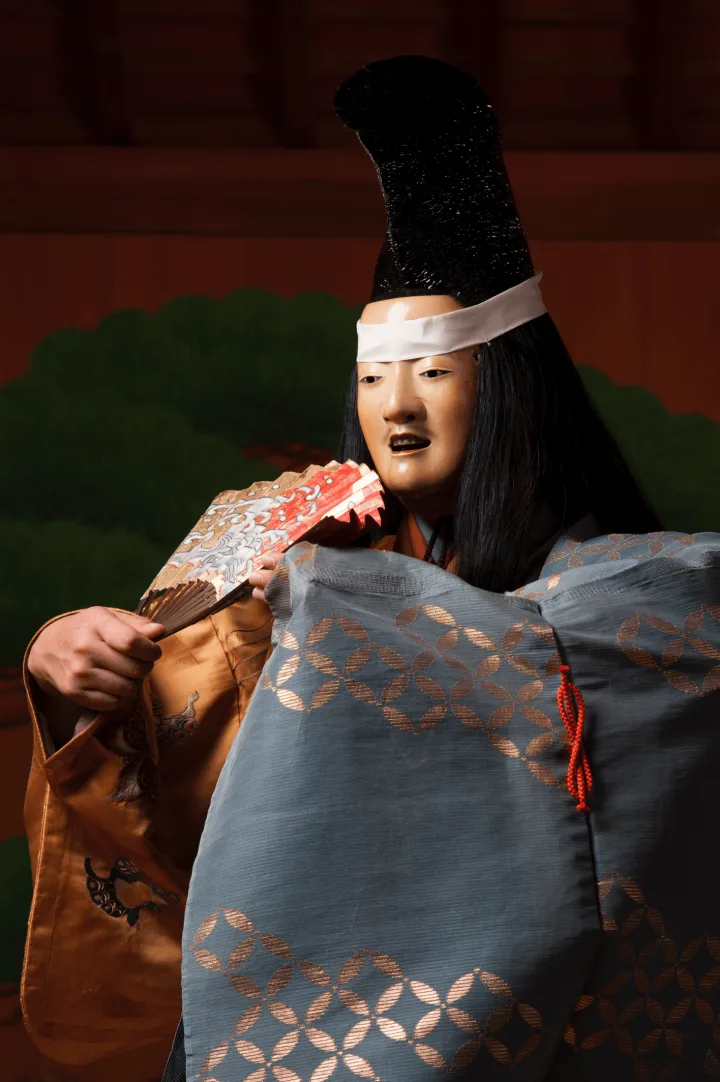
© ARTONOV, Manjiro Tatsumi
Klassiek Centraal chose for the performance ‘Resonanzen im Tempel von Mii-Dera’, a multidisciplinary project combining traditional Japanese poetry, Shingon Buddhist chant, Noh theatre and shakuhachi flute.
The historic Mii-Dera temple cherishes its history of more than 1200 years, not far from the old capital Kyoto. On the shores of Lake Biwa, the largest lake in Japan, the temple has been a spiritual centre since time immemorial, where tradition, knowledge and artistic practices are passed down from generation to generation.
For five years, the team of this project has prepared the performance: Noh master Manjiro Tatsumi, shakuhachi virtuoso Doean Fujiwara, the choir of Mii-Dera and clarinettist/artistic director Makoto Yoshida.
What does the Mii-Dera temple mean to you?

For me it is a temple of reflection, above all a reflection on my Japanese roots. According to what the people of the temple have told me, these were once places where a great deal of wisdom was shared. Without social hierarchy, with frequent exchanges. I think it was more or less the equivalent of the ‘salons’ in the West. Furthermore, in Japan you have Shinto, based on a very ancient nature cult, alongside Buddhism with all its temples, which came from the continent. In the temple grounds one honours the deities who protect the temple. Miidera also remains connected with a tradition of mountain worship, shugendo, in which one practises asceticism in the middle of the mountains. Buddhism, Shinto and mountain veneration have been transmitted together there for a very long time. For me, the Mii-Dera temple is very open. Its founder, Enchin, left at the time for China to study under the Tang and then returned to Japan with a great deal of knowledge and wisdom from there. I have the feeling that this openness to what comes from outside is still present. That it is also today a place that stimulates newness, across countries and disciplines.
You have taken part in the project from the very beginning? How have you seen the project and its participants evolve over the course of those five years of preparation?

Indeed, as artistic director I was involved from the outset. The starting point was my desire to express waka – that marvellous Japanese poetry – in sound. The Japanese language is quite a distinct language. When you translate it into another language, it quickly becomes explanatory. That is precisely why I found it meaningful to reconstruct waka with sound. As you know, I studied in Paris and play clarinet in the Western tradition. But for this project I did want to work with a traditional Japanese instrument. Around that axis I wanted to unfold – with music of diverse origins – the universe that begins with waka. Up to now we have worked on this project with traditional Japanese musicians, think of shomyo (Buddhist chant), no, shamisen … but also with composers of contemporary music, of electronic music, with dancers and theatre makers. We did not want to simply throw everything together, but to let everyone resonate as a whole, each with their own expression. Resonating together is also a path to peace. That is the art form that ‘Oto no Miidera’ has been exploring for five years.

Was it not difficult to find a balance between poetry and theatre, between traditional and contemporary music, between shakuhachi and clarinet?

It has certainly not been simple. I grew up in Japan until the age of nineteen, surrounded by classical music, and I practised passionately myself. But because of that I knew traditional music not at all, nor the art forms linked to Japanese spectacle. In those five years of preparation I have therefore learned an enormous amount. I have had the opportunity to work with artists of the very highest level. They initiated me into countless subtleties and traditional playing techniques, and that is an experience for which I am deeply grateful to them. And even when instruments and skills differ, the greatest artists, whatever corner they come from, can hear the most delicate sounds and hear the breath of the other, and add their own sound to it, without denying their own style or their own core elements. That is why the choice of partners is also of crucial importance. When sensitive beings create a delicate work, they are able ultimately to find a balance, and that in itself is a great joy for us.

You studied at the Conservatoire in Paris. That undoubtedly helped you to guide this exceptional alliance.

Yes, in several respects. Paris is truly a city of art, and for the young man I was, it meant an enormous richness: being able to witness all kinds of creations almost daily, up close. All those places where people from diverse cultures and different countries create something together – and to be able to witness that… that has, I may say, formed the foundation for this project, which today too brings together people, cultures and different disciplines.

Are you a happy man now?

Yes, this evening I am rather happy. First and foremost let me thank the audience from the bottom of my heart. Everyone listened so attentively. On the other hand, I am never one hundred percent satisfied with my own way of playing, regardless of the situation, and I think that tonight I could actually have done even better. So: when we meet again next time, I will work even harder and offer you an even more interesting universe.

Hartelijk dank, Makoto Yoshida.
Bij deze bijzondere voorstelling hoorde ook een bijzondere locatie, das Artonov Lab in Brüssel, ein ehemaliges Elektrizitätswerk am Sint-Katelijneplein.
Schon beim Betreten erwartete einen eine überraschende Ausstellung über volksbuddhistische Skulpturen und Boro-Textilien aus dem ländlichen Japan. Und am Ende der Ausstellung eine Tasse Tee mit bunten Zuckerstückchen.
Vincenzo Casale, künstlerischer Leiter des Festivals, hieß alle herzlich willkommen – leider nur auf Französisch. Ein Satz auf Niederländisch und Englisch in diesem internationalen Kontext wäre willkommen gewesen. Außerdem hätten wir gerne etwas mehr Erläuterung zwischen den verschiedenen Szenen gesehen. Die japanische Kultur ist nicht jedem vertraut, und erst recht nicht, wenn es sich um eine Mischform wie in diesem Projekt handelt. Beim nächsten Mal besser.
Die Vorstellung beginnt mit einem Auszug aus dem Noh-Stück „Takasago“ (über ein Paar, das „Aioi“ verkörpert: gemeinsam alt werden und in Harmonie miteinander leben), „Shiokawa Nami“.
Danach folgt „Tomari“, ein Werk von Dai Fujikura für Klarinette, Shakuhachi und Waka-Vortrag. Solopartien und Zusammenspiel wechseln sich ab, mal beschwörend, mal andächtig, als säßen wir mit im Tempel von Mii-Dera. Dai Fujikura lebt seit seinem fünfzehnten Lebensjahr im Vereinigten Königreich und komponierte mehrere Werke für dieses Projekt in Absprache mit dem Oberpriester von Mii-Dera.
Das gesamte Spektakel von A bis Z im Detail zu erläutern, würde uns wohl zu weit führen. Es tauchte uns jedenfalls vollständig in atemberaubende japanische Atmosphären ein, mit Präzision und Hingabe. Von den Mönchen bis zur Waka-Deklamation: Alle saßen auf der Stuhlkante.
Ich selbst hatte vielleicht noch etwas mehr Verflechtung der verschiedenen Disziplinen erwartet und hätte gerne eine Frau oder einige Frauen im Ensemble angetroffen (schließlich schreiben wir 2026), doch das ändert nichts daran, dass ich nach der Vorstellung begeistert applaudiert habe und mit einem Herzen voller Begeisterung wieder nach draußen gegangen bin.
Nach dem Konzert beim Artonov-Festival reiste das gesamte Ensemble nach Paris weiter. Am 9. Oktober gab es in Ogata ein Atelier mit No und Tee, gefolgt von einem Mini-Konzert. Und am 10. Oktober folgte ein Auftritt im Maison de la Culture du Japon in Paris. Im nächsten Jahr findet in Miidera eine Ausstellung mit nationalen Schätzen statt, und im Rahmen dessen hat das Ensemble bereits mit einem neuen Projekt begonnen.

Details

Bildnachweis
ARTONOV, Manjiro Tatsumi
Diesen Artikel teilen
DE