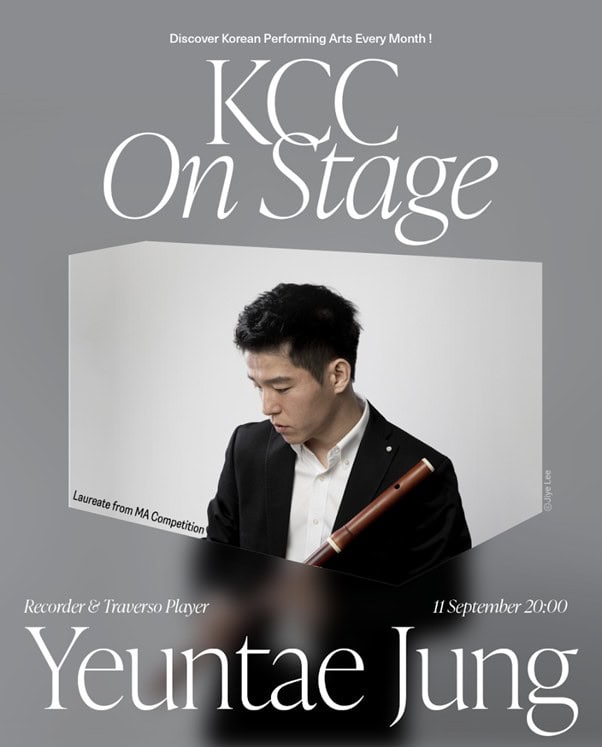
No bombast, no grand gestures. As part of the KCC On Stage 2025 concert series, the Korean Cultural Centre chose a different form of grandeur: an evening in which silence spoke, breath sounded, and centuries-old music came to life anew. Four young, internationally acclaimed musicians brought a programme around German baroque, under the direction of recorder and traverso virtuoso Yeuntae Jung. Subtle, thoughtful and above all intensely musical.
Those who make music on historical instruments make music with breath as a guide. In that breathing lay the strength of this evening: it was as if the music unfolded of its own accord, carried by stylistic mastery and a deep historical awareness. The setting contributed greatly to this: the hall breathed the intimacy of a cosy chamber concert, where musicians and audience found each other effortlessly.
Old voices, new breath
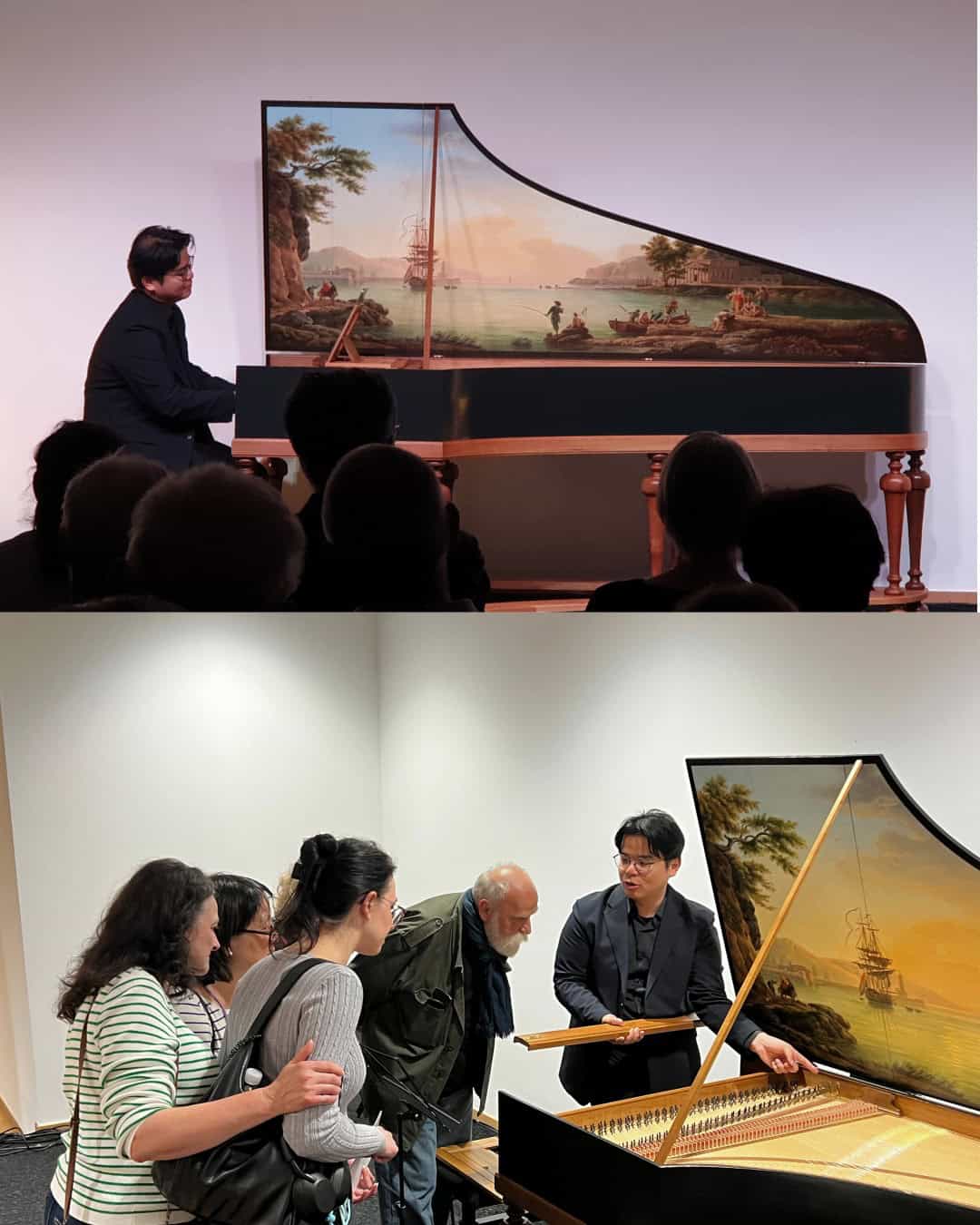
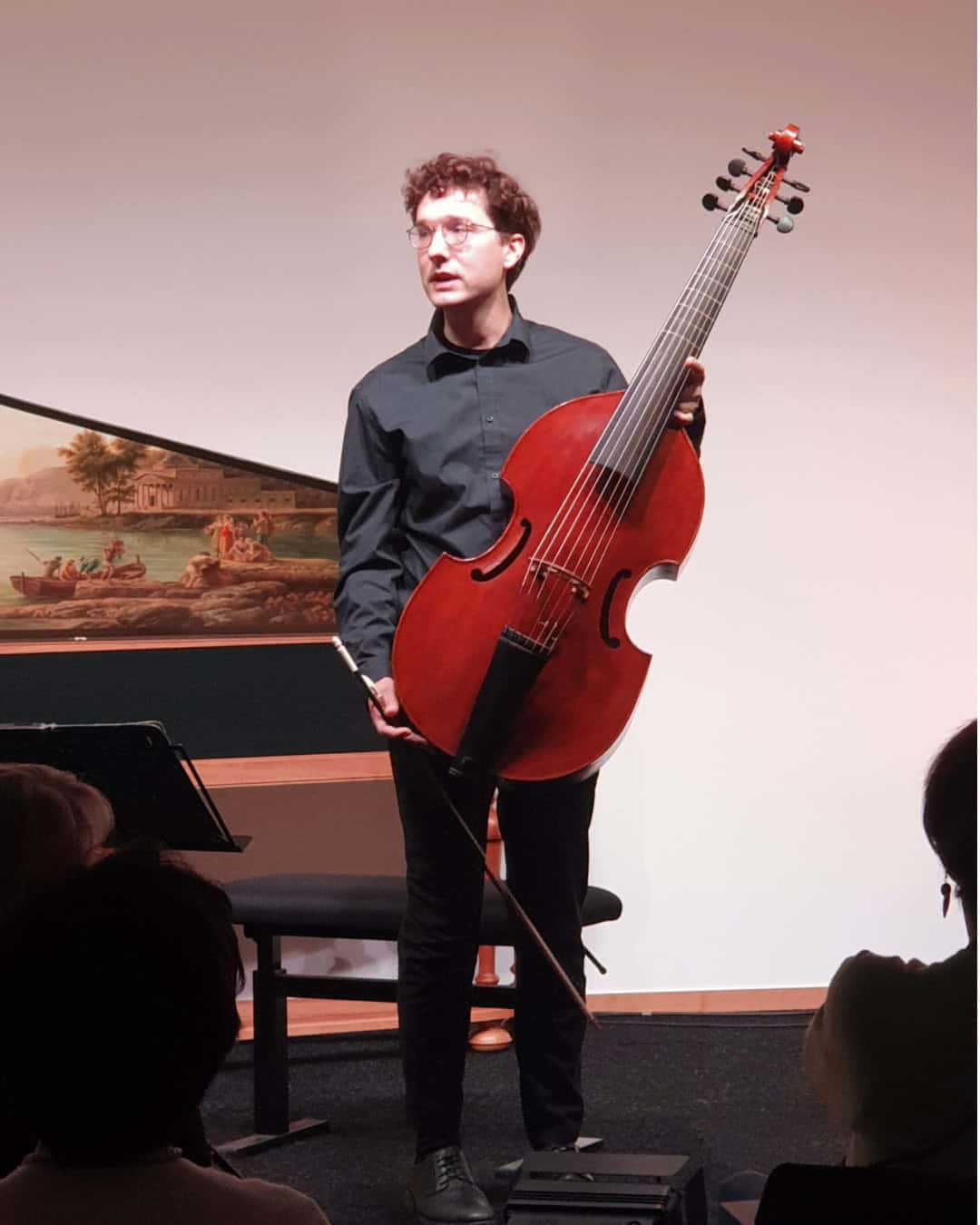
The evening opened with the Trio Sonata BWV 529 by Johann Sebastian Bach (1685–1750), originally for organ, but here in a refined arrangement for recorder, violin and basso continuo. Yeuntae Jung and violinist Han Sol Lee Eo wove their lines like gossamer threads through one another, elegantly supported by the warm sound of Thomas Fields on viola da gamba and the bright, driving harpsichord playing of Tung-Han Hu.
Then followed a rarely heard gem: the Sonata in E minor by Wilhelm Friedemann Bach (1710–1784). The eldest son of J.S. Bach employs a more measured, controlled idiom, in which Jung excelled with a subtle expressiveness. His traverso sounded soft, yet penetrating – as if each motif was a thought, articulated with breath as language.
The Trio in F (TWV 42:F3) by Georg Philipp Telemann (1681–1767) then brought colour and lightness. Fields shone on gamba with a singing, round tone that never lost sight of the style. The dialogue between recorder and gamba had something disarming: this music breathed life, not scholarship.
A brief harpsichord intermezzo – a fragment from BWV 998 by J.S. Bach – gave Tung-Han Hu a solo moment in which his fine touch and rhetorical sensitivity came fully into their own. No show, but tranquillity. And the eye was also treated: the instrument itself was a true work of art, which contributed to the visual charm of the evening.
The Bach sons: contrast and character
Then two other sons of Bach came to the fore. Johann Christian Bach (1735–1782) surprised with an elegant Trio in C – gallant, light-footed and clear. Jung and Lee Eo found an almost effortless balance, in which each phrasing seemed to arise naturally. The refined structure of the programme made it possible to distinguish the differences between father Bach and his sons with crystal clarity – each with their own voice, each brought to full advantage in an intelligently constructed dramaturgy.
Carl Philipp Emanuel Bach (1714–1788) brought the concert to an expressive climax with his Trio in G (H. 574). Here the Empfindsamkeit sounded in full glory: abrupt turns, pronounced expressiveness, and an inner drama that was perfectly tempered by the stylistic accuracy of the ensemble. Everything flowed, nothing was contrived. It was a true "Sturm und Drang" – musical and emotional – after which the surprising encore took an unexpected direction: an original arrangement of Arirang, the unofficial anthem of South Korea. The recognition in this universally melancholic song brought a moving conclusion that lifted many to higher spheres.
Music that speaks, plays and shines
The ensemble's interplay testified to a tight artistic connection: a well-rehearsed group in which each instrument was given space to shine. The joy of playing radiated from it – enthusiastic, with a smile – a pleasure to watch them at work. Because the musicians also played in smaller ensembles – solo, in duet or trio – each instrument had the chance to show different facets of its character. The explanations they gave about their instruments were enlightening and enriching, even for those already somewhat familiar with historical performance practice. No dry reading, but spontaneous and charming commentary that gave the whole an extra dimension.
Yeuntae Jung linked everything together in an accessible way. His commentary was full of interesting biographical tidbits about the composers, always with a subtle touch of irony. It contributed to the relaxed atmosphere and made the sometimes complex music particularly approachable for a broad audience.
Korean virtuosity in European style
What made this evening extra special was the cultural layering. At a time when the concept of 'intercultural' often becomes mere decoration, this concert showed what true dialogue looks like: subtle, enriching and without ostentation. Young Korean musicians, trained at top institutions such as the Universität der Künste Berlin, brought European baroque with a naturalness that radiated both respect and freshness.
Yeuntae Jung, finalist of Musica Antiqua Brugge and laureate of the Berlin Bach Competition, led with quiet, sensitive authority. Han Sol Lee Eo, winner of the Schmelzer Competition 2024, played with a refined flair in which even French baroque echoed at times. Thomas Fields, laureate of the Telemann Competition 2025, was stylistically unwavering. And Tung-Han Hu, affiliated with the Institut für Alte Musik in Berlin, surprised with clarity and playfulness in his continuo.
Not reconstruction, but inspiration
In the warm intimacy of the concert hall, the music of Telemann, Bach and his sons came alive not as museum heritage, but as living art. Not an academic reconstruction, but an inspired experience.
The Korean Cultural Center thereby organized its first concert around "early music" for the first time, and the choice of musicians proved to be a bull's-eye. After a long working day, you went home in good spirits, your mind recharged, your energy meter back to full.
The concert showed how music can build real bridges: not through spectacle, but through authenticity. And so after the final chord, only wonder remained – for the richness of the baroque, for the breath of the past, and for the power of music in the hands of young masters.