Beethoven fever is running rampant with barely any limits: audiences are being swept away by a tsunami of events. Every self-respecting venue is organizing at least a concert series, or better yet, a festival. But all this fuss around Beethoven also has something paradoxical about it.
In recent years, the great artist has increasingly been stripped of his heroic status. We've learned to see him as an ordinary man. Yet at the same time, that ordinary man is revered as a true hero, even as a god, who changed music forever! So we remain stuck, just like previous generations, in a heavily distorted perception of Beethoven. Admittedly a different one, but is it better?
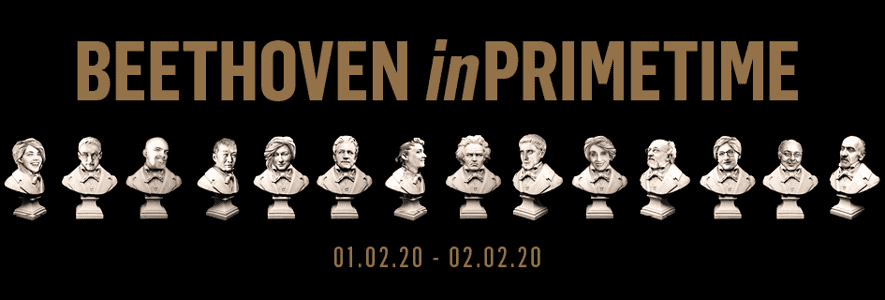
In Antwerp, AMUZ put on a special concert series Beethoven in Primetime: a Beethoven marathon of all thirty-two piano sonatas, performed in one weekend by different pianists on period instruments. Too much is too much. To avoid overdoing it, I decided to limit myself to two double bills on Sunday afternoon with my favorite late sonatas. Still a dozen of them!
Curious about the performances of our own Claire Chevallier, German Tobias Koch, Russian Olga Pashchenko who works in the Netherlands and Belgium, and Lebanese-French-Belgian Abdel Rahman El Bacha, I took a seat in Sint-Augustinuskerk among a predominantly older audience. Inadvertently, I was confronted with the graying of our classical culture. It's worrying that twenty- and thirty-somethings are so absent. Beethoven apparently no longer reaches that demographic. That doesn't bode well for the future. The older generation seems to hold on till the bitter end, but unless something miraculous happens in arts education, we must fear that Ludwig's 300st birthday celebration will look very different.
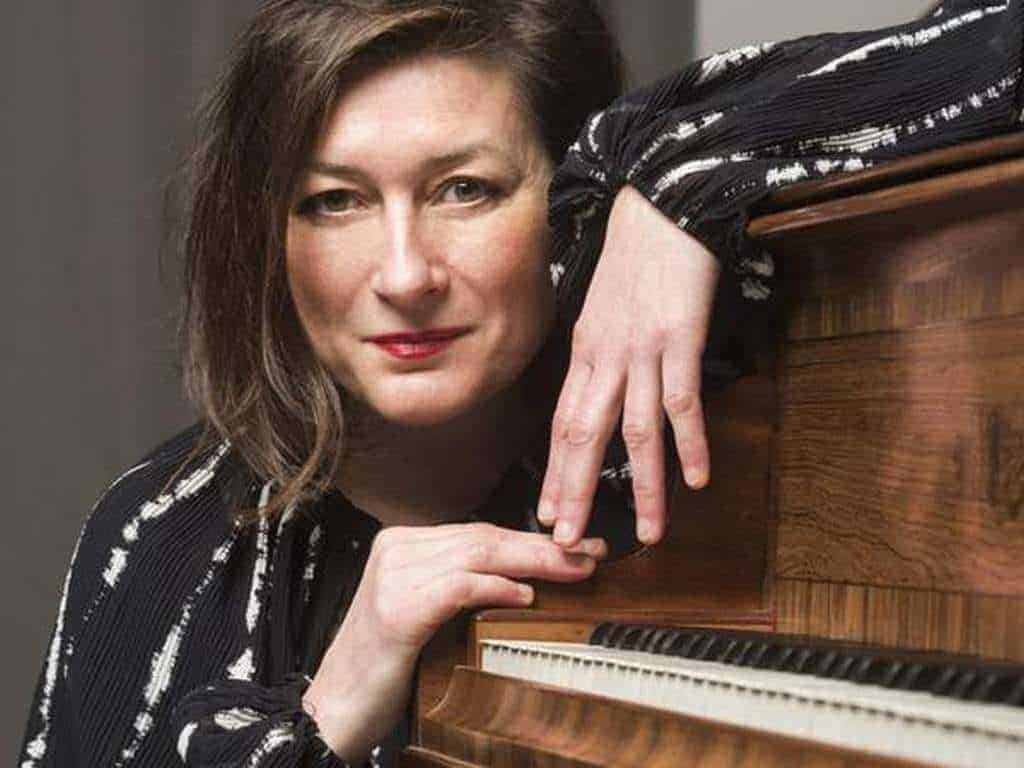
Claire Chevallier was responsible for three sonatas. She started with the all-too-familiar Waldstein Sonata. My expectations were high, but the exciting character of the constantly recurring theme with repeated notes didn't shine through due to her slow tempo. The many contrasting themes were presented in short phrases, and the tension arcs were missing, making her playing sound breathless.
Also in the lesser-known sonata 22, a laborious work built around scales but with an obsessive ending, her playing was not fluid enough. Perhaps that was because she was reading from the score? Her interpretation of sonata 23, known as the 'Appassionata', also didn't really convince me. She didn't draw me into the narrative through her playing, which lacked contrast and was somewhat messy (especially in the final section), and she had the instrument tuned between two movements because there was a radio recording. The instrument itself didn't always sound as clear either, especially not in the louder passages in the lower register, where the sound sometimes became thick and dull.
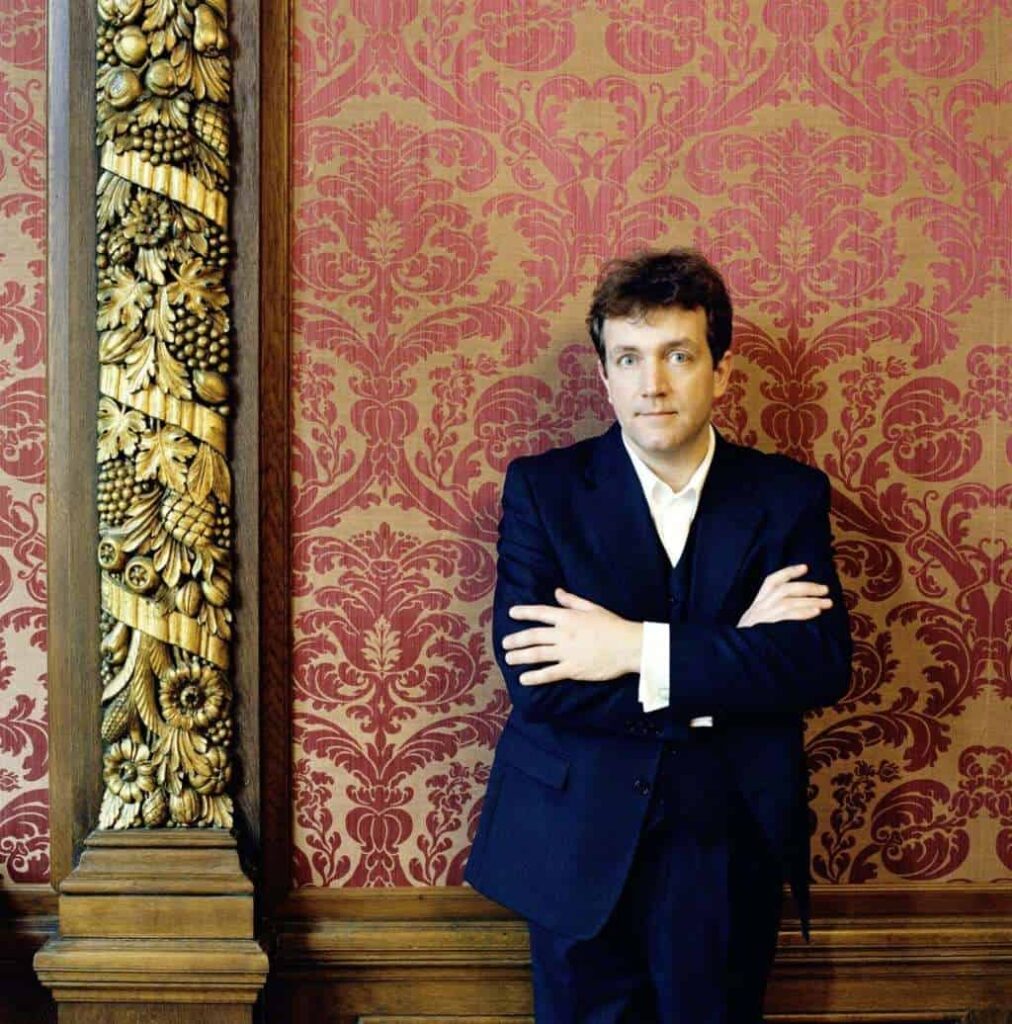
Under the hands of Tobias Koch that same pianoforte – a replica of an instrument by Johann Fritz, built by Chris Maene – really came to life. He was responsible for four sonatas: 24, 25, 26, and 27. And while I wouldn't call Koch the most inspiring Beethoven interpreter, he acquitted himself well in his task. There was tonal color, dynamic contrasts were present, his playing was light and full of humor. That made his rendition of sonata 26 'Les Adieux' a pleasure. His playing flowed and left a positive impression.
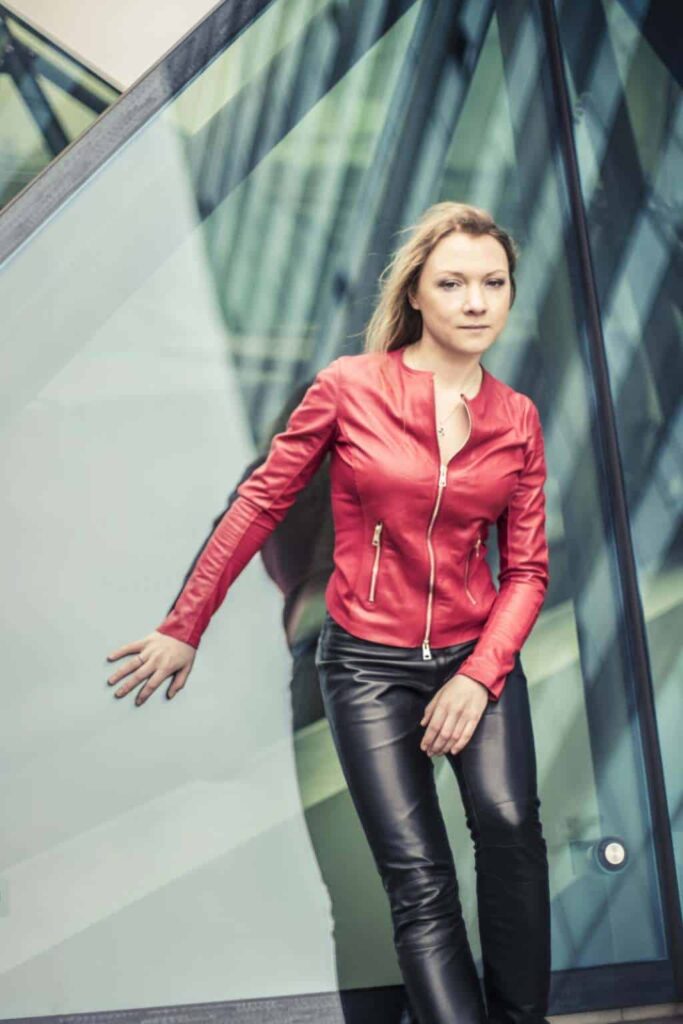
The real work was still to come. The Fritz was removed and the Conrad – a replica of a Conrad Graf instrument – took its place. Anyone who visited the Beethoven House in Bonn couldn't have missed the original. A substantial instrument with a range of well over 5 octaves. Olga Pashchenko tackled sonatas 28 and 29, the so-called Grand Sonata for the Hammerklavier, at her expense. That proved to be a smart move. Pashchenko, who has a brilliant command of everything with keys and is widely regarded as one of the greatest talents of our time, delivered an impressive performance of both works.
Sonata 28 illustrates well how Beethoven's views on sonata form evolved over the years. Here he charges through the musical china shop like a bull and fully indulges himself in a succession of themes and their sometimes dizzying elaborations. A fine example is the four-part fugue in the final section, which Pashchenko executed with sovereign brilliance. From the first to the last note there was tension and excitement in her playing. Pashchenko tells a story, and that's what we missed with Chevallier and Koch.
It became even more impressive with the Hammerklavier Sonata, which, rich in contrasts, timbres, and dynamic differences, was executed with meticulous care. All themes were presented with clarity, culminating in the colossal fugue in the final movement. There Pashchenko once again demonstrated the brilliant technique at her command, and – more importantly – how she knows how to combine it with musical intelligence.
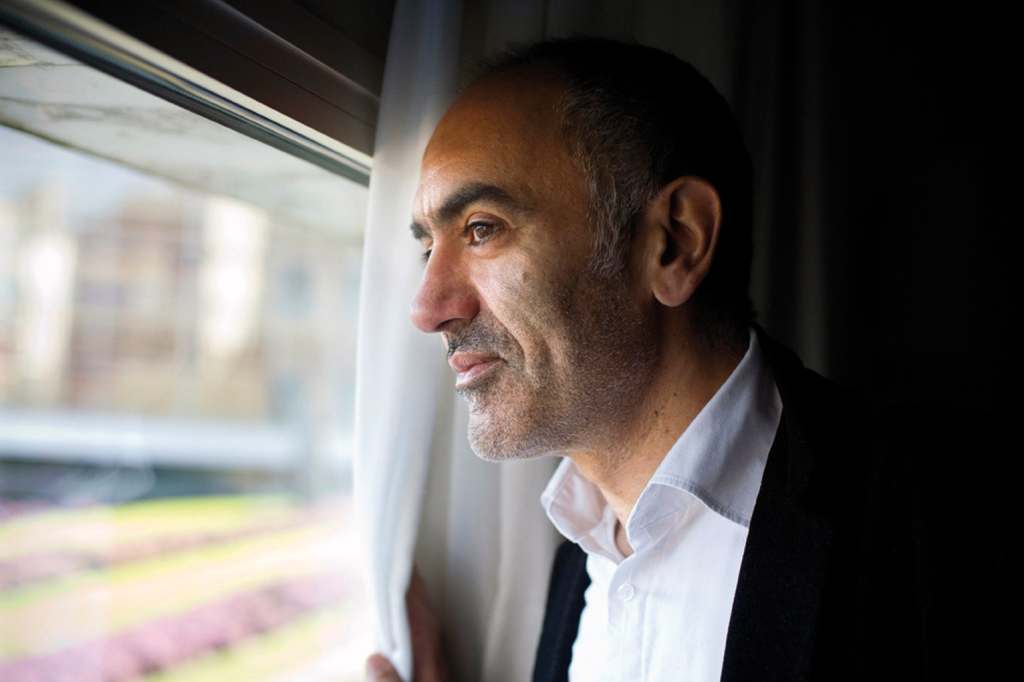
The audience was left exhausted after so much musical display and the accompanying decibels. However, they didn't get much time to recover, because within fifteen minutes {{NOTRANSLATE_1}} was ready to take on the challenge. Abdel Rahman El Bacha Anyone who thought things could only go downhill after Pashchenko was sorely mistaken. Rahman El Bacha surpassed all his colleagues with his restrained, honest performance, free of any artifice. A pleasure to see and hear. Under his hands, Beethoven's last three sonatas sounded almost like a single work. An impression that was further reinforced by the brief pauses between the works. He coaxed surprising timbres from his instrument, sometimes as light as a harp, sometimes dark with deep, resonant bass strings. A convincing argument for the fortepiano! Sometimes meditative, sometimes agitated, always engaging.
And then, finally, at the end of the afternoon, an element made its entrance that we had sorely missed during this recital: emotion. We had heard much that was beautiful, but Rahman El Bacha was the first to touch the heart. His interpretation of Beethoven's final sonata became the true highlight of the afternoon. Here the composer is like a bear breaking free from his chains: freedom! In the succession of ever-evolving variations on a theme that characterizes this sonata, time seems to stand still and the sonata as art form and genre is laid to rest. The end of an era.
It is Rahman El Bacha's great achievement that he placed himself as a conduit in Beethoven's service and thus, as a true medium, offered the audience a direct glimpse into the rebellious and heroic soul of the maestro. He received a standing ovation. A well-deserved reward for an impressive performance!
- WHAT: Beethovenmania
- WHO: Claire Chevallier, Tobias Koch, Olga Pashchenko, Abdel Rahman El Bacha
- WHERE & WHEN: AMUZ, Antwerp, Sunday afternoon 2.2.2020
- VIDEO FOOTAGE: © mt