Festive Season Under Eternal Protection
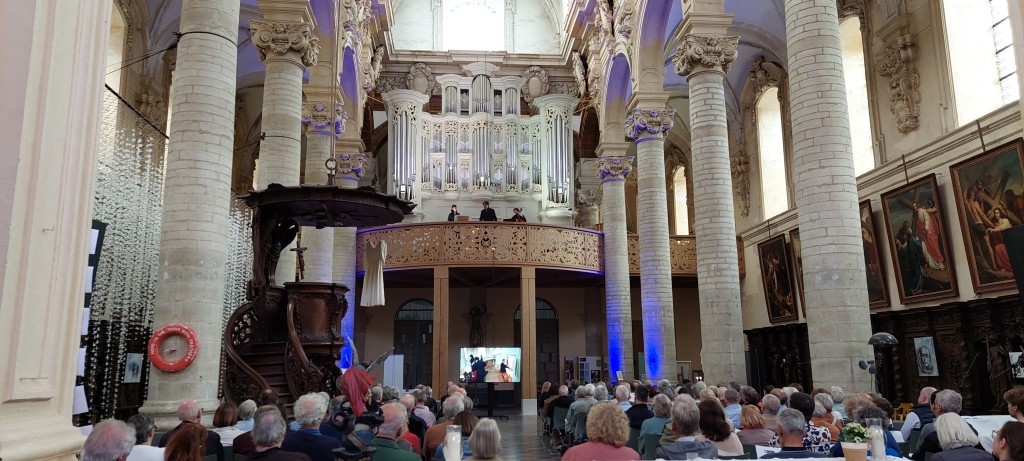
The program featured a carefully curated selection that allowed the interplay between voice and traverso to create space for the organ and baroque cello. Benjamin Alard performed Bach's keyboard transcriptions on the Contius organ; Ronan Kernoa played his parts standing on a twenty-year-old instrument with a warm, sweet and full sound, an instrument built after the model of a baroque cello, without an endpin.
The moving Erbarme Dich moved us as a far-reaching, highly dramatic prayer aria, belonging to one of the two cantata cycles that Bach composed during his Leipzig years 1724-1726, with a libretto written in German by Picander, based on the Gospel of Matthew. It is a plea from Peter after the betrayal, gripped by devastating remorse and – by extension – a profound plea from fallen humanity seeking grace and redemption.
The celebratory program was a repeat of the beginning in 2016 and was marked by a CD recording for the Apha label. The concert, which left a deep impression, left the audience almost speechless. It seamlessly aligns with the countertenor's structured vision for the mission of the Nocte Temporis Ensemble. A celebration for the Holy Family, a testimony about life and vocation: this is how the jubilee concert in honor of the tenth anniversary of A Nocte Temporis came about. Being part of it felt like a privilege to be part of the close circle of devoted loyal audience.Through Bach's music, the audience was invited to contemplate the 'infinite One' who looks upon humanity with love. Face to face with radical transcendence, with the divine Savior, the musician becomes the embodiment of a person lost in prayer, hence the powerful expressiveness of the incredibly warm voice and the appeal to the deepest soul. "Singing is praying twice," Augustine had said… th A Nocte Temporis – The Vision of Reinoud Van MechelenThe tenor, born in Leuven, told in an interview in Versailles last year how he started in 2016 with a small chamber music ensemble. In the meantime, a larger orchestra has emerged, with a repertoire focused on 17th-century French music and 18th-century music by Mozart, confirmed by a CD released in 2025. In its research and development, the ensemble does not focus on the Renaissance, as it could have done, but on modernity up to Romanticism, with Ludwig Van Beethoven and Carl Maria von Weber. From the Night of Time came about. Being part of it felt like a privilege to be part of the close circle of beloved and loyal audience.
Through the music of Bach, the audience was invited to contemplate the 'infinite One' who looks upon humanity with love. Face to face with radical transcendence, with the divine Savior, the musician embodies the human being lost in prayer, hence the powerful expressivity of the incredibly warm voice and the appeal to the deepest soul. "To sing is to pray twice," Augustine had said…
A Nocte Temporis – Reinoud Van Mechelen's vision
The tenor, born in Leuven, told in an interview in Versailles last year how he began in 2016 with a small chamber music ensemble. In the meantime, a larger orchestra has emerged, with a repertoire focused on 17th-century French music and 18th-century music by Mozart, confirmed with a CD released in 2025. In research and development, the ensemble does not focus on the Renaissance, as it could have, but on modernity up to Romanticism, with Ludwig van Beethoven and Carl Maria von Weber.
Reinoud Van Mechelen chose the name for the ensemble A Nocte Temporis meaning "since time immemorial." Philosophically, the name refers to 'an unknown origin,' from which a journey toward knowledge is launched. In other words, the name points to the mysterious night or darkness of ages, an ignorance, an absence of any clarification from which a journey toward the light began.
As the ensemble grew, he became interested in what connects people. Emotions and stories are moving, and he believes this relationship is best expressed in the Baroque. He feels driven to bring this lesser-known music from that period in Belgium to public attention and make it accessible to audiences. Van Mechelen regards Bach as the composer whose work has been completely preserved and who therefore offers every reason to be loved. He hopes that the ensemble can make a worthy contribution to the interpretation of Bach's sacred oratorios of the Passions, as well as works by Vivaldi and Händel. He demonstrates how in the 18th century a turning point occurred with the rise of lyrical tragedy, close to the text: it takes time before people, far removed from the context, can identify with it and receive it.dThe driving force behind starting the ensemble and leading it lies in the bliss he experiences: having artistic control, choosing the repertoire, bearing responsibility, and finding solutions to challenges.
Remaining happy while collaborating with others is a guiding principle. Important encounters took place with people such as William Christie, Philippe Herreweghe, Simon Rattle, and others who inspired him. In opera productions, it is essential that the ensemble acts as a single unit, which is hard work, since artists are less willing or inclined to adapt. He wants to become meaningful in conveying the message, close to the composer's intentions, clearer in works such as Christmas oratorios. Although opera has a large, devoted audience, it is not easy to find suitable listeners for early music. People prefer to attend concerts of the great composers, so the artist's fame is important to be able to present lesser-known music. The early music movement, still in its reflection, began in the 1960s–70s as a reaction and had a difficult start, but gradually reached the level to offer a comprehensive repertoire, thanks in part to musicians such as Jordi Savall and of course the brothers Sigiswald, Wieland, and Barthold Kuijken who rediscovered the historical instruments. There is a continuous restlessness in thinking about what the ensemble can add to established music, which is sometimes played very well, in the competition of interpretative versions and how originality can be preserved. Communicative music is propelled by the established line: old masters, scholarly works, ideas, musical performance, bringing to life – with great effect on the audience that expects a worthwhile experience.
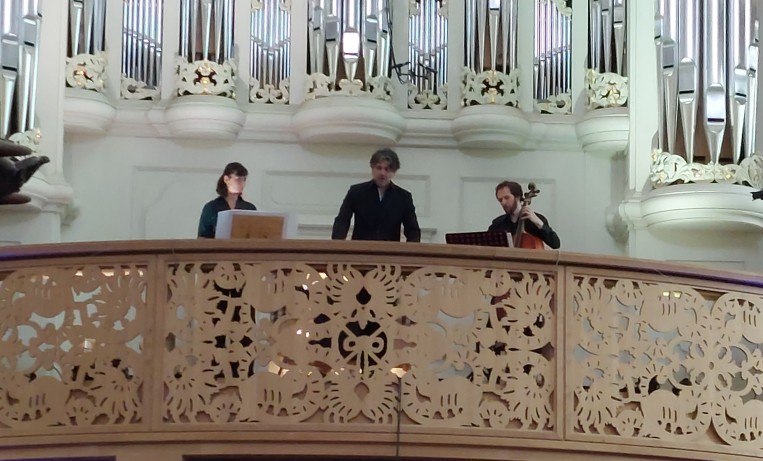
Although the tenor indicates he doesn't feel entirely comfortable with contemporary compositions (he is open to them), a first project was carried out in Bruges, whereby A Nocte Temporis expanded its research to both the Renaissance and works from the early 20th century. It is difficult to combine pieces in one repertoire that require two instruments: a historical instrument and a more modern instrument, for example from the Romantic period. Reinoud Van Mechelen sees that sacred music prompts us toward a spiritual experience and he seeks spiritual comprehension, to rescue the listener from secularized life.
Perspectives
He discovers in French-German music, such as that of Rameau and Telemann, the same ideas about the moments of the day and their significance. Today's hectic pace seems not entirely attuned to real human needs, unlike the Romantic era: there is a difference of seconds to hours, hence the challenge of offering people – and by extension society – a different tempo.
Ultimately, I believe that the public will always receive these musicians, who continue the dialogue of prayer in their and our lives, with great warmth. The jubilee year 2026 also marks their international tour with Rameau's Les Boréades. We wish them every success and hope their art and life remain under blessed protection, as has been the case so far.
A Nocte Temporis: tenor: Reinoud Van Mechelen - traverso: Anna Besson - organ: Benjamin Alard - cello: Ronan KernoaSint-Michael Church of Peace, Leuven PS/KC Festive time under eternal protection The program consisted of a selection in which the interplay between voice and traverso leaves room for the organ and Baroque cello. Benjamin Alard played Bach's transcriptions for solo keyboard on the Contius organ; Ronan Kernoa played his parts standing on a twenty-year-old instrument with a…. We wish them every success and may their art and life continue to enjoy the blessed protection they have known so far.