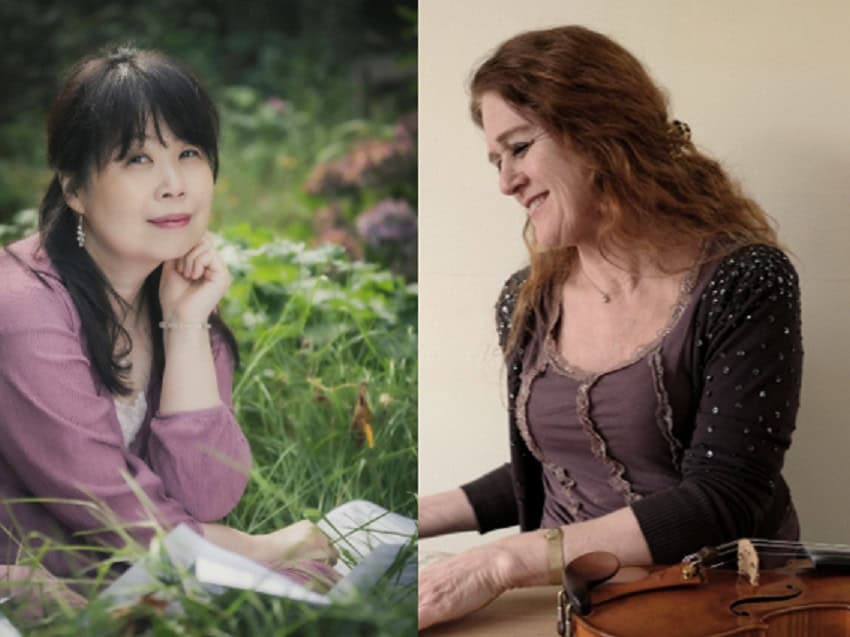
How did you come together as an ensemble and what brought you together in the first place?
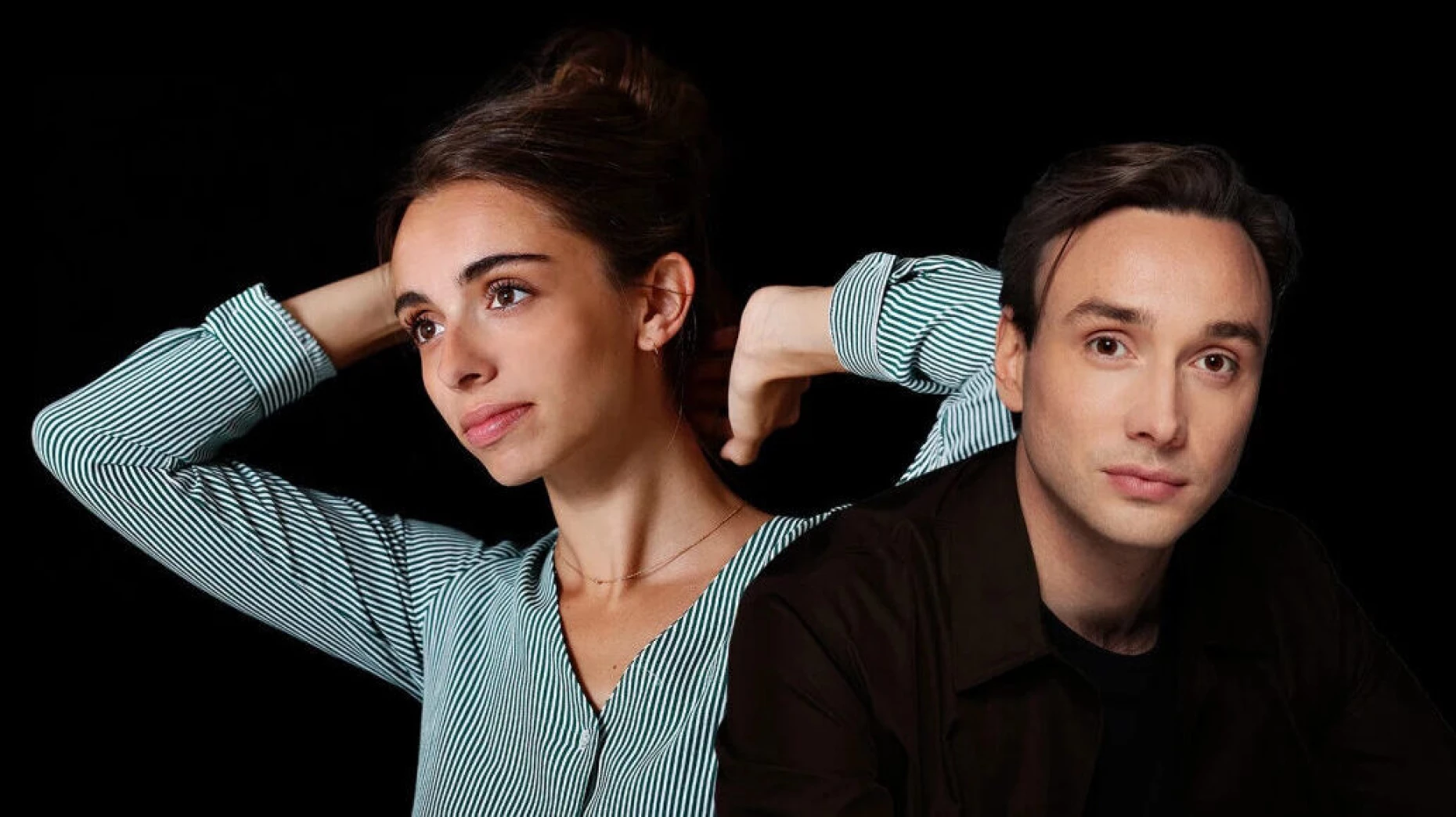
We met through a colleague at the Munt. We were looking for a pianist for a concert on October 12, 2012 in the Concertini series on Friday afternoons. It was a program featuring clarinet works by Berg and Webern. The first piece we played together was Four Pieces for Violin and Piano by Anton Webern opus 7. It clicked immediately, and I asked Yasuko back for a concert program with sonatas by Franck and Beethoven. Over time, we played together so often that we decided to find a name for our duo. FeYa comes from the first letters of our first names.
How do you decide which repertoire to perform? Is there a specific reason why you choose certain pieces?
We usually perform together with others in larger ensembles, often in collaboration with the Munt, where the opera programming typically connects with our chamber music concerts. And for ourselves, we've been working on piano quintets for a few years now in combination with members of the Taiyo string quartet, and we choose together which works we'll perform.
How do you approach the interpretation of classical pieces? Do you share a common vision or do discussions arise?
Usually the rehearsal process runs very smoothly; we mainly work on timing and dynamics. Yasuko is a pianist who has made ensemble playing her specialty—it's a dream to work with her. She inspires and follows along; we barely need to discuss anything.
What were memorable moments and why do they stand out for you?
Personally, I have fond memories of a concert in Ghent where we performed Shostakovich's Piano Trio No. 2 together with cellist Renaat Ackaert. At that moment I entered a flow state where I forgot I was playing violin and became completely one with the music.e What has also stayed with me are the concerts around César Franck. The sonata is one of my favorite pieces, and the last time we performed that work was at a concert in December 2022 for his 200
What also stuck with me are the concerts around César Franck. The sonata is one of my favorite pieces, and the last time we performed that piece was during a concert in December 2022 for his 200the a birthday celebration, where we also performed the piano quintet. It was quite an achievement for Yasuko to play these two works in a single concert! It was also the last concert my mother attended, which made it extra special. She was also a pianist, and I often played this sonata with her during my student years.
And of course, as the crowning achievement of our collaboration, making this CD. That was a wonderful adventure. We spent three days in the old Rosario monastery, where we worked intensively together with Hans Van Daele from Arsis, our fantastic sound engineer. Those days are ones we'll never forget.
What does classical music mean to you, and how has working in an ensemble shaped you personally and musically?
Classical music is an art form in which so many outstanding masterworks have been created that for this reason alone, this music must never be lost. It is an enrichment for every human being to come into contact with it.
Nothing beats experiencing a live concert with music performed by real people. A computer (AI) cannot convey emotions the way humans can. Even if many people don't notice the difference, that doesn't mean it isn't there.
There are so many aspects to classical music. Just learning to play an instrument, like the violin or piano, expands your mind. As a violinist, you have the privilege of being able to play in an orchestra—a very special experience and a good—sometimes tough—learning ground. You learn to listen to others, because you almost always play together in an ensemble or orchestra, where you have a specific role to fulfill. By exploring diverse styles from different periods, you develop an intuition for music and with it, an understanding of many aspects of human nature.
As a pianist, you also gain a fantastic insight into the structure and harmony of music. Many composers have brought these two instruments together in their compositions. The instruments complement each other perfectly in melody and harmony. I've done this myself in two compositions that can be heard on the CD.
But also the unifying aspect of music—sitting together in a hall in silence listening (with your phone switched off)—is something people desperately need in these times.
The wealth of emotions, colors, and atmospheres penetrates every fiber of your being, even if one doesn't always realize it. In classical music, you can express so much that cannot be put into words.
We do our part with this CD and our live concerts.
The joy of experiencing something together and knowing you've moved an audience is incredibly fulfilling and makes life worthwhile.
Why did you make this CD?
Over time, we discovered quite a few unknown beautiful works for violin and piano that had rarely or never been released on CD. With this, we want to create something for the future while also recording Femke's compositions for violin and piano. This is important for her as a composer.
How has working in an ensemble shaped you personally and musically?
We hope that young people, as well as older ones, are moved by our music and inspired to embark on their own journey of discovery through the vast repertoire.