Festival 20'21, music of the 20the and 21ste century
TRANSIT, festival of contemporary music
September 12 to October 26, 2024 in Leuven
From the very beginning in 1994, when Festival 20'21 was still called 'Festival van Vlaams-Brabant' and later 'Novecento', festival director emeritus prof. Mark Delaere aimed not merely to bring 'beautiful music in the finest performances' to audiences but to continually seek connections and meaning. Because the current artistic leaders Pieter Bergé (20'21) and Maarten Beirens (Transit) also enjoy weaving threads between the works performed, each concert program often feels like a composition in itself. The audience knows it will hear primarily music from after 1900, but opening with Schoenberg—you don't see many festivals doing that.) you have to do it 20'21, which traditionally opens together with the academic year of the university city, claims it wants to celebrate its thirtieth birthday in rather modest fashion. What is certain is that the meanwhile spoiled concert audience will leave enriched once again..
It's striking that this edition pays greater attention to composers' anniversaries, perhaps because the two festivals 20'21 and Transit themselves are celebrating milestones. They didn't want to miss two important and perhaps still underappreciated sesquicentennials. That's why the series exceptionally opens before the start of the academic year on
150 – 100
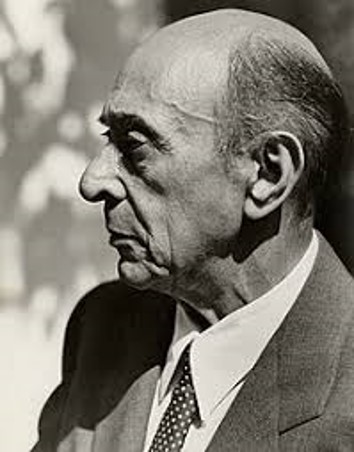 September 13 , which happens to be Arnold Schoenberg's birthday (1874). The godfather of the American avant-garde Charles Ives was born shortly thereafter in that same vintage year of 1874. The 'prelude concert' becomes an adventurous Viennese-American diptych, supplemented with Anton Webern, Henry Cowell, Frederic Rzewski, and Ferruccio Busoni, who died 100 years ago. The pianist Daan Vandewalle, an expert in this repertoire and friend of the festival, will perform.Because the Ives specialist and author of
Listening to Charles Ives. Variations on His America emeritus prof. Peter Burkholder happens to be in our country in September for a congress on music after 1900, the festival even opens a day earlier. On September 12, Burkholder, who has devoted his life's work to Ives, gives a lecture in which he warms up the listener and prepares them to truly listen with 'open mind, open ears' to what may well be the most idiosyncratic and radical composer in music history. Is this the man of thousand thrones
who strew'd our earth with hostile bones
who strewed our earth with hostile bones
and can he thus survive?
Two weeks later, on September 26, the 150-year-old Schoenberg is heard again in the piano quintet Ode to Napoleon Buonaparte, in which the Jewish composer in 1942, from the US, offers biting satirical commentary on the events in Europe that he escaped. The cutting words from Lord Byron's poem of the same name that Schoenberg set to music will be delivered not so much as sung but rather rhythmically declaimed by none other than Dietrich Henschel. Trio Khaldei, expanded with Tony Nys (viola) and Maximilian Lohse (violin) open the concert not only but also conclude it with Ode to Napoleon. Knowing that you will hear a piece twice can bring with it a special concert experience and offers the chance to dive deeper into a work. During the second performance you might focus on different aspects than during the first, more general listening. Perhaps we will experience how variable listening to a work can be, because can we ever cross the same musical river twice? In between, parts of Beethoven's variations Op. 35 and the C minor variations WoO 80 have long held a special appeal for both performers and audiences. But the most famous piece is undoubtedly are heard in an arrangement for piano quintet by Ferdinand Ries and the Piano Quartet by Aaron Copland. Praise and Dread for an authoritarian leader, in one breath.
Having a birthday is also looking back at what has gone well. For the 'real' opening concert on September 23, the start of the academic year, the festival — to the delight of those who were there then — reaches back to a boldly flavored program from 2018 when composer Daan Janssens, at the festival's request, adapted Schubert's song cycle The Beautiful Miller Girl for a larger ensemble. Schubert remains untouched but in Janssens' The Beautiful Miller Girl the melodies are given a rich, contemporary sonic world. At appropriate moments he adds his own intermezzos to texts by Fernando Pessoa from the Book of Restlessness. The CD recording that Spectra under the direction of Filip Rathé made with tenor Thomas Blondelle (in 2018 Thomas E. Bauer sang) is presented on the day of the concert. A prized possession, both for the original musical content and for the visual design entrusted to visual dramaturg Lise Bruyneel who has been taking care of the visual aspect of 20'21 for years.
THE BEAUTIFUL MILLER GIRL by Daan Janssens recording of the 2018 premiere with Thomas E. Bauer
65 – 25
If one can write a sonata, one might as well write 24, composer Frank Nuyts must have thought. With his well-known abundance of energy and ideas, he has over the years breathed contemporary life into the venerable piano sonata. Following in the footsteps of Mozart, Haydn, Beethoven and Schubert, he wrote 24 virtuosic and sparkling sonatas tailored to different pianists. On Transit, which by the way also celebrates 25 years, Elisa Medinilla, Jan Michiels and Barbara Baltussen play sonatas 8, 16 and 24 that were written for them. Who knows, it might become a self-portrait concert? In any case, Leuven will finally see, with a two-year delay, a celebration of Frank Nuyts' 65the birthday, who knows that COVID-19 can have long-lasting effects. Those who want to experience the complete cycle of 24 sonatas by 18 different performers, each with a unique introduction by the composer, should head to Quatre Mains in Ghent the last weekend of September.
20
For Malaysian composer Kee-Yong Chong, this edition of 20'21 is a form of homecoming. Having just graduated from the Brussels Conservatory with Jan Van Landeghem and Daniel Capelletti, he had the opportunity in Transit's early years to present a Belgian creation. On October 19, Chong returns to Leuven as one of Southeast Asia's leading composers with a commission created for the festival.
© Chantal De Waele
EX NIHILO
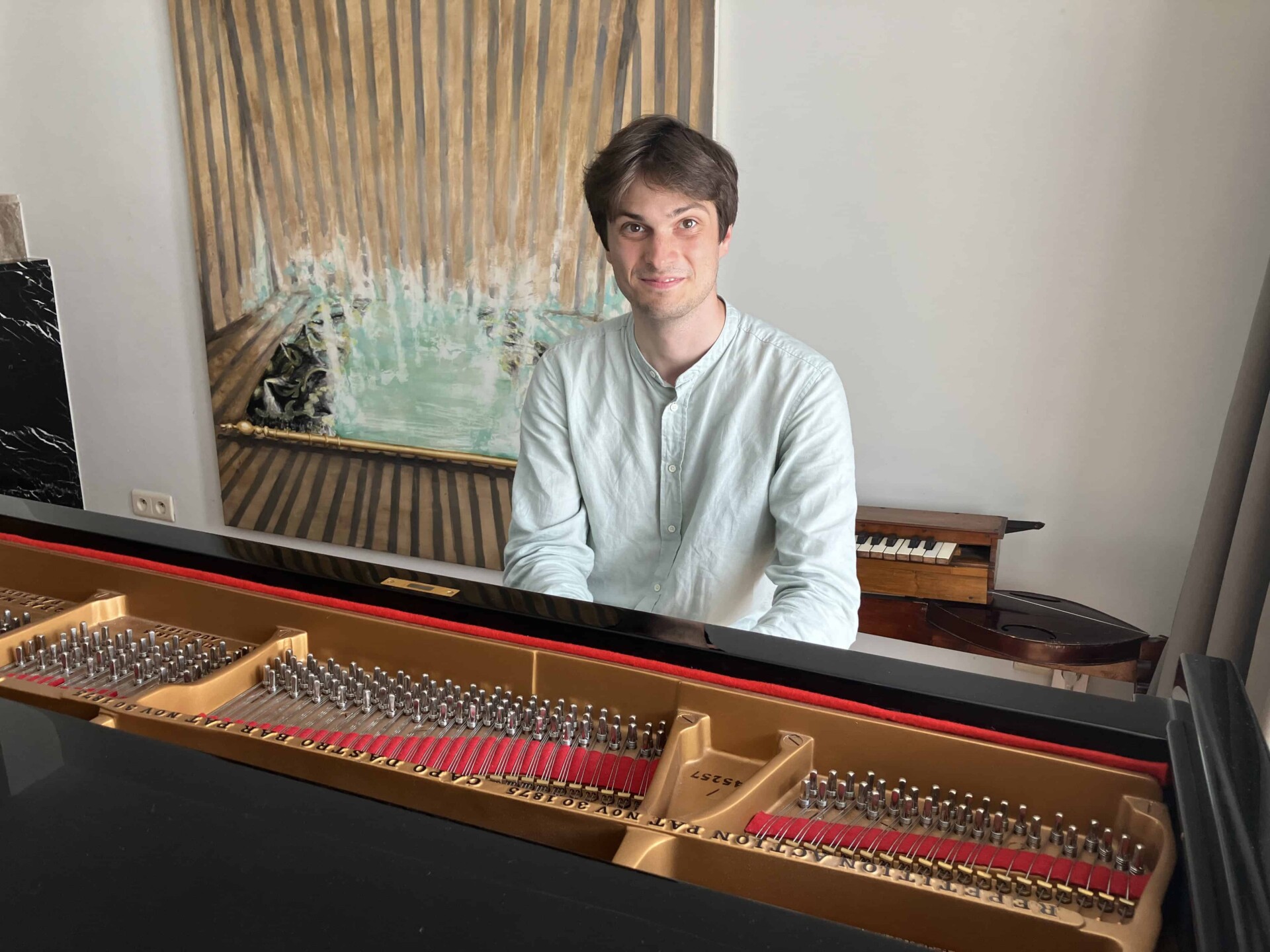
Ex Nihilo is not only the title of the concert with Brecht Valckenaers on October 15,
ex nihilo is also the festival's way of working. With the exception of Grain de la Voix which on September 30 presents a musical collage around the Mass of Notre Dame All of Guillaume de Machaut's concert programs have once again been created 'from scratch' and have slowly matured through an exchange of ideas between the performers and the programmers. Creating a cohesive concert program often requires considerable effort, with countless emails flying back and forth. The same goes for this collage concert In 1951 I began to experiment with very simple structures of rhythms and sonorities as if to build up a 'new music' from nothing. What can I do with a single note? With its octave? With an interval? With two intervals? With certain rhythmic relationships? featuring music by György Ligeti.
When 20'21 and Transit in particular send out their brochure to the world in spring, much of the music listed in it hasn't even been written yet. As you read this, composer Brecht Valckenaers is still writing or revising the interludes for the Ligeti concert. In 1951, the Romanian-Hungarian Ligeti was a young composer of 27 who was completely stuck and wanted to reinvent his musical language. What could he do with a single note? With a single interval? With certain rhythmic principles? Through this exploration emerged his eleven-piece piano work Musica Ricercata. Pianist-composer Brecht Valckenaers, who is still a few years younger than Ligeti was then, develops this music further, expanding it into a full concert program with five of his own interludes as well as five connecting fragments by Lachenmann, Kurtág, Crumb, Cowell, and Bartók.
György Ligeti.
Musica ricercata is an eleven-part cycle in which Ligeti searches for a new language, almost from nothing, sometimes doing a great deal with very little material. In part I, he uses only two notes: the A in all possible places on the keyboard and at the very end twice D as a kind of resolution. For part II he chooses three (different) notes, part III four notes and so on… to end with all 12 notes in part XI. As sparingly as he uses the notes, so lavishly does he play with combining the most diverse rhythms and experiments fully with texture, dynamics and emotional expression.
! LET'S CELEBRATE!
The stage of the Soetezaal at STUK will be far too small, because for the first time in its history, Transit is presenting a real symphony orchestra. 80 students from the Podium Sint-Niklaas Academy perform both Dalí's Dream? by Luc Brewaeys as well as the creation of Ropes by Belgian-Syrian composer Shalan-Alhamwy, a musician with roots stretching from Homs to Ghent. Expect musical traditions ranging from Gnawa music from Morocco to Western Romanticism. The bagala, oud, and Middle Eastern percussion add extra color to the orchestra.
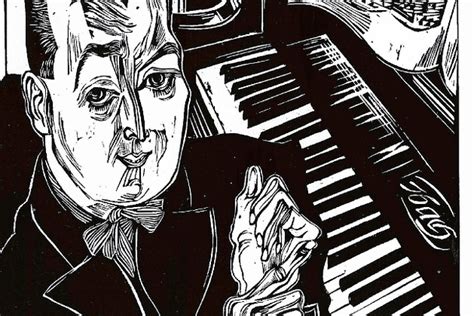
Woodcut by Conrad Felixmüller of the composer Erwin Schulhoff, Prague 1924. © Lindenau-Museum, Altenburg, VG Bild-Kunst.
The festival's most festive moment is reserved for the themed day on October 13, which exceptionally starts at 1:30 PM due to municipal elections and is this year dedicated to Czech masters Bohuslav Martinů, Leoš Janáček, and Erwin Schulhoff. Czech That! comprises two concerts, one for strings and one for winds and percussion. The highlight will be the Dance of the Philosophers, ballerinas, boxers, armchair critics, upstarts, and so on in the satirical ballet The Bourgeois Gentleman Gentleman by Erwin Schulhoff, who reimagined Molière and Lully's would-be aristocrat in 1926. The festival, which always places great importance on carefully balanced visual elements in its music, has engaged artist Gerda Dendooven for this production to make art and music together with pen and pencil. Seven wind players from I Solisti and a battery of five percussionists fade as much as possible into the orchestra pit, to free up the stage for Dendooven's sets and to allow her to continue drawing on the spot . Will she perhaps tackle the political events of October 13? A concert that's literally worth watching.
After the evening concert, you're welcome to join us in the foyer of the City Theater to toast 30 wonderful years and look ahead to the future of Festival 20'21. And while we're at it, why not dream aloud about the new Leuven concert hall, whose cornerstone has yet to be laid? In the meantime, you can already discover the brand new hall at the Philips site, with its modernist design, easy access, and excellent acoustics for chamber music. You can test the acoustics when the Ragazze Quartet performs both Dvořák and works by two American women composers, Ruth Crawford Seeger and Florence Price. Music From the New(est) Worldon October 3, 2024.
Of course, there's nothing wrong with simply letting yourself be carried along and enjoying so many carefully programmed concerts, though it's worth knowing that this isn't the only intention of the organizers. For artistic director Pieter Bergé, "the concert hall is not a refuge to escape from overwhelming reality, but a place to reflect on that reality and where multiple interpretations are possible."
For concerts, dates, and tickets see the website