No better time to publish a book about Tchaikovsky's Eugene Onegin": the opera is one of the Russian operas that the Royal Mint Theater has on its program this season. In the "Word of Thanks" as an introduction to the book, the author mentions that Peter de Caluwe, intendant of the Mint Theater, also inspired the writing of the work.
The ambitious subtitle of the book does make one eagerly anticipate this study: "A groundbreaking interpretation of Tchaikovsky's opera." (italics L.M.) The professor of musicology at Ghent University is in any case not breaking new ground here. In this context, we think especially of his "History of Russian Music," which upon its publication in 1996 indeed caused a stir and which Francis Maes also cites as "a first tribute" to his revered professor and authority on Russian music history, Richard Taruskin, who passed away in 2022. This new book is "dedicated with sincere gratitude to his memory."
The Relationship Tchaikovsky – Pushkin
Francis Maes wants to rescue the opera from the shadow of the story on which it is based. Tchaikovsky's opera deserves a life of its own and displays undeniable qualities that elevate it above a mere "adaptation" of Alexander Pushkin's masterpiece. At the same time, the composer Tchaikovsky is also seen in a new light as both a composer and a human being.
The title of the book refers to the tragedy that is so real and recognizable: your desire is almost fulfilled but happiness slips away at the last moment. It is the essence of the story of Yevgeny Onegin, which Pushkin tells and with which Tchaikovsky captivates us in his opera in an extremely nuanced way with causes and consequences from beginning to end.
The successive chapters of the book delve ever deeper into the subject matter. The first chapters offer a fascinating perspective on the art form of opera ("art of nuance"), the adaptation, the theme of the opera ("What is Yevgeny Onegin About"), the character of Tatiana. Then the author focuses on the composer: the period of composition, the biographical aspects, the libretto, and of course the extra-musical value.
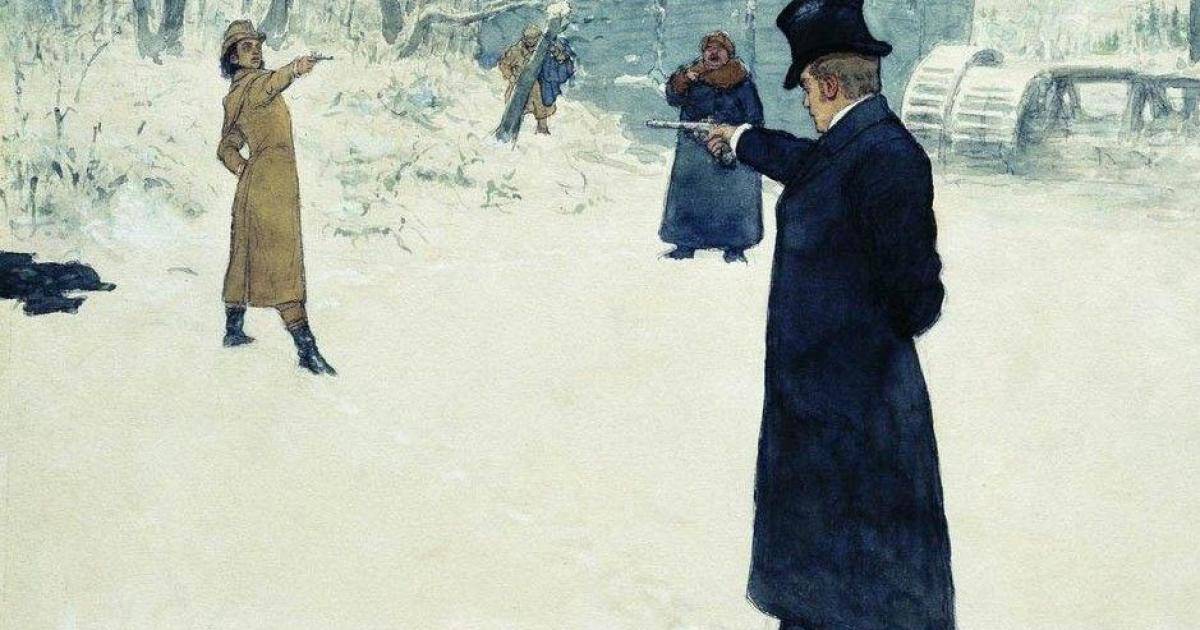
The first chapter makes it clear in an interesting way that it is quite a challenge to put the relationship between Pushkin's literary work and Tchaikovsky's opera in the right perspective. If Pushkin's story ends rather laconically and without commitment for Onegin, in Tchaikovsky Onegin is desperate and the music confirms the inescapable tragedy. From literature to (operatic) music always requires a different nuancing of the subject. It creates the precondition and the freedom for a meaningful visual presentation.
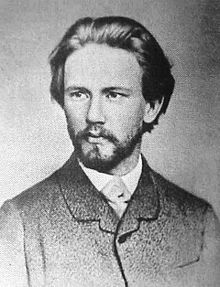
Pyotr Ilyich Tchaikovsky
F. Maes will take issue with the condemnation of Tchaikovsky as an overly confessional composer, which has caused him to lose his universal significance within the music history of the 19thth century missed him. Additionally, his identity as a homosexual prevented him from receiving the recognition he deserved during various periods. But "the intertwining of Tchaikovsky's life and his music goes so far that aspects of his creativity have flown under the radar" (p.39). With Tchaikovsky, it's all about listening carefully and becoming aware of the "unheard refinement and sonic splendor" (p. 42).
The next chapter provides a fascinating analysis of the literary qualities of Pushkin's work, as literary criticism in Pushkin's time was anything but gentle with the way he characterized and developed his characters.
Who is Tatyana?
In addressing the question "Who is Tatyana," Chapter V begins with the observation that the title character Onegin only gains character in confrontation with Tatyana. The opening notes of Tchaikovsky's opera refer to Tatyana. The digression on the role of the "muse" in Pushkin's creative process belongs more properly to academic discussions of the verse novel, but in essence, this chapter provides a very clear and meaningful analysis of Tatyana as the key character in both the novel and the opera. Onegin's fate remains open, while Tatyana's has reached a conclusion, though there remains room for interpretation.
A couple of chapters then examine influences and interactions between contemporary composers who drew inspiration from universal literature (Dante, Shakespeare) and themes from Russian folklore. How did Tchaikovsky come to compose the opera, and what is its performance history? Interesting detail: the opera wasn't performed at the Amsterdam Muziektheater until 1955.

To what extent is Onegin autobiographical?
Of course, the question cannot be avoided: to what extent is Eugene Onegin autobiographical. Through references to some of Tchaikovsky's biographers and the account of his failed marriage, the message is primarily that for a correct interpretation “a careful distinction between the biographical and the creative narrative” (p. 125) remains of the utmost importance.
From verse novel to libretto
A librettist must master the vocabulary of opera and transform a drama or literary plot into a musical structure. The following two chapters delve very thoroughly into this. To convey the correct proportion, F. Maes compiles a schematic overview of the scenes in Pushkin and their possible place in Tchaikovsky's libretto. Perhaps the opera-goer has no need for such detailed overviews, but the conclusion is interesting: namely, that Tchaikovsky succeeds in making his plot more effective within the brevity of an opera structure. The digression on "static" and "kinetic" moments in a libretto belongs more in a more advanced study of an opera libretto.
As Nadezhda von Meck says: "I shall hear Peter Ilyich in it and not Pushkin," so the author of the book confirms that music has its own way of telling a story and can "add something that is not in words." With Eugene Onegin, we can certainly establish that the fidelity to the original is very great. In doing so, the composer brings the characters musically to life and creates a tonality that gives the drama perspective and establishes connections. This chapter goes into detail on these two principles of characterization and tonality, and refers to them (with a QR code link) to Adolf Dresen's production conducted by Semyon Bychkov. Scene by scene, the action is musically analyzed and explained.
Onegin and Tchaikovsky
In the final chapter ("A reflection"), the author examines some later adaptations of Pushkin. Reworkings by playwright Krzjizjanovski or by Prokofiev, who composed incidental music for the verses, never really came to life. Of the choreographies by John Cranko (1965) and John Neumeier (2014) and the film version by Martha Fiennes (1999), F. Maes describes the nuances that deviate from the opera.
Finally, he also discusses the 2006 production of Eugene Onegin by the controversial director Dmitri Tcherniakov for the Bolshoi Theatre. It provoked fierce reactions, especially in Russia. Even the fantastic soprano Galina Vishnevskaya opposed this production.
The conclusion of the reflection addresses the key scene of Tatyana—the letter scene. The author places this scene in the history of emotional "women's scenes" in opera history. He concludes that as an expression of the female psyche in Tchaikovsky's opera, it is an absolute illustration of the "emotional power of music."
However iconic Pushkin's verse novel may be in Russian literature, Tchaikovsky's opera has certainly contributed to a more universal place for the characters of Tatyana and Onegin in the cultural world. Conclusion
This book cannot be read as an "opera guide" for those seeking a concise and accessible introduction before attending a performance of Eugene Onegin. It is a book for those seeking added value—those who want a broader cultural context for the opera and for the relationship between a literary masterpiece and an equally powerful musical masterpiece.
That this book provides extremely interesting insights into Tchaikovsky and Russian literature and culture is beyond question. And it certainly offers a clear analysis of Tatyana's psyche and her evolution from young girl to a resigned, self-aware woman.
It's a shame that the author frequently gets carried away with extensive academic discussions or overly detailed literary analysis (e.g., descriptions of types of rhyme—feminine, masculine, iambic tetrameter, rhyme schemes). References to consulted studies and specialist literature on the subject are always precisely indicated in footnotes.
Moreover, the academic language can certainly make the book difficult for the average interested reader. (Example: "Although the critical discourse lacked criteria relevant to evaluating Tchaikovsky's music, the public was never deterred by this," p. 42)
The academic language used in the book can certainly make it difficult for the average interested reader. (example: "Although the critical discourse lacked the criteria that could be relevant for assessing Tchaikovsky's music, the public was never distracted by this." p. 42)
The book is certainly humanistic, though whether it's as accessible as Peter de Caluwe promises on the back cover is debatable. But anyone who wants to delve into both a literary and musical analysis of a masterpiece from Romantic opera literature will certainly find pleasure in reading this admittedly "groundbreaking interpretation".
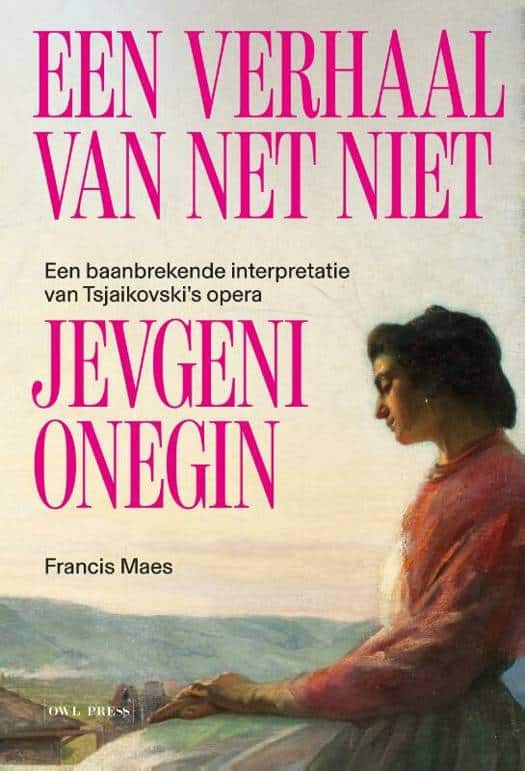
WHO: Francis Maes
WHAT: A story of almost
A groundbreaking interpretation of Tchaikovsky's opera Eugene Onegin
EDITION Owl Press
Performances at the Royal Mint Theater (Brussels) until 14-2-2023: Info & Tickets