The novel La Convertie by Stefan Hertmans adapted into an opera seemed like an almost impossible task! Not for a composer with an open mind and interest in diverse cultures like Wim Henderickx. It was precisely the impact of diverse cultures on an individual's life that fascinated him in the novel, and he set out to compose an opera that builds bridges between Christian-Western, Jewish and Arabic-Eastern cultures. He succeeded remarkably well.
L'histoire
The "Convert" is a woman who in the 11th century falls in love with a Jewish boy. She escapes her prominent Christian family in Rouen and stays for a time in Narbonne. The couple must flee from the search ordered by her parents and end up in Moniou in Provence. Meanwhile, they have married and Vigdis has converted to the Jewish faith. In doing so, she has changed her name Vigdis Adelaïs to Sara Hamoutal. They have two children. But the violent and fanatical Crusades of the Christians cause a real panic. During a pogrom, her husband David is murdered during the storming of the synagogue and her children are abducted. The journey that Hamoutal then undertakes in search of her lost children becomes an incredible ordeal, in which she repeatedly finds courage to overcome all kinds of threats, often at risk to her life. Only a letter of introduction from the rabbi of Moniou offers her some protection. In various stages she reaches Egypt. Rape, the death of the baby she carries anxiously, threat of the stake—with inhuman resilience she endures all these horrors. She remarries and tries to rebuild a life. But the news that her two abducted children are with her parents causes her to undertake another journey, back to France. Having gone mad, Hamoutal finally dies in a secret cave of the synagogue of Moniou where she hoped to find refuge.e Mysticism and magic
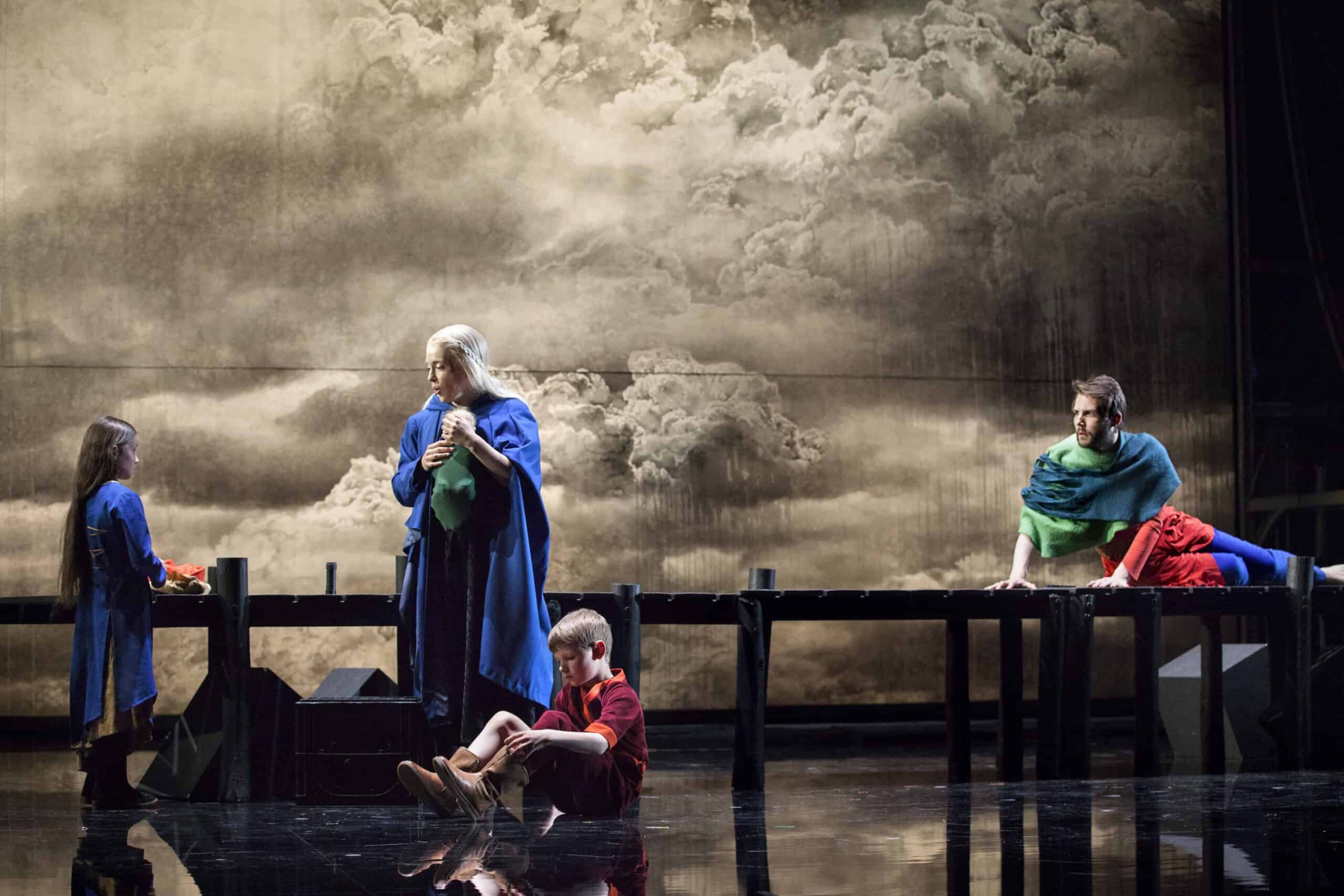
While Wim Henderickx may have set the harmony between diverse cultures as the main goal of his opera in terms of content, formally he has also achieved a fine harmony between all elements of an opera. The fact that he could rely on a number of collaborators whom he clearly inspired with his vision plays an important role. But the icing on the cake is certainly his music. The dissonant opening sounds of the work immediately create an atmosphere of mysticism and magic, two aspects that permeate the tenor of the opera. His use of electronics is gently combined with traditional instruments. The same applies to the use of Eastern elements with which Henderickx is so familiar and which he integrates into this story in a meaningful way. The baptism of Vigdis/Hamoutal and certainly the ending with the "death scene" and the mourning prayer Kaddish work ideally on the viewer thanks to the spiritual tone. The emotional passages are always imbued with lyricism, with strings and woodwinds laying down a gentle melodic line. This often creates a strong contrast with the intense passages with sharp brass and percussion. Henderickx is of course not new to this and has proven his talent and skill as a contemporary composer in various genres with countless works (vocal and instrumental), but his years of evolution culminate perhaps in this opera, in which various characteristics of his work come together and are united in a never obtrusive but rather efficient way to serve the story. In Koen Kessels he has an experienced and extremely motivated conductor to bring the music to life in all sections and nuances.
Drama in need of lyricism

The vocal parts of the soloists are very detailed with an alternation of long melodic lines (for example in the aforementioned love duet between David and Hamoutal) and shorter rather parlando fragments (example for Obadiah). The sometimes demanding tonal shifts in Hamoutal's meditative passages are no problem for Lore Binon and she has some beautiful arias with coloratura character. Once again she proves what a magnificent singer she is, especially for rather "delicate" vocal music. Her Hamoutal reminds one of that other fragile yet determined woman Mélisande, whom she also portrayed with such depth. She can almost be typecast for such characters. She plays the role of beloved and mother in a touching and deeply felt way, with all her care and helplessness, even to the point of hallucination. Her real pregnancy moreover adds an extra credibility to the role. Her Jewish husband, David, is played by tenor Vincenzo Neri, with a clear and flexibly manageable voice, which enables him to also skillfully perform the other roles assigned to him. The procedure of entrusting different characters to the same singers is also used for other roles. Certainly worth mentioning among the singers is Amel Brahim-Djelloul with her specific Eastern-tinged timbre. Luvuyo Mbundu is with his soft bass a charismatic Rabbi Obadiah.
A tour de force
Précédent
Suivant
Reducing a novel with so many events into a coherent opera-length story, letting so many different characters and landscapes pass by—it's a tour de force that librettist Krystian Lada has accomplished with verve. Moreover, he had to avoid the pitfall of the sub-stories with which Stefan Hertmans in his novel historically justifies the narrative, while remaining true to an accurate portrayal. Theory about different ways of life and ideologies, with all their discrepancies and conflicts, is embedded in the characters' dialogue and depicted on stage. The second part of the performance is somewhat more chaotic, as Hamoutal's many wanderings on her fatal flight from France to Egypt make the storyline less clear in a short space. The text in English (except for a few short passages in Latin and Hebrew) sounds fluent and poetic. The fact that the opera is in English may seem contradictory to Henderickx's claim that he wants to make "opera for everyone," but the performance certainly proves that the language works well and of course in this way the chances for international reach (which the work certainly deserves!) are assured.
Original direction
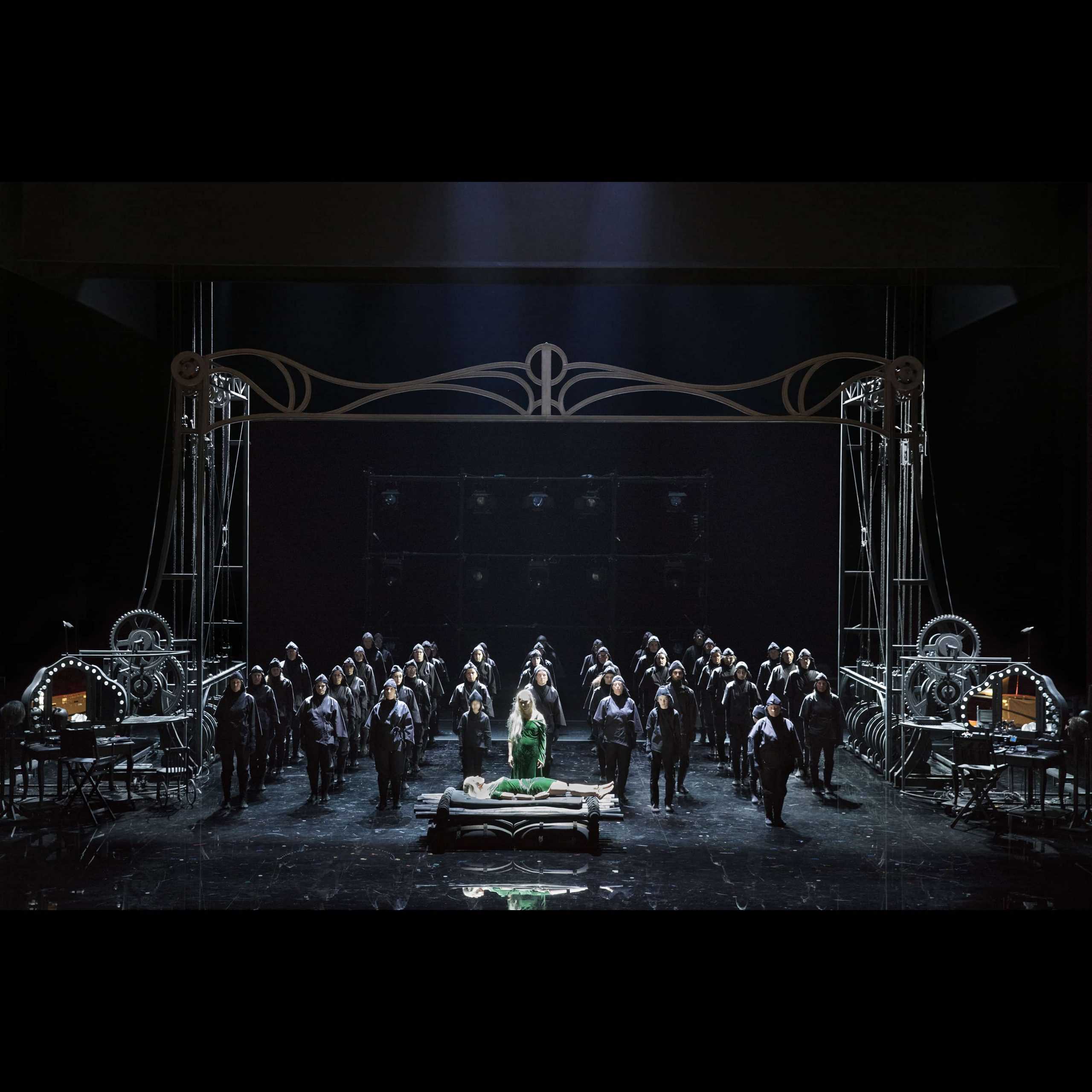
How refreshing to see a contemporary opera that doesn't resort to the by now almost clichéd technique of video. Hans Op de Beeck as director lets his painting talent run wild with large painted canvases as sets. There are about sixteen paintings that are changed via a manual rotation system like the old curtains of a theater. The director himself calls it a "picture book" and you can't describe it better. Within a frame with an arabesque-like illustration at the top, a page turns per scene, as if you're leafing through a storybook. The value of the paintings is that besides being a beautiful print they help the viewer integrate into the emotion of the characters. In the love scene, the moon accentuates the poetry of the couple, the desert landscape heightens the desolation of Hamoutal's wandering, and so on. His costumes also work strongly in terms of content. Especially for Hamoutal. The double choir is dressed in black, like a kind of Greek choir commenting on the tragedy, where again the musical style of Henderickx works poignantly. What is somewhat disturbing in his set design is the use of some rather kitschy-looking props, such as the shell and the toy scales of the children in the opening scene, although that image does show from the beginning of the opera how strong the maternal involvement of (at that moment still) Vigdis is with her children. The threat of the drama that follows is immediately insinuated. The shell as a reference to Botticelli and the birth of Venus is perhaps a bit too far-fetched? A clever invention is the doubling of Hamoutal in a doll as an "alter ego." In this way the director avoids showing certain sensitive passages as too painful (example the rape). And at the end of the opera it's clear that the "old" Vigdis has no reason for existence anymore, while Hamoutal steps into the dark night. The mourning prayer at her death is so beautiful that it evokes the processing of trauma. Deeply impressed, you leave the hall as a spectator.
© Filip Van Roe
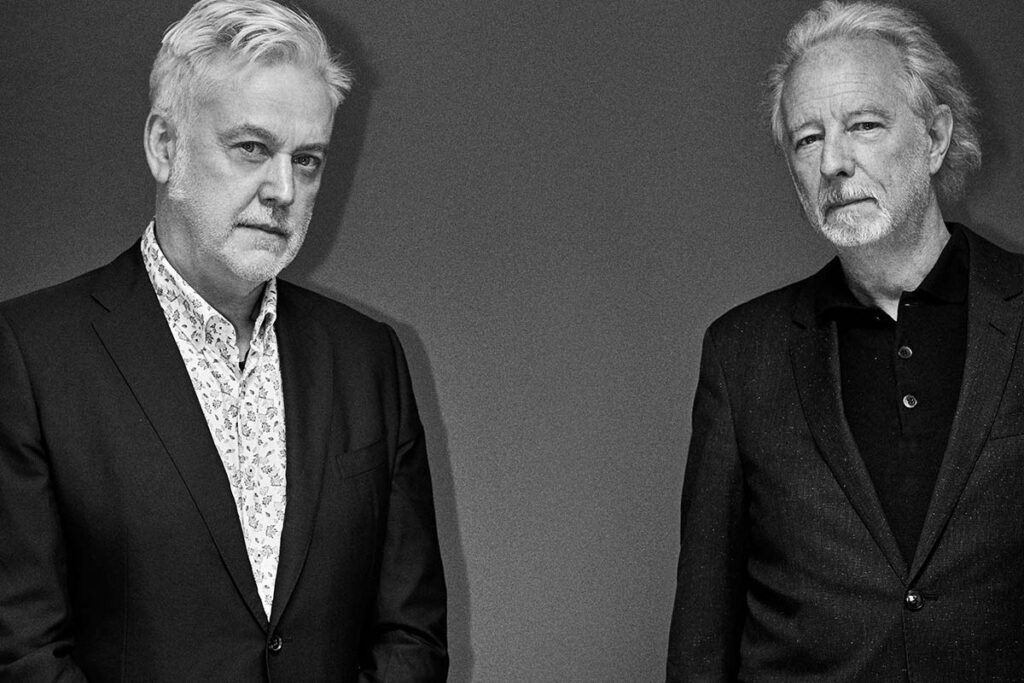
(The Convert)
OÙ: La Convertie Wim Henderickx [music], Krystian Lada [libretto], Hans Op de Beeck [direction]
QUI : : Lore Binon, Vincenzo Neri, Amel Brahim-Djelloul, Luvuyo Mbundu
Elena Galitskaya, Bruno de Simone, Guido Loconsolo, Julie Bailly, Mert Süngü, Biagio Pizzuti, Alexander MarevTuesday 10-5-2022, premiere
ORCHESTRE: Orchestre Symphonique Opéra Ballet Flandre, Chœur et Chœur d'enfants Opéra Ballet Flandre, Chœur de la ville Madam Fortuna
OÙ : Phile Deprez
QUAND : De Bekeerlinge can still be seen until May 19 in Antwerp, and on May 27, 29 and June 2 and 4 at the opera in Ghent. Tickets and more information via [eafl id="31283" name="De bekeerlinge" text="this link. "]
INFO : La Convertie peut être vue jusqu'au 19 mai à Anvers, et les 27, 29 mai et 2, 4 juin à l'opéra de Gand. Billets et plus d'informations sur [eafl id="31283" name="De bekeerlinge" text="ce lien. "]