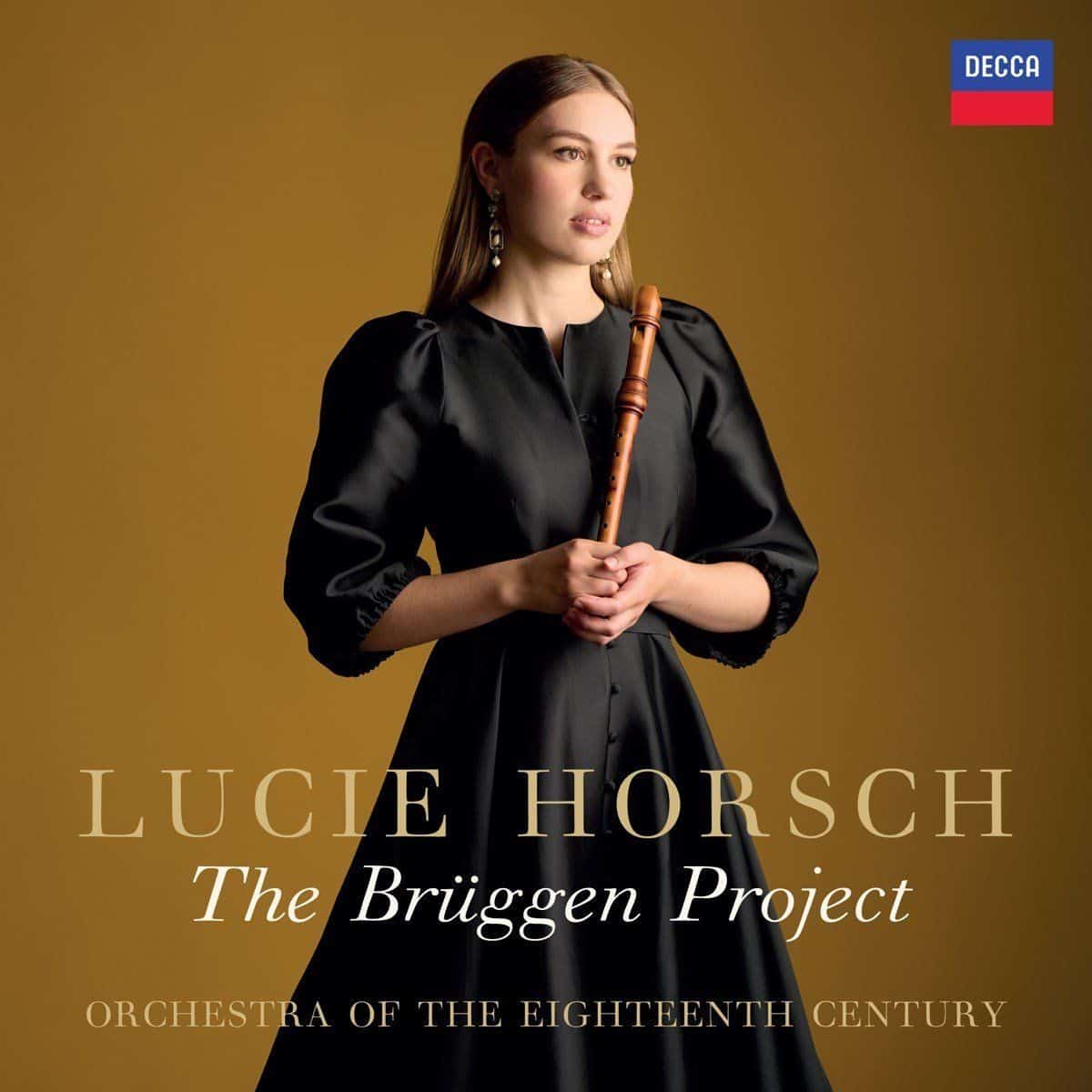
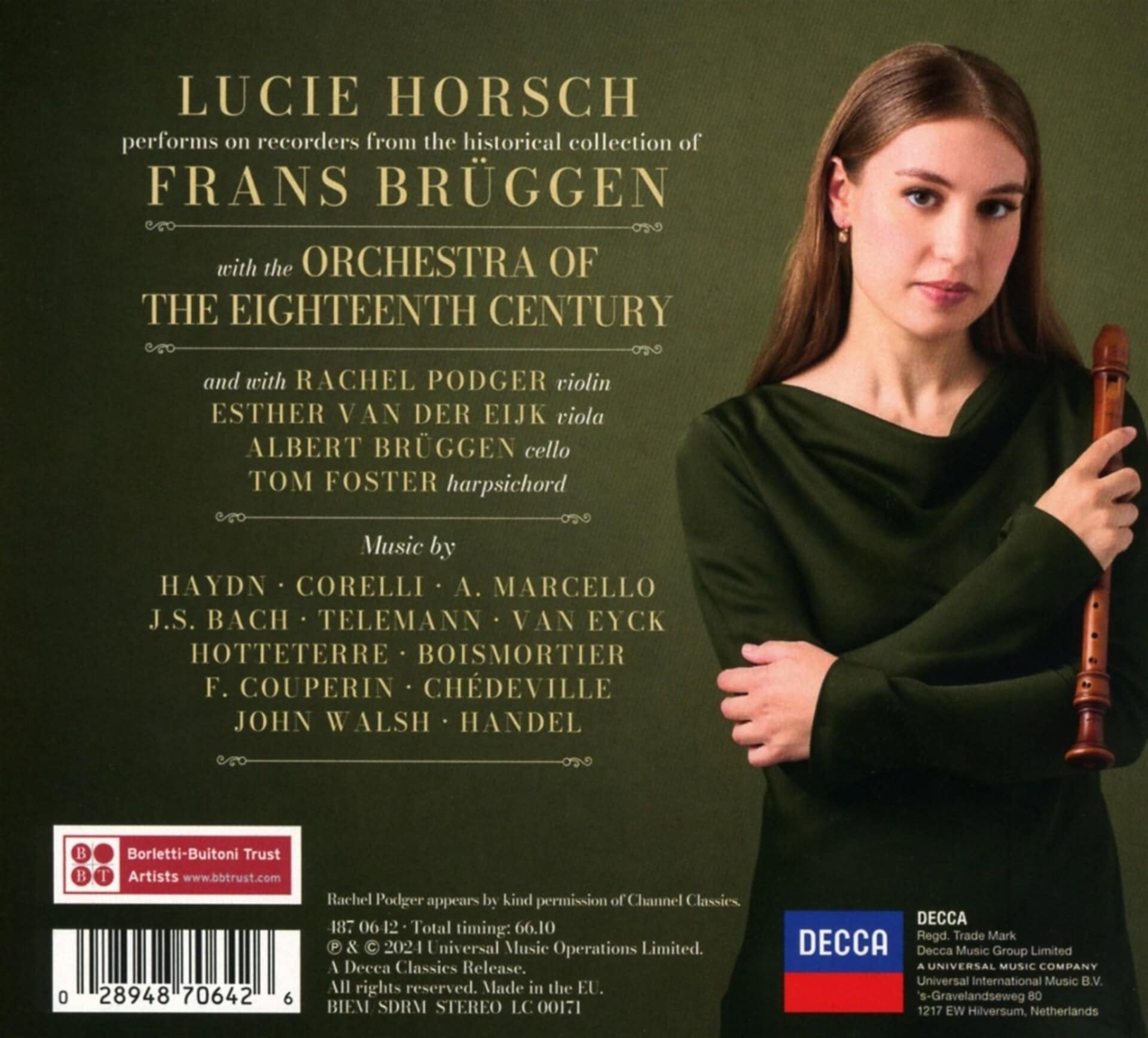
Lucie Horsch (25) is a natural-born talent in more ways than one. Not only does she play the recorder with masterful brilliance, but she also sings and plays piano with remarkable skill. A world-class musician who has already added several gems to her discography.
This new Decca album centers on the recorder—an instrument many of us learned with as children, though musicologist and sociologist Cas Smithuijsen rather dismissively refers to it as 'something you pick up at the local department store.'
It took a musical giant to breathe new life into this instrument that had been buried by time. That was Frans Brüggen (1934-2014), who succeeded brilliantly. In his bookReveil en RevolteSmithuijsen recounts the founding ofSour Creamthe recorder ensemble established by Brüggen and Kees Boeke in 1971, which dedicated itself to Renaissance and early Baroque recorder literature while also fearlessly embracing contemporary repertoire of the time, making arrangement, experimentation, and improvisation practically a life's motto. All this while maintaining a stylistic purity in performing medieval, Renaissance, and Baroque music that was virtually unheard of at the time. The ensemble unfortunately came to an end in 1990 when Boeke departed for Zurich to teach at the University of Theater and Music, specializing in recorder and early music.
Brüggen had founded the Eighteenth-Century Orchestra nine years earlier, in 1981, together with Lucy van Dael and Sieuwert Verster, with the primary aim of delivering stylistically authentic performances of eighteenth-century composers' works (though this mandate eventually expanded) within the frameworks of historically informed performance practice.
Brüggen was more than just a musician: he scoured libraries searching for interesting material not only for the recorder but later for the orchestra as well, and he also collected historical recorders. This resulted in acquiring several centuries-old instruments, fifteen of which Lucie Horsch was permitted to play thanks to the enthusiastic cooperation of Brüggen's widow and art historian Machtelt Brüggen-Israëls. However, the playing time necessarily had to be limited, as the instruments had become extremely fragile over the years due to exposure to breath and environmental moisture. This was the only—but certainly important—constraint Lucie Horsch had to impose on her playing. It also meant finding appropriately short repertoire, as most instruments could only be played for about three minutes at a time before that was it. The stopwatch was therefore carefully monitored, and the instruments were kept close to the body, so to speak, to keep them warm. Inevitable corrections afterward were also time-bound, which certainly didn't make the sessions any easier. But she did have an enthusiastic 'audience'—besides Machtelt Brüggen-Israëls, there was Furmitaka Saito, a Japanese recorder maker, who supported Horsch with both advice and practical assistance.
For Horsch, it was a fascinating adventure that gained extra significance because she was now playing onoriginal instruments to play, rather than copies. She herself had developed a preference for replicas of French maker Peter Bressan (1663–1731), but thanks to this Brüggen Project, she was now holding two authentic recorder recorders by this famous maker for the first time. That felt very special to her, and especially because she now had the opportunity for the first time to compare their original sound against that of the copy.
For the listener too, it must be a remarkable experience to hear these original recorders for the first time, not only performing solo, but also together with other musicians, including that equally magnificent Orchestra of the Eighteenth Century, conducting this special occasion under the baton of Lucie Horsch. The recording has also received meticulous attention, allowing the sound of both these recorders and the ensemble to come alive in an equally special way.