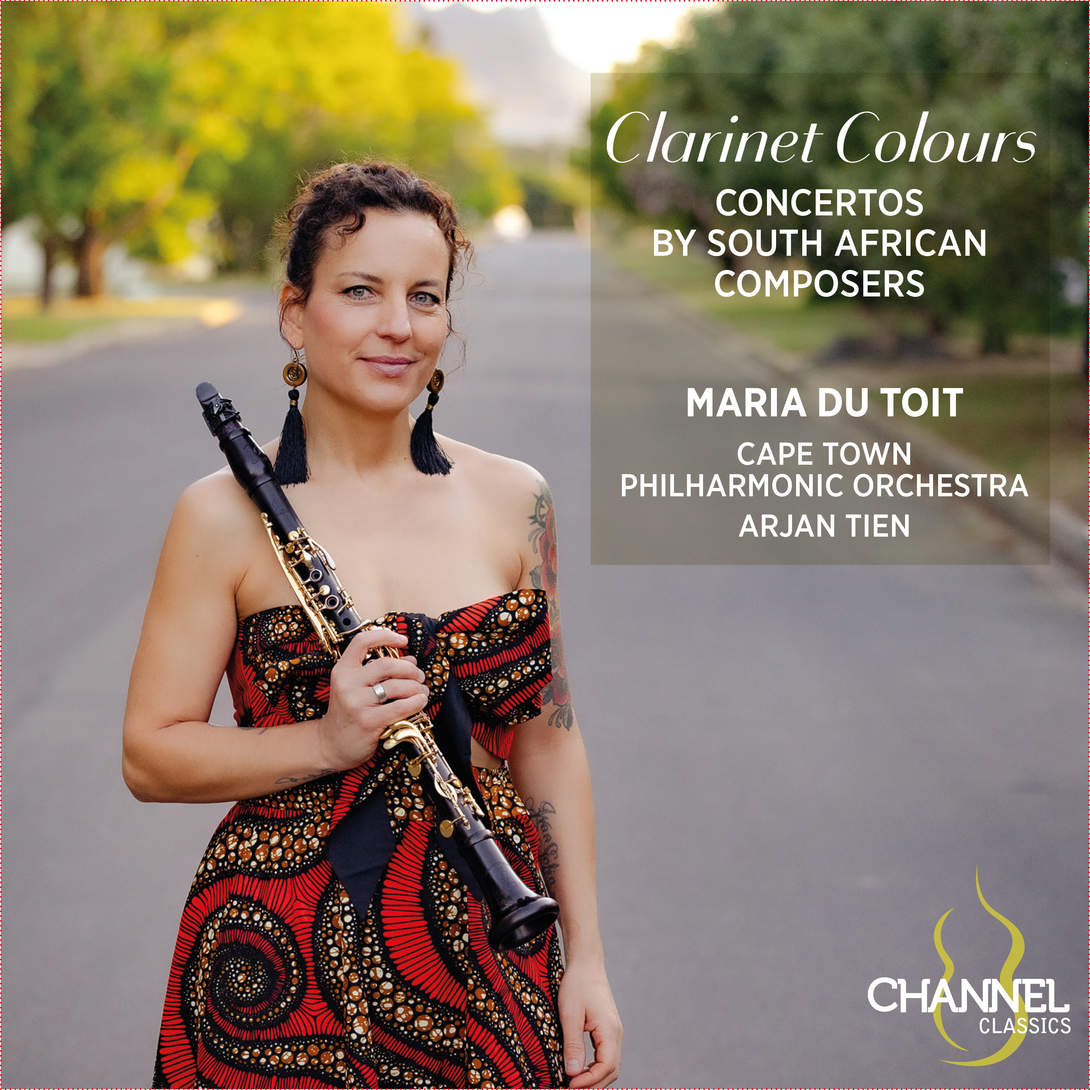

Two masters of the art song: tenor Ilker Arcayürek and his accompanist Ammiel Bushakevitz
Who hasn't shed a tear reading and listening to "Die schöne Müllerin," the song cycle that touches every heart with music by Franz Schubert and texts by poet Wilhelm Müller (what's in a name?).
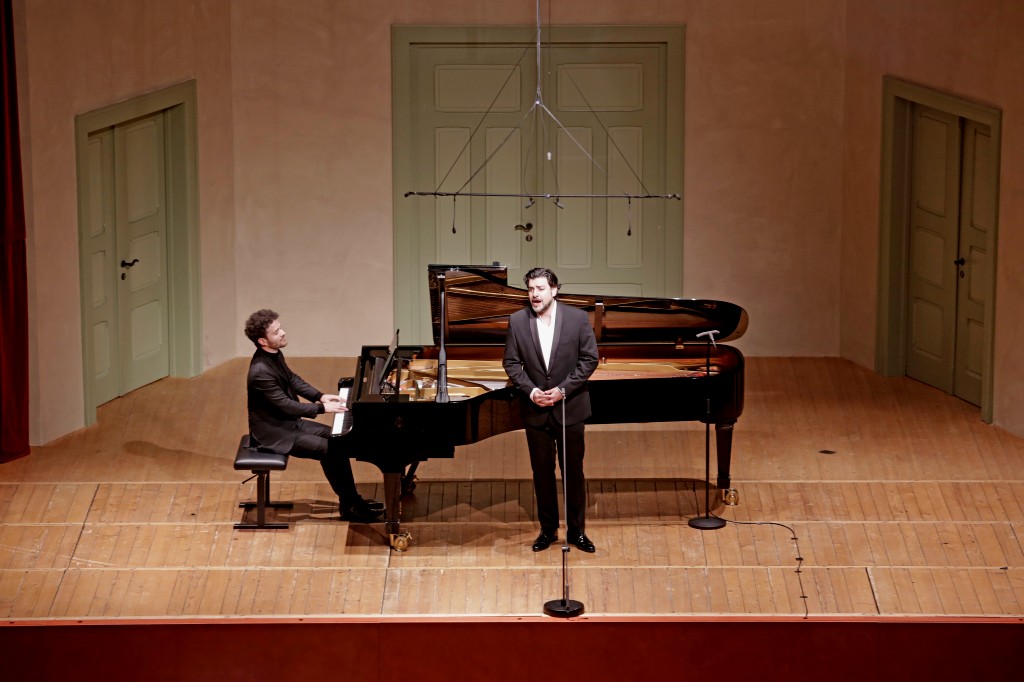
Unrequited love was Schubert's cross to bear. His great heart carried an open wound. That wound echoes through nearly all his works: unfulfilled love, longing for an embrace, a kiss, a glance in the eyes, and oh so much more. Müller must have experienced it too, for how could one write such a gripping, emotionally rich collection of poems without having tasted heartache? Müller and Schubert elevated love to something both beautiful and profoundly tragic in an almost superhuman way. Who better than the naturally melancholic tenor Ilker Arcayürek could interpret these songs with all their moving nuances? He reaches another dimension—it's no longer merely beautiful singing, he truly weeps.
Is it from his difficult childhood years and the hard labor that fell to him? Or is it as he told me himself: "We Turks are melancholic, you know, just look at our TV soaps." Yes, Ilker has Turkish roots, but aside from his dark hair and his name, there's no trace of it. He speaks wonderfully fluent German, has an extremely rich and varied vocabulary—it's truly a pleasure to converse with him—and he has accumulated enormous knowledge and conveys it with great thoughtfulness. We'll publish an interview with him later. Please be patient.
Yes, that oh-so-beautiful Müllerin, why did she have no eyes for that oh-so-devoted young fellow and gave her attention to another? She wouldn't listen, not even to the brook that kept trying to tell her with the rustling of water that carried the young lovesick miller's tears until the stream and the young miller became one, and she would never know it. It's dramatic, painful, but set to music so profoundly that the pain and suffering are soothed and accepted. It all runs much deeper than you can imagine, and each time it touches me deeper still. How mature was the genius Schubert? Was he really only 31? It's truly infinitely moving in itself.
Impressive, as were the texts and music, this performance was equally so. Arcayürek doesn't interpret—what would he, he's sung it so many times. He experiences it with every fiber of his being and expresses it in his singing, his expressions, his gestures, his entire bearing. What a noble artist he is, and he is accompanied, as if by a twin brother, by pianist Bushakevitz. Yes, I must wipe away tears, and I'm not alone—on stage even the singer must swallow hard by the end. The woman beside me whispers: "He sometimes breaks down during performances because it affects him so deeply. What a remarkable human being." The Golden Label he received in 2018 for his first CD (also Schubert) I would give again without hesitation, preferably right then and there during the concert. Oh yes, I am deeply moved, together with the few hundred listeners who wait before applauding. The silence must settle first, the music and texts must come to rest, breathe, deeply and slowly... Then it breaks loose: bravos and foot-stomping on the wooden floor of the Markus-Sittikus-Saal, one of the finest chamber music halls I know, perhaps in the world.
Winterreise...
I walk through the little town along the riverside. The trees and vegetation on the banks remind me of the Müller cycle and Die Forelle. In Schubert's time, those ugly square, soulless, dumb concrete blocks didn't yet exist; there was nothing ugly or 'functional'—only beauty, whether simple or expressing wealth, but always beautiful, harmonious, soft colors, never intrusive. And so much, so very much nature, songbirds singing non-stop. What an infinitely inspiring setting that must have been. It invites you to walk, to observe, to listen to nature, to breathe deeply, to put aside and forget your worries. Beauty in its purest form. Yes, then such an artistic talent as the genius Schubert would come home after his walk with masses of music in his head. There was so much of it that he could never write it all down. Winterreise was fortunately entrusted to paper. This is a different Schubert composing here. Darker in mood. He knew so well that the end was already coming and it was far too soon, that he couldn't finish his work—he still had so incredibly much to compose. He wrote like a man possessed, filling page after page just to get ahead of that hated doorway. And then there are those poems, the Winterreise...
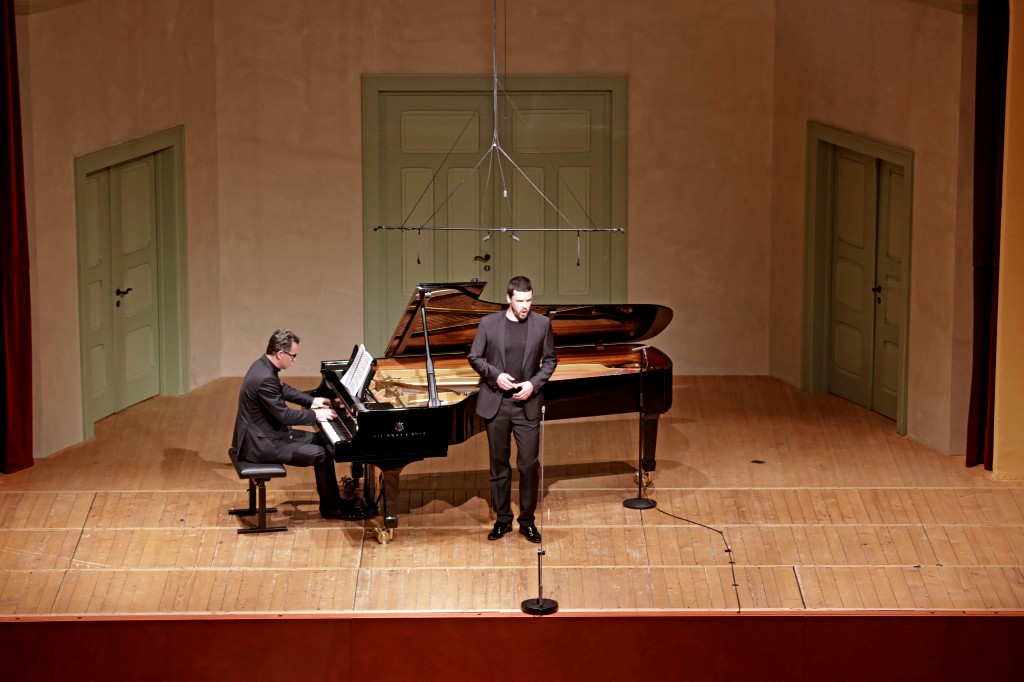
André Schuen, a powerful baritone from South Tyrol, and the dedicated pianist Daniel Heide perform the collection of poems set to music, also written by Wilhelm Müller. What a voice! What warm, deep color, what carrying power. And I have the impression that the voice is becoming even riper, even though the singer is 42, a year older than the tenor we heard in the afternoon. Schubert's circle had more difficulty with these songs, which he sang himself shortly before his death. They really only enjoyed Der Lindenbaum. Schubert's words proved true: later it would all be much more appreciated. Still, I can understand his friends. After all, they couldn't accept it—who could?—that this young, so talented, friendly fellow with whom they experienced so much pleasure and musical highlights was standing so close to death. They actually knew it, but yes...
Schuen sings compellingly; the piano is as cold as the frost that rings out in the notes, or it thaws the frozen tears while the singer tells his sad story. If only 'the Postman' had brought that long-awaited letter with good news. Alas, thrice alas... The last hope falls with the leaves from the trees... It is the final poem/song from the cycle. Schubert closed his eyes... Silence overtakes the audience; no one dares to start the applause. Everyone is so deeply moved. Until one person cautiously begins to clap, and then it breaks loose. Just like Ilker and Ammiel, André and Daniel must return to greet the audience multiple times to receive the bravos, the foot-stomping on the wooden floor, and very heartfelt applause.
My two days at Schubertiade in Hohenems are over. I fear a journey through the stations with Deutsche Bahn heading home. My fear is confirmed. Ah, I have some extra hours to ponder all the beauty I was privileged to experience and absorb, and how I would put it into words for you, readers of our beloved Klassiek Centraal. Thank you!