Ghent's music center De Bijloke organizes two festivals each year: Côté Jardin in June and the multi-day Wonderland festival at the end of August, featuring concerts and events across the entire Bijloke site—outdoors in a tent, in the grand concert hall, and in the Kraakhuis.
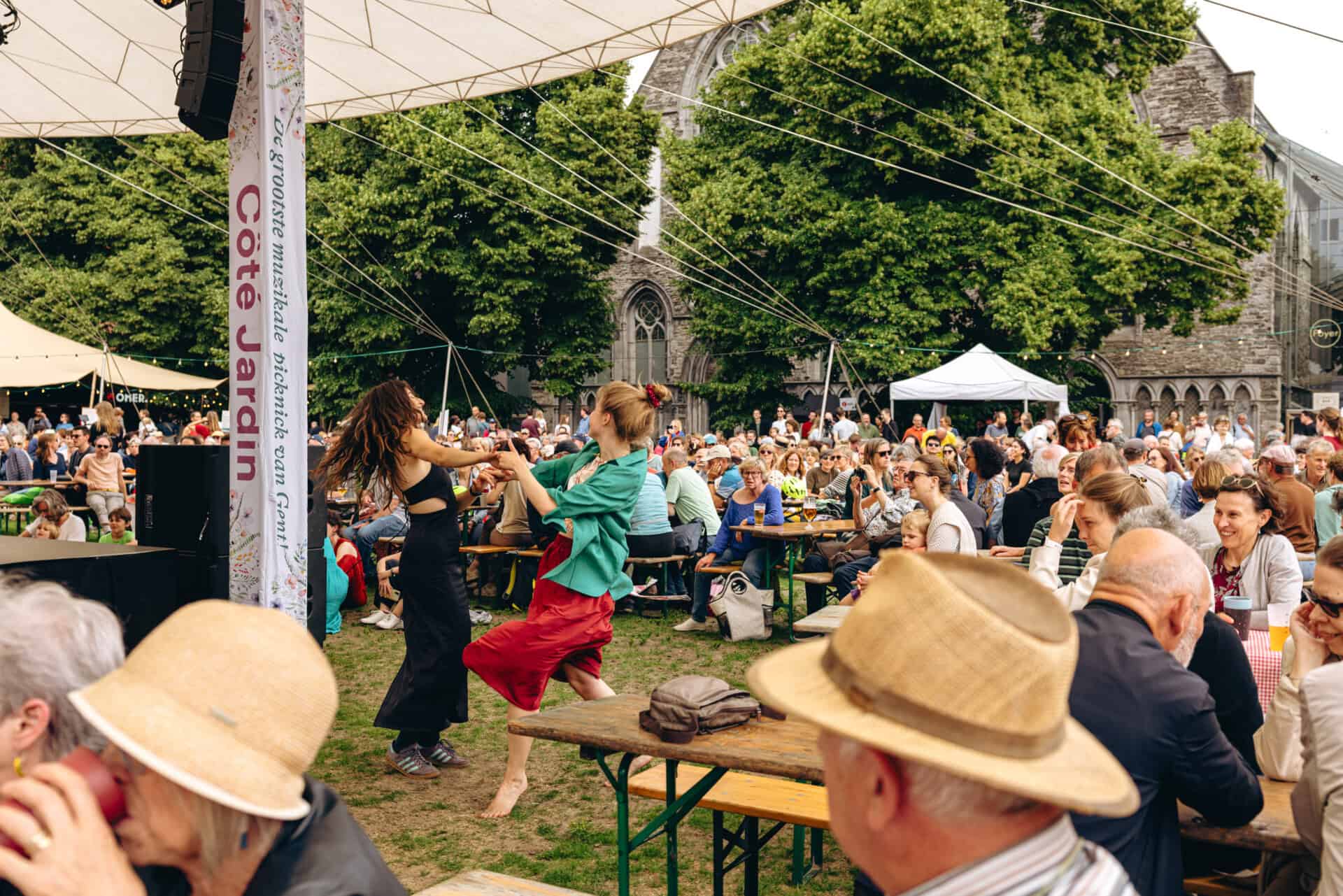
Bring your own picnic! That's what the announcement says. It's not just a musical event, but also a social gathering for young and old. An older audience and young parents with toddlers who venture into the concert hall.
Crazy bunch
It starts at 11 a.m. in the tent with the Ledebirds orchestra from Ledeberg, a suburb of Ghent. This wild bunch is a quirky ensemble with strings, brass, and percussion instruments led by clarinetist Mattias Laga. They play world music, often featuring Balkan tunes. Songs, not classical pieces. A motif in these songs, melodies, and litanies is sometimes repeated endlessly in different arrangements. Once the Ledebirds get going, they can play for quite a while…
At Côté Jardin they performed together with composer and arranger Dirk van der Harst. He's earned his stripes as a musical jack-of-all-trades and fits with the Ledebirds like a lid on a pot. The Ledebirds play and sing on their violins, flutes, clarinets, and drums, leading the meadow in high spirits. Mattias Laga is a passionate leader, firing up his troops with his clarinet. The Ledebirds are also a social project, an accessible initiative to bring musicians together and give voice to multicultural Ledeberg.
One symphony, four conductors.
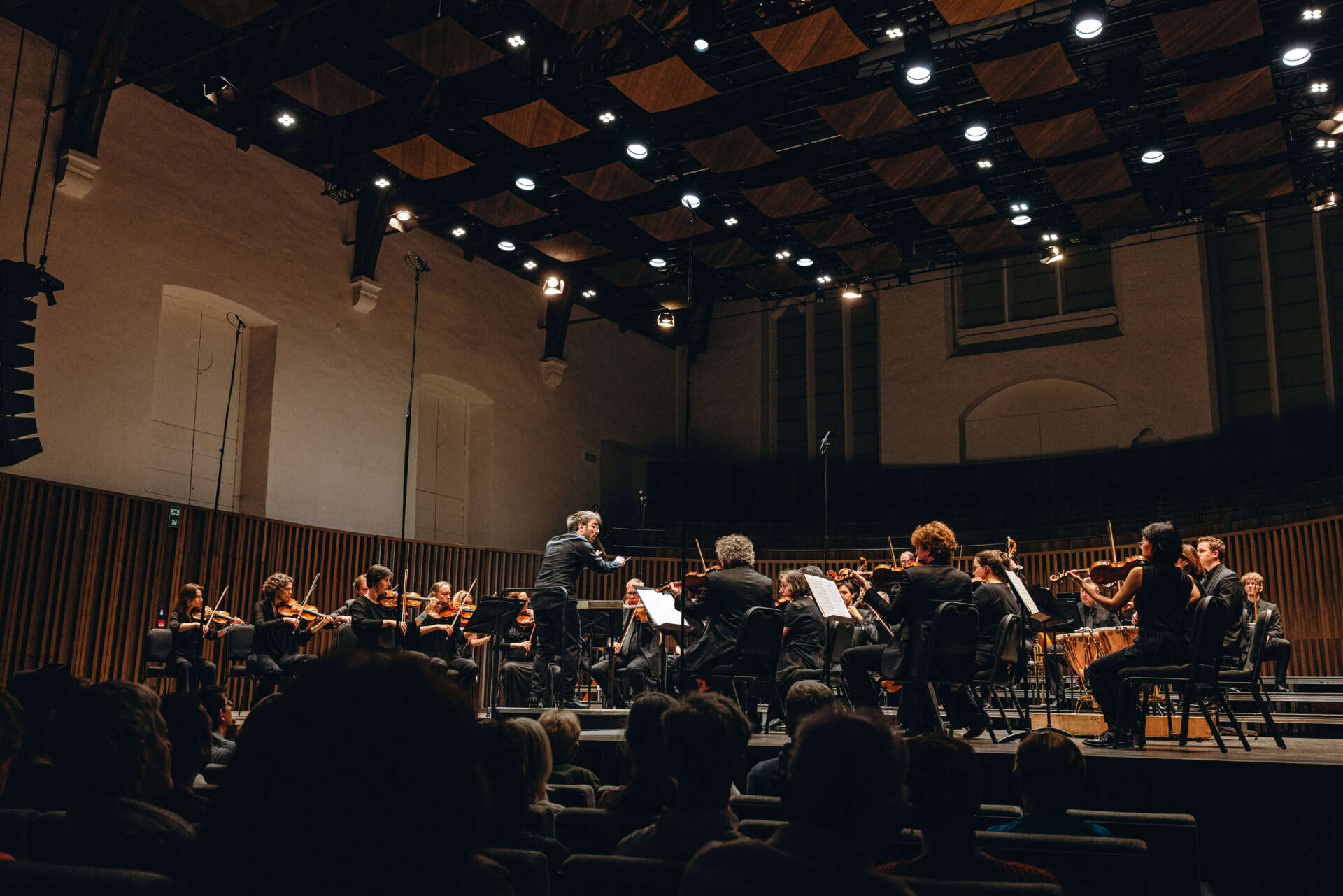 At 12:30 p.m. comes the central event at Côté Jardin, at least as far as classical music goes. The Flanders Symphony Orchestra performs Beethoven's Sixth in the grand concert hall. The Pastoral—a nod to the meadow and the musical picnic that Côté Jardin is also billed as. No fewer than four conductors take the podium. Not simultaneously, but one for each movement of the symphony.
They had a week of conducting lessons from German maestro Christian Ehwald. In turn, the British Tess Jackson, the Italian Giovanni Fanizza, the Venezuelan Elvis Pérez, and the German Friedrich Praetorius take the helm. They draw everything from the orchestra—a noble, taut, sometimes rather thin sound from the strings, which sounds fuller in better concert halls. In this medieval infirmary, the oldest but certainly not the best concert hall in the world, it sometimes sounds as sparse as a madrigal…
The orchestra plays in the so-called Viennese seating arrangement, with the second violins facing rather than sitting next to the first violins. High above us we see the wooden vault from the thirteenth century. An inverted ship's hull, I think when it sways in the first movement like we're in a boat. Even with the Venezuelan Pérez, I hear surprising crescendos in the scherzo. Not just his Third or Fifth—Beethoven's Sixth symphony must have sounded quite shocking in its time. With this young talent and their batons, it comes through beautifully. I leave the hall with a lovely pastoral feeling, ready to count my sheep in the meadow.
In the afternoon, that meadow is well populated. Tables and chairs are everywhere, people are toasting and feasting, laughing and dancing. There are various bars on the site, but many bring their own coolers. The atmosphere is relaxed and festive. There are also performances for the children—Le Contrevent's flying carpet or Kagoels street theater.
Voices on, beside, behind, and above the stage
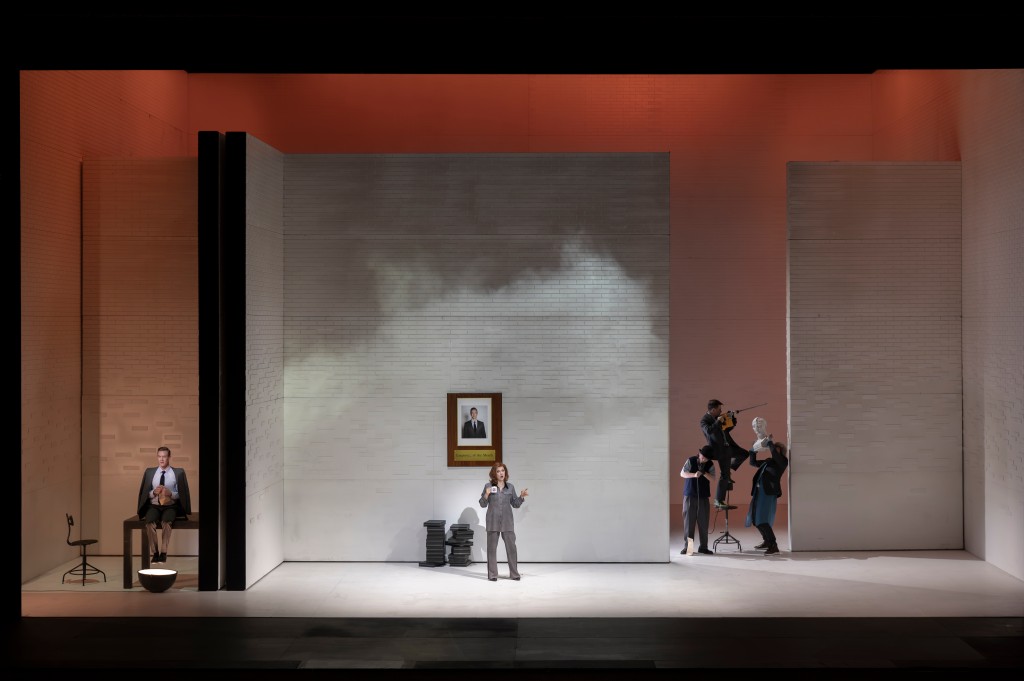
Then it's time for opera, with five singers from the IOA (International Opera Academy), which is based at the Bijloke site. They sing Italian arias and recitatives from Händel to Puccini. Five women and one man, accompanied by two pianists. Baritone Alexander Van Goethem and sopranos Klara Vermeer and Marjolein Appermont share the stage with their international colleagues Lucy Gibbs (UK), Marianna Giulio (Italy) and Mathilda Sidén Silfver (Sweden).
They sing together in surprising stage arrangements where they not only perform on, but sometimes also beside, behind and on the choir benches above the stage. Today's audience isn't your typical concert crowd—there are quite a few young families too. Behind me I hear a little squeal; toddlers don't realize how their tiny voices break the silence.
Opera isn't just singing, it's also acting. Opera isn't just music, it's a story about life. Love, hope, hatred and envy—we get the whole spectrum in a delightful hour. With their voices honed and polished at the Academy, they fill the mighty hall. Golden voices of the gilded youth!
Ordinary Gent Citizens
Côté Jardin isn't just classical, it's also jazz, folk and world music. And there's room for experimentation, thinking outside the box. In the Kraakhuis, the small concert hall at De Bijloke, there are two performances of Petites Histoires today. The announcement reads: "Ordinary Gent citizens sing their remarkable 'Petites histoires' together with B'Rock musicians and Paul Griffiths." These ordinary Gent citizens are residents from disadvantaged backgrounds who sing out their fate, their worries, their anger in their own written verses. Sung, spoken and shouted in chorus and sometimes individually:
“We are Gent. We are the people of Gent. We are giants, dragons, buffaloes. Our memories are bittersweet.
“We are rebels fighting against the system, fleeing from our past and searching for the sunrise.
“We are fighters, dreamers, stubborn and resilient.
Fighters Against the System
Actually, these aren't 'petites histoires'—they're big stories of brave people who can't make ends meet at the end of the month. People who live in society's shadows, who never shine on stages. In this project, they get to shine in the Kraakhuis, accompanied by three top musicians with baroque instruments, led by guitarist Paul Griffiths.
What a wonderful initiative. Although of course we shouldn't forget that "our system," which they're fighting against, is a system with excellent social security. Previous generations also fought for that. We are all citizens of a city and a country where wealth is fairly redistributed. A country that has safety nets for the unemployed, where there are insurances and support for the weak and the sick. But I shouldn't have said that to those ordinary Gent citizens.