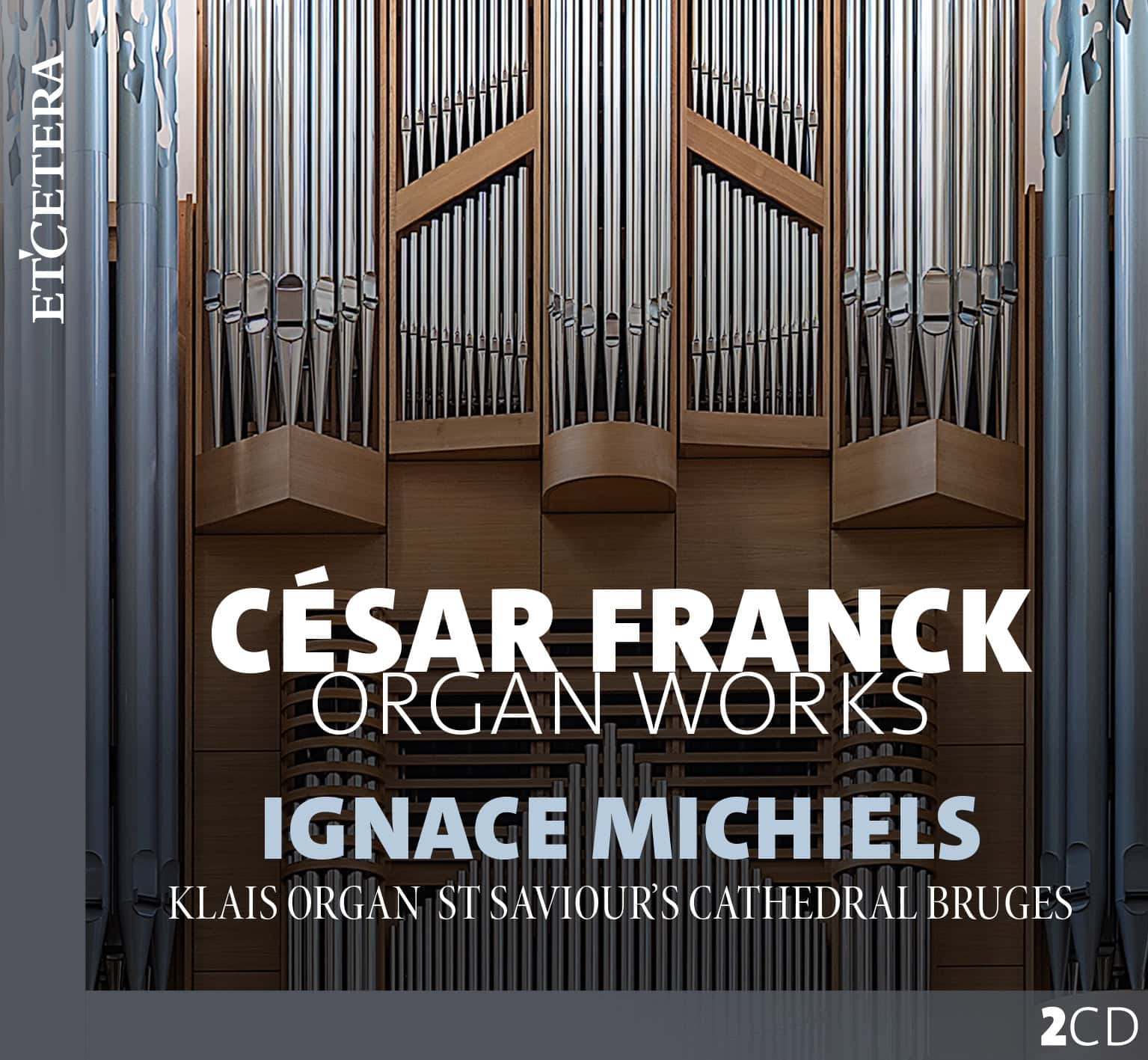
In the CD booklet, Belgian music scholar Jan Christiaens provides an in-depth exploration of the relationship between César Franck's (1822-1890) organ works and the revolutionary innovations implemented during that era by the highly influential organ builder Aristide Cavaillé-Coll (1811-1899), who also pioneered the symphonic organ with its exceptionally rich sound. Perhaps his most famous organ is found in Paris's Saint-Sulpice, an instrument boasting as many as 100 stops and 5 manuals.
Franck—and he was certainly not the only composer to do so—regarded Cavaillé-Coll's organs as symphonic orchestras in themselves, and he composed accordingly. This is precisely what Christiaens notes in his commentary: that the collaboration between Franck and Cavaillé-Coll laid the foundation for a new approach to organ music, specifically tailored to symphonic organ playing.
Cavaillé-Coll's aim was to enrich the organ's sound as much as possible by adding extra stops across multiple manuals. However, this came with a substantial drawback: at full volume, the wind supply might not be sufficient for a stable sound, while the coupled manuals certainly did not facilitate playing rapid passages.
Of course, this concern was shared not only by organists but also by the organ builder himself, who therefore worked on practical solutions in his workshop. He integrated the newly patented Barker machine, a pneumatic system, which greatly simplified playing. Additionally, he made an important improvement to the swell box, which—thanks to its thicker walls and better-sealing louvers—made possible a broad range of dynamic nuances, from subtle, restrained tones to powerful sonic bursts.
From the middle of the 19th century onward, it was widely recognized that Cavaillé-Coll's organs could match the symphony orchestra in sound and power. Franck shared this view, as evidenced by his statement: "My new organ is an orchestra!" upon his appointment in 1851 as organist of the Saint-Jean-Saint-François church in Paris, an important career milestone at the time.
During this period, we see a perfect convergence between innovations in organ development, their positive influence on playing technique, and the emergence of new organ literature. When Franck began his work as titular organist at the Sainte-Clotilde church in 1858, he had the opportunity on December 19, 1859, to inaugurate one of Cavaillé-Coll's new masterpieces together with French composer Louis James Alfred Lefébure-Wély (1817–1869), which also marked the birth of his first major organ work: theSix Pieces.
The complete organ works of César Franck, recorded across two CDs by Belgian organist and music professor Ignace Michiels (Bruges, 1963), must be considered a jewel in terms of performance as well. Many organ enthusiasts will have expected little else from an organist who, in addition to an impressive education—he studied at the Lemmens Institute in Leuven, and the conservatories in Brussels, Ghent, and Paris (where he won the Prix d'Excellence)—has built an extensive repertoire over the years and enjoys worldwide recognition.
Michiels lets the music speak for itself. This may seem both simple and obvious, but you'll find organists who indulge themselves in Franck's works (and others') with mannerisms and exaggerated virtuosity. These habits have little to do with integrity and restraint, but instead make the music itself speak less clearly. Michiels, fortunately, adheres to higher standards, which in my view allows Franck's organ works to truly shine.
But here's the thing… Michiels did not use a Cavaillé-Coll organ but rather a Klais organ in the Sint-Salvators Cathedral in Bruges, which is incidentally one of the city's most iconic buildings and also the cathedral of the Diocese of Bruges. You'll findherethe data and an image of the organ.
Franck enthusiasts and organ aficionados will likely prefer to hear his organ works on a Cavaillé-Coll (documented by, among others, Daniel Roth, Michel Bouvard (herediscussed by Siebe Riedstra), Bram Beekman and Piet van der Steen), but the Klais organ also unfolds with great presence under Michiels' hands (and feet) thanks to its symphonic proportions. You could also say: anyone who isn't generous in this regard misses out on a lot. And that despite all the many recordings of Franck's organ works (though not all of them may still be available).
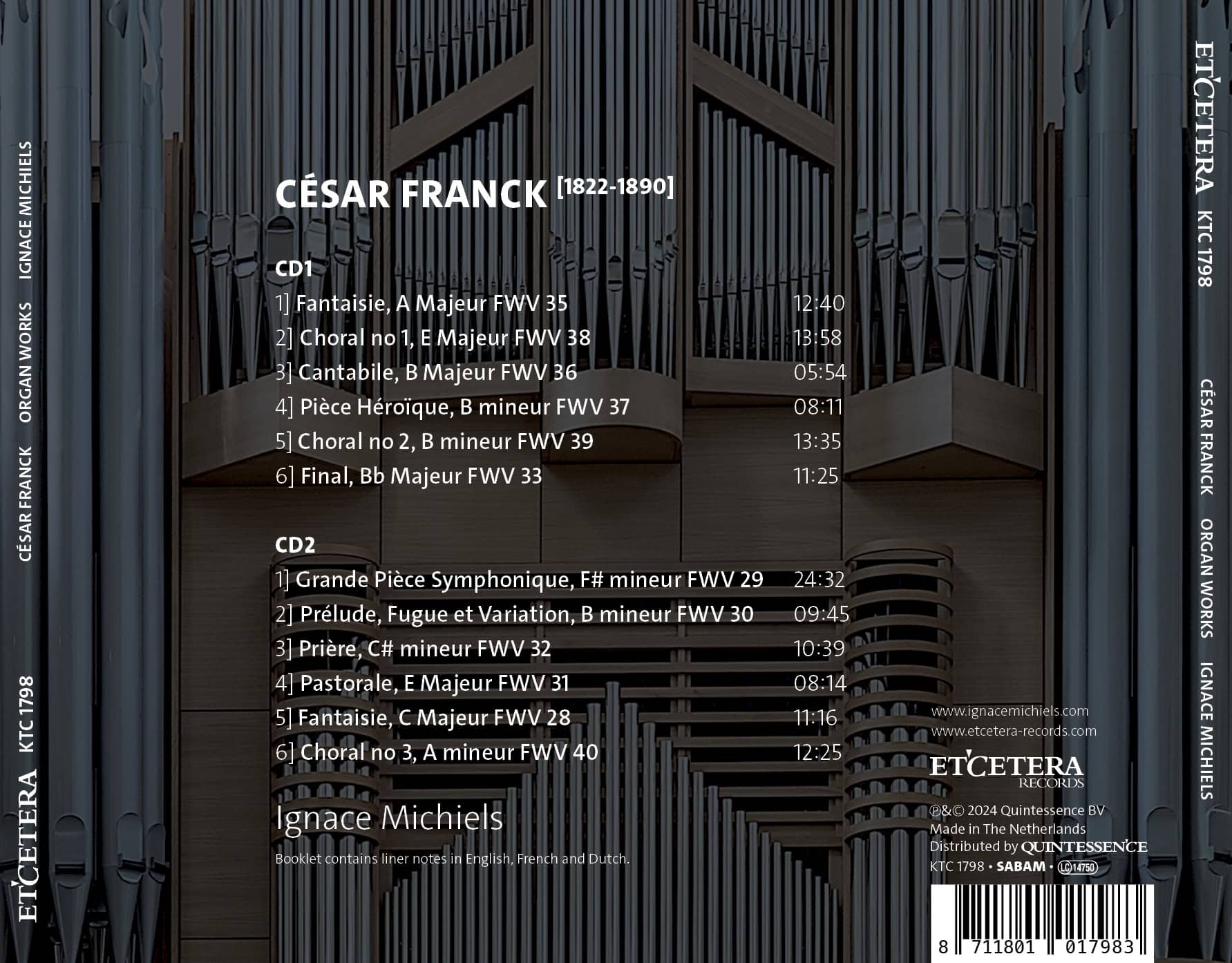
Michiels is a tremendous organist who brings Franck's music to life incomparably on an equally impressive organ. According to the recording information in the booklet, these organ works were recorded in a single day: on May 24, 2024. If that's the case, it represents an unprecedented feat. Just one tiny point of criticism though: the cover mentionsOrgan Works, but since this concerns Franck's complete organ oeuvre, it should have been mentioned. But aside from that: highly recommended, this remarkable release!