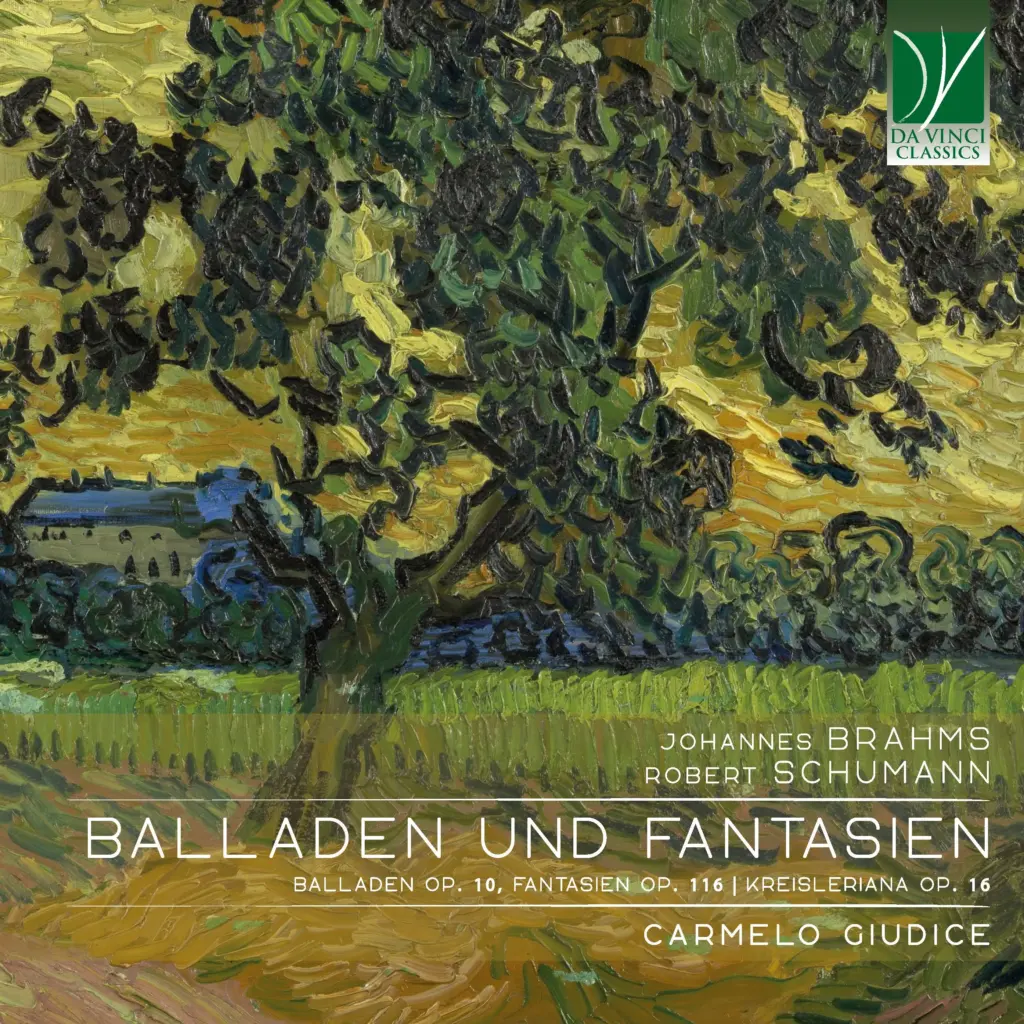
The dialogue between word and music, which reaches its peak in art songs with text, also sees important development in the interweaving of music and literature. This became particularly clear during the Romantic era, and the figure who perhaps embodies this dialogue in exemplary fashion is Robert Schumann.
For years he moved between the world of literature and that of music, and throughout his life he continued to write "words." He founded a journal of which he was editor and inspired many readers with his profound insights.
Literature and music were not two separate domains in Schumann's mind and body of work. Many of his instrumental works are clearly and unambiguously inspired by literary creations, and within his own oeuvre there is a profound connection, typically represented by the figures "Florestan" and "Eusebius." These two pseudonyms represent two sides of Schumann's personality and artistic current. "Florestan" is the impetuous, restless, reckless, daring and extroverted aspect; Eusebius, the pious, reflective, contemplative, calm, poetic and dreamy figure.
These two opposing figures (who are, incidentally, twin brothers) represent, however, two sides of the Romantic soul, as also emerged in another influential author from the same period, the poet and musician E.T.A. Hoffmann. In his 'Princess Brambilla' fantasy is defined as "the realm in which the human spirit governs real life and existence according to its free will, in order to enjoy itself in a completely unique way." It is identified with the character Giacinta, of whom it is written: "I could say that you are fantasy, whose wings need humor to be able to fly, but without the body of humor you would be nothing but wings, drifting away – a plaything of the wind – in the air." Fantasy and humor are two other poles of human creativity, and they could be respectively well represented by Eusebius and Florestan.
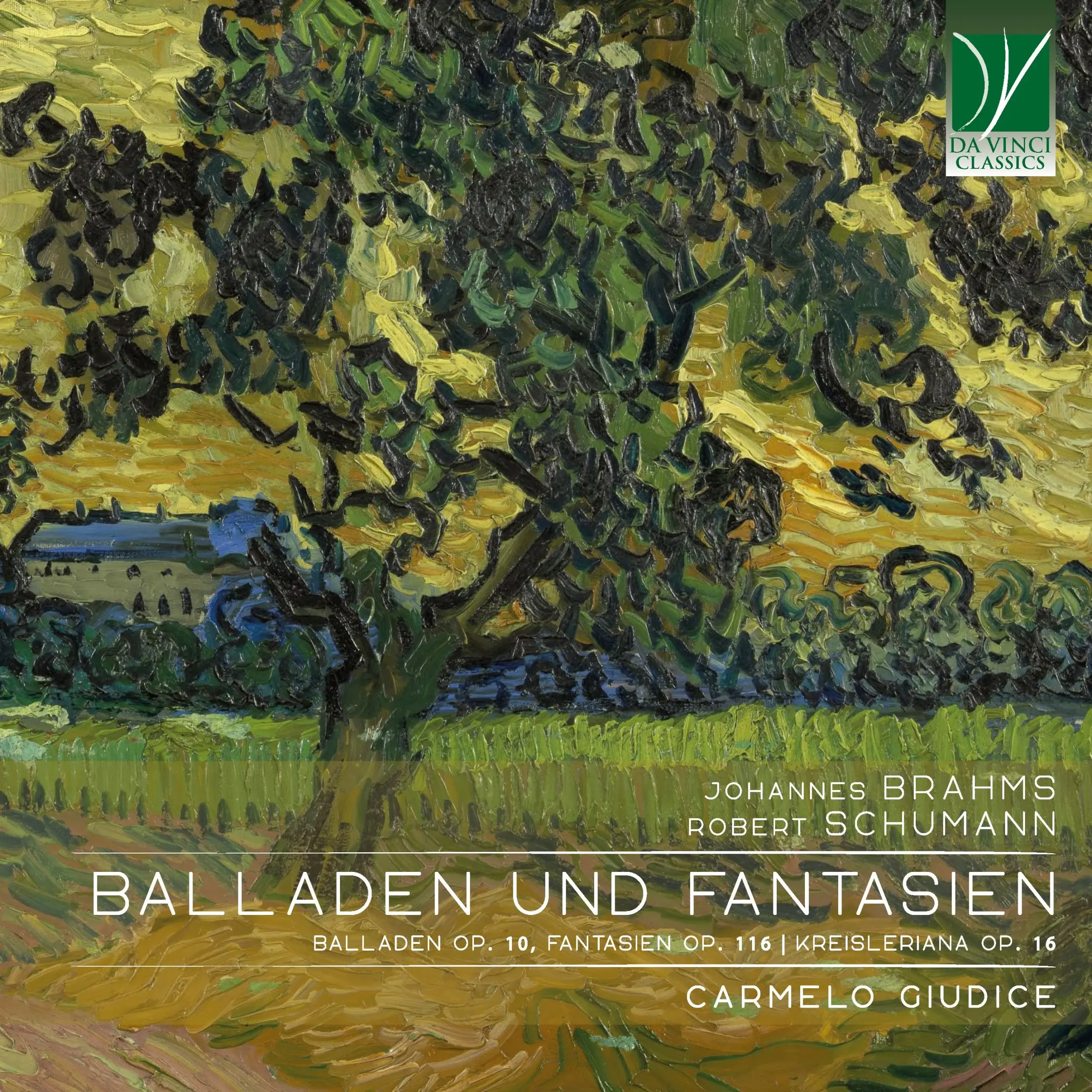
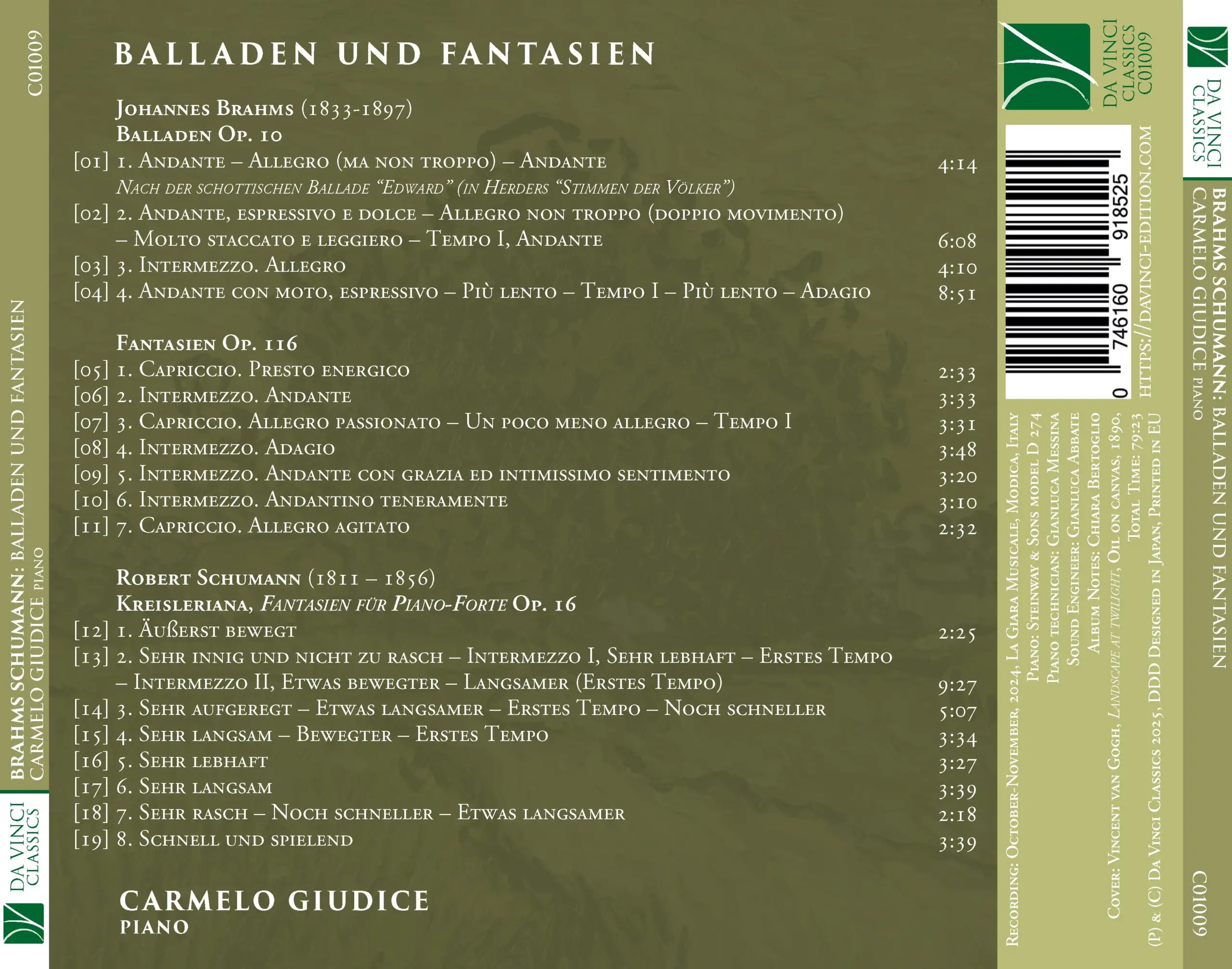
In this sense the word fantasy should be understood in the works performed on this Da Vinci Classics album. Of course, piano fantasies had a long and glorious history before the nineteenth century, and formed a musical genre (albeit a genre without a clearly defined form... by definition). In the works included here, however, we can and must point to this double reference to the literary world: ballades refer to a poetic genre, epic and passionate at once; fantasies are works in which this "realm" of the "free will of the human spirit" opens up, spreads its "wings" and is carried by "humor."
Hoffmann, the author of these words, was himself also a composer, and his writings – crucial to German Romantic culture – are peppered with references to this art form. In particular, one of Hoffmann's creations would become iconic for the self-interpretation of the Romantic musician and composer. It was the figure of "Kapellmeister Kreisler," who appears in various works by Hoffmann and represented the essence of Romanticism in music. The book in which Kreisler is most prominently present is tellingly Hoffmann's Fantasiestücke in Callot's Manner (1814-1815), with yet another reference to "fantasy."
Both Robert Schumann and Johannes Brahms, although they belonged to two different generations, saw Kreisler as their alter ego, as a fictional creation that helped them interpret their own calling.
In his late twenties, when Schumann fervently hoped to marry Clara Wieck, an extraordinarily talented pianist and composer nine years his junior, one of the many piano cycles he had written in his youth came to light. This would become known as Kreisleriana, and interestingly, Schumann seems to reveal that the title occurred to him before the actual pieces (whereas with him it was normally the other way around). He wrote: "Only Germans will understand the title [Kreisleriana]. Kreisler is a character created by E.T.A. Hoffmann, an eccentric, untamed, witty Kapellmeister. There are many things about him that you will like."
Schumann's Kreisleriana came to light in phases, apparently in two parts. In a letter to Clara Wieck of April 14, 1838, the composer wrote: "In [Kreisleriana] you and an idea of yours will play the leading role, and I want to dedicate it to you – yes, to you and to no one else. – You will smile so sweetly when you recognize yourself in it." The association between Clara (or a "thought" or an "idea" of hers) and Kreisleriana recurs in Schumann's letters and diaries, and the dedication to her was also included in the proposal for the publication of Kreisleriana that he initially sent to a publisher. Later, at Clara's insistence, he removed that (public) dedication, however, which Clara's father, who was fiercely opposed to the love between Robert and Clara, would probably only have further annoyed.
Ultimately Schumann published Kreisleriana with a dedication to Frédéric Chopin, with whom he was friends and whom he greatly admired; Chopin would do the same the following year by dedicating his own Ballade op. 18 op. 28 op. 38 to Schumann.
We jump ahead to 1854. Clara and Robert were happily married and their family was blessed with countless children and much music. But Robert had developed a serious mental illness, which ultimately forced him to be admitted to a psychiatric institution in Endenich. Clara was left with their children, with a broken heart and all sorts of worries. In that situation, the support of a friend was essential to her, and she found it in the young Johannes Brahms, who was then 21 years old. Brahms had been a good friend of the family for some time, after the warm reception that the couple had given him and his exceptional talent. Now he was ready to support Clara, with whom he would maintain a close friendship throughout their lives (they would die within months of each other).
During Robert's stay in Endenich, Brahms had written a collection of ballades, opus 10, which he would dedicate to his friend Julius Otto Grimm. Here too, however, the implicit dedication was to Clara, as Grimm himself soon noted and wrote to the composer: "But has Mrs. Schumann also approved of this dedication? For the Ballades owe their true origin to her. But you surely would not have done this without her approval, so I get a sort of double dedication." Both these and the Variations on a Theme of Robert Schumann with the preceding opus number (op. 9) are closely connected with Robert's wife and Johannes' friend Clara. Brahms, namely, had planned to publish a collection of pieces (including op. 9) under the title Leaves from the Diary of a Musician, compiled by the young Kreisler, a reference to the similarly named Leaves from the Diary of a Traveling Enthusiast, also written by Hoffmann. Although Brahms' lifelong friend Joseph Joachim convinced him to abandon this plan, the connection with Hoffmann is also very strong in this case.
The Ballades were presented to Schumann by Joachim for Christmas 1854, and in the following Epiphany Robert wrote enthusiastically about them: "How beautiful is the first [piece], absolutely new. [...] The ending is lovely – strange! The second, how different, how varied, rich in imagination; there are enchanting passages in it. The concluding bass F# seems to introduce the third Ballade. How shall we describe that? Demonic – absolutely sublime, and how it becomes ever more mysterious after the pp of the Trio, which itself is completely transfigured; then the return to the main section, and the conclusion. In the fourth Ballade, how beautiful that the strange opening melody sways back and forth between minor and major all the way to the end, and lingers wistfully in the major."
Almost forty years later, in 1892, Brahms and Clara were approaching the end of their lives. Brahms now limited his compositional activity to the summer months, and the thundering virtuosity and passionate spirit that had characterized his early piano works had given way to a sound of exquisite poetry, melancholy and refinement. Clara heard from her pupil Ilona Eibenschütz, who was on vacation in Bad Ischl, where Brahms was also spending the summer, that Brahms had written some new piano pieces. She politely asked him to send her a copy; Brahms immediately complied with her request with the Fantasies opus 116, while it took somewhat longer for the Intermezzos opus 117 to be ready. Clara was enthusiastic about them and found them "wonderfully original." She also wrote in her diary: "Through these pieces I once again felt how my soul was traversed by the life of music. I can still play with genuine devotion, and I have returned to Robert's piano music with renewed enthusiasm." Thus the circle closes: from Hoffmann to Robert, to Clara, to Johannes, and back to Robert, in Clara's reverent and loving memory. Like a literary masterpiece, these musical pieces were able to guide fantasy along the path of remembrance and support the working through of grief, transforming sorrow and anguish into a pattern of beauty and hope.