
Every year, the Caecilia Awards are presented for CDs and DVDs released in the previous year.
During an extraordinary General Meeting on November 3, 1974, the Association of the Belgian Music Press decided to award annual prizes to the best musical recordings, regardless of the musical medium or sales figures on the Belgian market in the preceding year.
The Caecilia Awards ceremony took place on 25/03/2022 at the Flagey in Brussels. The program was opened with a performance by the Duo Goggles, Wim Pelgrims & Esther-Elisabeth Rispens, the winners of the Supernova competition which we previously had aninterviewwith; you can read about it in this article.
The jury also selects a Young Musician of the Year, this year it is Sarah Defrise, read more about Sarah in this article.
Josquin Desprez
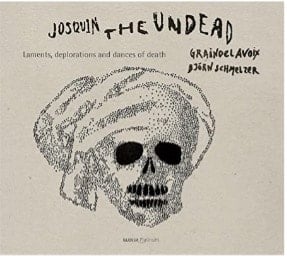
Desprez: Josquin the Undead
Josquin Desprez experienced the same fate as Rembrandt. When he died, he was so renowned that, as a contemporary wrote, "now that he is dead he produces more works than he did in life". Nothing was better for making a mass, motet or chanson popular than attributing it to Josquin. It is precisely with this uncertainty that Björn Schmelzer and his ensemble Graindelavoix engage in their contribution to the Josquin Year 2021. In the edition that the Antwerp publisher Tielman Susato prepared twenty-five years after Josquin's death, they delve into the late works of the "master of the notes" (Luther), which he composed after his glorious career. Their consistently 'anti-historicist' approach, which "reflects the deep contradictions of the era in which the repertoire originated", transforms these into ethereal meditations. Music from an almost-dead composer for the dead of then and the living of now. (Stephan Moens)
Rameau: Acante and Céphise
Although Acante and Céphise cannot be counted among the greatest works, it is the work of a musical giant. Until now, there has been no complete recording of this pastoral which, however, offers more invention and theatrical drama—as in the incredible intensity of certain sections of the Third Act—than what one finds in many an opera by minor masters that have been painstakingly rescued from obscurity in music history. Any recording would deserve our gratitude, but this performance does full justice to the score. Under the equally elegant and refined direction of Alexis Kossenko, Les Ambassadeurs-La Grande Écurie resurrect the opulent orchestra of the Paris Opera as it could be heard in the 1750s, and they can rely on a well-suited cast who articulate the text with clarity and a feel for subtle rhetorical nuance. (Bernard Schreuders)

Jean-Philippe Rameau
Carl Philipp Emanuel Bach
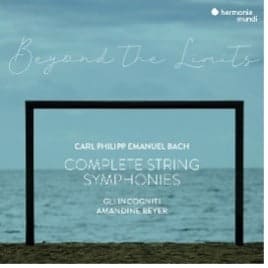
Bach, C. Ph. E.: Beyond The Limits
How fortunate that Gottfried van Swieten not only praised the old Bach (Johann Sebastian) to Mozart and Haydn, but also asked his son Carl Philipp Emanuel to write some symphonies for him. At van Swieten's, all composers knew, you could let loose. Technically demanding, harmonically bold, formally innovative: anything went. The first critics were already impressed by the "original, daring flow of ideas and the great variety and novelty in the forms and modulations". While quite a few recordings of these string symphonies are already available, the one by Amandine Beyer and her ensemble Gli Incogniti perhaps best captures the sparkling contrasts in tempo and dynamics and the unpredictable capriciousness of this music. Mendelssohn is not far away. (Stephan Moens)
El Nour
Attempts to bring East and West together in music are certainly numerous, but rarely successful. While this remains true, the apparently effortless way in which Egyptian singer Fatma Said and her musicians—from all walks of life—tackle this repertoire with virtuosity and naturalness towers head and shoulders above everything in the discography so far. Combine Schwarzkopf with Oum Kalsoum with a sprinkle of sparkle à la Jodie Devos on top (just to give an example). Add a tessitura of two and a half octaves, plus irresistible chic and sensuality. (Martine D. Mergeay)
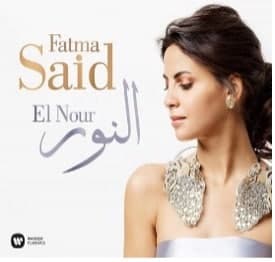
Abd al-Rahim, Hector Berlioz, Georges Bizet, Fernando Obradors, Maurice Ravel, etc.
Franz Liszt
Liszt
While more demonic or philosophical versions of Liszt's Sonata certainly exist, this recording by Benjamin Grosvenor bears witness to a rarely heard intelligence and refinement. Phenomenal technique and intellectual clarity ensure an exceptional performance of a work that has been recorded so many times. The seldom-played Berceuse, the Three Sonnets of Petrarch, and Liszt's arrangement of Schubert's Ave Maria are rendered with unfeigned poetry and finesse. Grosvenor shines in Reminiscences of Norma and demonstrates astounding virtuosity in this fiendishly difficult score. (Patrice Lieberman)
Lassen: Songs – Melodies
This unexpected release brings a double discovery: both a long-overlooked Belgian composer and works of surprisingly high caliber. Édouard Lassen (1830-1904) was born in Copenhagen but the family settled in Brussels as early as 1833. Lassen studied piano and composition at the Brussels Conservatoire. Liszt took him under his wing and helped him secure a position as conductor in Weimar, where he enjoyed high esteem as Kapellmeister for nearly 40 years. This did not, however, prevent him from continuing to compose, and his more than 260 lieder enjoyed considerable popularity. Reinoud Van Mechelen and Anthony Romaniuk offer us a fine selection from this extensive oeuvre. Thus we can discover a refined and sensitive composer, an artist with a pronounced gift for melody in the tradition of Schumann and Mendelssohn. (Patrice Lieberman)
Édouard Lassen

Sergei Lyapunov
Lyapunov: 12 Transcendental Etudes
Sometimes the joy of discovery lies in recognition: everything is new, yet it already existed, accompanied by the most intense happiness long since faded. Such is the world of Sergei Lyapunov (1859-1924), a realm where excessive virtuosity transforms into pure poetry, dream, or epic. Belgian pianist Florian Noack executes it all with stunning technique, while also enchanting with a natural, unforced performance full of light and color. (Martine D. Mergeay)
Ives: Complete Symphonies
Listening to Ives' four symphonies in sequence is like taking a crash course in the evolution of American music. The First—written for his Yale composition exam—still bears the strong influence of Dvořák and Brahms. The same applies to the Second, though Ives here begins distancing himself from his European models in an attempt to forge his own American musical language. After the Third with its intimate and serene character comes the extraordinary Fourth—surely the greatest American symphony ever composed. The work's grandeur and depth often hide behind a peculiar atmosphere of joyful anarchy. Gustavo Dudamel conducts the excellent Los Angeles Philharmonic with a firm hand. (Patrice Lieberman)
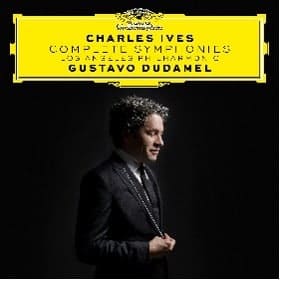
Charles Ives

DVD: Erich Wolfgang Korngold
Korngold: The Dead City
Korngold's operaThe Dead Cityhas long since been freed from the stigma of "sounds like film music." We had that proven definitively when it was performed at the Munt during the height of the Covid19 pandemic. The dual leading role of Marie/Marietta was in the hands of Marlis Petersen: ideal casting (she is an equally powerful Lulu or Salome). In Munich she faced the supertenor of the moment, Jonas Kaufmann, who revealed himself as a committed actor in Simon Stone's somewhat dated yet still convincing, hyperrealistic staging. But perhaps the strongest element was Kirill Petrenko's musical interpretation. Not film music at all, but a simultaneously luxurious and luminous, glittering and modernist 'Viennese' soundscape that recalled Mahler or early Berg more than Puccini. Korngold as the Klimt of music? (Stephan Moens)
And Love Said…
Jodie Devos leaves Offenbach to explore a new musical world with theseEnglish Songs The Belgian soprano has been familiar with this poetic universe since her studies in London and chooses here a broad range of composers of both sexes. Two monodrams by Patrick Leterme—dedicated to the singer and friend—round out the program. In close collaboration with pianist Nicolas Kruger, Jodie Devos demonstrates both imagination and pristine technique in a brilliant succession of masterpieces from Benjamin Britten to Freddie Mercury. (Martine D. Mergeay)

DVD: Patrick Leterme, Ralph Vaughan Williams, William Walton, Freddie Mercury, etc.
Édouard Lassen
Lassen: Songs – Melodies
This unexpected release brings a double discovery: both a long-overlooked Belgian composer and works of surprisingly high caliber. Édouard Lassen (1830-1904) was born in Copenhagen but the family settled in Brussels as early as 1833. Lassen studied piano and composition at the Brussels Conservatoire. Liszt took him under his wing and helped him secure a position as conductor in Weimar, where he enjoyed high esteem as Kapellmeister for nearly 40 years. This did not, however, prevent him from continuing to compose, and his more than 260 lieder enjoyed considerable popularity. Reinoud Van Mechelen and Anthony Romaniuk offer us a fine selection from this extensive oeuvre. Thus we can discover a refined and sensitive composer, an artist with a pronounced gift for melody in the tradition of Schumann and Mendelssohn. (Patrice Lieberman)
Poot: Symphonies Nos. 1-7
The memory that is now preserved of Marcel Poot (1901-1988) is that of the man who, for more than half a century, was a true pillar of Belgian musical life, among other things as director of the Brussels Conservatory and as longtime jury chairman of the Queen Elisabeth Competition. As a composer, Poot unfortunately fell into obscurity, and we can certainly be grateful to Naxos for this complete reissue of his symphonies. The first two are the work of a young, playful and enthusiastic artist, while the last three show us a musician who has mastered his craft perfectly and sometimes comes across as a bit academic. The Third and Fourth Symphonies display remarkable depth and sobriety. The excellent performances are provided by various orchestras and conductors. (Patrice Lieberman)
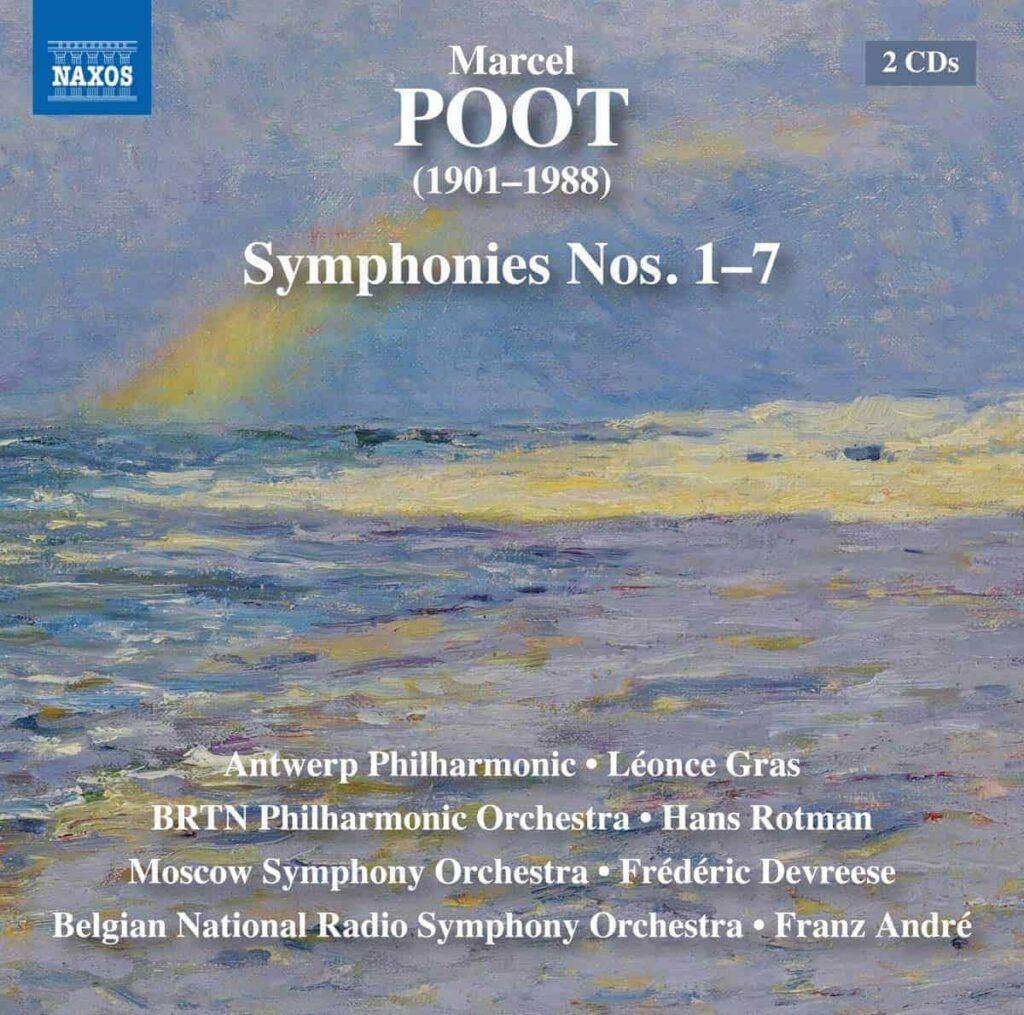
Marcel Poot


