

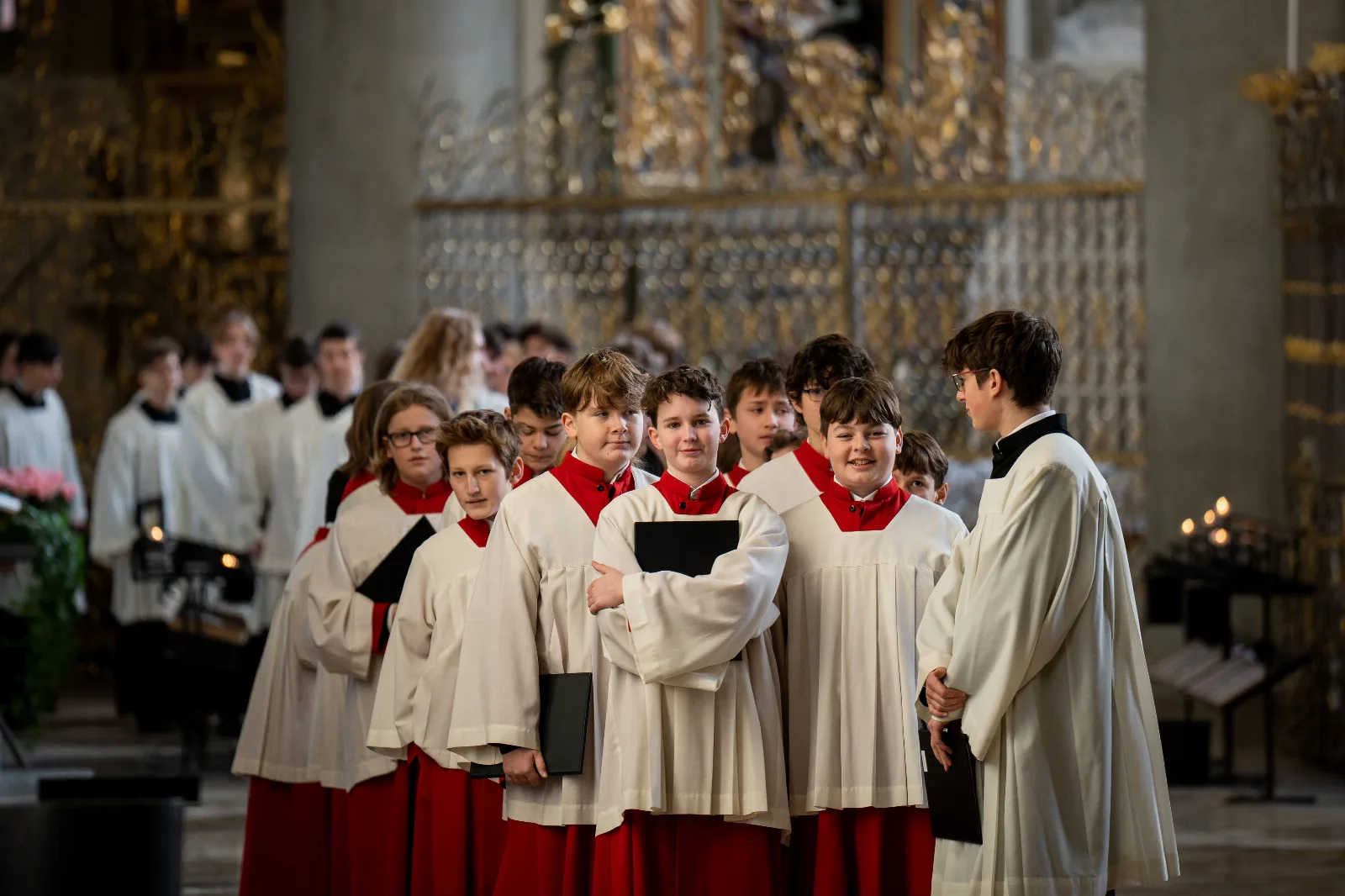
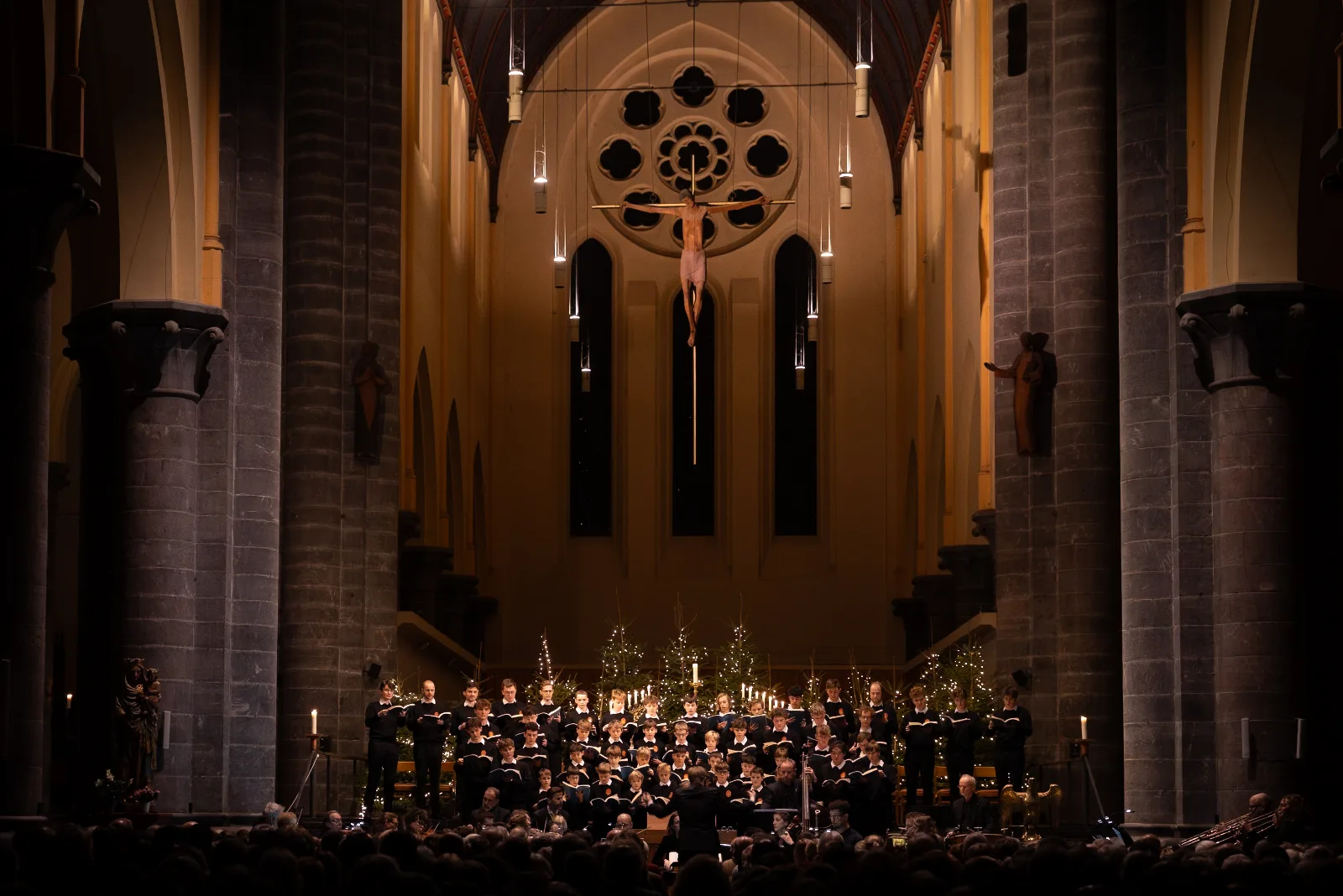
On Sunday 25 October, Heinrich Ignaz Franz Biber's Missa Salisburgensis à 53 voci, one of the most monumental works of the Baroque, will be performed in the Herkulessaal in Munich. The Augsburger Domsingknaben perform the mass together with the Barockensemble des Bayerischen Staatsorchesters and Les Cornets Noirs, under the direction of Domkapellmeister Stefan Steinemann. The concert – also the closing concert of the Münchner Residenzwoche – opens a tour marking the choir's fiftieth anniversary. On Tuesday 3 November, I will attend the same programme in the Kreuzkirche in Dresden. Reason enough, as a former singer of the Antwerp Cathedral Choir, to pause here and reflect on the tradition of this boys' choir.
Behind the jubilee lies a history that reaches much further back than 1976. But the story of the choir is told above all by the people who sang in it and still sing in it: a Domkapellmeister who began as a boy himself, former choristers who became judges, organists or singers, and boys who are right in the middle of their choir years. Their stories show how a tradition stays alive: not because everything remains the same, but because each generation shapes it anew.
A history that goes back further
 The fiftieth anniversary refers to the re-founding in 1976, not to the beginning of the singing tradition. That tradition goes back much further. For centuries, the Cathedral of Augsburg had a Domschule, where boys were trained as singers. In 1439 they first appear in a charter, under the name mariani: a reference to Mary, to whom the cathedral is dedicated.
In the centuries that followed, the choir enjoyed golden periods. Around 1600, Gregor Aichinger, a pupil of Giovanni Gabrieli in Venice, came to Augsburg as Domvikar and brought with him the Venetian multi-choir style. At the end of the eighteenth century, Domorganist Johann Michael Demmler was active there, a friend of Mozart who held him in high esteem. Through him, the Viennese classical style found its way into the liturgy. Gregorian chant remained a constant pillar alongside it.
From the secularisation of 1802 and 1803 onwards, it became increasingly difficult to attract new singers. In 1848 a woman joined the ensemble for the first time; in 1865 the institution of the mariani was abolished. For roughly a century, a mixed choir provided the musical service of the Cathedral, with a repertoire that included Beethoven's Missa solemnis and works by Josef Rheinberger.
In the 1970s, Domkapellmeister Rudolf Brauckmann encouraged music student Reinhard Kammler to breathe new life into the tradition of the Domsingknaben. With the support of Bishop Josef Stimpfle, the choir was re-founded in 1976. Initially, the choir rehearsed in temporary premises on the Springergässchen. Kammler became Domorganist in 1978 and Domkapellmeister in 1995. Since 1986 the choir has had its home in Haus St. Ambrosius, a former canons' house from the Rococo period, close to the remains of the old Domschule.
In 2024, the Augsburger Domsingknaben were recognised as intangible cultural heritage of Bavaria, together with three other renowned boys' choirs: the Regensburger Domspatzen, the Tölzer Knabenchor and the Windsbacher Knabenchor.
From Domsingknabe to Domkapellmeister
Since 1 January 2020, Stefan Steinemann has led the choir as the youngest Domkapellmeister in Germany. He sang as a child with the Domsingknaben and performed as a soloist at an early age. He then studied church music, singing and choral conducting at the Hochschule für Musik und Theater München, and pursued the Advanced Vocal Ensemble Studies programme at the Schola Cantorum Basiliensis, with a focus on secular vocal works of the Renaissance. He sings, plays keyboard instruments and conducts, including with the ensembles InVocare, Alerïon and the Leonhard-Paminger-Ensemble, and teaches at the Hochschule in Munich. In 2024 he received the Kunstförderpreis of the city of Augsburg in the category Musik vokal.
 "For me personally, this jubilee is closely tied to my own life story," he says. "I grew up musically with the Domsingknaben and now, as Domkapellmeister, I have the responsibility of leading the choir. Much of what I experienced here as a child still has an effect today." For him, the jubilee is first and foremost a moment to look back with gratitude: to everyone who built and guided the choir, to the families, and to the diocese that makes all of this possible.
He describes the identity of the choir as follows: "Our identity grows from the connection between musical training, a lived community and our service to the Augsburg Cathedral." From the very beginning, the boys experience that their singing has meaning: they take part in a church service, touch people during concerts and become part of a group in which everyone is needed. For him, musical training and personal development cannot be separated. The boys learn to listen to one another, to take responsibility and to deal with both success and disappointment. The older singers take responsibility for the younger ones and pass on what they themselves have learned. In such a community, he believes, friendships and trust can develop that reach far beyond the active years in the choir.
A training for life
The stories of former choristers show how long that formation continues to work.
Daniel Egge sang from 1984 to 1996 in the choir and is now a judge in Augsburg. He especially remembers the annual performances of Bach's Weihnachtsoratorium in the Protestant Heilig-Kreuz-Kirche and the concert tour to Japan in 1992, where, alongside the culture and landscape, the courtesy of the hosts and their interest in the music left a strong impression. His choir years deepened his love of music, especially of works from the Baroque, Classical and Renaissance periods, and gave him a sense of order, discipline and community. "I look back on an exciting time full of challenges, intensive rehearsals and wonderful successes," he says. His eldest son goes to school close to the Cathedral. When Egge walks past it, he likes to think back to his life as a Domsingknabe.
 Thomas Haala sang from 1981 to 1995 with the Domsingknaben. Today he sings with the a cappella ensemble Cash-N-Go; his choir years laid the foundation for his musical side occupation. The trip to Istanbul made the strongest impression on him. "That was very exotic for a child who until then had only been on holiday in Western Europe!" Above all, he learned discipline there. "You can get up to a lot of nonsense, and we certainly did plenty of that," he recounts, "but when it comes down to it, you have to be extremely focused. Only then can you achieve something great, and in the end everyone benefits from that." The vocal training and choir experience still come in handy for him, in classical, pop and jazz choirs as well as in a cappella ensembles and bands.
Julian Romanowsky joined at the age of five and stayed for more than fifteen years. "It was my greatest hobby," he says, and the friendships from that time still exist. Bach's music and the Renaissance polyphony the choir constantly sang made such an impression on him that after grammar school he went on to study historical singing at the Hochschule in Leipzig: "Without the basic musical training with the Domsingknaben, it certainly would not have come this far." What also stayed with him: the choir director was not only concerned with the music but also personally asked how he was doing, and the pedagogical approach of the prefect, supplemented by liturgical formation, he found engaging and instructive. The church services still shape his spiritual life. For him, the choir stands for "a feeling of home and childhood."
Valentin Meyer (2007–2022) has become an organist and harpsichordist. His interest in the organ arose during the Sunday celebrations in the cathedral. What stays with him most is how naturally the choir rehearsed works by Schütz, Bach and Palestrina: "I never had the feeling that we were rehearsing or even 'practising.' We simply made music." He tries to carry that lightness along now that he performs concerts himself or stands in front of choirs. Doubt and stage fright never stay away, he says, but the trust that it is about the music, with the necessary discipline and openness, helps him fully surrender to what is happening in the moment.
What has changed?
Asked what has changed since their own choir years, the former singers give varying answers.
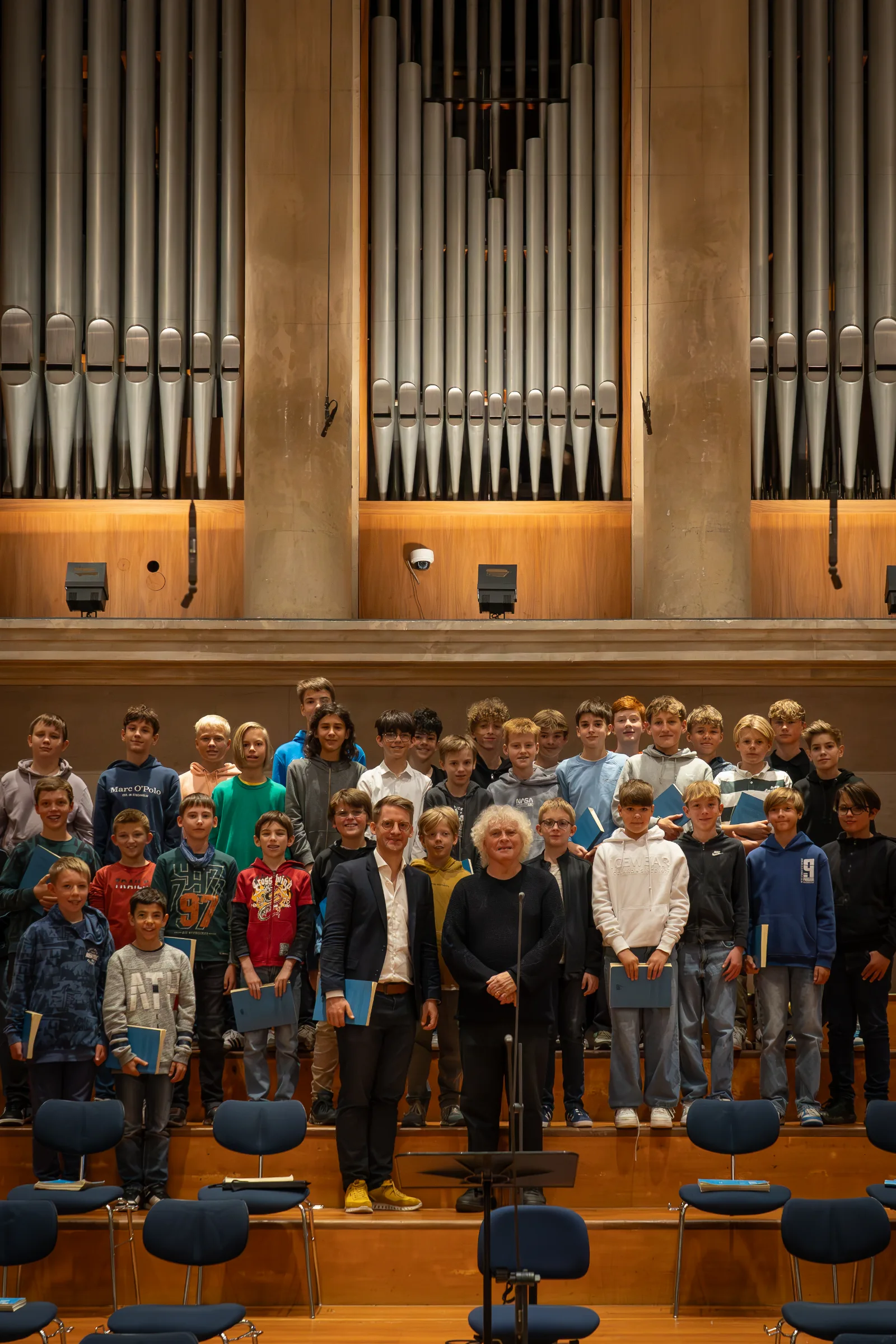 Haala, who left in 1995, indicates that as a former member he finds it hard to judge. He does, however, have the impression that the choir's outward character has remained the same, including under a new choir director. Egge had little contact with the choir after leaving, but noticed at concerts that the high level of ambition and the joy in singing are still there. Romanowsky sees from the outside that attention to early music has increased in recent years. He especially finds the large-scale projects with period instruments remarkable. What, in his view, has remained unchanged is the community: the foundation on which the rest of the choir life rests.
Meyer sees the clearest change. The change of Domkapellmeister in 2020 brought, in his view, a different dynamic: "A fresh, new spirit blew through the house." He also suspects that children begin their choir training after the coronavirus pandemic with a different outlook on the world. Some things that ten or twenty years ago were a matter of course in the training and in communal life seem less self-evident today. It remains his personal impression, but it makes clear that a jubilee does not only invite us to look back.
Steinemann views these changes from his own experience, as a former choir member and as the current Domkapellmeister: "Tradition stays alive when each generation makes it its own anew." The world of families, the demands of school and the experiences children bring with them are constantly changing. Choir training must keep pace with that. The core mission remains the same: to guide children and young people musically and personally, to develop their voices with care and to inspire them to sing together. He also points out that a boys' choir is constantly in motion: because of voice breaking, the composition changes, so the collective sound must grow anew each time.
The young voices
How does the tradition sound today? The current singers give very different reasons for why they joined the choir. Four of them share a first name with a former singer above; that is why we speak of the young Valentin, Thomas, Julian and Daniel.
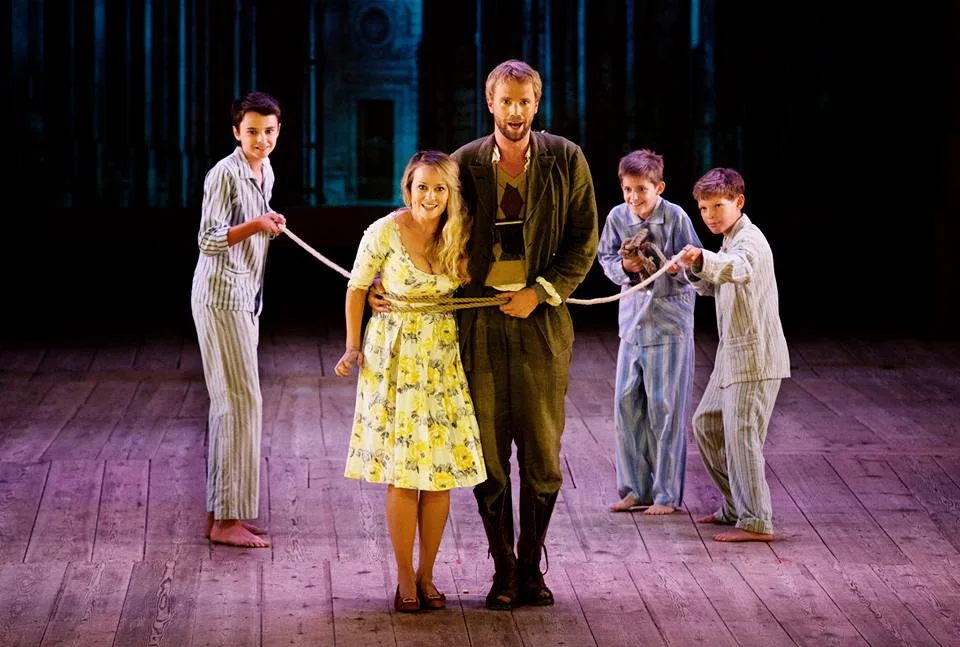 At the age of five, young Julian went with his grandmother to a concert of Gregorian chant sung by male voices. His mother then spoke to Reinhard Kammler, and in 2019 he began his musical preparatory training. The choir means a great deal to him, also on a personal level. „It gives me support in difficult times,” he says. It also still connects him to his grandmother. He appreciates the atmosphere and the way the choirmaster talks about composers: „He presents them as if he knew them all personally.” His most cherished memory is the production of Carmen at the Staatstheater Augsburg, where he also got a look behind the scenes of the theatre.
Bruno joined the choir at the age of four through his mother. „At that time I didn't think I would stay so long,” he says now, nine years later. He thinks it is cool to be a Domsingknabe, „not even primarily because of the singing, but also because of the friends.” He also values the various voice coaches. The tour to Sweden and Denmark has stayed with him most: „Going on tour with friends was fantastic!”
Young Valentin joined the choir because his brother already sang in it. „We experience things that others don't experience,” he says. He is „a little proud” of that. He finds the trips especially remarkable. The tours to Lithuania and Guatemala and the visit to the city of Antigua have stayed with him. He most enjoys singing the Weihnachtsoratorium.
Young Thomas followed in the footsteps of his father, who was also a Domsingknabe himself. He hoped to make new friends there. He calls it „an honour” to sing in one of the best boys' choirs in Germany. He also enjoys singing solos. His most cherished memory is the Pentecost tour to Guatemala.
Young Daniel heard about the choir through a friend and was immediately enthusiastic. He loves the singing itself, the concerts and the nice people he meets there. The choir holiday and the Weihnachtsoratorium are also among his favourites.
Alexander auditioned in 2021. He finds it „a great honour” to sing in such a well-known choir. Moreover, singing helps him to focus his thoughts on other things for a while. His most cherished memories are the Easter tour to Sweden and Denmark, where he first sang in a quintet, and the choir holiday in Wertach. Above all, he remembers the food: it was exceptionally delicious.
When looking ahead, the young singers are honest about what they will take with them and what they will miss. Young Julian mainly takes the discipline with him, but will also miss the community. Young Valentin has learned how to behave within a group. Young Daniel wants to hold on to what he has learned at the choir, „even though I actually want to become a footballer.” Above all, he will miss the singing and the people. Alexander has learned to keep a cool head. What he will miss most are his friends, the community and his choirmaster, Mr Müller-Henneberg.
For Steinemann, that very development is the most beautiful aspect of his work: a child begins in the musical preparatory training, discovers his voice and grows within the choir. „It is also my task to give the boys confidence in what they can do. When they then feel for themselves that together they rise above themselves, those are also deeply fulfilling moments for me.”
Singing in the service of the liturgy
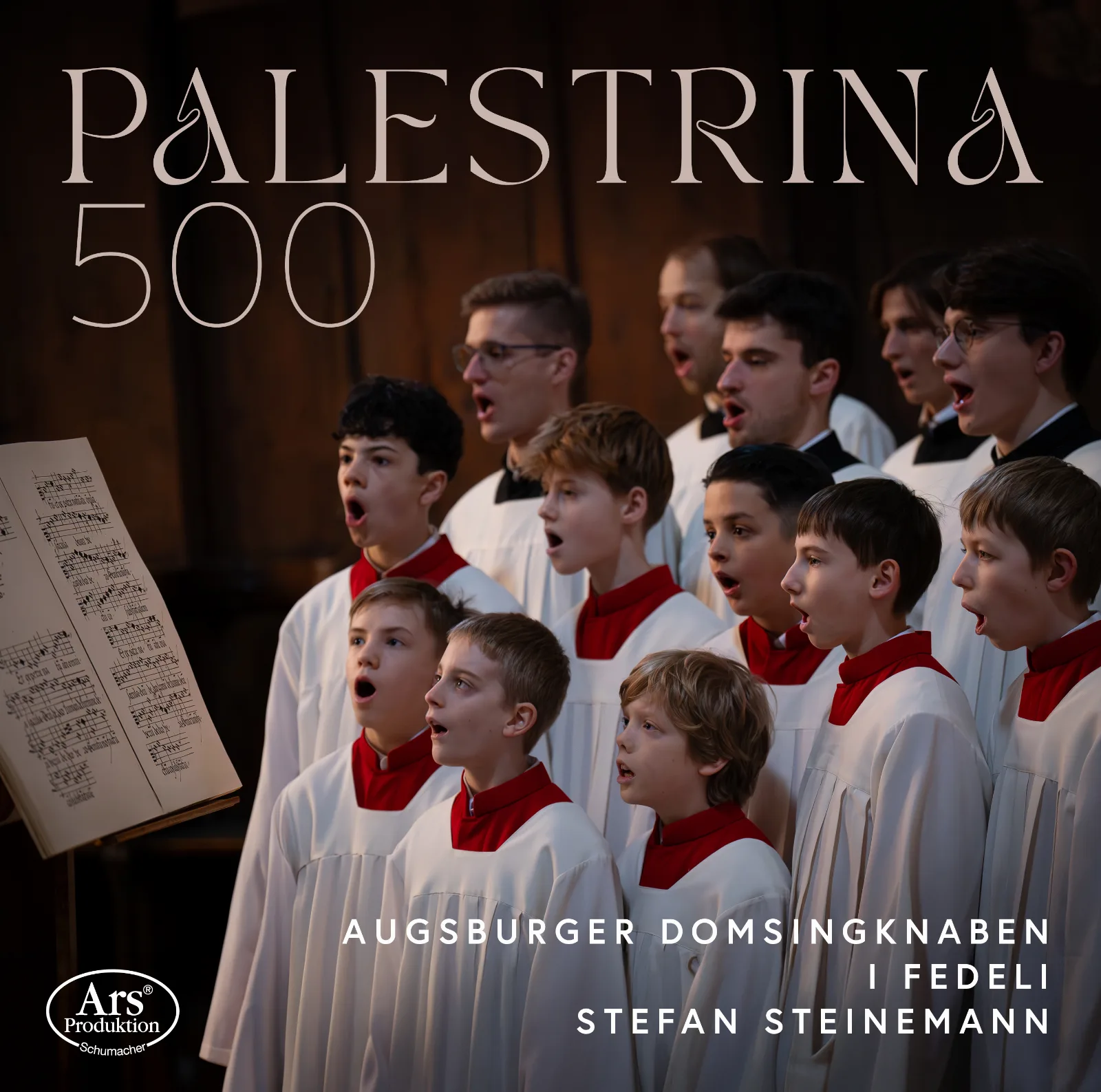 No matter how far the journeys take them, the Cathedral remains the centre. „Here our singing has its fixed place in ecclesiastical life,” says Steinemann, „and here the boys most directly experience what they use their voices for.” Music makes spiritual texts audible: „When we give musical shape to a church service, we carry the prayer of the congregation along.” Today's children come with very different experiences of church and faith. By singing together and experiencing the liturgy, new paths to faith can, in his view, emerge.
The Cathedral also connects the singers with a musical history that is much older than the current choir. Continuing that tradition in its original sound-space is, according to Steinemann, a special task. It means carefully maintaining the inherited repertoire and discovering what has not yet been heard: „Historical works that have not been performed for a long time can be just as new and surprising to our singers as a contemporary composition.” New impulses also come from collaboration with other musicians and ensembles.
On tour and on stage
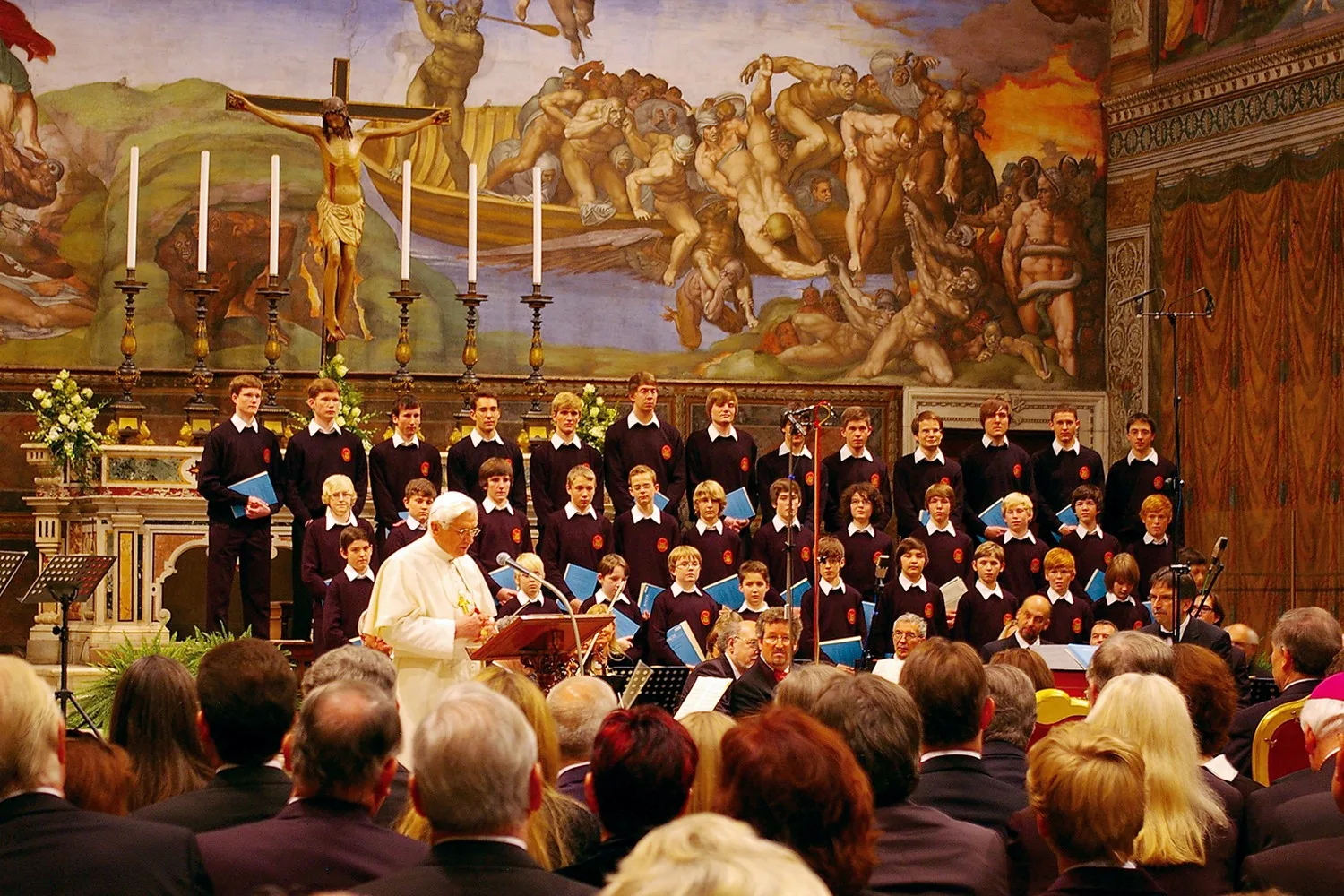
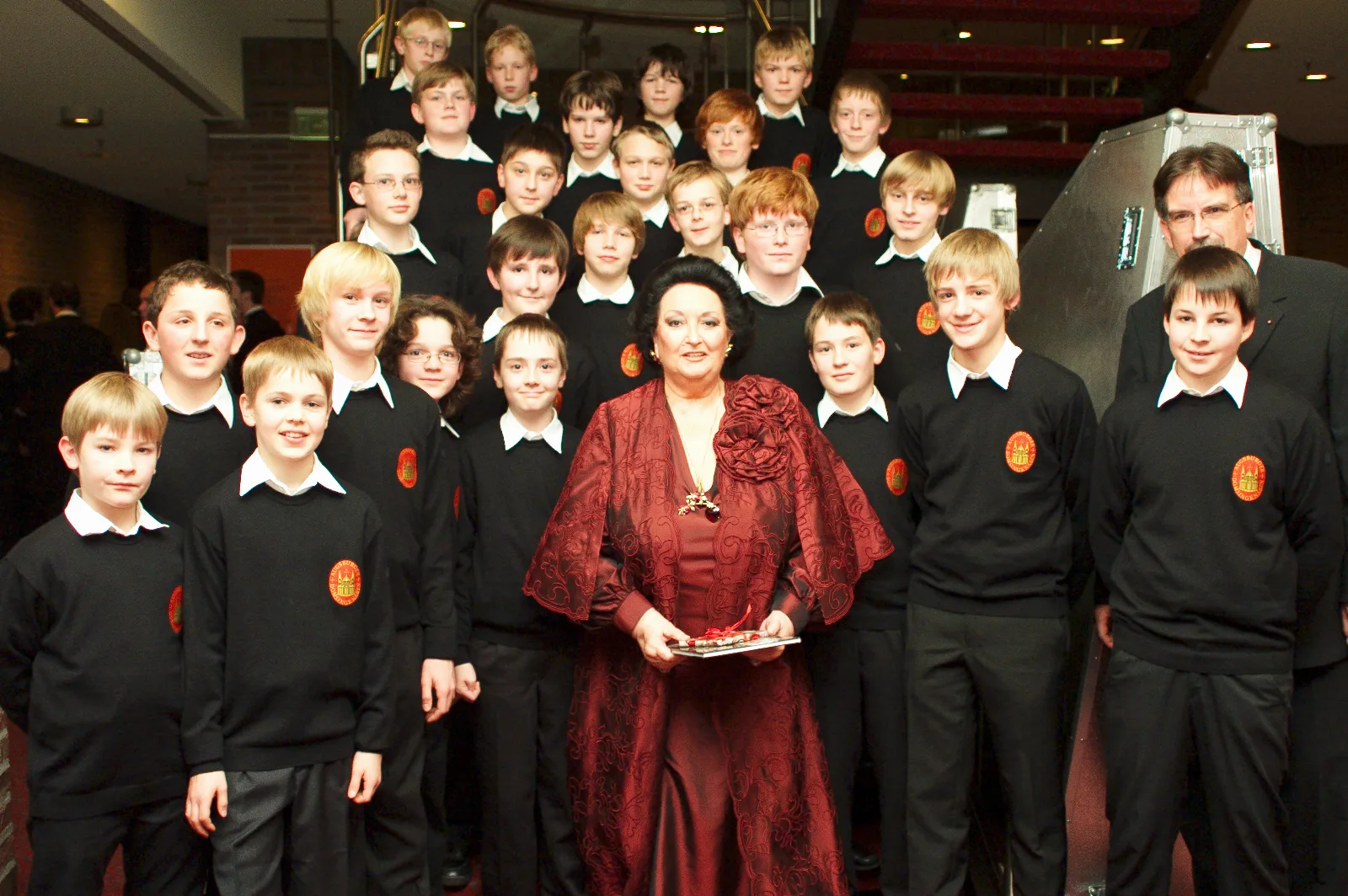
The Augsburger Domsingknaben have worked together with the Symphonieorchester des Bayerischen Rundfunks and the Deutsche Radio Philharmonie and have performed under conductors such as Sir Colin Davis, Kent Nagano, Mariss Jansons, Bernard Haitink, Daniel Harding, Manfred Honeck and Sir Simon Rattle. The choir has sung several times in the Vatican, was a guest at Schloss Bellevue (the official residence of the German Federal President), and performed at, among others, the Schwetzinger Festspiele, the Baltic Sea Festival in Stockholm and the Internationale Wolfegger Konzerte. Boy soloists and smaller ensembles take part in opera productions and CD recordings throughout Europe.
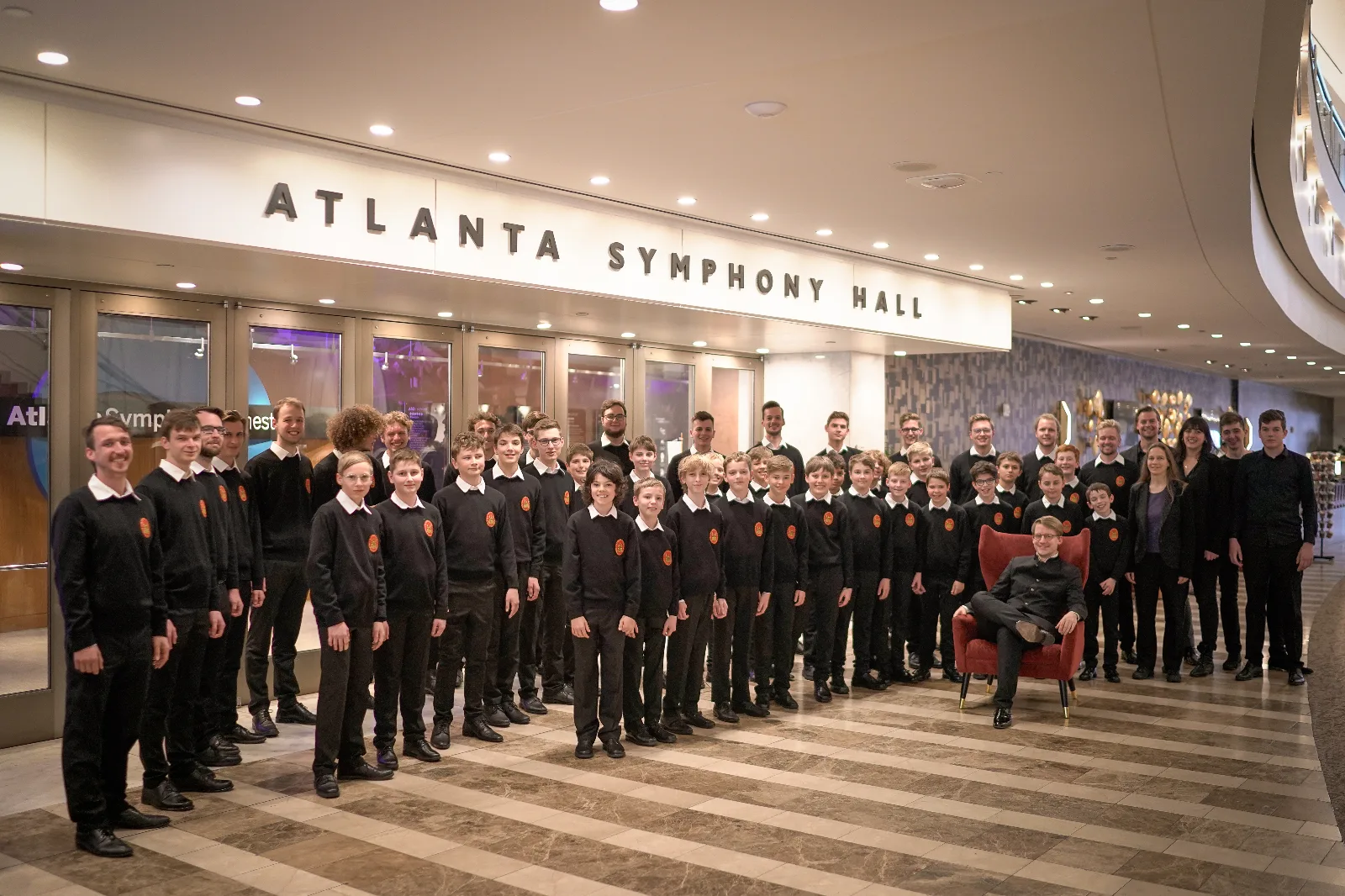 Over the past five years, the concert tours have taken the choir to Austria, Poland, Belgium, the Czech Republic, Lithuania, Italy, Denmark and Sweden. It also performed in renowned venues such as the Atlanta Symphony Hall, the Alte Oper in Frankfurt and the Cuvilliés Theatre in Munich. In the Elektra Tonquartier of the Bergson Kunstkraftwerk, which opened in 2024, the choir was the first ensemble to perform. In 2026, the chamber choir travelled to Guatemala at the invitation of the German Embassy, where it musically graced the celebration of two hundred years of German-Guatemalan immigration in the National Palace.
For the boys, such a trip means more than a prestigious hall. "On a concert tour, the boys get to know other countries, people and ways of life," says Steinemann, "and they experience that music can also foster understanding across language barriers." During a trip, the bond also grows: the singers spend a lot of time together, have to adapt to new situations and take responsibility for one another.
The future begins with the next generation
What does Steinemann wish for his choir for the decades to come? That in the future too, many children will discover the joy of singing and find a place where they are guided and feel at home. For that, committed people are needed, the trust of families and the reliable support of the church and society. Musically, he wishes the choir curiosity, courage and a high standard, along with the patience that every new generation of singers requires.
What must never change is the attitude with which the choir works: the appreciation for every individual, the responsibility for one another and the anchoring in faith and in service to the Cathedral. "From that, our shared singing will continue to grow for me in the future," he says, "to the honour of God and the joy of people."
Missa Salisburgensis à 53 voci – jubilee tour
Augsburger Domsingknaben, Barockensemble des Bayerischen Staatsorchesters and Les Cornets Noirs, conducted by Stefan Steinemann.
- Sunday 25 October, 5.00 pm: Herkulessaal, Munich
- Friday 30 October, 7.00 pm: Augsburg Cathedral
- Monday 2 November: Elbphilharmonie, Hamburg
- Tuesday 3 November, 7.00 pm: Kreuzkirche, Dresden
In addition, there are concerts in Bregenz and Basel. Tickets and current information: domsingknaben.com/tickets