

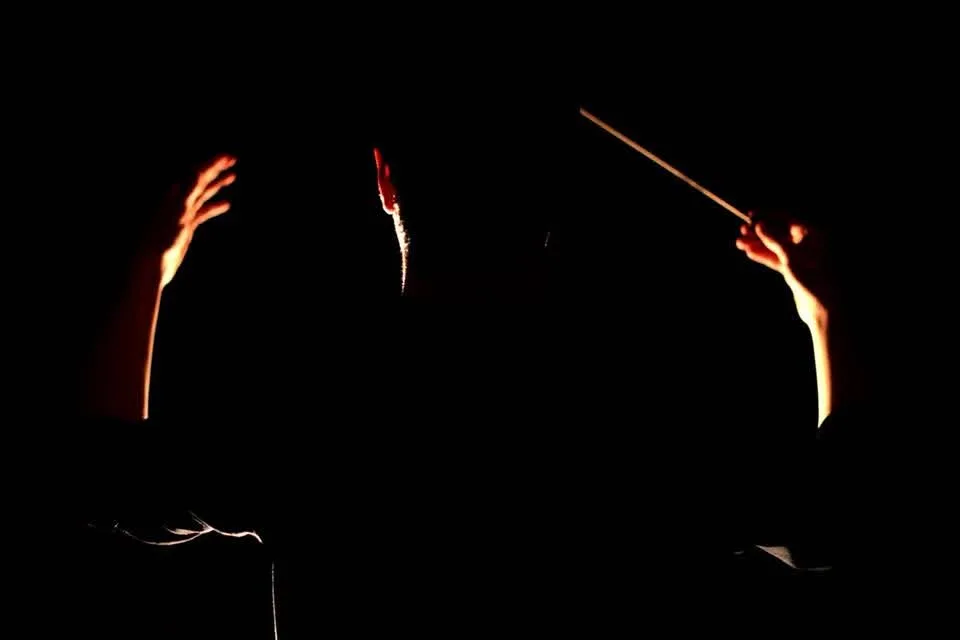
On Sunday 15 November, the Requiem by composer and conductor Lucas Van Vlierberghe will premiere – a work that not only forms the culmination of a years-long artistic quest, but also carries a deeply personal significance. Klassiek Centraal spoke with Van Vlierberghe about his musical training, the interplay between composing and conducting, and the path that led to this new work for choir and strings.
From cello to composition
Van Vlierberghe's musical journey did not begin at the music stand, but with the cello, which he played at the Kunsthumaniora in Antwerp. Soon, however, it became clear that his true fascination lay in creating music itself. That drive led him to the Royal Conservatory Antwerp, where he studied composition with Wim Henderickx and Bram Van Camp, supplemented by lessons from Luc Van Hove and Alain Craens.
A decisive period in his development was his master's programme at the Estonian Academy of Music and Theatre in Tallinn, where he studied composition with Helena Tulve and Tõnu Kõrvits, and choral conducting with Hirvo Surva. Estonian musical culture, with its natural connection between nature, silence and spirituality, left a lasting mark on his way of listening and composing. Singing in the academy choir under the direction of Tõnu Kaljuste, and masterclasses with composers such as Pēteris Vasks, Thomas Adès and Toshio Hosokawa, further enriched his musical outlook.
Today Van Vlierberghe considers himself first and foremost a composer. "That is where my artistic identity lies and where my musical ideas originate," he says. Conducting and building ensembles he experiences as a natural extension of that – a way of experiencing music, both that of others and his own work, from the inside.
Ex Cathedra and the Antwerp String Ensemble
This relationship between composing and conducting takes concrete form in two ensembles that are particularly close to Van Vlierberghe's heart: the chamber choir Ex Cathedra Antwerpen and the Antwerp String Ensemble. For him, both are more than performance platforms; they are artistic projects in which he can develop his own musical vision.
Ex Cathedra, formed from a shared passion among former members of the Antwerp Cathedral Choir, focuses on a refined choral sound and a repertoire in which spirituality, textual expression and musical depth are central. The Antwerp String Ensemble, on the other hand, emerged from the desire to bring young musicians together at a high artistic level, and at the same time gave Van Vlierberghe the space to perform his own compositions.
For the premiere of the Requiem, both ensembles complement each other seamlessly: the work was written precisely for this combination of choir and strings. "It feels like a natural culmination of the path we have travelled together over the past years," says Van Vlierberghe.
Composer and conductor: two sides of the same coin
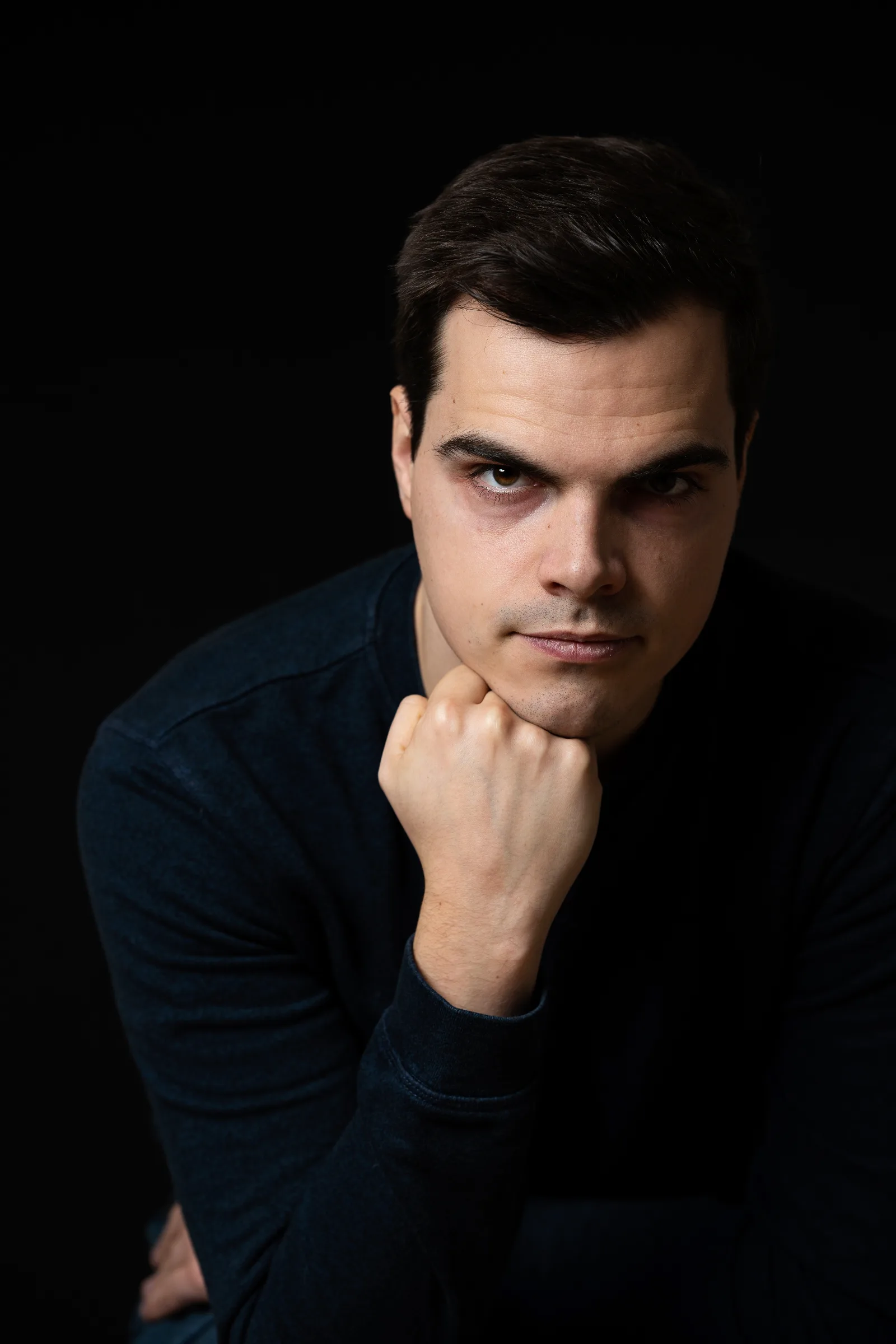 Van Vlierberghe's experience as a singer, choral conductor and composer forms a cohesive whole: each role feeds into the others. His years in the Antwerp Cathedral Choir, first as a singer and later as assistant conductor, taught him the importance of a clear rehearsal method, attention to text and carefully considered sound-building.
As a composer he feels closely related to Arvo Pärt, Pēteris Vasks, John Tavener and Henryk Górecki – composers whose music shows how simplicity, silence and sonority can often say more than technical complexity. In addition, the musicians and teachers with whom he has worked over the years have also played an important role in his musical formation: they taught him to listen critically and to remain faithful to his own artistic conviction.
This kinship and these formative collaborations also colour his way of conducting: "In my view, a conductor must be the bridge between the intention of the composer and the experience of the performers and the audience." Both disciplines, composing and conducting, continually nourish each other, he believes.
A musical language of simplicity and stillness
Van Vlierberghe's music usually starts not from a melody, but from a mood or emotion. He works quite intuitively: the original idea often determines the direction in which the composition unfolds, rather than everything being fixed in advance. He believes that a work must retain a certain inevitability. Experimenting and reworking are naturally part of that process: he regularly cuts or rewrites passages when they do not contribute to the larger whole – not to constantly seek something new, but to let the music speak as clearly and convincingly as possible.
He describes his musical language as modal or tonal, with sonority, stillness and a natural musical breath at its core – not complexity for its own sake, but music that can touch people directly.
This aesthetic crystallised mainly during his time of study in Tallinn, where he discovered that simplicity and silence can carry great expressive power. "Previously I was much more in search of complexity," he admits, "but today I believe that music often moves most when, with relatively simple means, it manages to express something essential."
During the compositional process itself, Van Vlierberghe always keeps the listener in mind. He hopes to create a musical space in which everyone can find their own experience – stillness, reflection, emotion. His background as a performing musician helps him in this: because he knows how singers and instrumentalists breathe and phrase, he writes music that feels natural to perform.
The road to the Requiem
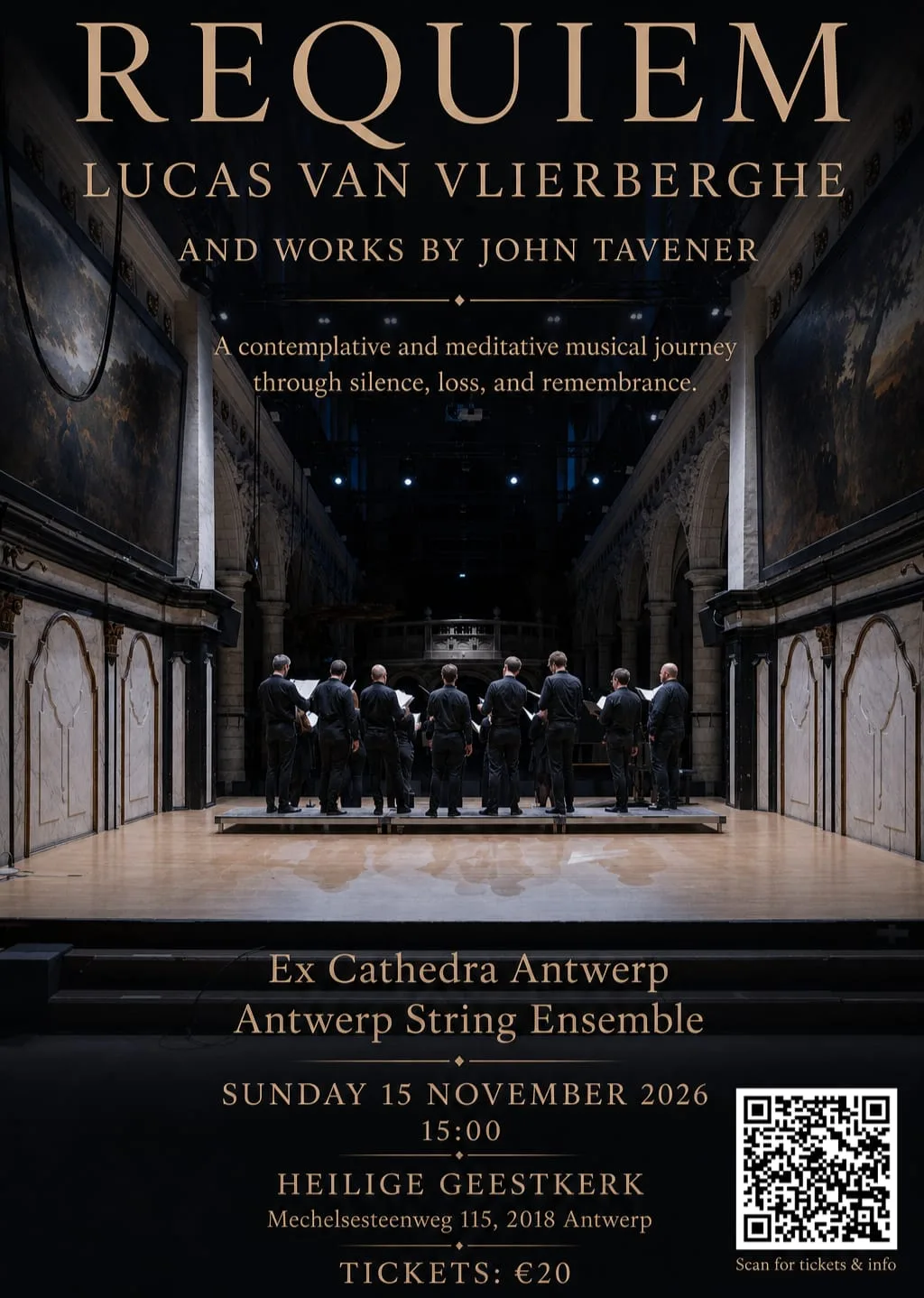 The theme of death has long fascinated Van Vlierberghe, not from a place of gloom, but from questions about transience, memory, consolation and hope. For a long time he had carried the plan to one day write a requiem. The passing of his grandfather, and later also his grandmother, ultimately tipped the balance to develop earlier sketches further and complete the work – so that the Requiem also acquired a personal significance.
From the very beginning, he heard the work as a composition for choir and strings. A masterclass with Pēteris Vasks, who approaches choir and strings not as opposites but as one breathing whole, left a lasting impression. In Van Vlierberghe's Requiem, the strings therefore often move colla parte with the vocal lines: they do not accompany the choir, but extend and deepen the vocal sound. This organic unity determined both the scoring and the form and duration of the work. "I did not want to write a grand or monumental requiem," he explains, "but a hushed musical meditation in which every note has a meaningful place."
Within the rich requiem tradition, Maurice Duruflé's Requiem remains an enduring source of inspiration, above all for the naturalness with which Gregorian chant and a personal harmonic language merge there. Vasks and Tavener also influenced his view of sacred music, not as stylistic models to imitate, but as proof that simplicity, sonority and silence can carry great emotional power.
Van Vlierberghe locates the core of the work not in one specific moment of the score, but in the continuous atmosphere: a musical space in which farewell, memory and hope can exist side by side. "If listeners feel at the end that they have undergone an inner journey," he says, "then the Requiem has achieved what I wanted to say with it."
A continuous musical journey
For the concert programme surrounding the premiere, Van Vlierberghe deliberately chose works by John Tavener – Funeral Canticle, Mother of God, Here I Stand, Funeral Ikos and Song for Athene – which breathe the same stillness and spirituality as his own language. Samuel Barber's Adagio for Strings opens the concert as a universal reflection on loss and remembrance. Together these works form not a loosely strung-together programme, but one continuous musical journey that places the Requiem within a broader tradition of contemporary sacred music.
As a composer you write the notes, but according to Van Vlierberghe a score only truly comes to life during rehearsals. Musicians then bring their own personality, sound and interpretation, and this colours the work in ways not yet visible during the writing itself. "It is precisely this interplay that makes a premiere so special," says Van Vlierberghe, "at that moment the score becomes music for the first time."
Beyond the premiere
When the Requiem sounds for the first time on 15 November, this marks a transition for Van Vlierberghe: the work ceases to belong only to him. "As long as I am working on it, it is my music. But as soon as the first note sounds, it also belongs to the musicians who perform it and to the listeners who find their own meaning in it." This shared experience is ultimately, for him, what music is about.
He is also open to new interpretations in future performances by other conductors and ensembles. As long as the essence of the work remains intact, he finds it fascinating when others place different accents or discover nuances he had not thought of himself – a composition thereby remains alive.
With the Requiem as a recent highlight, Van Vlierberghe is already looking ahead. In the coming years he wants to continue developing his own musical language, with a particular attraction to larger vocal and orchestral forms. New works for choir and orchestra, alongside other concertante and symphonic compositions, are on his wish list – always with the same ambition: that every new work has something essential to say and feels a genuine artistic necessity.
Tickets can be purchased here: https://www.eventbrite.com/e/tickets-requiem-lucas-van-vlierberghe-1986533457046
And discover some other works here in the meantime: