

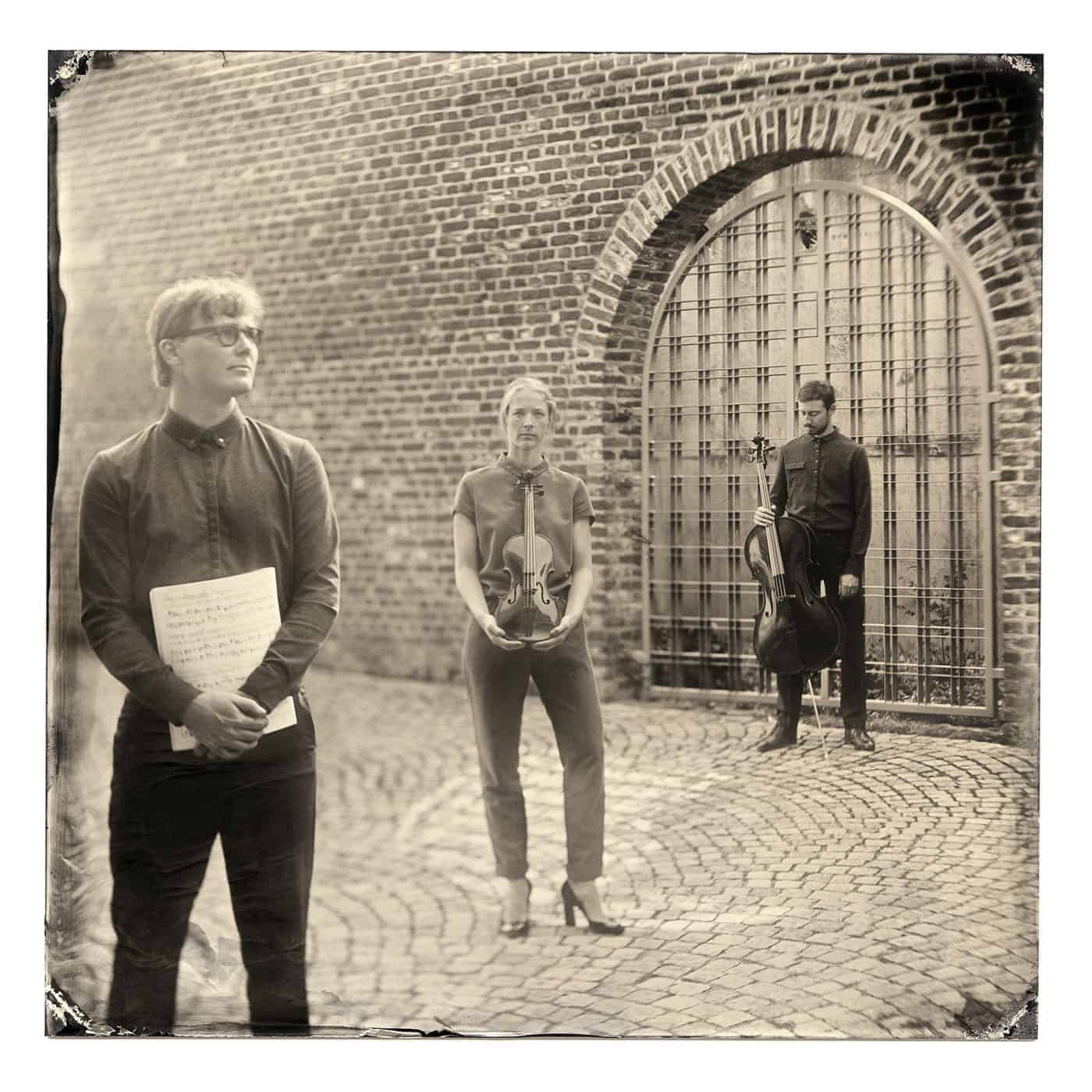
2018 has been an annus mirabilis for them so far, despite a painful bicycle fall. It began with the release of their first CD. Then the trio unexpectedly won prizes during the Concours International de Musique de Chambre de Lyon. And at the moment the piano trio is in Melbourne for yet another competition. Plenty of material, then, for a good conversation with the Belgian-Dutch Mosa Trio about the quest for the ideal instrument, their many masterclass experiences and the attraction of contemporary music.
You'll get tips about some fun card games at the end of this interview for free... Because the Mosa Trio are three playful musicians who can be exceptionally enthusiastic not only on, but also off the stage. The ensemble, with Bram de Vree at the keyboard, Alexandra Van Beveren on violin and Paul Stavridis on cello, is a successful product of the Belgian-Dutch border region. The trio got to know each other at the conservatory in Maastricht and named themselves after the Latin name of that city. 2018 has been an exceptionally fruitful year for the Mosa Trio so far. In January the CD Portraits was released on Antarctica Records, their first recording featuring, alongside Shostakovich's second piano trio, two new works: Portrait of Light by Dutch composer Sam Wamper and Trio opus 2 by 'our' Mathias Coppens. Then they went to a competition in Lyon, where the piano trio won not only third prize but also the audience prize, the 'Prix Yamaha'. And when you read this, the ensemble is competing in Australia, as one of only eight trios that made it through the strict pre-selection.
At the Concours International de Musique de Chambre de Lyon a total of 13 piano trios participated. The jury included well-known names such as Susan Tomes, pianist of the Florestan Trio, Jean-Marc Phillips-Varjabédian, violist of the Trio Wanderer and the "queen of the cello" Natalia Gutman. According to their own account, it was a tense and exhausting competition. What made the competition so intense? Can you put your finger on it?
PAUL STAVRIDIS: First of all, it was of course a long competition. The concours lasted a full week and in that way created a long period of tension. And you feel that both physically and mentally. You had to play a lot of repertoire and often had to peak at short notice. Because in half an hour you have to show what you can do. We also hadn't had the most ideal preparation. Two months before the competition I fell off my bike and had a fracture in my pinky finger. That made the preparation even more stressful.
ALEXANDRA VAN BEVEREN: A competition like this is also an emotional challenge. You have to not only gear yourself up for each round, but also for the moments when you get the results. So you're in that tension the whole time. The whole week you run on a kind of euphoria and you're in your own world.
How important is participating in various competitions for you? And are there more competitions lined up, or is this a closed chapter?
PAUL: In July we're participating in a competition in Melbourne. The long trip certainly makes it exhausting. Moreover, we have to go first. In this case, the DVD selection was already particularly demanding. We had to send a lot of very specific repertoire. This included a complete 20th-century work from after Ravel and Debussy, two movements of Haydn and a first movement from a Romantic work. To compare: for Lyon this was one Beethoven movement. The reason for this strict selection is that in Australia they only invite eight trios, and the organization pays for everything anyway. Otherwise it would be much more difficult for ensembles from Europe to participate.
ALEXANDRA: We're really looking forward to it, even though it requires a lot of preparation again. Fortunately, some pieces from Lyon are coming back, so we already have those well in hand. But of course there's also a set piece that was written especially for the competition. It turns out to be a piece of 32 pages (Pulses by Australian composer Paul Stanhope, editor's note), where you have to make it completely your own. For the rest, the program is much freer than in Lyon, where everything was tightly determined and we also had to play Beethoven's triple concerto as a finale. We'd never done this before, so that was incredibly exciting. And difficult, because those are really solo parts. On the other hand, this was certainly the icing on the cake.
PAUL: It's just important that you participate in competitions. Nowadays it's THE way to profile yourself as a trio, because there are very many young and good ensembles. And so we also want to do the Joseph Joachim concours next year and the competition in Trondheim, both of which are also specifically organized for piano trios. These are things we have to do NOW, because in a few years we'll be too old.
A second reason why 2018 is such an extraordinary year for the Mosa Trio is the release of Portraits, your first CD recording – be sure to watch the video below this article. On the CD, alongside the famous second piano trio by Shostakovich, we find two recently composed works: Portrait of Light by Dutch composer Sam Wamper, and Trio opus 2 by Mathias Coppens, both written in 2015. How would you characterize these pieces?
ALEXANDRA: Sam Wamper's work is literally a portrait of the face of his – unfortunately – now ex-partner. It is a modern and very virtuosic piece, at times very lyrical, but also with very fleeting, fast passages. A very energetic work then, with bright chords and a strong atonal character.
PAUL: In that respect, it also contrasts sharply with Mathias's work. His piece is completely tonal, with the exception of a short middle section. It is very melodic and eclectic in style: a unique stamp that applies to much of Mathias's music. He draws inspiration from different style periods and in this way shows how diverse classical music can be in the 21st century. The two works complement each other beautifully.
Has the recording changed you as an ensemble? And are there perhaps already plans for a follow-up?
PAUL: I don't think the recording changed us. The preparation is similar to that of a competition in that respect. One of the reasons we enter competitions – besides getting national and international recognition and being able to perform concerts – is because we all three have a strong feeling that this makes us stronger as a trio. Because, so to speak, not a single note goes undiscussed and you get to know and sense each other even better.
ALEXANDRA: There were already a number of ideas for a follow-up because one of the prizes in Lyon was a kind of partnership with a French organization that would support you in a project. We toyed with the idea of asking ten composers to each write a short piece for us for our tenth anniversary and possibly recording it. But it's not really concrete yet. We both much prefer to play concerts than make a recording. That's our core business.
With winning a whole series of prizes and releasing a first cd, the Mosa Trio is firmly on the map. Yet the piano trio is not your only activity as a musician, because you both also play in orchestras. Alexandra, you are active in, among others, the Nederlands Kamerorkest, the Rotterdams Philharmonisch Orkest and the Antwerp Symphony Orchestra. Paul, you are permanently employed as second soloist at the Orchestre Philharmonique Royal de Liège. To what extent is the orchestra environment and work as a chamber musician different? And to what extent do you benefit from combining both?
ALEXANDRA: Both are of course very different, but at the same time they complement each other enormously. It's wonderful to be able to use both ways of playing together. When I'm in a large orchestra, I listen just as much as when I'm playing chamber music. But in the trio it's also important that you sometimes think in orchestral terms, which is not always easy. While chamber music is very soloistic, you have to constantly adapt to what's happening around you in an orchestra. Switching from one day to the next does require a great capacity for adaptation.
PAUL: In orchestras it's of course interesting to work week after week with different conductors and soloists. Because they also bring their baggage and insights with them. And you of course take those influences with you in the trio playing. I couldn't imagine a life without one or the other: the interplay is one of the most beautiful things you can do in our profession.
Voicing frustrations
On your website I read that the Mosa Trio shows great interest in the performance practices of different style periods. How is this interest expressed exactly?
PAUL: The starting point is as broad a repertoire as possible. If we then choose, for example, to play a trio by Haydn, we research which performance rules were the basis for it in the past. Actually, we take the same approach as our early music colleagues, with the only difference being that we play on modern instruments. It is very important to contextualize every period and every style in its own spirit. You can't play Haydn the way you play Schubert, even though they're only thirty years apart. Both grew up in a different tradition. It's important to be aware of that.
[caption id="attachment_13835" align="alignleft" width="231"]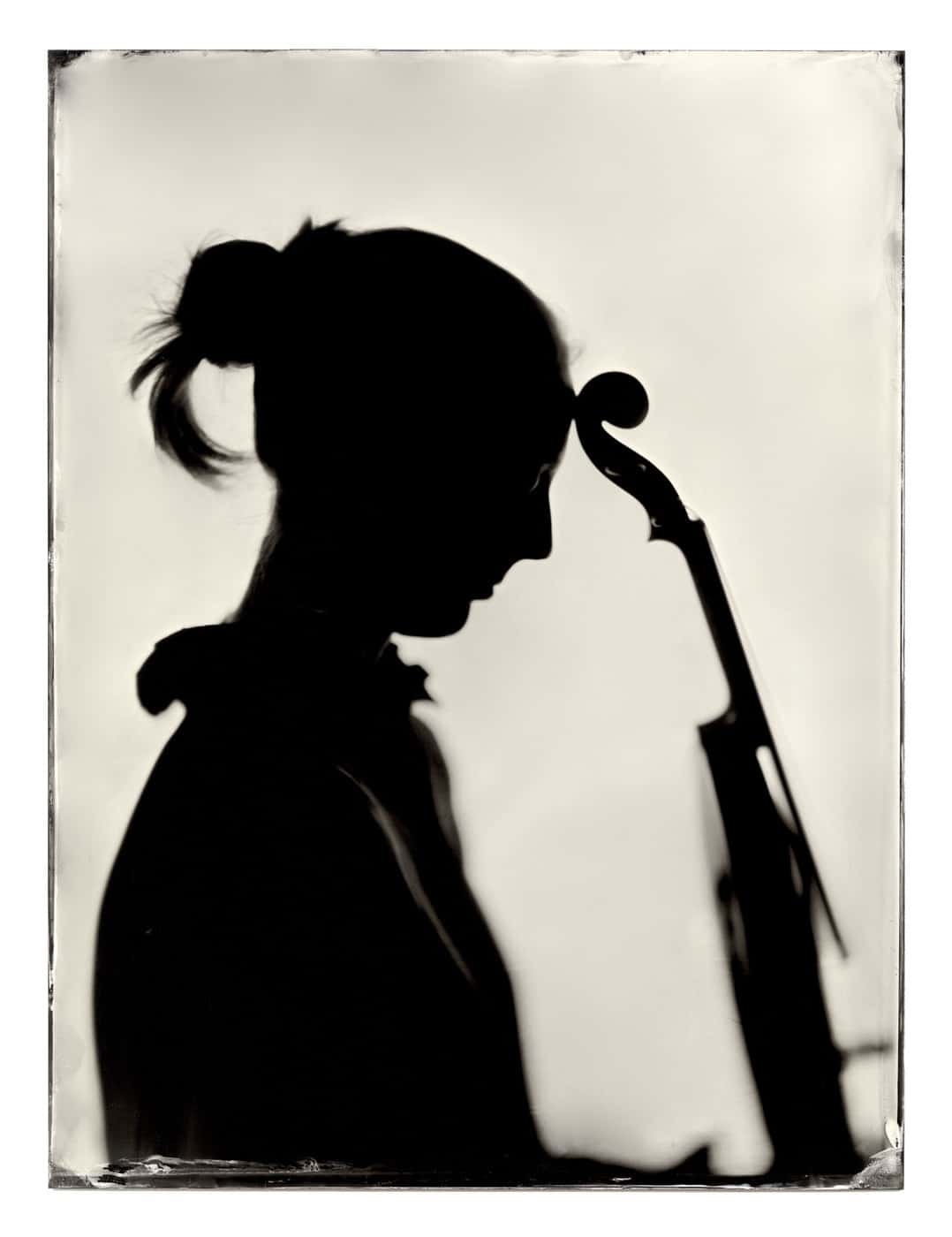 Alexandra Van Beveren[/caption]
ALEXANDRA: It seems boring to me to play everything the same way. That's why we also take lessons regularly. At the European Chamber Music Academy we have for example had lessons many times from Hatto Beyerle (former violist of the Alban Berg Quartet, editor's note). That is truly an encyclopedia of the Viennese school. When you play Haydn with him, you really don't know what hits you. Those are very confrontational lessons. Everything is about tactus, meter, iambs and Latin syllables: everything you need to know about diction and speech. If you don't know those things, you play Haydn very differently. That's exactly what we mean by stylistic awareness.
What instruments do you actually play?
ALEXANDRA: I have a violin from the Flemish school. It is a Gaspar Borbon from 1690: a particularly beautiful violin, but unfortunately it has little power. I have been to a luthier many times with it to remedy this problem, but it is simply the nature of the beast. It is actually not an instrument made for the concert hall. That is why I now have a Guiseppe Scarampella on loan from a foundation from the early 20th century. That is a very powerful violin that I used during the competition in Lyon.
PAUL: My cello is a Hilaire Darche from 1917. But besides that, I am currently also using another instrument. Alexandra was touring last week (we spoke to each other at the beginning of May, editor's note) with the Rotterdams Philharmonisch Orkest and I went to visit her in Munich. On the way back, we stopped by the builder Urs Mächler. I had coincidentally already heard a cellist playing one of his instruments twice, and it sounded wonderful. And so now I have a cello from him on trial. Alexandra also brought an instrument from him, by the way. So we are definitely also looking at newly built instruments, because in that regard we are really experiencing a golden age. (In the meantime, both Alexandra and Paul have purchased the Mächler instrument and are using these instruments at the competition in Melbourne, editor's note)
What do you think are the main qualities of a well-oiled piano trio?
ALEXANDRA: I think that is a difficult question. In any case, besides the playing aspect, you also have the social aspect. It is so important that you communicate well and also express your frustrations. Otherwise it really wouldn't work to collaborate so intensively. In that respect, we have become very Dutch as an ensemble: if there is something that doesn't sit right with us, it just has to be said. Fortunately, one of our great qualities is that we are such good friends. Our qualities complement each other very well. I myself am quite impulsive and play very much on my feelings. Bram, on the other hand, listens a lot. And Paul has a bit of both.
[caption id="attachment_13837" align="alignright" width="231"]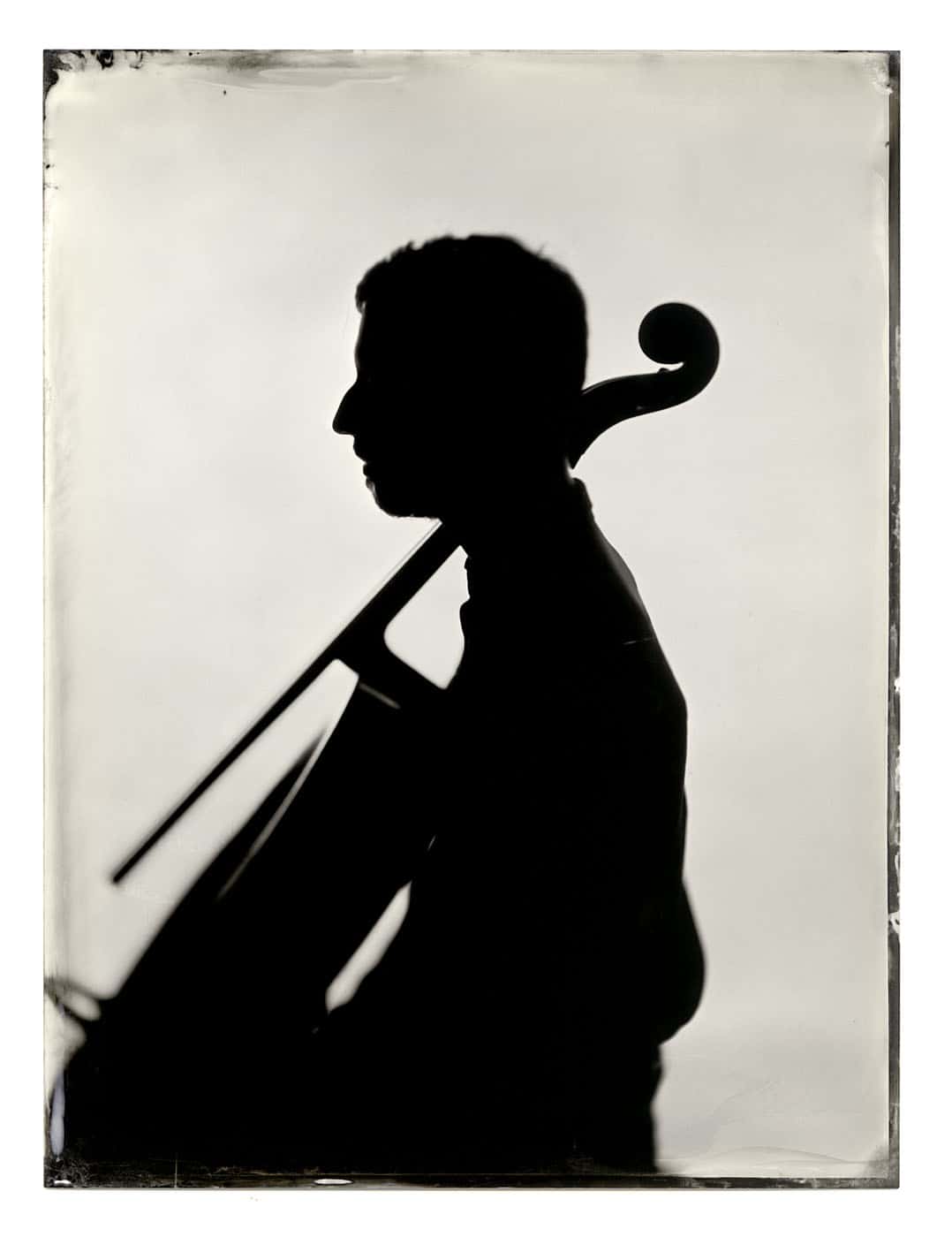 Paul Stavridis[/caption]
PAUL: I think that is also the fundamental difference between a piano trio and a string quartet. In a quartet, you do everything to become one player: you become the string quartet. In a piano trio, you have to do that at moments too – I think for example of the unison opening of the second trio of Schubert – but often it is so that each of you has your own solo role, and thus much more than in a quartet you are three individuals who together form an ensemble. I think that is one of our strengths: we do everything to be able to sound as one instrument, but each maintain our own voice in the chapter, even though we can certainly still grow in that solo aspect by daring to seize our moment more. I think these are the two most important qualities of a piano trio: on the one hand forming an ensemble, but on the other hand also not losing sight of the fact that you have three separate roles.
According to Menahem Pressler, the pianist is the primus inter pares of a piano trio, . How do you experience this?
PAUL: The point is, of course, that if you as a pianist in a trio do what you want, you completely ruin the string players. In that respect, I think you have a very important role as a pianist. Because purely by sound, the piano produces the greatest amount of sound and the instrument is largely responsible for the harmonic richness. In terms of dynamics, the piano also has a very large influence. The piano is thus more or less the foundation of the ensemble. But unlike in a string quartet, you do not have a true leader in a piano trio. For example, almost every beautiful melody in the first trio of Mendelssohn appears first or only in the cello. In other works, the violin has to shine, while the trio of Ravel has the allure of a piano concerto and is very difficult for the pianist. I think we cannot entirely agree with Pressler's assertion.
Broken air conditioner
Tell us about your experiences during the masterclasses you attended with various musical greats such as Susan Tomes (Florestan Trio), Menahem Pressler (Beaux Arts Trio) and Mark Steinberg (Brentano Quartet)?
ALEXANDRA: The encounter with Pressler was a public masterclass here at the Muziekgebouw van Eindhoven. Of course that man says golden things and something like that is really an experience, but it's also a bit of a one-man show. You have to be aware that Pressler is there for you, but also for the audience. Such a lesson therefore has a very high entertainment value. That's why there are other lessons in Paris and elsewhere that were more valuable to us.
PAUL: The lessons with Mark Steinberg at the Orlando Festival in Kerkrade were perhaps our best ever. That might sound strange because he plays in a string quartet, but that man has such incredible imagination and can also perfectly explain how you as an ensemble benefit from it. We had never experienced that before. Especially for us as string players this was a memorable encounter because he always thinks in refined terms and brought many new ideas. He's also an incredibly nice man. And that's not a given, because sometimes you run into people who can completely demolish you.
ALEXANDRA: I remember a masterclass by a German pianist whom Paul compared in Schubert to a broken air conditioner. If you notice with a teacher that there's no respect present, then something like that works counterproductively. We had a day of lessons with Susan Tomes in London a few years ago. That was very interesting because musically she's somewhat a counterpoint to us. She's someone who goes for a lot of clarity, but at the same time is also very straightforward and terse. From her we learned that we sometimes went too far and took things out of context, simply because we found it beautiful. But she brought us back to organized playing.
How is your study period with the Trio Wanderer currently progressing at the Conservatoire à Rayonnement Régional de Paris? What exactly are you working on?
PAUL: What the Trio Wanderer does and wants is certainly not always our taste, but in terms of general musical ideas they align more strongly with who we are. They really teach us the tricks of the trade, and that means that after three years we still enjoy going to the conservatory in Paris. When we return home, we often play the pieces completely differently. It's wonderful to be able to make big steps forward that way.
ALEXANDRA: It's actually a very non-binding education. We email them and tell them we're ready for lessons. We then get two days of lessons from morning to evening. That way we can prepare for a competition under the most optimal conditions. We always get lessons from one of them separately, and it's striking that about the same piece they sometimes say something completely opposite. Yet that's such an incredibly good trio. The way they influence each other, they also influence us. That ranges from the smallest details and a few measures to the big lines of a work.
How exactly do you go about studying new repertoire, for example the required work for Melbourne?
PAUL: First of all, we each study the score separately to get an idea of the sound, especially with a modern work that we don't know at all yet. Then we bring our instrument to try out a few things, but it's not the case that we all three have to know the pieces perfectly before we get together. The last step is then technical refinement. It's only when we play together that we really make the piece our own. This way you try to develop a shared vision of the piece from the beginning.
ALEXANDRA: I always look forward to the moment when we sit down together. Because on your own you can really do so little. You can play the notes, but it's only when we play together that the music really takes shape. After a few rehearsals, the study process also goes very differently, because then you have a much clearer picture of what we want to do with it. Only then do things also pick up speed.
Quest for confirmation
The Mosa Trio prides itself on also delving into contemporary music. Belgian composer Mathias Coppens even wrote a piece especially for you. What attracts you so much to this new music?
PAUL: The nice thing is that you can work intensively with a composer. That's very enriching. Also in building a concert program, we think it's important to have different styles represented, so that the listener also hears new things and listens to the pieces with different ears.
ALEXANDRA: What I appreciate is that you're somehow less bound by rules. I feel confined to a certain role quite quickly, while in modern music you can sometimes go a bit further. Because any music is first and foremost about the heart, and that also applies to contemporary compositions like those by Sam and Mathias. And people notice that. They're attracted and stimulated by it. The response from the audience is often very positive.
What is the nicest compliment the audience can give you?
PAUL: When are you coming back? Because ultimately it's for the audience that we play, not for ourselves.
ALEXANDRA: I thought the moment when we got a standing ovation before the intermission at the Concertgebouw Amsterdam was a nice moment. That was during the release concert of our cd. I know that Dutch people stand up quickly, but we had never experienced that before the intermission. I was impressed by that. The life of a musician is also a bit of a constant quest for confirmation.
What is your favourite piano trio from the repertoire for each of you?
PAUL: If I may take one piece to a deserted island, I choose Haydn. I don't need to study for that (laughs).
ALEXANDRA: Ravel does something to me every time, especially the third movement. It touches me every time Bram comes in there. Simply blissful. There are few trios that have such an impact when you play them, purely because you create a wave of sound and it washes over you. Although I experience that too with the finale of Schubert's second trio.
PAUL: If we can sit together on a deserted island, I can live with her choosing Ravel and me choosing Schubert's second trio. Then we're both perfectly happy.
Is there actually a hall or venue where you would like to (still) perform?
PAUL: The small hall of the Concertgebouw Amsterdam or the Musikverein in Vienna: those are truly beautiful halls with a great history that inspire you as a musician. In the Concertgebouw, symphonies by Mahler had their premiere and the composer also conducted there himself!
ALEXANDRA: What is special about BOZAR is that for chamber music concerts they turn the hall around. We sit with our backs to the hall and the audience sits on the stage. That is particularly intimate. Moreover, you have good acoustics because you play towards the organ.
One last question to finish: the Mosa Trio is actually formed by Alexandra, Paul, Bram and a stack of board games. I myself am also a board game enthusiast. What games do you play?
PAUL: We have our holy trinity, and they are all three card games. What we've been playing the longest is Ligretto. That is a game where speed is very important and it can sometimes get quite intense. Over time we found the game not challenging enough anymore, so we came up with a number of variations. In Lyon we played it every evening. And Alexandra has already infected quite a few other musicians in the Rotterdam Philharmonic Orchestra with it.
ALEXANDRA: Besides that we also play Bonanza. That is a kind of horse trading, where you have to swap cards and negotiate. It's a dangerous game though, because it brings out the worst in us, especially in Bram. You become a bit mean and we are quite fanatical.
PAUL: And the third card game is Exploding Kittens. That is the most successful card game on Kickstarter (an online platform where game makers can do crowdfunding, ed.) ever. The game raised a thousand times more than it had in mind.
Klassiek Centraal wishes the Mosa Trio all the best in Melbourne and much more fun playing, both on and off the stage!
- WHAT: interview with Alexandra Van Beveren and Paul Stavridis, violinist and cellist of the Mosa Trio. The trio is further complemented by pianist Bram de Vree.
- PHOTO CREDIT: © The Tintype Studio
- WEBSITE: http://www.mosatrio.nl/nl