

Born in 1984, Liebrecht Vanbeckevoort was 22 when he became laureate of the Koningin Elisabeth Muziekwedstrijd for piano. For his 40th birthday, the Davidsfonds Cultuurreizen, for whom he is also a tour guide, wanted to pamper him and asked him to organize a trip of his choice.
He didn't have to think long. To Hamburg, where his beloved Steinway's are built. That way he could also visit the meanwhile "iconic" Elbphilharmonie in that port city on the Elbe, known as an architectural jewel with excellent acoustics. It was on his bucket list and could now be checked off. There was plenty of interest in that offer. With 24 music lovers we traveled with him for 4 days through Germany's second largest city. Where better could we start than in the museums of the Komponistenquartier.
You'll find everything there about Brahms, who began his musical career in Hamburg, about Fanny and Felix Mendelssohn who were both born there, and also about Telemann, who was music director there for 50 years. There are numerous "pianos from that time" and of course our pianist couldn't resist trying one. An extra gift for his listeners. Before each visit and concert during that trip, our tour guide, a born storyteller, also provided a substantial introduction.
But a real gift day for Liebrecht Vanbeckevoort only came when he took us along for a rare glimpse into the workshops where the famous Steinway pianos are built. Such an exceptional visit was really only possible because our guide is himself a 'Steinway-artist'. A title that the company only gives to their best pianists: they must play exclusively on a Steinway, have bought one themselves, and they are not paid for that title.
[caption id="attachment_38461" align="alignleft" width="350"]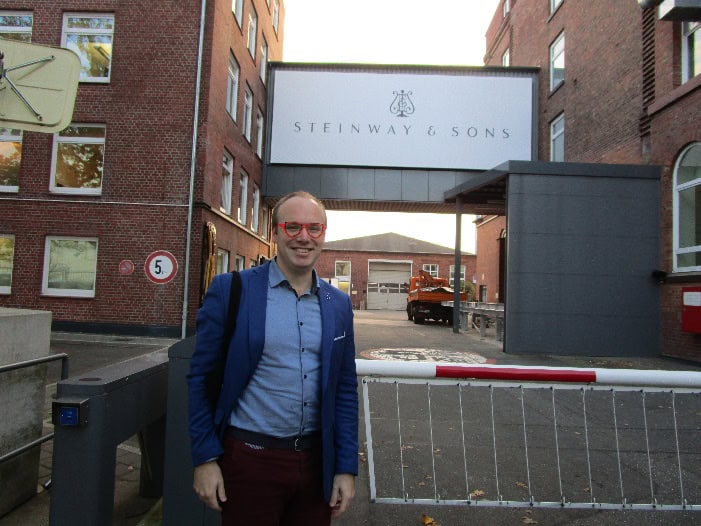 Liebrecht Vanbeckevoort at the entrance to the Steinway & Sons factory in Hamburg[/caption]
It was in New York that the exiled German Henry Steinway (once Heinrich Steinweg) began his piano factory in 1853, and in 1880 the Hamburg branch was established. Unimaginable what we got to see there: how they make the typically curved shape for the casing of a grand piano here, how they glue together different layers of boards of very special types of wood by hand, rivet them in a curved form and clamp them so they have time to permanently maintain that unnatural and indefinable shape of a grand piano. Wonderful! And then the soundboard or lid: all the slats that make it up are checked by hand, the 'defects' in the wood marked with a red pencil to be removed, the sound of each slat compared with that on a sort of model xylophone, listening to the sharpness, clarity, tone, warmth, and also based on the thickness of the growth rings, selecting the best boards. The interior, the hammers, the strings, the keys and so much more: you wouldn't believe it, but there are 12,000 pieces in one piano that all have to pass quality control. It's not assembly line work but truly artisanal craftsmanship. Here 1300 grand pianos are completed per year. Incredible.
What can come out of such a Steinway piano, Liebrecht Vanbeckevoort let us hear with great enthusiasm during a short recital in the showroom of this European headquarters. The 'Steinway-artist' played us pieces by Brahms, Mendelssohn, Chopin and Liszt, off the cuff. As listeners we sat almost in that brilliant piano. Wonderful to experience that live.
[caption id="attachment_38464" align="alignleft" width="350"]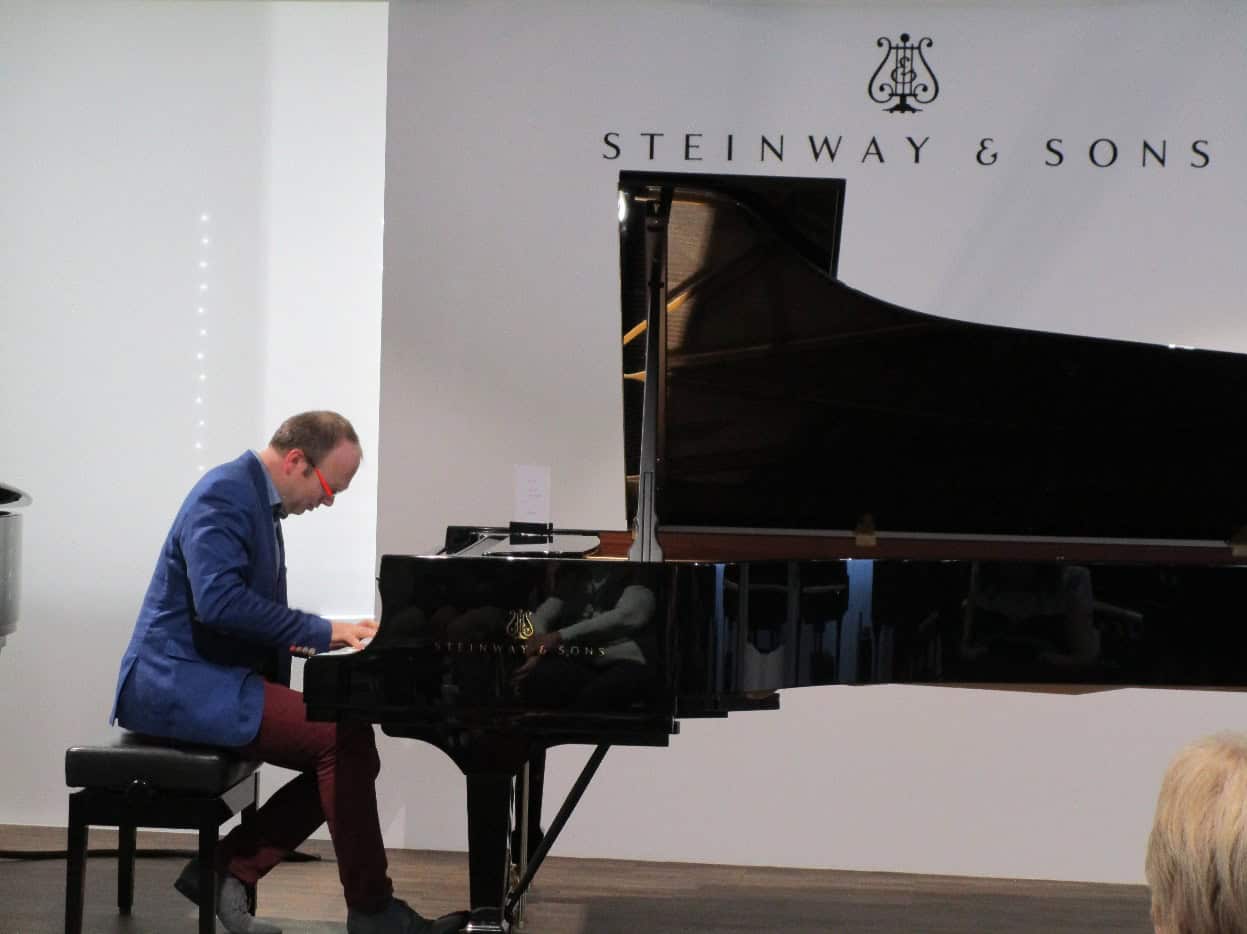 Recital by Liebrecht Vanbeckevoort in the showroom of Steinway & Sons, Hamburg[/caption]
In the afternoon, another Hamburg monument was on the program: the Elbphilharmonie. It is an immense, gleaming glass construction, built on top of a brick warehouse from 1963 that serves as a plinth for the new building. Completed at 108m high with a wave-like roof, which is reminiscent of the billowing sails of ships that once visited this German Hanseatic city. You can't overlook it when you walk around the new urban development project HafenCity Hamburg, right on the Elbe and next to the UNESCO World Heritage "Speicherstadt", the old, listed storage warehouses. The design is by Swiss architects Herzog & de Meuron and includes three beautiful concert halls, the largest with more than 2000 seats, but also apartments and a hotel. The Japanese Yasuhisa Toyota gained world fame with his acoustic design for the concert halls. He used only ingeniously designed oak walls and floors for the covering. How that would sound was for a later experience because first we went to the Hamburgische Staatsoper for the evening to experience a Tosca by Puccini in a production by Robert Carsen. Somewhat disappointing for anyone who saw his Puccini cycle in the 1990s at what was then the Vlaamse Opera. It was the identical same production as the one he brought to Ghent/Antwerp. But that cycle definitely put Carsen on the map as an opera director. It was a fine performance now, but it sounded loud, both cast and orchestra. The production did feel somewhat dated.
[caption id="attachment_38463" align="alignleft" width="350"]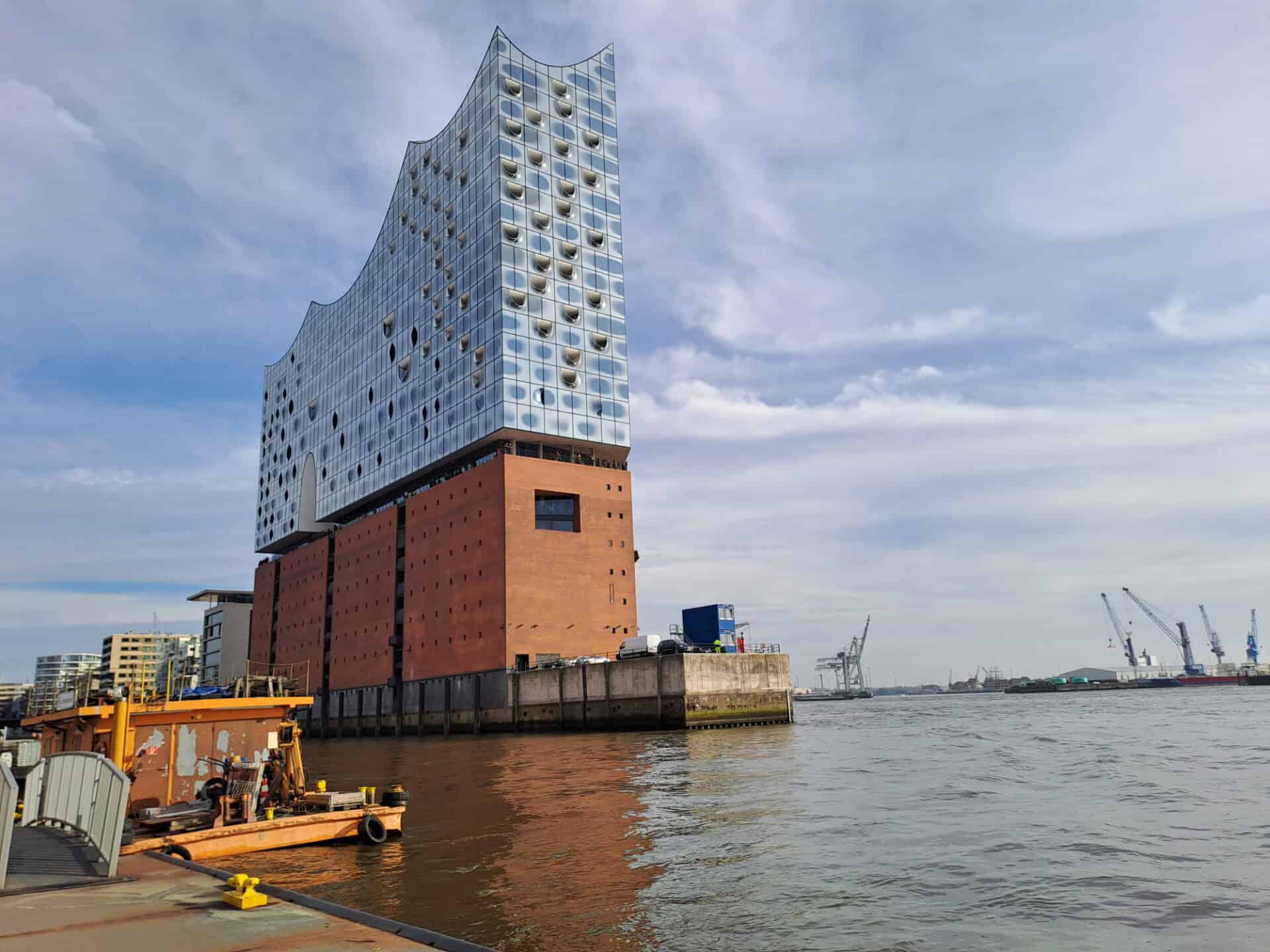 Elbphilharmonie, Hamburg[/caption]
Different kettle of fish, then, on the last day with a matinee at that Elbphilharmonie. We had already seen the concert hall, but now we could "hear" it. Formidable, that sound. The Philharmonisches Staatsorchester with none other than Andrey Boreyko as conductor sounded equally formidable in that "surround" arena: architectural splendor with an overwhelming acoustics. We received from Josef Suk a sprightly "Fantastiké Scherzo" full of Czech sounds reminiscent of Dvorak. How could it be otherwise when he was the favorite student of that composer and later even married his daughter. Then followed a tribute from Igor Stravinsky to his compatriot whom he so admired, Peter Tsjaikovski. From his ballet music for "Le Baiser de la fée" he composed a divertimento, at times quite broad and elaborate balancing on "improved" Tsjaikovski themes but of course also pungent as Stravinsky himself. There came powerful crescendos and lyrical orchestrations that abundantly recalled Tsjaikovski. And then it was listening to the unfolding of pure music, of an unmistakable and unbeatable true Tsjaikovski, his Fourth Symphony. Even more lyricism in that andantino but also those dreamy and original pizzicato passages from the scherzo. Almost stamping his foot, the conductor launched into the resounding finale. A pleasure to watch that charismatic Andrei Boreyko, known to us from his time with the National Orchestra of Belgium, at work, with his whole body, conducting with arms, hands and even finger movements to keep that orchestra in check. Beautiful acoustics? Yes, but the spectacular orchestral sounds perhaps spread a bit too hard through the hall.
[caption id="attachment_38462" align="alignleft" width="350"]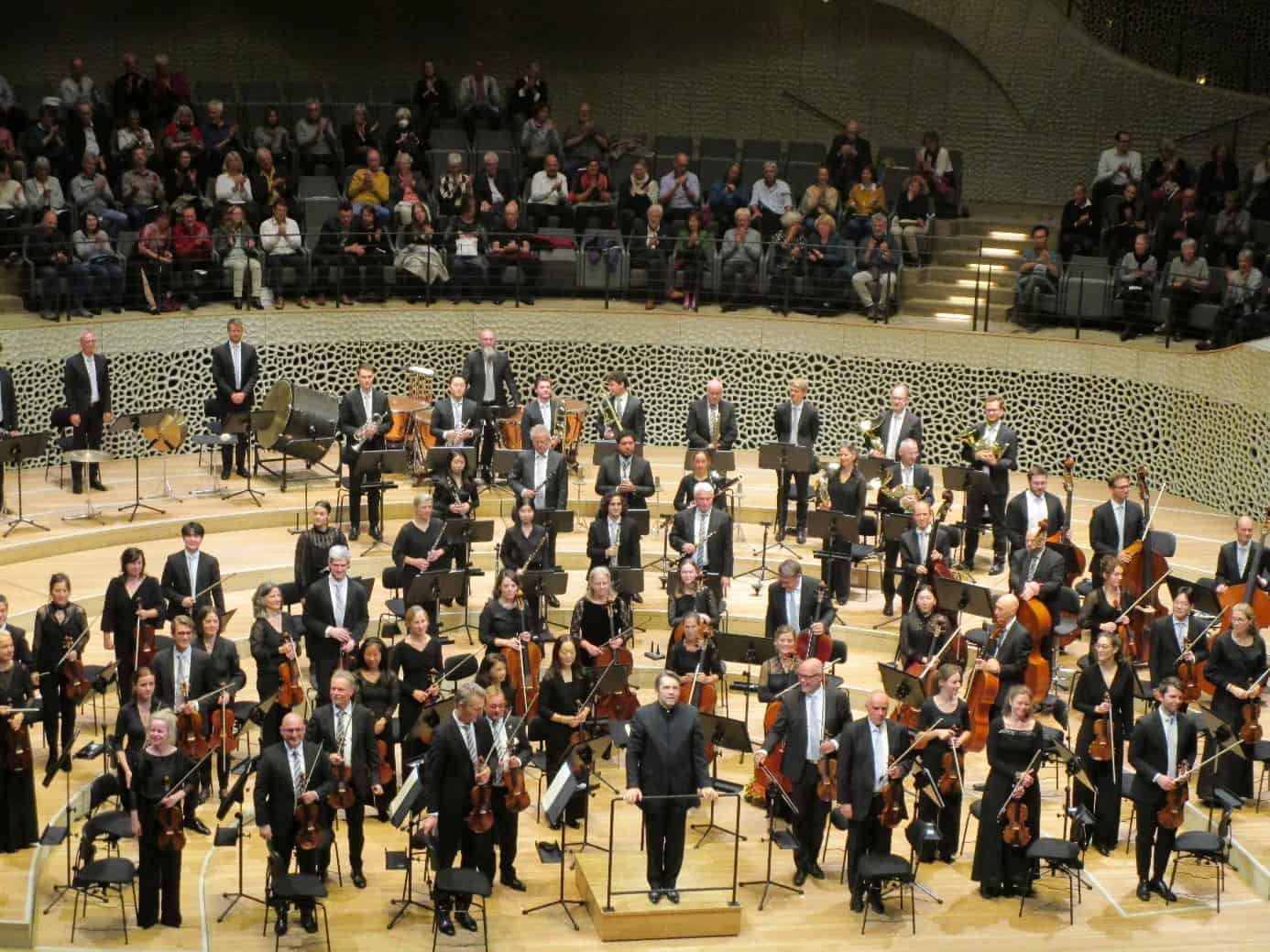 Philhamonisches Staatsorchester Hamburg o.l.v Andrey Boreyko[/caption]
We experienced all of this under the inspiring leadership of Liebrecht Vanbeckevoort. He did have to step out of his pianistic comfort zone to now act as a tour guide keeping a group of travelers together and under control. He did that with talent, attention and care for all participants. But our Steinway artist could effortlessly let all of that go the moment he sat behind his Steinway and could make the piano sing the way he likes to hear it. Excellent tour guide, outstanding pianist.