

It was a select gathering that I saw in a select hall, actually a chapel, converted into a theater/music venue. The chapel of the renovated Irish College in Leuven.
On the small stage not much space but enough room for a violinist, Isabelle Decraene, a bandoneon player, Gerardo Agnese and a spoken word artist, Jan Ducheyne. But the poet whose poetry is recited is not on stage. It is Philippe Decraene. His absence is more than compensated by the presence of his sister and her two companions, a trio that found each other immediately in performing and musically expressing those poems.
An Argentinian landscape
There is actually no real musical score for what they play. A sighing opening from the bandoneon sets the tone. The second tone comes from the violin. Then softly a melody wafts in on the bandoneon, taken up by the violin. And you can't help but be drawn into the harmonic and rhythmic landscape of Astor Piazolla. It is an almost improvised soundscape for the whole evening. How could it be otherwise with a violinist who, thoroughly classically trained, one day came to know the intimate and intuitive world of Piazolla and with an Argentine bandoneon player who needs no score for the musical lines that Isabelle Decraene has sketched. Are they arrangements, compositions, improvisations? Rehearsing together, playing together, sensing each other, proved sufficient for an uninterrupted melodious flow of sounds, in service of the poetry, sober and convincing as delivered by Jan Ducheyne. A stuttering, plucking, gently bowing and sometimes sharp-cutting violin, plus all manner of soft and hard, short and long strokes on the bandoneon support that poetry.
And a poetic landscape
Poet Philippe Decraene speaks of "the color of sounds in my head." His sister wanted to draw that out and wrap it as a gift with her musical talent for a listening audience. "I have it in me to soothe you or to disturb you" he writes. It is poetry from someone who cannot do everything he would like, but can certainly write poetry about it. Lovely and poignant. It is sometimes rage put on paper, but also "since this poem again hope". You can hear that in the music too, mostly solitary melancholic. And always that human shortcoming.
The direction tries to capture that too by confining the spoken word artist in a diving suit, a metaphor: with this suit on the poet must protect himself against a world that is dear to him but also threatens him. "Ce sont des drôles de types" Leo Ferré sings in his chanson about Les Poètes, "ils mettent des rubans autour de l'alphabet." That's how you hear it here too. Only in their poetry do they seem able to break free from the constraints of a barren world, from a melancholy full of Tristesse and Détresse. Imagination is their salvation. And in symbiosis with this music, with this musical interpretation of the poetic word, that is undoubtedly the case. "Sometimes you just KNOW it" stands in the title of a poem.
On the way out I heard someone say: "They could bring this to the KVS!" As far as I'm concerned, indeed.
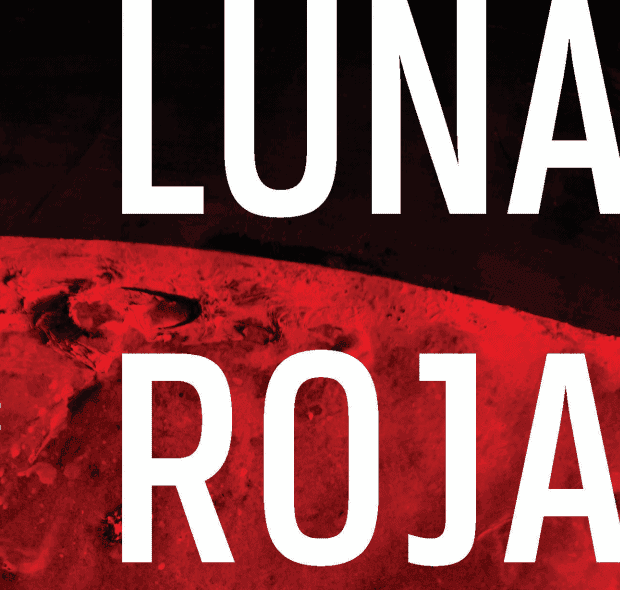
- WHAT: Luna Roja, Music and Poetry
- WHO: Isabelle Decraene (violin), Gerardo Agnese (bandoneon), Jan Ducheyne (spoken word), Philippe Decraene (poems), Dirk De Strooper (direction), Nicolas Surra Spadea (sound design and lighting)
- WHERE: Irish College, Leuven
- WHEN: 22.8.2021