

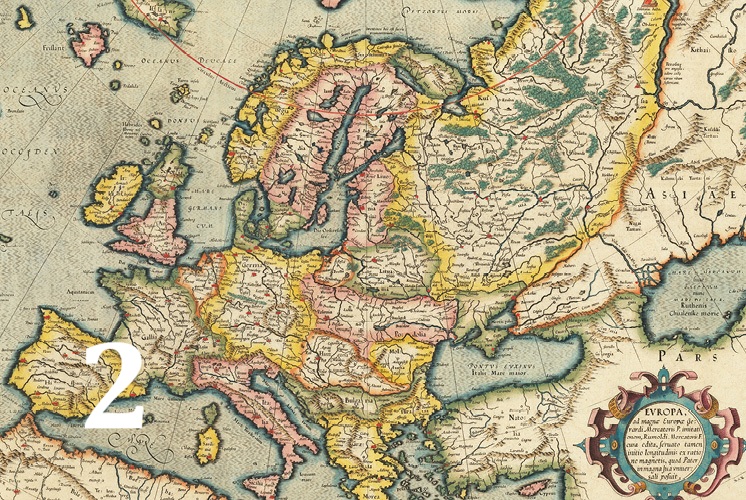
Approximately two months from now, on August 21, Laus Polyphoniae 2026 starts: the annual high mass of early music in Flanders. This year's theme is Polyphonic Europe circa 1600. In three installments I will take you through the program, here and there with a personal touch.
Sunday: a rest day that isn't quite one
After the overwhelming Saturday, Sunday seems to announce itself somewhat more quietly, with "only" three concerts on the program. That sounds almost like a vacation, though the seasoned festival-goer by now knows better.You can start the afternoon with a film about Lassus, which is actually a particularly good idea: sit for a while in the soft red velvet, get away from it all, and especially pretend you're not in the middle of a multi-day musical endurance test.
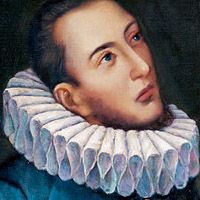 But even on this more subdued day, a figure immediately emerges who puts any form of rest into perspective: Gesualdo. Everyone knows his story more or less, whether in a somewhat romanticized form or not. I got to know him mainly during my cathedral choir days, where his life story was told with considerable drama. Since then, he has remained in my mind as a sort of Baroque rock star: brilliant, unpredictable and, let's be honest, not entirely free of dark sides.
You can hear that duality in his music too, which sounds both clear and transparent as often as it suddenly takes an unexpected, almost literally unsettling turn. It's music that carries you along and at the same time makes you slightly uncomfortable, as if you're not quite sure where it wants to go — and therein lies its appeal.
The day ends in Sint-Andrieskerk with music by Claude Le Jeune, performed by the Huelgas Ensemble. That's such a combination where one no longer asks questions, but simply sits down and listens, trusting that it will be good, very good.
Monday: a weekday like no other
Where Monday usually stands for a hesitant restart of the working week, Laus Polyphoniae seems to give it its own special meaning here. Today too, three concerts are scheduled, and the tempo is effortlessly (or mercilessly) maintained.
The day begins with a program by Transport Public, a name you'd best google with some caution, unless you happen to have an interest in schedules and tram networks. The ensemble performs music by Richard Dering, a composer with a strong Antwerp connection. Which immediately brings to mind a time when Antwerp and its cathedral formed the center of the European music world, where composers and styles met each other — an idea that isn't always so obvious today.
In the evening, Paul O'Dette takes over, and that is without exaggeration one of the great names in the world of early music. With his lute he opens a sonic universe that is at once intimate and impressive, and this time he brings music from Central Europe, a region that in this repertoire and for the general public still often remains somewhat in the background.
The day ends with the ensemble Comet Musicke and a program about madrigals. Moreover, you get another chance to hear instruments like the (bass) serpent or sackbut, which in itself is already a small experience, if only because the instrument looks visually almost as intriguing as it sounds.
Tuesday: the rhythm is in
By Tuesday you've probably found your festival rhythm, which means you move from concert to concert without too much thought and the time of day has only relative meaning.
The Officium Ensemble brings Portuguese polyphony, and that is immediately a good opportunity to correct a commonly held misconception. Because Portugal and Spain are geographically so closely connected, their musical traditions are sometimes lumped together, but if you listen carefully, you soon hear that Portuguese polyphony has its own tonal color and sensitivity that clearly distinguishes it from its Spanish counterpart.
In Sint-Augustinus follows a special program that is situated in the Prince-Bishopric of Liège around 1600. The ensemble InAlto brings music that is situated somewhere between French and German influences, resulting in a surprising and eclectic whole that perfectly reflects the cultural crossroads of that time.
Earlier in the day, also in the Augustinuskerk, Près de votre oreille provides a more intimate experience. Their name, literally "close to your ear", proves to be no empty promise, for their way of making music creates a closeness that you rarely experience so directly in a concert hall.
Wednesday: halfway and still surprised
Wednesday, August 26 brings us halfway through the festival, a moment when some fatigue might quietly make an appearance, except that the program again offers sufficient stimuli to keep attention sharp.
In the evening, Ensemble Irini performs, a group dedicated to a cappella music and effortlessly connecting different time periods with each other. Their program combines works by Giovanni Gabrieli, one of my personal favorites and a composer who bridges to the Baroque, with Byzantine music. On paper that might seem an unexpected combination, but whoever has stood in San Marco in Venice intuitively feels that these worlds lie closer to each other than you would suspect at first glance.
During the day, a lecture by historian Hans Mulder offers a welcome addition, as it provides context for the world in which this music was created. How did people live around 1600, what drove them, and what ideas shaped their view of the world? These are questions that will only enrich the music we hear this week.
And then there is Dowland, brought to us by Scherzi Musicali, who takes us into a more introspective, almost melancholic atmosphere. His music has that special quality of being both simple and profound, accessible without ever becoming banal. I must honestly admit that I have used his work myself more than once in an educational context — which usually means that it is both rewarding material and somewhat indestructible — but I have no doubt that it will sound here in a performance of exceptional quality.
Three more beautiful days to go. Will you join us?
To be continued!
Click here for all information and tickets