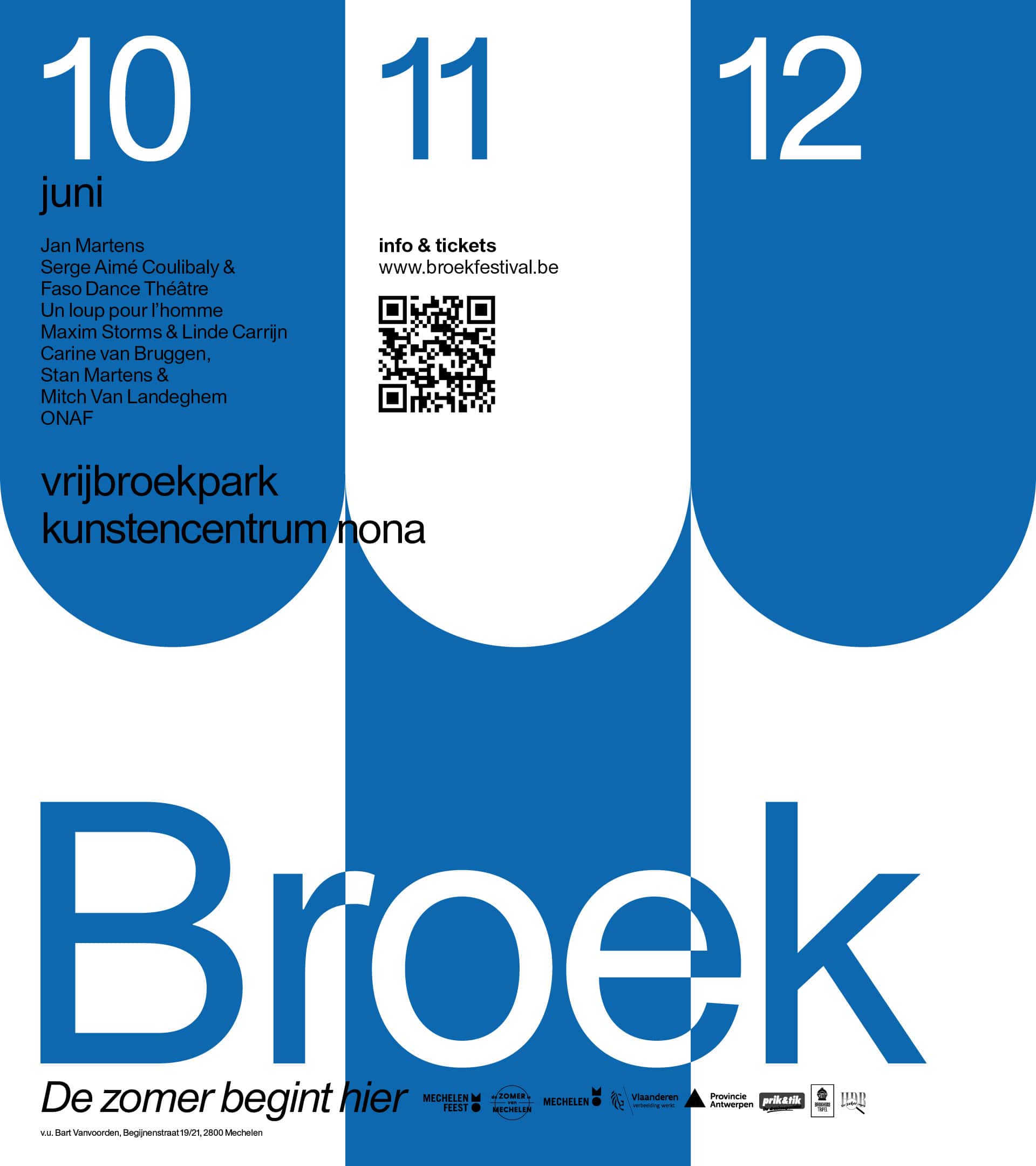
The City Festival, Summer belongs to Mechelen, starts again with BROEK. Bart Vanvoorden, artistic director of art center nona and programmer, set the bar high and brings in leading figures. He presents a whole weekend with a range of artistic forms: dance, theater, music, circus on 5 different stages in a natural and healing setting: the provincial green domain Vrijbroekpark. This gives the whole event a special dynamic in a dialogue between styles, trends, tastes and ages. It will be the place for stories, music, tone and rhythm. Art meets nature and vice versa. Bart Vanvoorden gives Klassiek Centraal some more information.
VR: A third edition of Broek. By now you've got the hang of it.
Practice makes art. We started with it in 2019. That was a wild idea and motives that were different. On one hand because we're located here in the center of the city with two halls and they're always well filled. Yet we're always looking for new audiences. How can we literally break out of the walls and be present in an even more visible place? That was one reason to start the festival. The other was that we're always looking for what doesn't yet exist in Mechelen. We found the green edge somewhat underutilized when it came to cultural offerings. As an arts organization, we should be able to offer something there too.
VR: Open-air performances, is that also an effort to broaden the audience reach? The threshold fear is gone!
Right. When I speak of new audiences, I mean exactly that. Being visible in a place where many people come and not necessarily the people who come to our halls. Without really adapting our offering, we go to a different context which allows us to reach a broader audience.
VR: The BROEK festival is partly participatory (free) and partly paid.
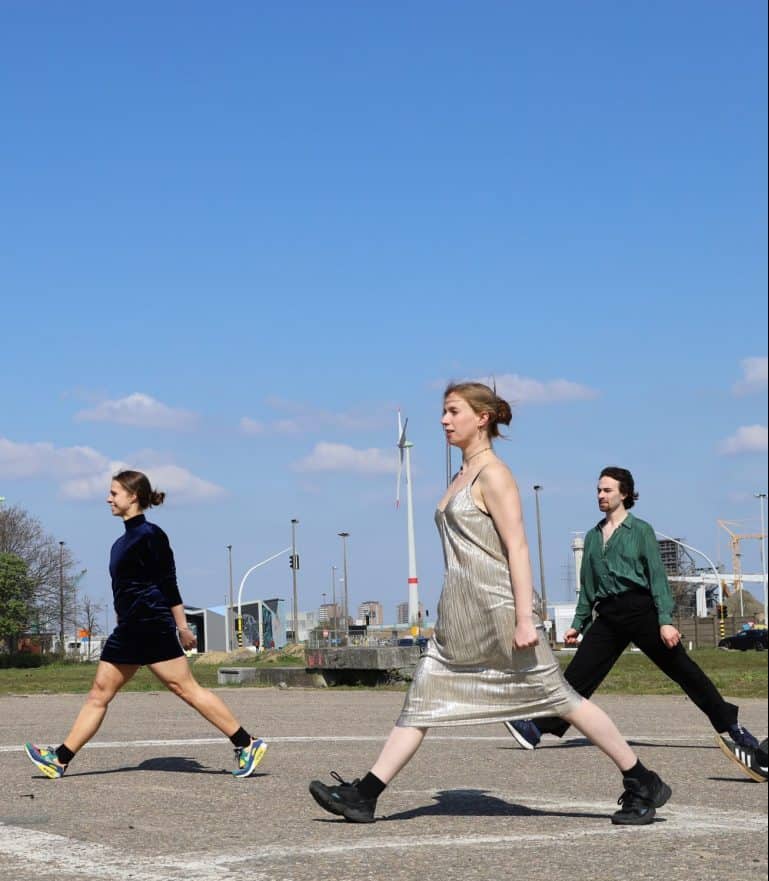
It's the first time we're offering one performance for free. That will happen in the middle of our BarBROEK, the central place where we also gather audiences for the other performances. It's actually a gesture towards the audience but equally towards young artists. In this specific case, they're dancers who are right on the edge of graduating and entering the professional field. This way we offer them a platform. It's quite aptly called 'ONAF – Combination Theory'. Which removes one more threshold for the public to see them at work.
VR: You've managed to book no small names.
Jan Martens, one of our leading choreographers, is performing this summer at the legendary Cour d'Honneur in Avignon. He's also been selected twice for the Theatre Festival. But first he's a guest at BROEK with a production from 2011 'Sweat Baby Sweat'.
BROEK doesn't bring new creations. These are performances that already exist. We ask the performing artists to adapt them to the open air, to the beauty of the natural environment and space.
VR: Do they embrace it eagerly, or is there some hesitation?
It's not a must. If they don't see it that way, we program their work here in the hall. Most find it a very interesting challenge and it also produces interesting work. In the sense that the performance becomes different simply by placing it outdoors, in the context of nature. A new and additional meaning is generated that normally wouldn't be present in the hall. Jan Martens embraced it eagerly. We've been following this choreographer/dancer for a long time. He passes through here with all his performances. We thought which performances from his already substantial body of work could work best in the context of BROEK? Through joint consultation we settled on 'Sweat Baby Sweat'.

VR: He's the ideal man. He excites a broad audience for contemporary dance.
I can go along with that. He creates performances that indeed captivate a broader audience than just the audience of deSingel. But that's not only true for him. The entire offering of nona has a broad audience reach. Only some of the artists we program are often not yet so well known. Jan Martens' reputation is growing. That's wonderful because we've supported him all these years.
VR: He was inspired by the concentration, tension and symbolism of circus acrobatics to create a performance about love.
'Sweat Baby Sweat' is an extremely slow and intimate duet in which a man and a woman combine acrobatic strength with mental vulnerability, a look at love beyond all clichés. Particularly beautiful.
VR: The dance-loving audience will get their money's worth. Another name with resonance is Belgian-Burkinese choreographer Serge Aimé Coulibaly. He brings in contrast 'Kalakuta Republik', a very energetic dance performance.
Yes, the performance consists of two parts with a brief changeover in between. It consists of two very different parts. The first is black and white. Literally also in the absence of color. After the intermission it's more of a celebration of color which is also expressed in the costumes and the lighting design. It is indeed a very expressive and energetic performance. Which in a different way is generous than Jan Martens' 'Sweat Baby Sweat' which has a stilling effect. 'Kalakuta Republik' is inspired by the life of the legendary Nigerian musician Fela Kuti, inventor of afro-beat, but also symbol of resistance in Africa. Serge Aimé Coulibaly translates Kuti's struggle into an energetic and engaged dance performance, sensual and wild.

VR: BROEK is an intercultural meeting place, you also managed to book the French circus company Un Loup pour l'Homme. They present 'Cuir'. Not traditional circus. They approach acrobatics as a vision of humanity that consists of social individuals who are as different as they are interdependent.
'Cuir' is a duet about attraction and pulling force between Arno Ferrera & Gilles Polet. In a powerful body-to-body confrontation two men in a leather harness manipulate each other's bodies.
VR: Not only established talent but also young emerging talent, budding makers are given a platform.
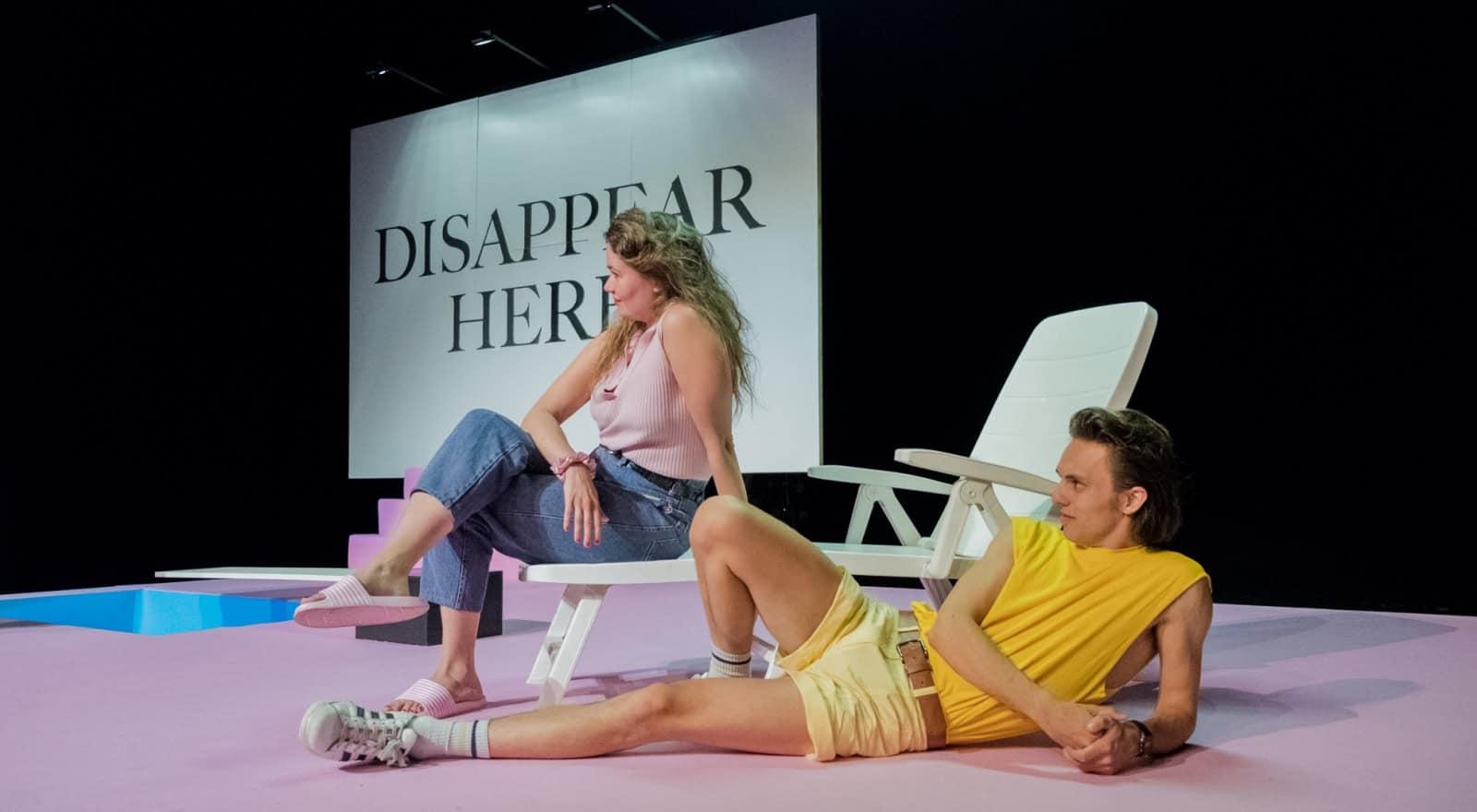
That is of course one of the lines of the house. We want to continue that in the park as well. I already spoke about the free spectacle in BarBROEK. The other young work is text theater by Carine Van Bruggen, Stan Martens & Mich Van Landeghem 'The Rules of Attraction'. They present a graduation performance that was already staged in Gent last year. Now they are adapting the performance to the setting of the park.
VR: The coming days it will be a real explosion of festivals. Is there a lot of interest in BROEK?
Absolutely. It looks very promising. Ticket sales are going well. We are not sold out yet, however.
VR: These days the weather is extremely changeable again. Then a programmer would skip a beat or two, I suspect. The weekend looks better, fortunately.
Those are the risks of the trade when you're organizing an open-air festival. You are in any case dependent on the weather. Yes, people are a bit cautious. But just like the previous two editions we are heading towards nice weather. With the good weather forecasts for the weekend it will certainly be a beautiful and well-attended edition.
VR: Culture in the middle of nature has something purifying.
In any case it is a different experience than in a hall. When performances that were conceived for a black box or a hall suddenly stand in a different context, new meanings are generated. The artists really have to think along. How can the incoming darkness have an effect on the meaning of the performance, its dramaturgy?
The audience experiences such a performance differently. In that sense it is indeed purifying.