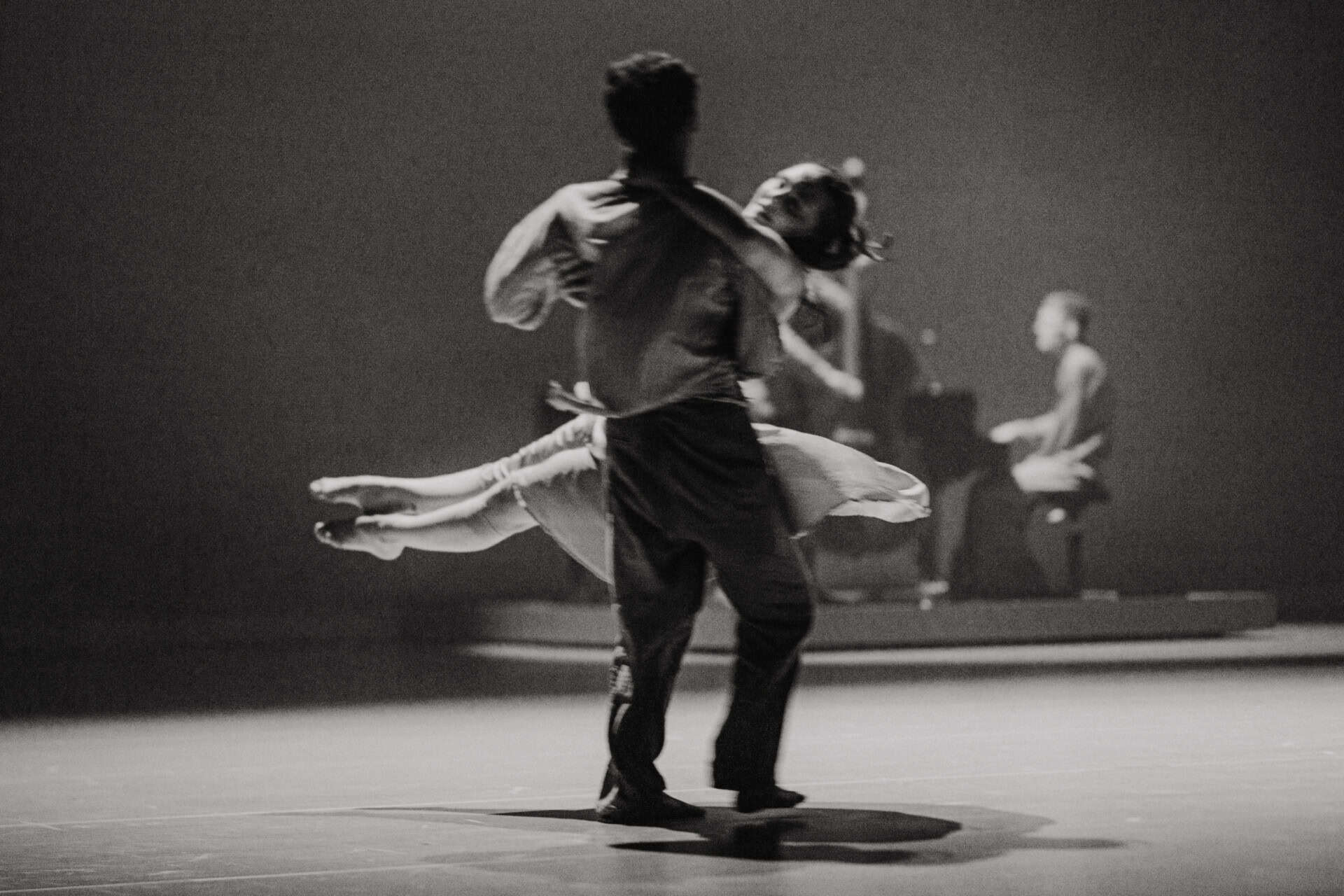
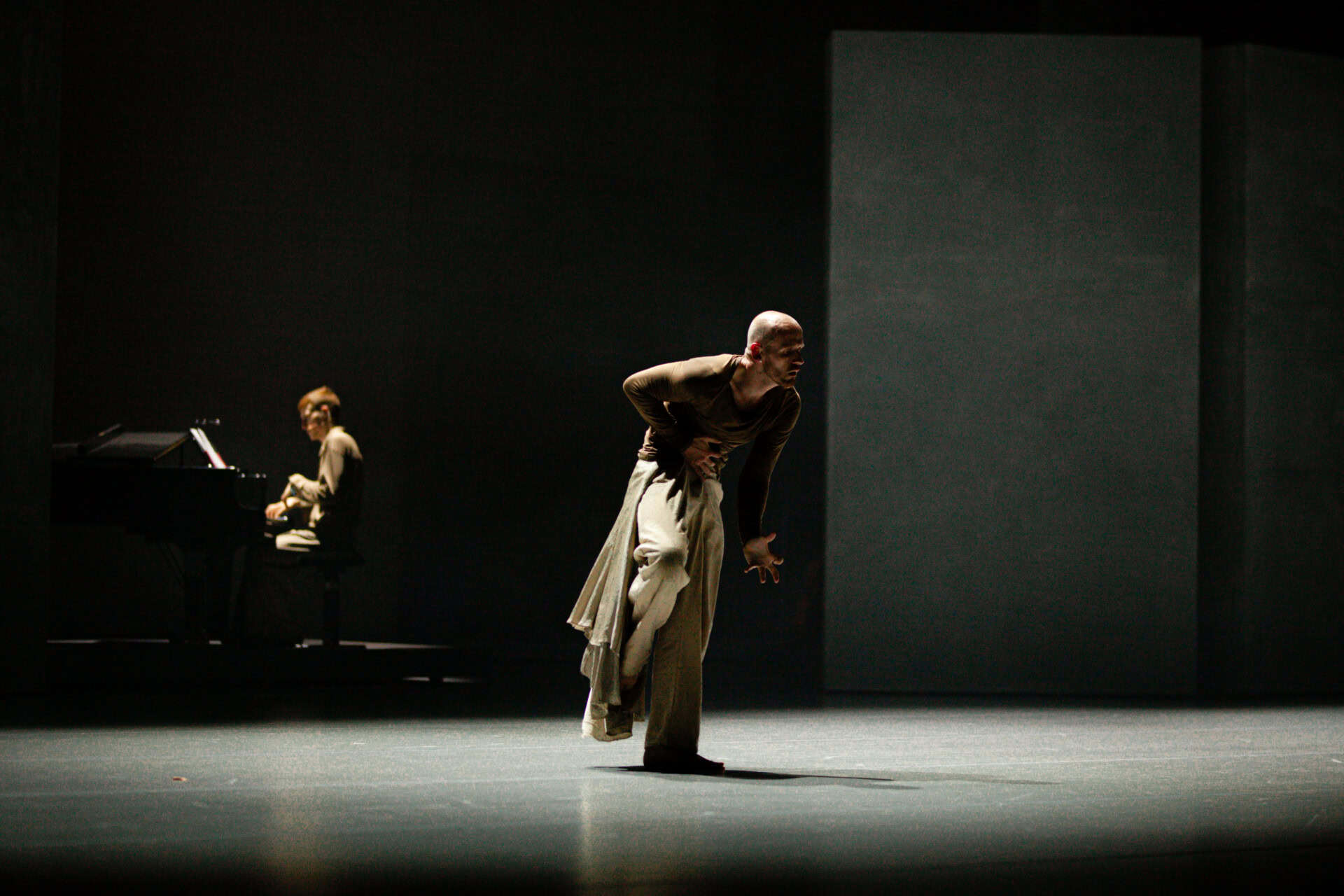
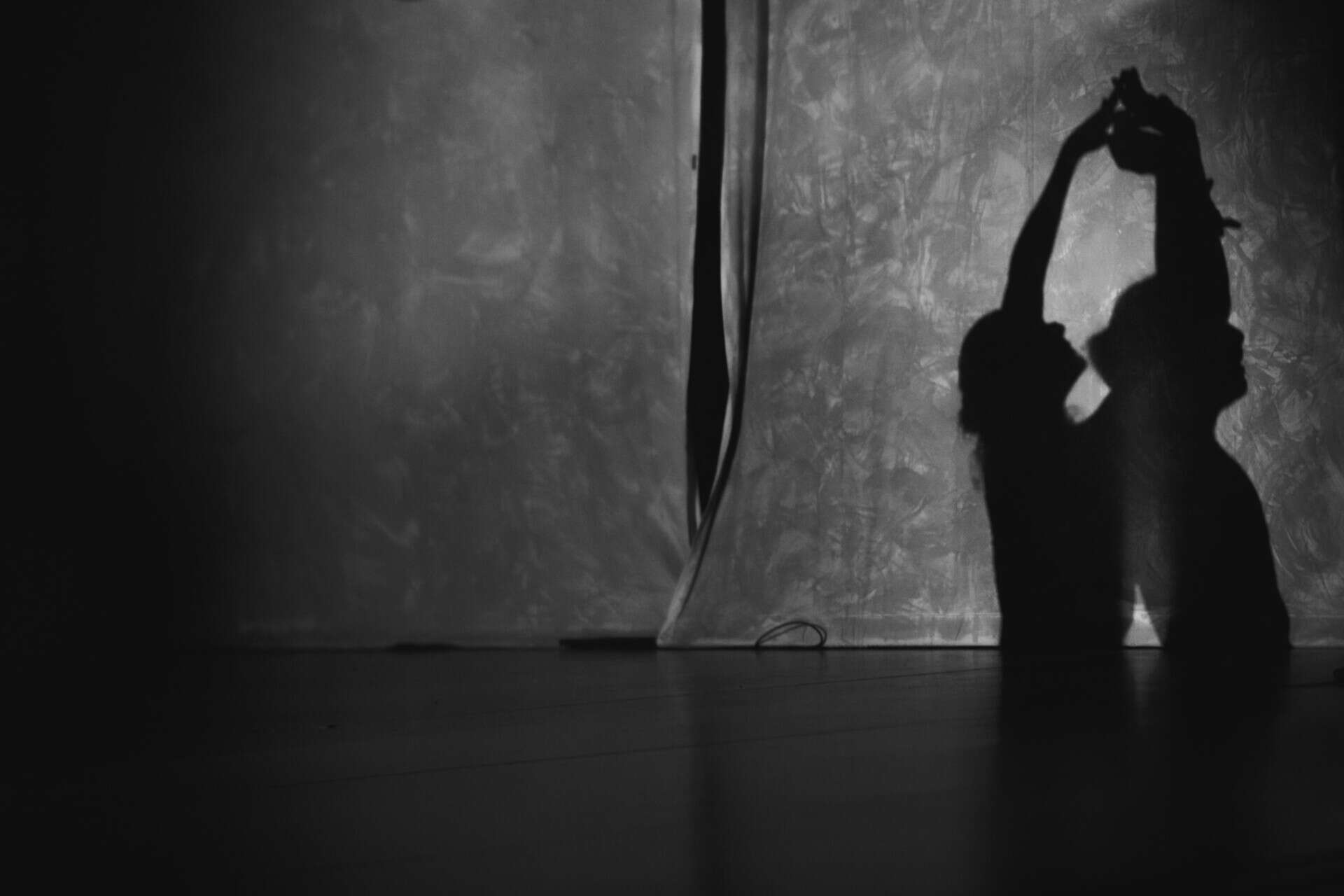
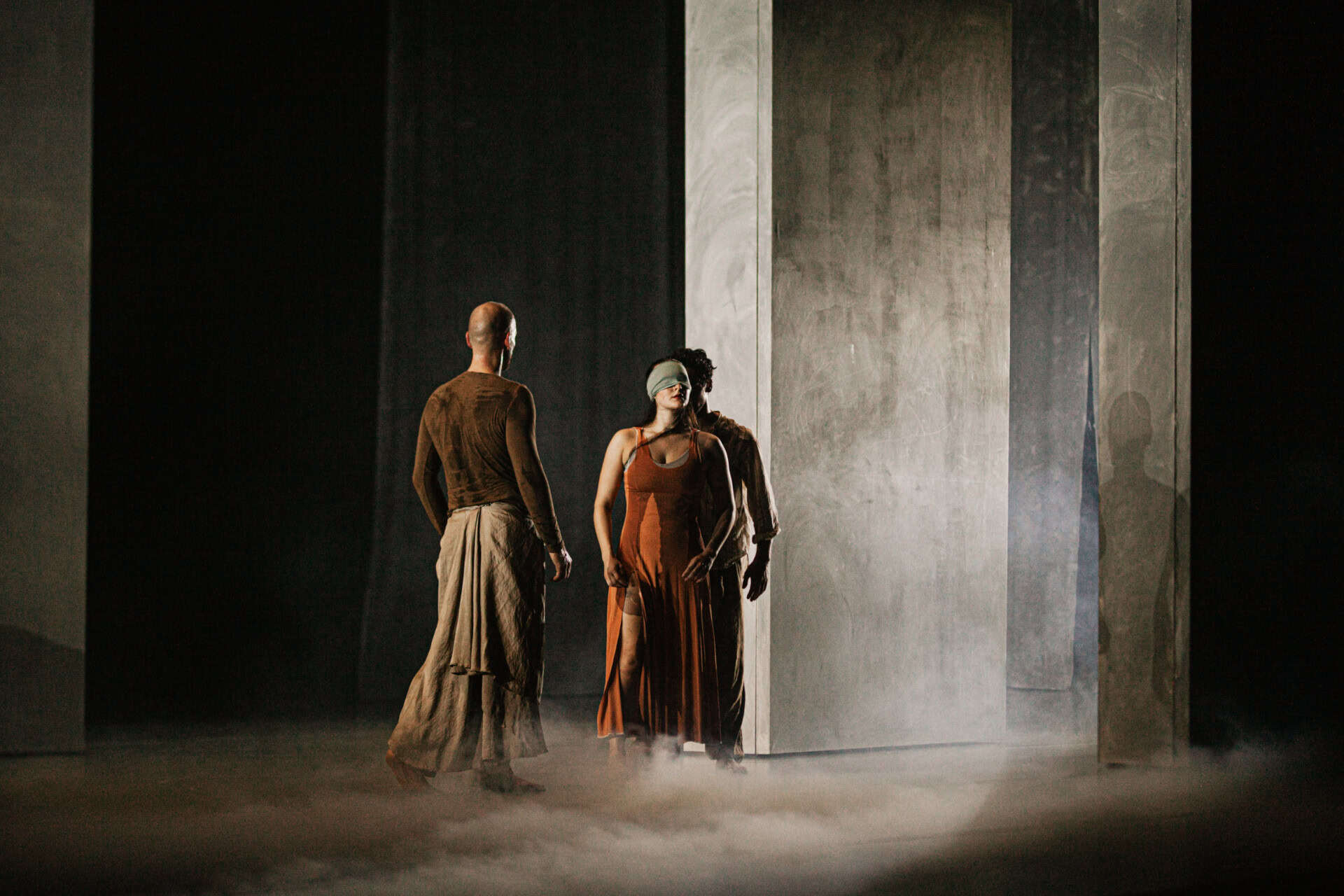
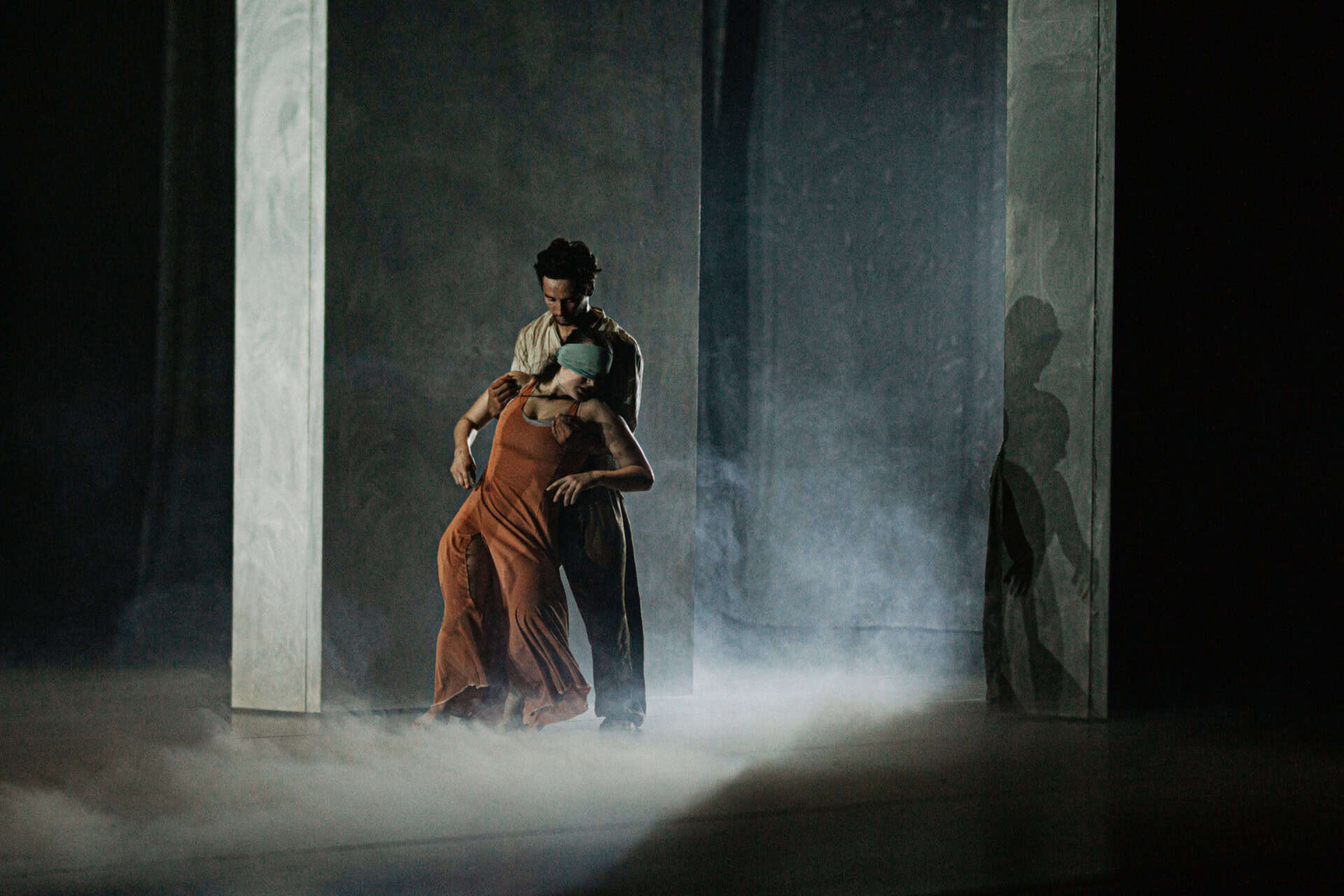
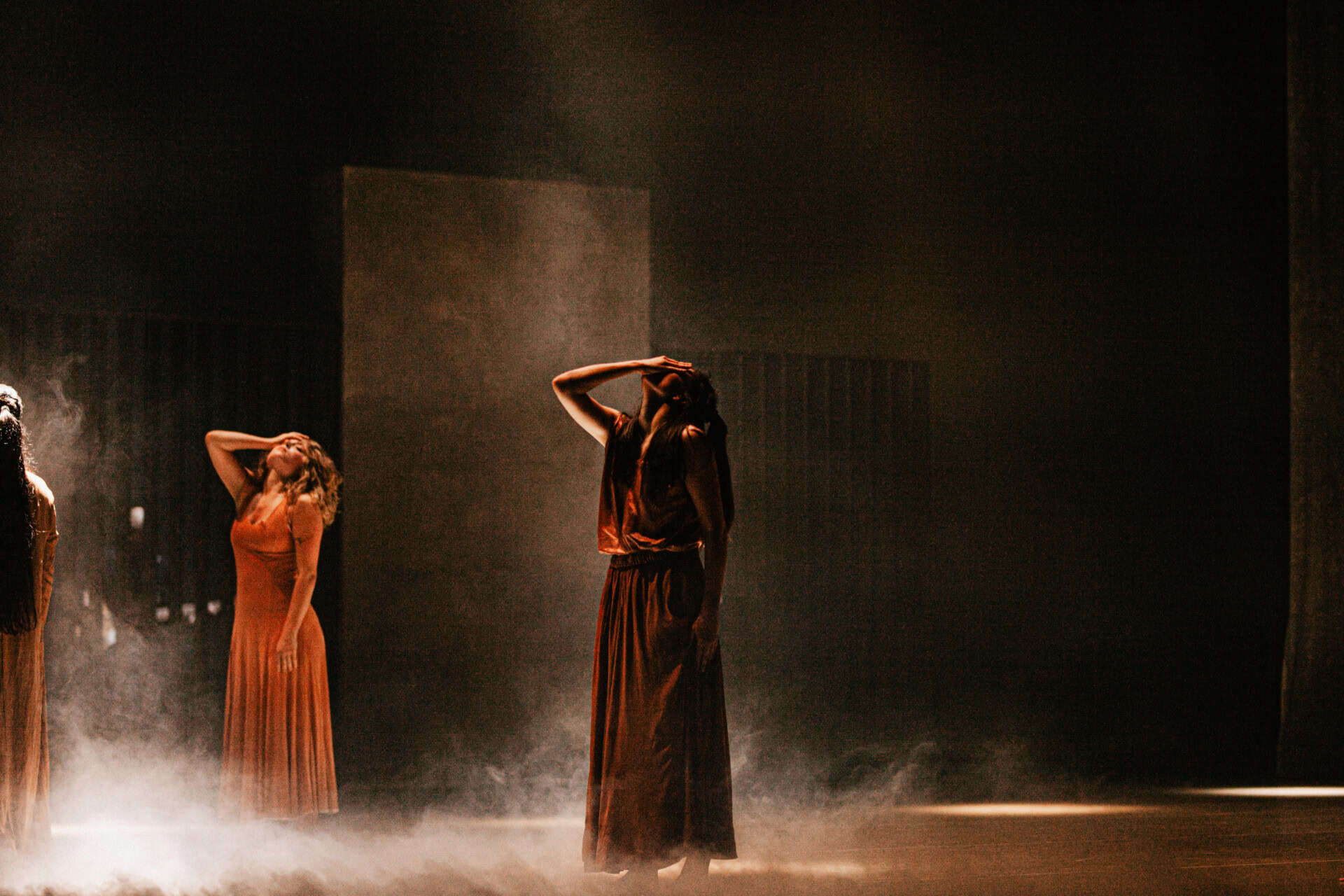
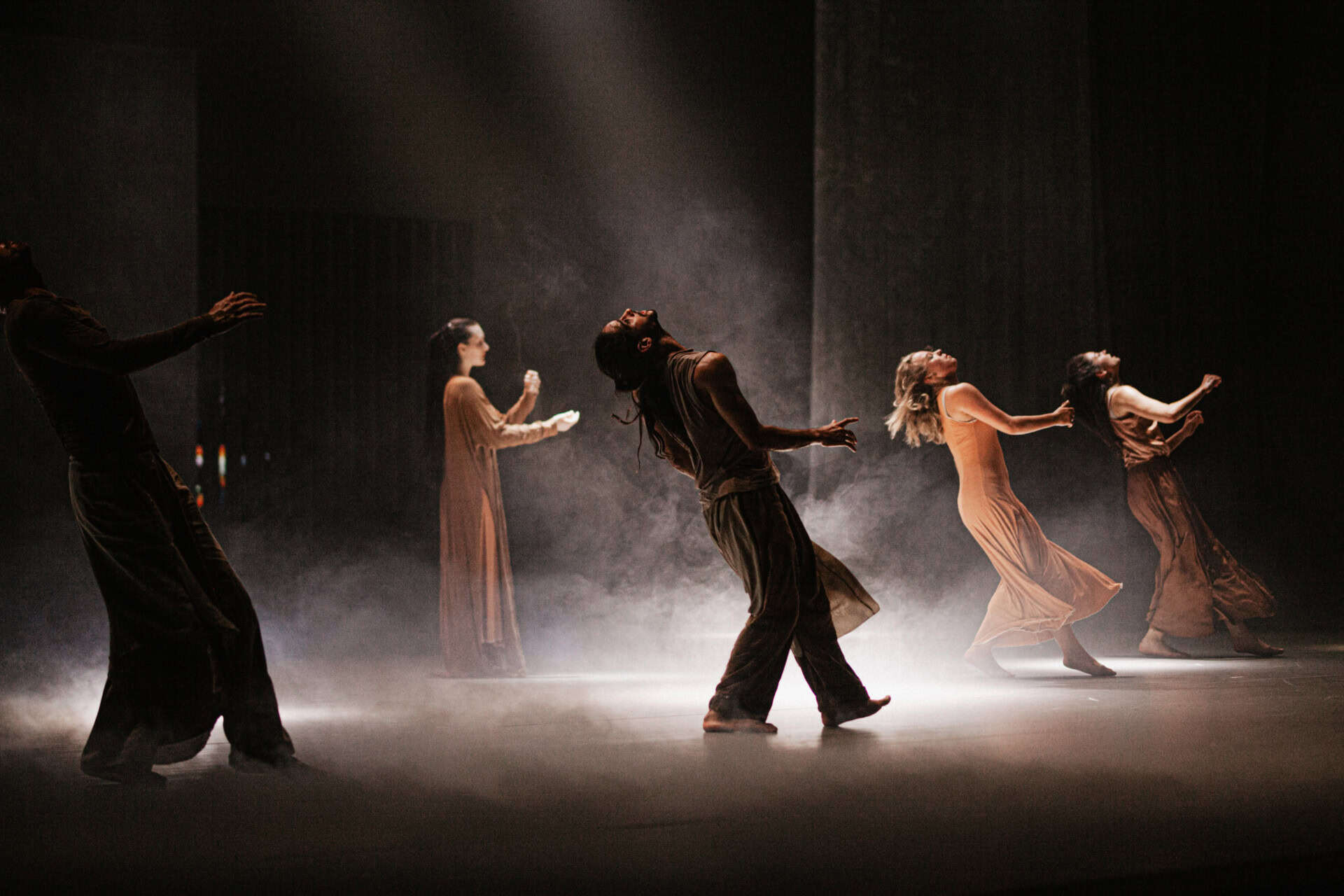
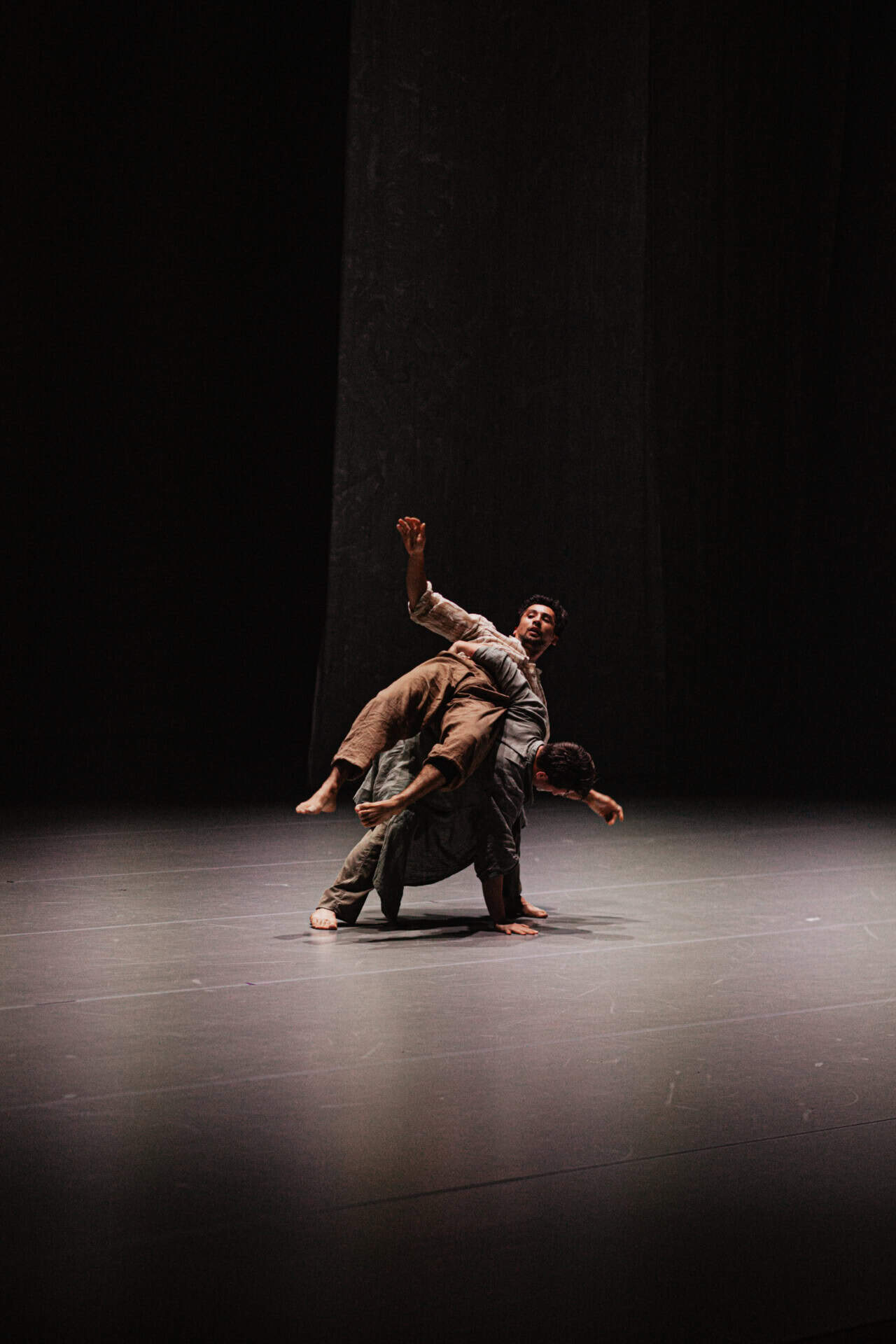
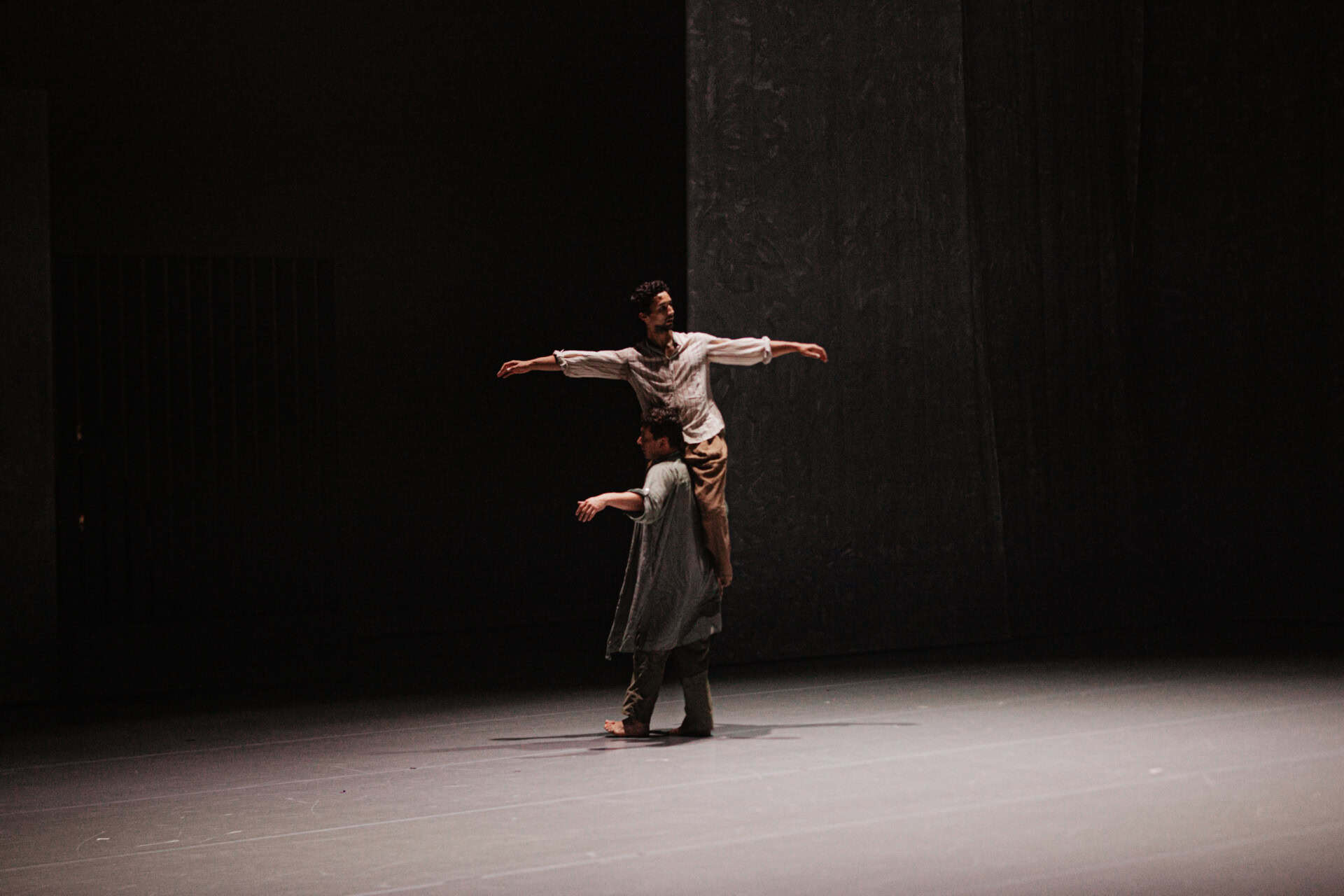
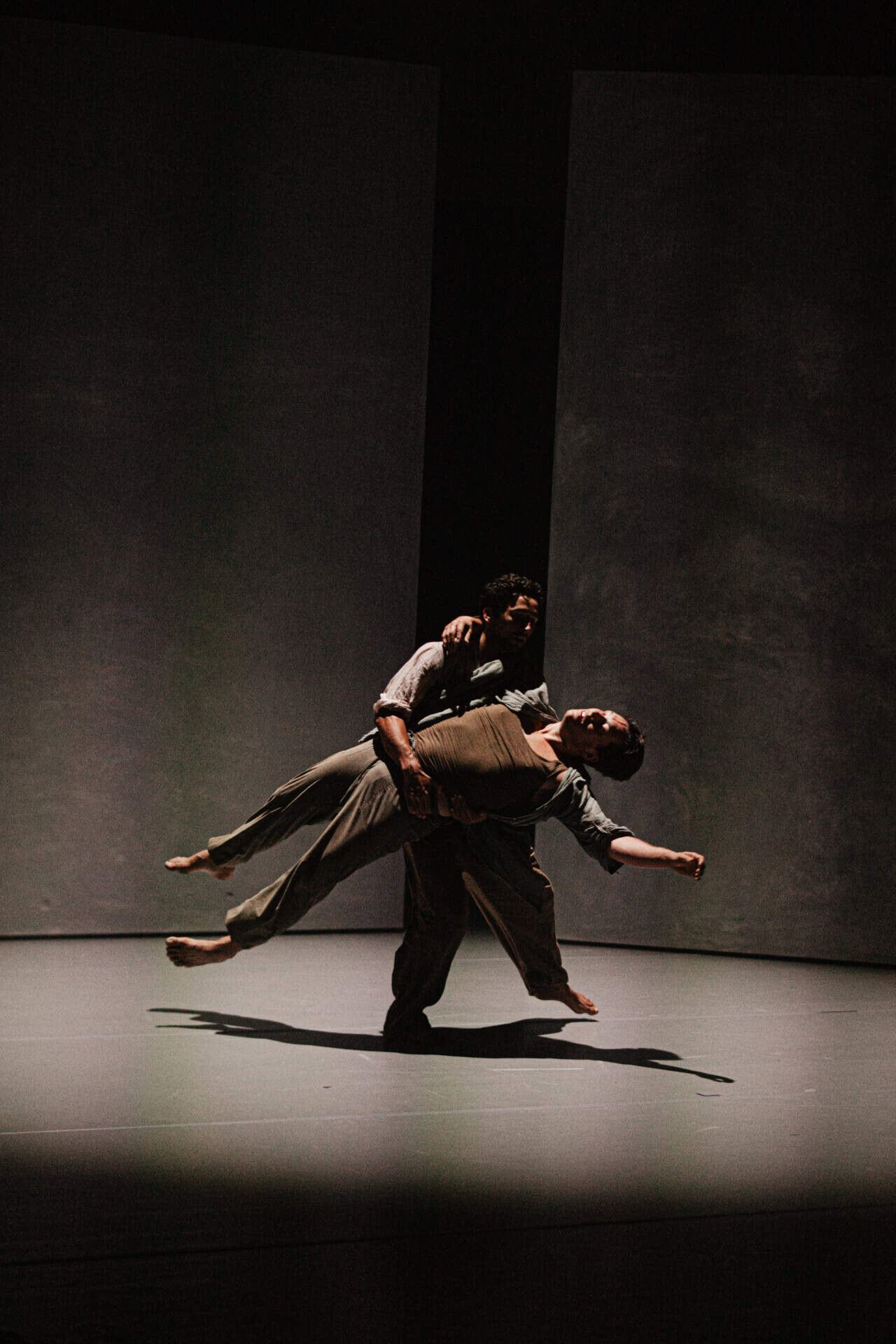
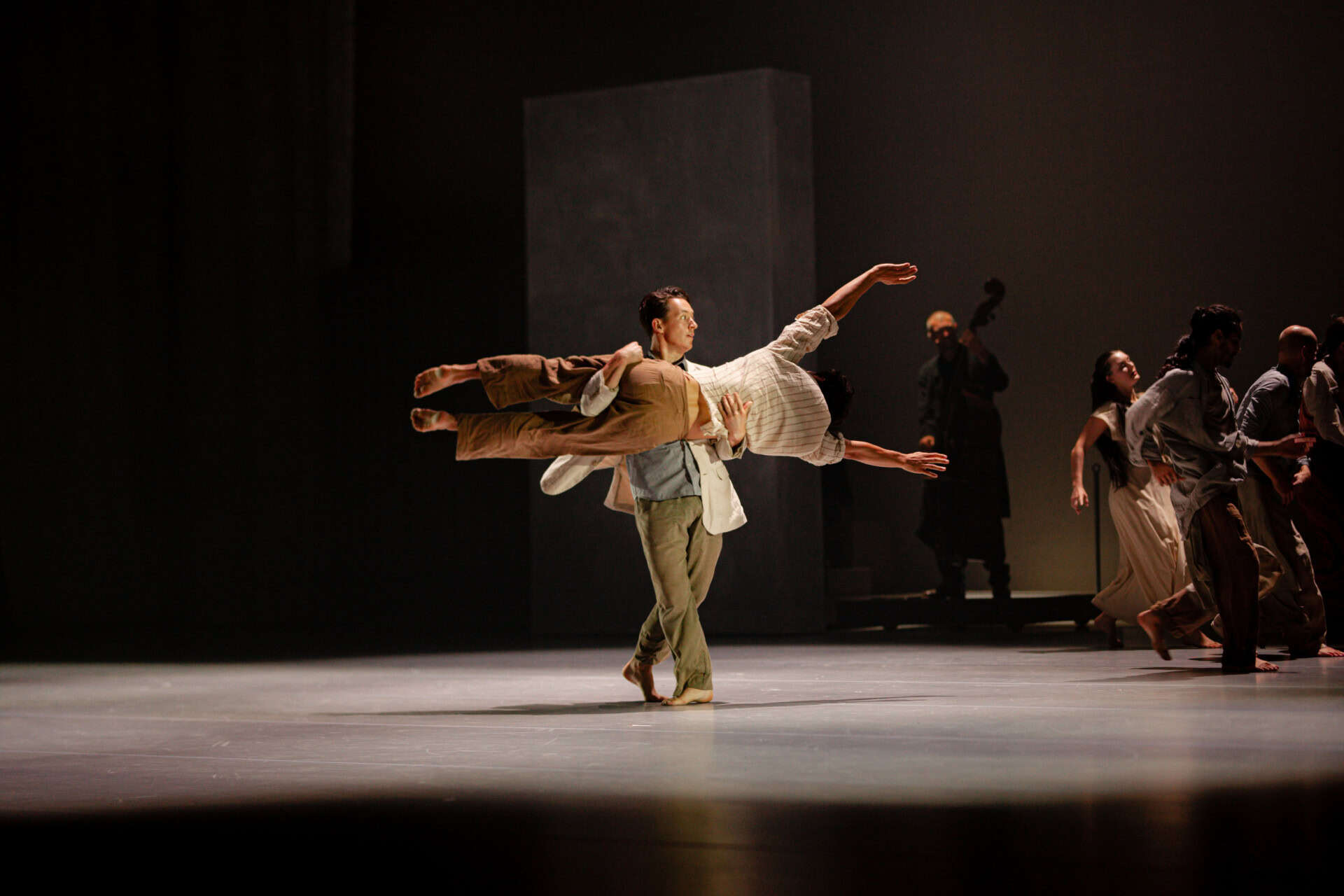
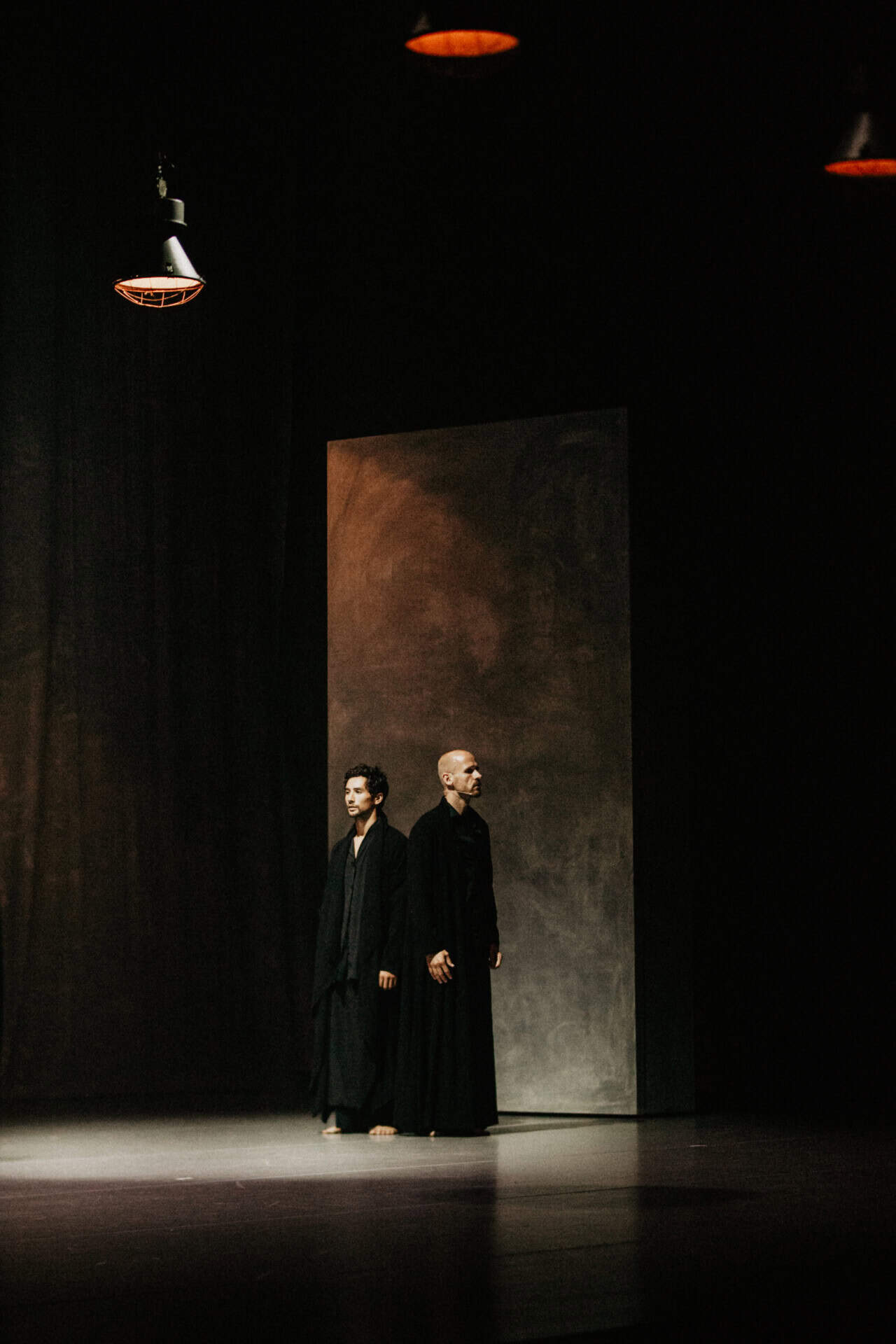
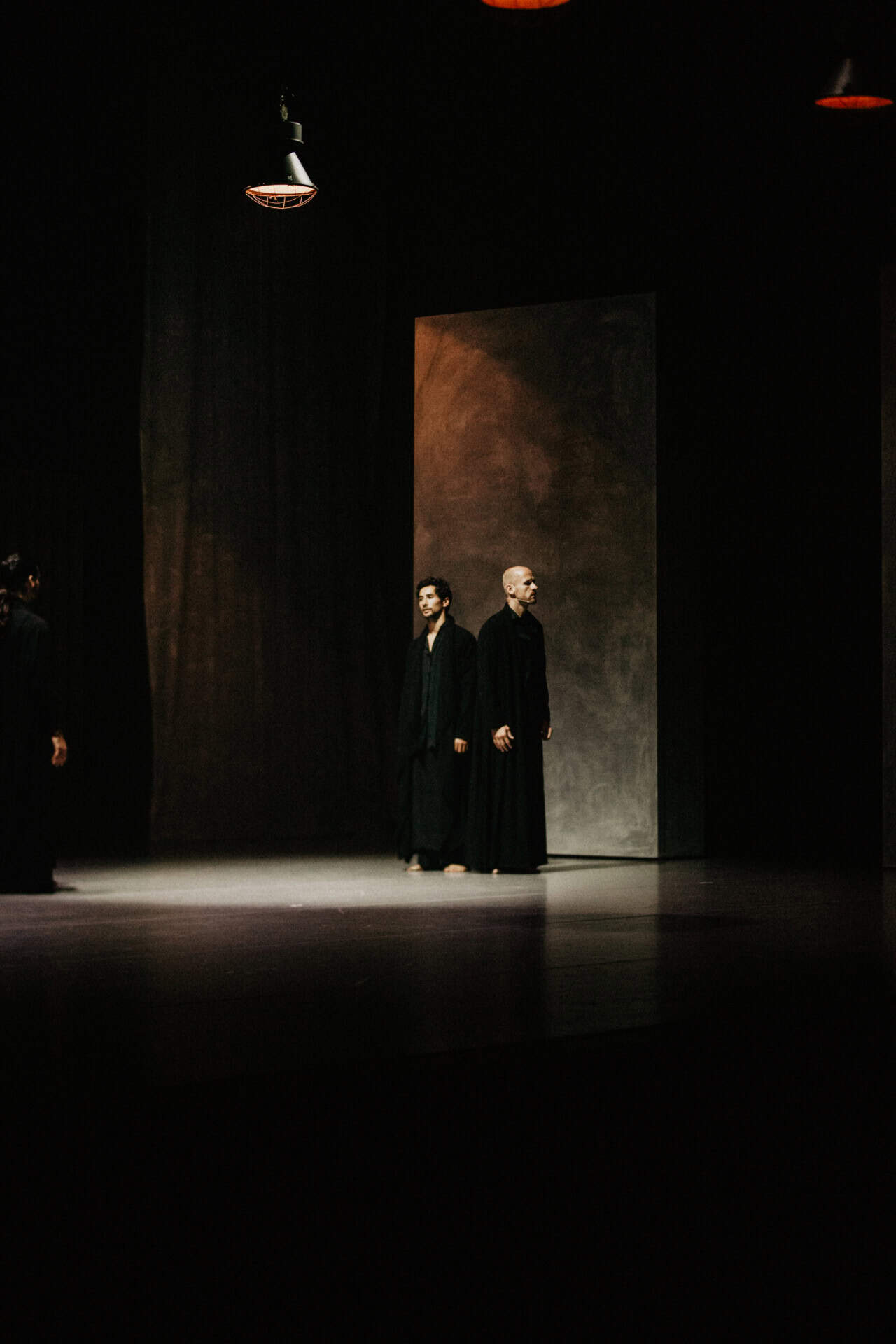
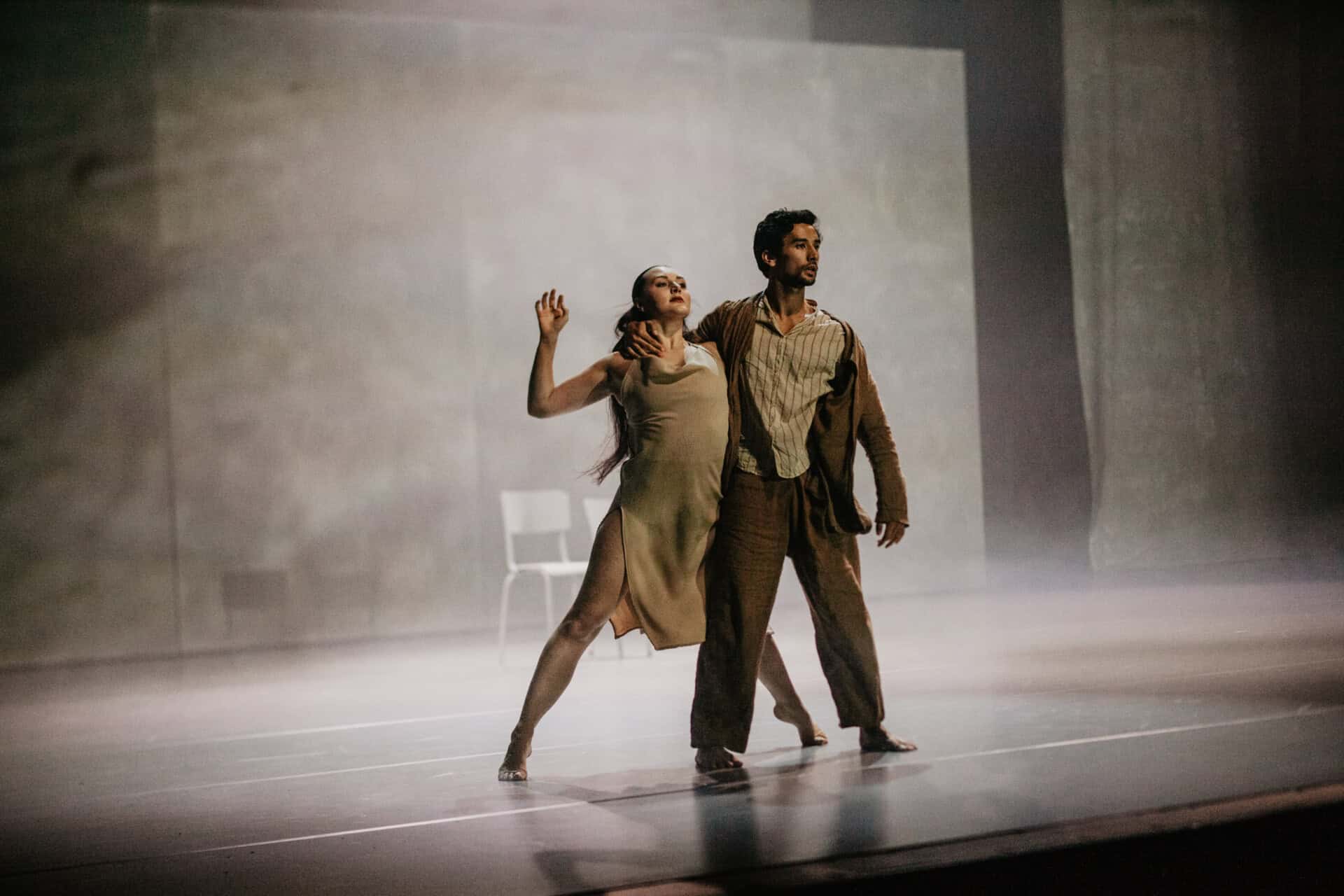
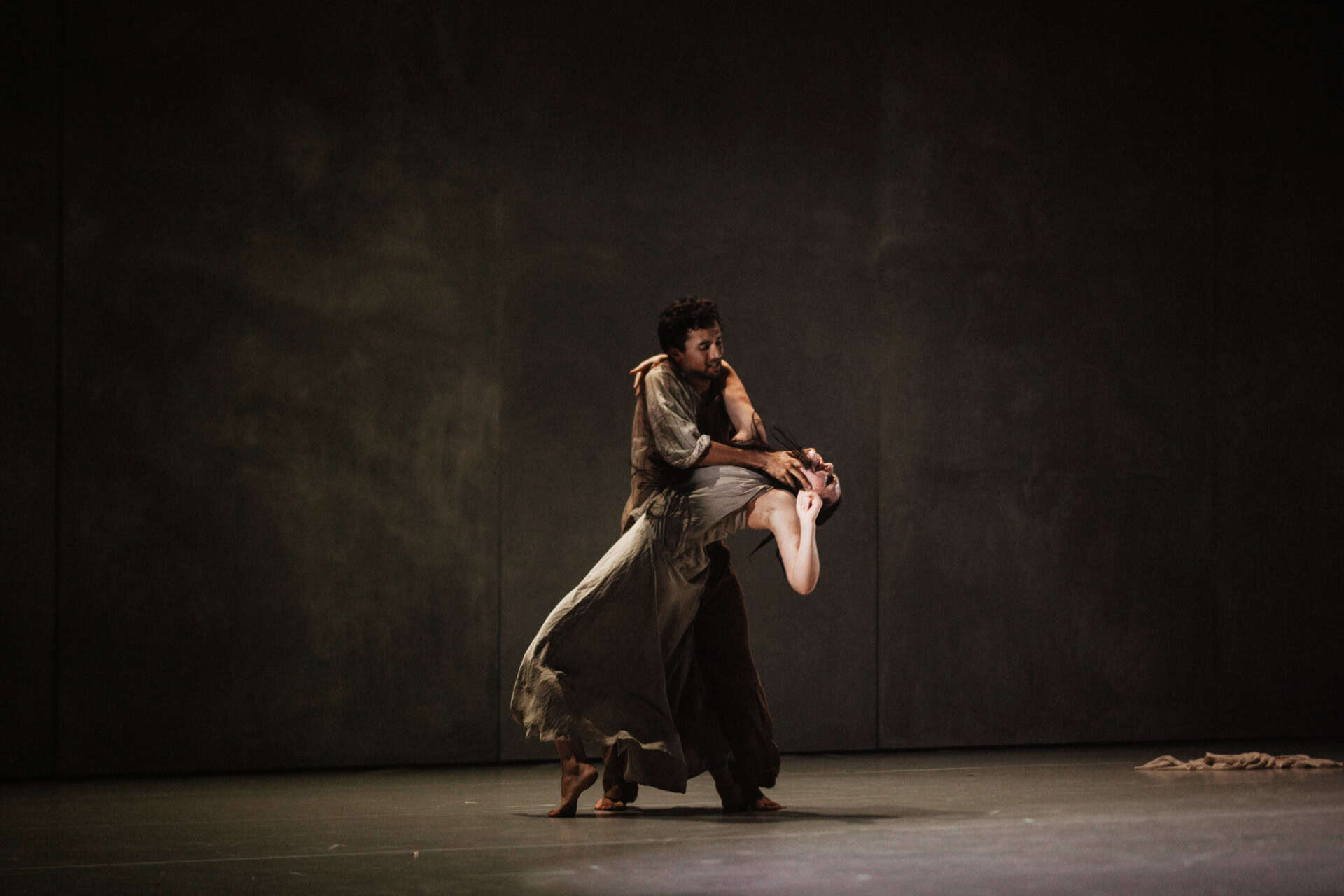
Isabelle Beernaert is in the prime and most intense period of her life. By nature passionate with a sparkling vitality and a spiritual love of life, of its contradictions and ambiguities. She is developing her artistic universe further. Her new production was given the intriguing title 'Amor Fati'. A woman who stands out for her life experience and passion. Illness also crossed her path. Creating is a survival strategy for her. Dancing to heal. Older, more experienced and mature, she zooms in on la condition humaine. Her creative spirit wanders like a will-o'-the-wisp through the multi-layered universe of dance. An autonomous artist who works without subsidies and doesn't let herself be pigeonholed, but rather positions herself in transit between different styles and genres. 'Amor Fati' becomes a sensory trip from birth to death, leading along the vaults of heaven of happiness and euphoria to the dark catacombs of loss and grief. A performance about the beauty and fragility of love, fears and existence.
Isabelle Beernaert possesses classical grace and eloquence and elegance of language. Discipline and work ethic are the keywords in her existence, alongside enormous resilience and dignity. She can look back on an impressive career. A woman with a wealth of feeling that she knows how to transform into movement in an identity quest. This in an eclectic mix of styles. She weaves rhythmic, visual and auditory patterns into a subtle interplay with space. Another performance of a searing intensity.
-May I paraphrase Iranian-Dutch author Kader Abdoulah, who says: "Growing old is beautiful". Do you experience that as well?
Yes, if you linger too long in the nostalgia of your youth, in the thoughts of: I used to be prettier, faster, more skilful… If you keep thinking in that narrative it's difficult. But if, on the other hand, you say: thank you, I was allowed to experience all of that. Now I'm in a different phase and I experience other things. There is also a constant evolution: the time span is different, the manifestation of things becomes different, you see and experience things differently. If you go along with that evolution with gratitude, then I think growing older is very beautiful.
-You created a new choreography 'Amor Fati'. There is an energy that propels you forward. Body and mind are intertwined.
I've come to the realisation that for the first half of your life you go a bit wild, experimenting… searching for your own style. I think I'm at that turning point, in that phase of life. After that you become more aware of everything. You start to analyse more and work in depth. As a dancer, I've been fortunate to be very quickly aware of my body. I'm now experiencing that my mind is even more in my body. When I was younger I was more in my body and my mind propelled me. Now I'm much more aware of my mind. That radiates all the way down to my bones. When you're young everything is more superficial, explosive and extraverted. Our body is so active! Now I have more feeling for the spirituality that surrounds us and that is immense. The creator is not a source, but a receiver. He channels something from above. If I may use the metaphor: our body is actually a bottle into which everything flows. In the past I sometimes felt as if my body was too small for my mind. Fortunately I can then dance, or immerse myself in music, or write down ideas and then you can expand a bit. Everyone is confronted with death at some point. We leave our body behind. Our mind finds its way in the free space, the universe, fans out… everywhere.
-You must create space to grasp life and accept it.
We must be grateful for everything that comes our way. I've tried to translate that in my own way. Every period in our life takes us further on that initiation path. I get more and more tools. That expands. I keep saying how magical everything is. Cancer was also my share. A second operation became necessary. Then you think: oops, what did I not do right? What should I listen to? What is the sign and what can I do about it? That is Amor Fati. Between accepting what fate is and still not sitting passively by and letting yourself go. You're really walking a fine line of seeking balance between accepting and still being grateful that you made it through again. Fears don't need to be based on anything to flourish! Stay positive, don't slip into the victim role. I think everyone gets that initiation in their own way: through an accident, through an illness, the loss of a child, a partner, parents. I think they are the steps towards the 'everything'. Nothingness does not exist. It is always everything. In this form (body) or in spiritual form. The most important thing in life is to follow your own vision, your own language.
-Personal life is important, especially when you're involved with art.
Your personal life is your source of nourishment. I created this choreography with 'Amor Fati', the central concept in Nietzsche's philosophy. It encourages embracing everything in life, both good and bad, and not fighting against it. He considered it a formula for human greatness and the eight loves according to Greek philosophy: Eros (passionate love), Philia (friendly love), Agape (selfless love), Storge (familial love), Mania (obsessive love), Ludus (playful love), Pragma (practical love) and Philautia (self-love). During the creative process, I did not start from my personal life but gave space to my eight dancers to fill it in. Extremely remarkable! When we had a first run-through, I saw my entire life pass by. I thought: that can't be right!
-Always searching for the root, the core of things.
Exactly, my soul, my spirit must have sent out signals again. There must be something!? I am being guided, accompanied by an invisible hand. It was beautiful to see my dancers at work. What does Nietzsche propose and these eight loves according to Greek philosophy? Everyone has relationships. At the beginning of the creative process, I especially watched the performers to get to know them, understand them and feel what they could bring to this new creation 'holding space', which was later choreographed and with the material that materialized through the improvisation assignments, I continued to embroider and model, format and stage it, and at a certain point let it go. Then you get a beautiful result.
-If you really want to be happy, you must also embrace unhappiness.
Yes, but that's inherent in ballet training anyway: discipline, sacrifice, gritting your teeth. Suffering is part of it. That's how you cultivate character. Dance is, besides the artistic aspect, also top sport. The day an artist is satisfied with his creation, that's when it stops. We as women have to endure quite a lot. Do you know how much strength it takes to bring a baby into the world? In the delivery room, they say, don't react excessively: be quiet, don't scream. Hello there! When we have to push to bring that baby, that creation into life… that's quite something. That's a primordial force! I experienced that with my female dancers. They give themselves completely. Men are different. There is resistance. That patriarchal supremacy is still in its death throes. The outcome: we must strive for more mutual harmony.
-'Amor Fati', fatum…fate… or does it rather stir your senses and emotions?
'Amor Fati' is twofold: the word 'Amor' love and 'Fati' fate. You must look at both parts. Everything in life is relationship, connection, love. And yet in life we must sacrifice, suffer. You experience beautiful moments but also dark periods. If we look at nature: the animals, the plants, they undergo the seasons. Coming alive and dying. The normal order of things. We cause ourselves enormous pain because we cling so much to life. Of course it hurts. I think we shouldn't look for solace, but go along with it. It's part of it. Not clinging to it. I was twenty-seven when my sister Julie died. Why? Such a beautiful child! Actually, I should be grateful because she almost deliberately put me in a process that I had to learn to love, but also to let go of. Where is the balance between: loving and letting go? I will certainly continue to work on that in my next productions. Many young people struggle with problems. Why is that? What has been done to them? The damage is often caused in their youth. During pregnancy, through the love of mom and dad, how that is channeled determines how you as an adult will express your emotions, how you will flee into alcoholism, into drugs. I have a lot of empathy for that.
-Music is your best friend and dance your great love. Which music have you chosen this time?
Evergreens. Beautiful music is still being made, but no longer with such beautiful words and intensity. The musical vocabulary of indestructible evergreens. Those songs have been reworked by a young musician Kristiaan Deruytter. He studied at CODARTS Rotterdam, among other things, and is the son of Frank Derytter, tenor saxophonist. In his younger years he also played in my father's orchestra. After that, he became a very well-known musician. Kristiaan Deruytter's artist name is Kristo. There is a special vibration in his voice. I don't think it's just by chance that the choice lies there to work with him live. He is a multi-instrumentalist, but plays mainly electric guitar and piano. He then pointed out someone: Nicolas Thijs, who has played in America. A somewhat older musician, a double bass player, who also plays bass guitar and then there's Bart Gits, a TAIKO percussionist. Kristo and Nicolas have reworked the various songs. We went looking for what fits and illustrates those different types of love. There is live playing: an interplay of singing, bass guitar, piano, double bass, percussion. It is completely scenographed. You are not in concert mode. The musicians appear and disappear… Scenographically, visually, I looked for a balance between the music and the dance. I strived to balance the value and power of the music and the dance. There is also a nice piece of classical music in it, which I absolutely wanted to include.
-A beautiful quote from philosopher Patricia De Martelaere: "Pluck the day not only when it is a daisy, but also when it is a thistle!"
That happens automatically. Melancholy, the drama is somewhat baked into an artist. Finding a balance in that, to not make life too difficult for myself, is a daily exercise. My profession consists of trying to penetrate the inner self, in order to flip a switch there and create connecting moments with the audience. The drive toward perfectionism remains. We are trained in that. When you're young you have to strive for it. You have to earn your stripes. Ultimately to be able to put your signature on it. Perfectionism is a positive thing at a certain level, but also a negative thing at another level. It can start to tip over so that it becomes too technical and all feeling is absent. Sometimes I ask myself: "How did Christian Dior do that, Rubens, Monet, Bach…?" I think they too reached that tipping point. The first phase of a career is toiling, searching for your own language, unique form and processing that into creations. Then comes a moment when you reach a point, the essence, the uniqueness of your artistry. You feel that… because everything is in a flow and you are satisfied. The voice of the soul speaks for itself.
-The moment when an artist coincides with his métier creates goosebump moments for the audience.
Every performance also confronts the viewer with his own artistic baggage and strength. A fluidity to appreciate things. Being open to new things. I have a very loyal and grateful audience. Someone who came to see one of my performances with a lot of music by American composer Philip Glass put it beautifully: "I follow you because you choreograph recognizable songs. That soothes our soul. But besides that you also introduce music we don't know. That broadens our minds. Many dance productions are so abstract, so elitist. We don't feel stupid with you."
-'Amor Fati'…
Fall and recover – falling and getting back up – from exhaustion to surrender. Where, Who, What are you when all elements: Fire, Water, Air, Earth come together?