

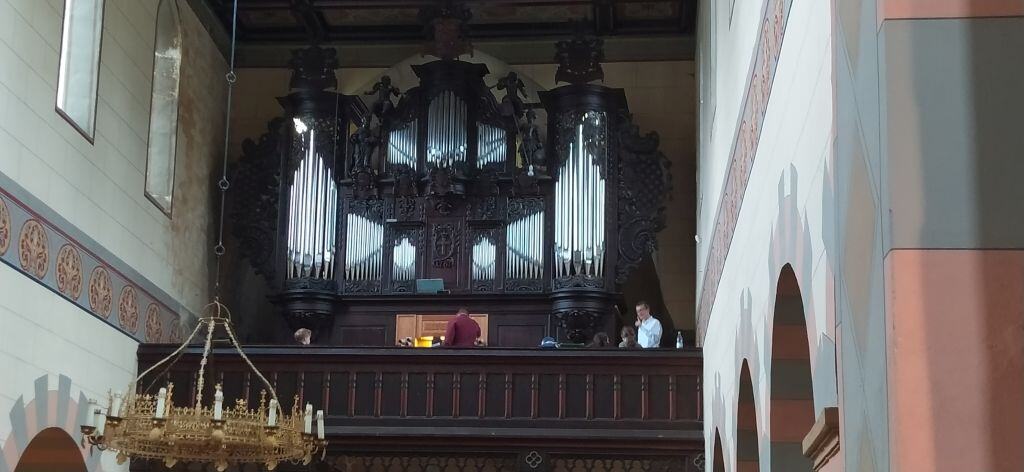
On Friday afternoon, August 8, the closing concert of the Junior-Orgelakademie 2025 took place in the Moritzkirche in Halberstadt. It proved to be a moving highlight of a week full of musical engagement, historical awareness and youthful dedication.
The performance took place within the broader framework of the 71st Internationale Orgeltagung van de Gesellschaft der Orgelfreunde (GdO), which settled in Halberstadt from Magdeburg this summer. A striking choice: Halberstadt is no ordinary city, but a true organ centre, deeply rooted in European cultural history with, among other things, its remarkable medieval Domschatz.
Learning pathway with vision
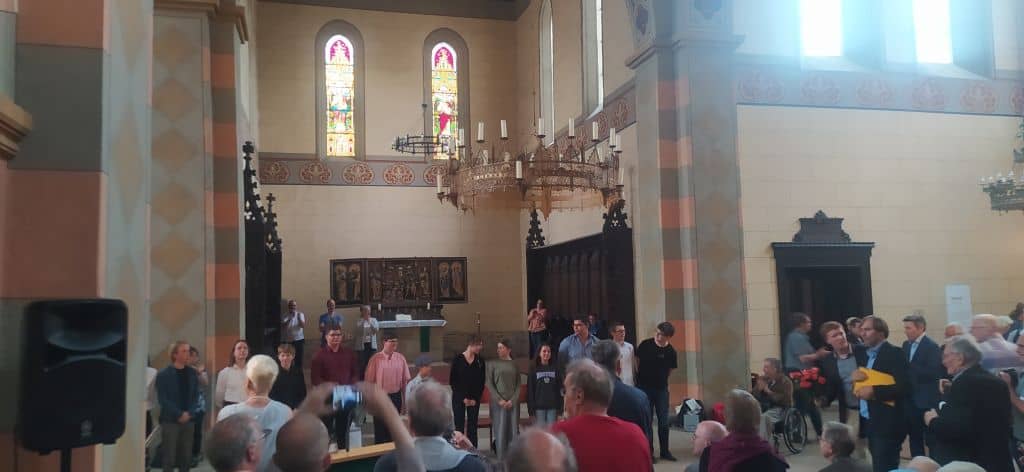 The Junior-Orgelakademie, organized by the Mitteldeutsche Orgelgesellschaft in Altenburg, offers young people between twelve and twenty-one years old the opportunity to spend a week working with top teachers on historic organs in Thuringia and Saxony-Anhalt. The emphasis is not only on technique or style, but on experiencing organ culture in its full context: from registration science to local organ history, from practical lessons to liturgical insight. This edition presented a vivid cross-section of the potential of young organists. The concert in Halberstadt was the icing on the cake.
Thirteen young people from all over Germany participated in this edition. What united them was not only their love and fascination for the organ – the queen of instruments – but especially their eagerness to learn. What struck us was how this seemingly disparate group of 12 to 21-year-olds stuck together like a close-knit family. During the week, bonds were forged that transcended the music.
A church with character
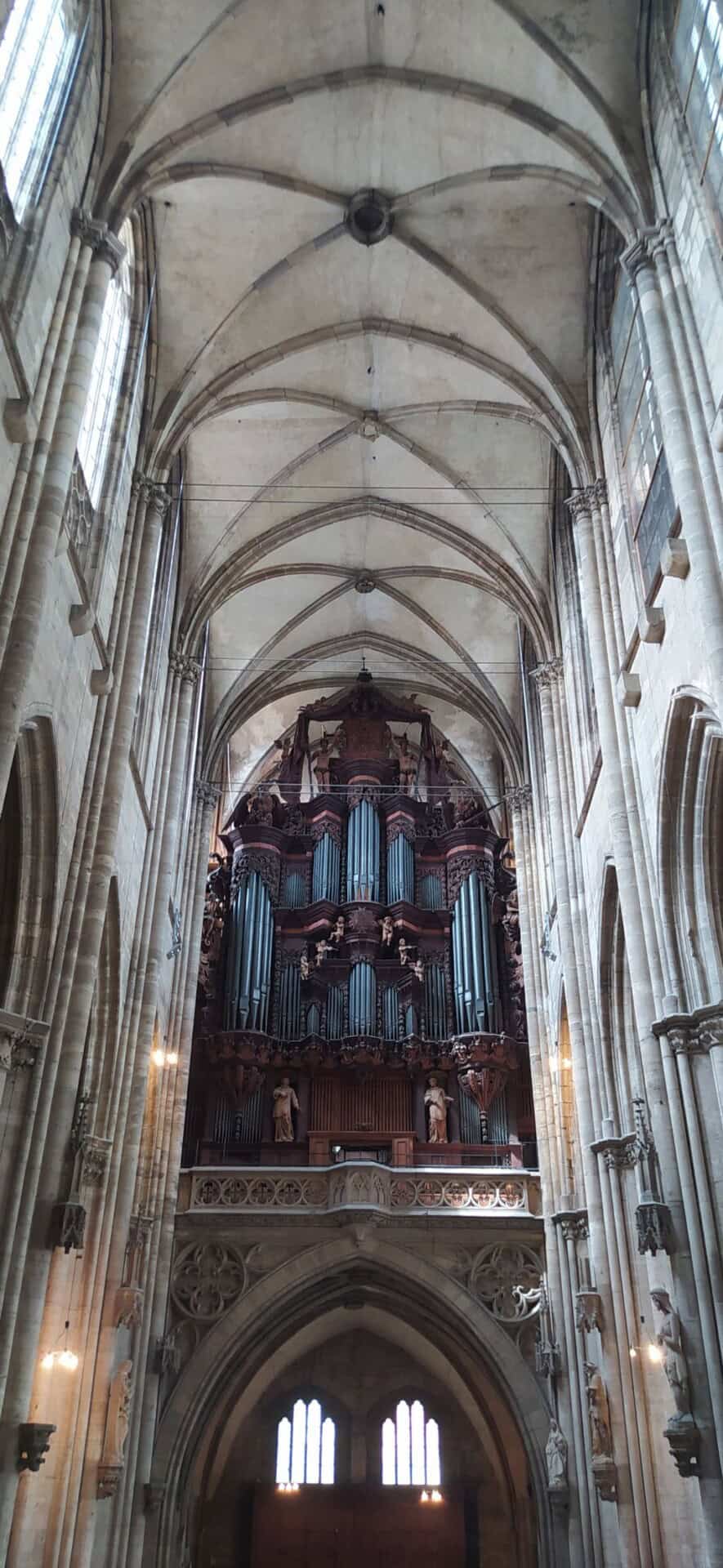
The Moritzkirche provided an atmospheric and meaningful setting for this concert. As one of the city's oldest churches – with roots going back to the 11th century – it exudes peace and history. The interior – characterized by austere Gothic, wooden beam ceilings and medieval ornamentation – invited focused listening. The star of the evening was undoubtedly the beautifully restored Christoff-Jesse organ from 1787: a late Baroque instrument with character and clarity that gave young hands and ears room to grow. The instrument's rich tonal palette came fully into its own. Not only Baroque works by Bach, Buxtehude, Krebs and Lübeck sounded wonderful, but also (late-)Romantic works by Boëllmann, Franck and Mendelssohn took on their own colour and spoke to the imagination.
The city as a sound concept
Halberstadt is not coincidentally the setting for all this. The city harbours one of the oldest written proofs of a chromatic organ (from 1361) and proudly bears the title of Orgelstadt. Hopefully we will be able to hear the majestic organ in the Dom one day. Today, the city is also home to the famous Organ²/ASLSP project by John Cage: a performance that began in 2001 and is scheduled to last 639 years – "as slow as possible". In a world that often demands speed, Halberstadt offers with this project a meditative, philosophical counterpoint – a perfect context for a young organ project that focuses on reflection, deepening and timelessness.
[video width="1920" height="1080" mp4="https://klassiek-centraal.be/wp-content/uploads/2025/08/VID_20250808_110757.mp4"][/video]
Young talent on a historical foundation
The concert itself was a layered and moving event. It was wonderful that every participant had the opportunity to introduce themselves to the audience with a self-chosen piece that they had studied under guidance over the past few days. Each piece was more than an interpretation; it was an encounter between young personality and centuries-old instrument. It was impressive how even the youngest participants – some barely 12 years old – managed to hold their own excellently. The future seems assured, something the numerous audience members from the Orgeltagung appreciated with visible enthusiasm.
The accompanying teachers – including established names such as Lisa Hummel and Léon Berben – played a crucial role. Not only did they guide these young people with expertise and care, they also challenged them to overcome their own limitations. During the concert, they actively assisted with registration and encouraged participants to gain platform experience, even for those for whom this was the very first time.
What made the concert special was precisely that interplay between vulnerability and strength. The uncertainty of the opening notes, the openness with which mistakes were integrated, and the brilliant moments of pure tonal control: these are exactly the contrasts that moved the audience. In this centuries-old church, music was not merely performed, but meaning was shared. Here, it was not the polished, virtuosic that mattered, but the growing, the sincere search for tone, timing and meaning.
The liveliest moment was undoubtedly an improvised concerto in D minor – a refreshing perspective on Baroque literature that surprised many listeners. The finale was a well-considered choice: a resounding performance of Nun danket alle Gott by Karg-Elert, which brought the listeners to a climax not only musically but also emotionally. A moment of gratitude, not only for the music, but also for the commitment of this young generation.
A promise in sound
With this concert, a bridge was built between past and future, between learning path and stage, between Halberstadt's glorious organ past and the talent of tomorrow. The Moritzkirche served as more than just a concert hall: it became a sonic space for development. The fact that these young musicians, in a society where classical music and organ playing are often perceived as outdated, even eccentric, continue with such passion deserves admiration. Projects like this Junior-Orgelakademie give them that necessary push. It is no easy task to work with historical instruments – you leave your comfort zone, and precisely that makes this initiative so valuable.
Johann Friedrich Röpke and Daniel Beilschmidt founded this project three years ago. Their commitment and visible pleasure were heartwarming. We can only hope that this initiative to work with historical organs will continue to exist and find imitators, even outside Germany. For what resonated here was not youthful frivolity, but a promise in sound…