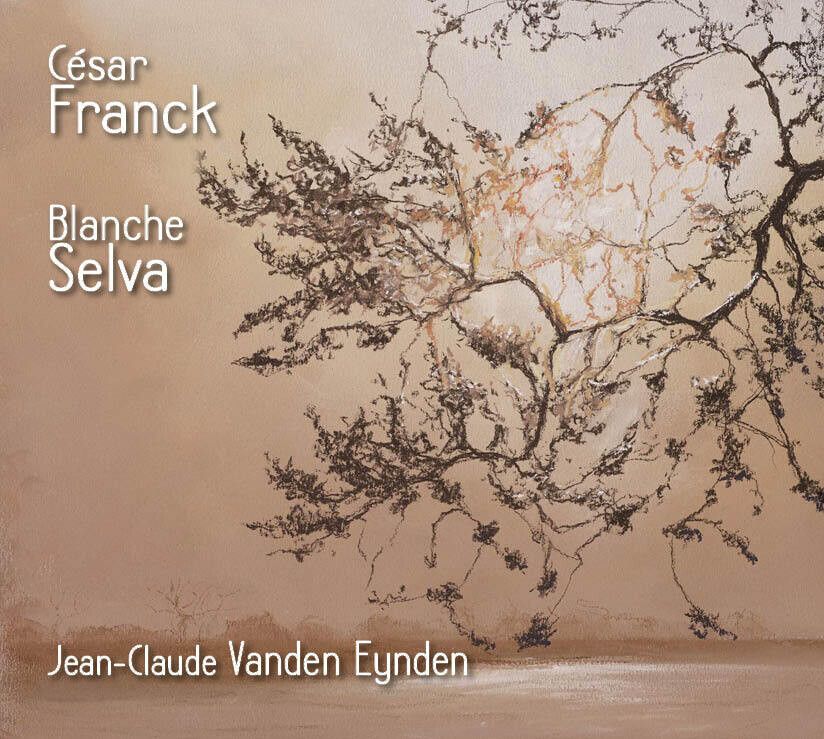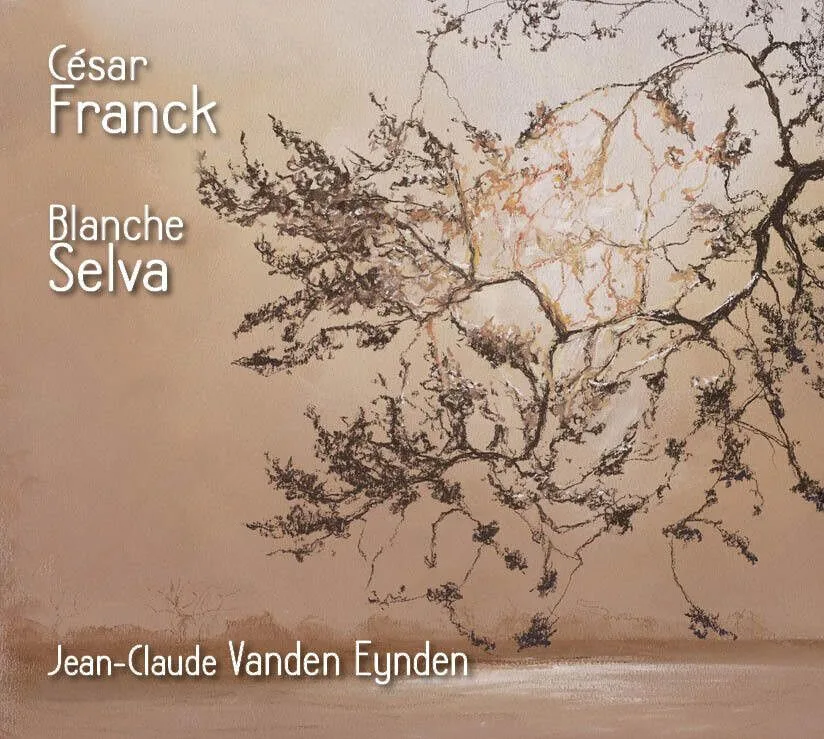
César Franck (1822-1890) and Blanche Selva (1884-1942) are central to this CD by the Belgian pianist Jean-Claude Vanden Eynden. Alongside Franck's Prélude, Choral et Fugue, we hear Selva's transcriptions of his organ chorales and two of her own piano miniatures. It is above all the transcriptions that intrigue: how does Franck's music sound when it is brought to life not on the organ but on the piano?
A new light
What makes this album special is the place it gives to Blanche Selva. The French pianist, composer and teacher championed the music of her contemporaries and also made a name for herself with her transcriptions. Her arrangements of Franck's three organ chorales call for a different approach to the music. What arises on the organ through the combination of manuals and pedal must here be realised with two hands. The challenge lies in letting the different voices keep their own character while preserving the coherence of Franck's music.
Jean-Claude Vanden Eynden opts for a nuanced approach. In the first chorale the melodic line is given time to unfold, supported by the rich harmonies. The second begins mysteriously, with something searching and indefinite. In the third, the pianist builds a clear arc of tension that underlines the dramatic character of the music. The three pieces nevertheless retain their contemplative character. Especially the depth with which Vanden Eynden lets the lower notes speak gives the music extra weight. At the same time, the various voices remain easy to distinguish. He does not try to imitate the organ but lets us hear what Franck's music has to offer on the piano.
To my surprise, I had never heard of Blanche Selva before this CD. I knew Franck's chorales only from organ performances. That is precisely why I find these transcriptions so fascinating: the piano sonority brings out an intimacy in this music that I had not experienced in the same way before, without the spiritual power being lost. Selva therefore does more than transfer Franck's music to another instrument. Her arrangements open a new perspective on familiar repertoire.
Between form and rapture
After the transcriptions follows Franck's Prélude, Choral et Fugue from 1884, in which he gives classical forms a personal stamp. The three parts do not form loose episodes but grow towards one another. The Prélude unfolds as a musical argument, the Choral brings a moment of reflection, and in the Fugue the tension increases. When Franck brings musical ideas from the earlier parts back and gathers them together, the work grows towards a powerful resolution.
Vanden Eynden is convincing in his performance of the whole. He keeps the various voices clearly separate, even when the musical lines intertwine, and maintains the balance between the contrapuntal structure and the expressive moments. The middle section, the Choral, stands out in particular. Vanden Eynden gradually builds the tension towards a piercing climax that lifts the contemplative mood to an emotional peak. The coherence between the three parts also remains palpable, so that the finale follows logically from what precedes it.
Selva can also be heard here as a composer. In Cloches au soleil the bells ring lightly and brightly, with a restlessness that makes the piece almost playful. Paysage au soleil couchant has a very different character. The music slows and becomes more contemplative, as if the landscape were gradually withdrawing from view. The contrast between the two miniatures works well: one piece catches the attention with its lively sound-picture, the other invites stillness. Although these are short works, each has a recognisable personality and shows Selva's feeling for musical colour.
The recording quality also adds to the listening pleasure. The piano sound is direct and free of disturbing reverberation, with rich basses and refined high notes. The various registers remain well balanced, so that both the depth of the sound and the detail in the playing come into their own.
A discovery that leaves you wanting more
Jean-Claude Vanden Eynden, who at the age of sixteen in 1964 became a laureate of the Queen Elisabeth Competition, proves to be an experienced interpreter of Franck. In both Selva's transcriptions and Franck's major piano works, he succeeds in profiling the voices clearly and bringing out the expressive power of the music.
The combination of Franck's piano works, Selva's transcriptions and her own compositions makes this CD more than a recital centred on a single composer. The transcriptions show how Franck's organ chorales take on a different guise on the piano, while Selva's miniatures make one want to hear more of her own music. For me, this recording was above all an introduction to a pianist and composer I did not yet know. Her work has enriched my view of Franck's organ music and encouraged me to explore her own oeuvre further as well.