Evening § – 1 June 2024
Klassiek Centraal brings you a report of both candidates defending their finalist position at each final evening. To avoid being influenced, swayed or in any way affected by third-party commentary, we do not follow commentary discussions before or after, we do not read any comments. In this way we hope to present an objective opinion. May the best win.
Each finalist will perform the mandatory work, Variations Litaniques, which was written especially for the final of this violin session by Thierry Escaich (world premiere on Monday 27 May 2024), and a concerto of their choice, with the Belgian National Orchestra, conducted by Antony Hermus. The proclamation of the ranking of the laureates will take place after the last performance, on Saturday 1 June around midnight.
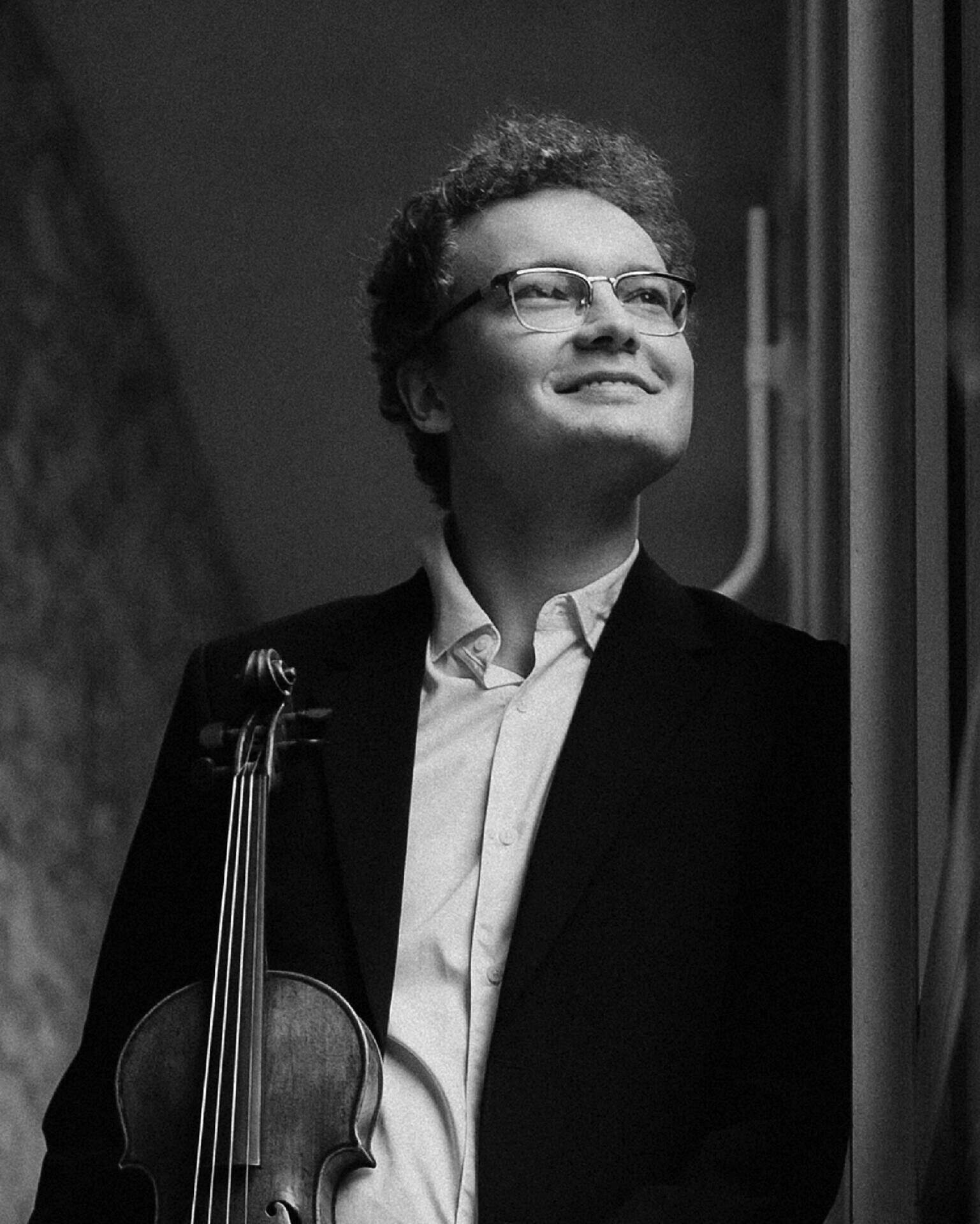
Dmytro Udovychenko (Ukraine, °1999)
Programme
- Thierry Escaich: Variations Litaniques
- Dmitry Shostakovich: Concerto n. 1 in a op. 77
Aside for a moment, let us not become emotional and rate this young violinist higher because his country is at war. There is understanding for it to be taken into account, but actually it shouldn't. It would be beautiful if the litany were a prayer for Peace. Should political leaders be inspired by this candidate: playing music by a Russian, 'the enemy', at this prestigious competition. If only that war were already over so that people could enjoy, for example, violin music instead of having to let themselves be torn to shreds because those in palaces decide their fate.
Udovychenko starts rather cautiously and plays very delicately. There is a lack of boldness and you can see that he is not quite confident enough as he is so fixated on the score. As the work progresses, he grows into this mandatory composition and overcomes the stress. There follow clever entries, beautiful bowing, firm music. Here too not really praying, confessing, pleading, but in any case a respectable performance.
With bated breath this laureate makes you listen to the end of the first part. Perfect. The entry of 'the diabolical' as Oistrach called it – he brought the work to its world premiere and gave many explanations to Shostakovich during the composition – is snappy, with some necessary aggression. There could be more depth, with some extra fanaticism. The devils dance in hell when the orchestra bursts forth and the violin hops along with them. It should actually lead this dance in the fireworks. After the sluggish heavy entry of the dark brass and heavy percussion of the third part, where a sacred musical melody takes over, follows a violin that weeps, all melancholy, a depressed lamentation. The solo is fragile until it becomes fierce and then seems to calm down, but it is a lull before the storm. Shostakovich throws his frustrations about. What a solo part in this concerto! The orchestra joins in with a spiteful malice that the violin fights against. Actually, this work is thematically too heavy for a competition. It demands so much, mentally above all, physically as well, but if you already have so much competition tension and then this work must be performed 100% properly, it is almost too much of a good thing. And yet Dmytro Udovychenko manages, after a cautious entry, to blossom and deliver a strong performance. The standing ovation he receives is possibly not only for his performance, but also because of everything that is happening in his country and fills the news daily. All understanding for that.
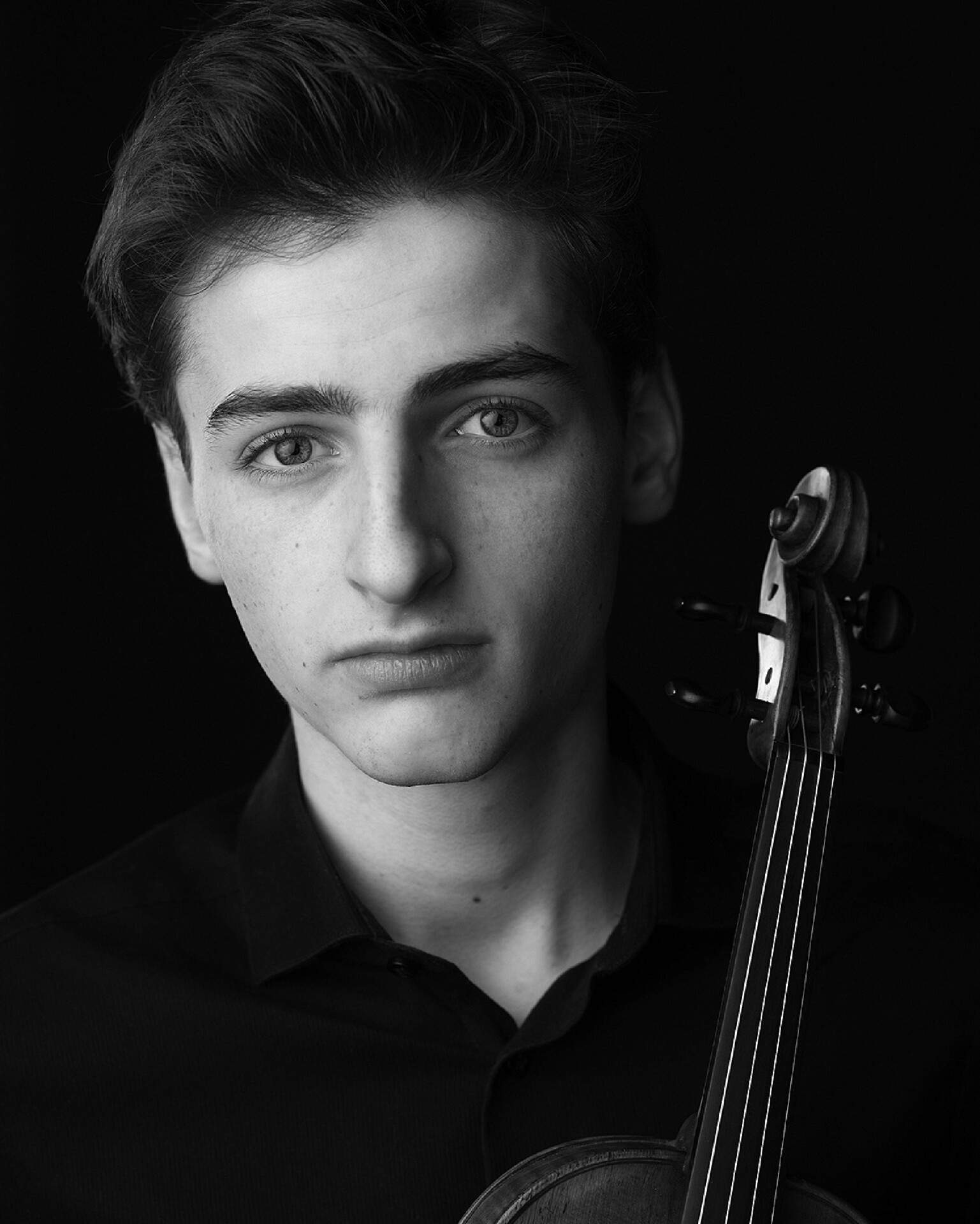
Joshua Brown (United States of America, °1999)
Programme
- Thierry Escaich: Variations Litaniques
- Johannes Brahms: Concerto in D op. 77
Brown starts with a constrained lamentation, very cautiously, subtly. His face expresses what he plays. The energy is kindled. This violist makes it a living litany. The dialogue with the solo of the concertmaster is remarkable. The orchestra also plays fuller. Further into the work, all requirements are present, both in content and technique. This is one of the better interpretations heard of this work, which is so difficult to understand for young people in our modern time that is so far removed from the contemplative.
Brahms's violin concerto is certainly one of his most inspired orchestral works. Who doesn't sing that silently along? And there stands Joshua Brown, all expression, ready to 'go on the attack'. And he does. Brown is one of those competition candidates who, once playing, forgets that he is competing in a competition for a (first) prize. He performs a concert. Yes, this is truly a concert, you MUST listen. And how the orchestra is swept along, even the conductor becomes more expressive. The cadenza, pure virtuosity where once Joseph Joachim proved himself after Brahms finally finished the score and it met Joachim's wishes. After that cadenza, the present love melody – that is it, isn't it? – becomes even more fragile than crystal. Delightfully fine and yet full violin sound conquers hearts. In the following parts Brown and Brahms – is he in that violin? – enchant hearts further. Joshua Brown is a violist with a great future, possibly more than all other candidates. Will the jury agree with this idea? We will know when the results are announced.
Prognosis?
It is always difficult to say who 'should' win. But we venture a prognosis of the top six while the jury deliberates.
- Joshua Brown
- Julian Rhee
- SongHa Shoi
- Anna Im
- Minami Yoshida
- Hana Chang
And now? Wait and see if we are close to the real result or completely on the wrong track...