

Lively performances made the sultry evenings shine
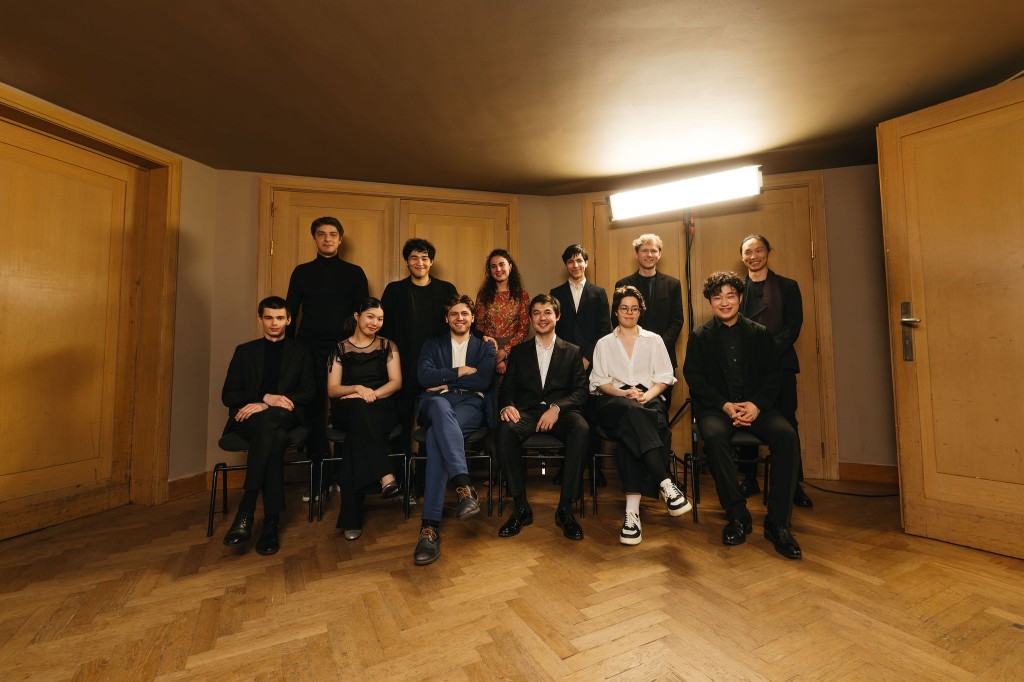
The final week of the Queen Elisabeth Competition for cellists 2026 was hot, both for the audience and for the performers. While a heat wave battered Brussels during the finals, paper fans fluttered in the audience, soloists wiped their foreheads and instruments, and sweat dripped like rain from the nose of the orchestra conductor.No matter how high the temperature rose, it was striking to see how the finalists entered the stage with great composure and performed with passion without wavering. A professional attitude is expected of participants at such a high level, but these soloists went a step further. At the highlights, the competition showed originality of interpretation, great technical skill and a symbiotic collaboration with the hardworking Belgian National Orchestra .
Audience atmosphere
The overall mood of the audience changed with each evening of the competition. On the first evening, there was an excited anticipation as the first two performers took on the challenge of making a good first impression. We heard the mandatory piece, Fang Mans Four Odes to the Tidings of Flowers, for the first time in two different interpretations, along with concertos by two completely different composers: Maria Zaitseva led the audience through a piece with a similar nature to the mandatory piece, Henri Dutilleux' Tout un monde lointain. With innovative phrasing, Lionel Martin offered the only composition from the Romanticism of the week, the audience favorite Concerto no. 2 by Antonín Dvořák. The audience debated how the next candidates could develop, as they gathered in the cavernous outer chambers of BOZAR with only two performances to compare.
The following days there was little fresh air, but the finalists refreshed the atmosphere with new ideas about Fang Mans composition and the theme of the four seasons corresponding to four types of flowers. One of them evoked an almost romantic phrasing style, while another played the strings fiercely to emphasize the drama. Some played sliding notes with the dryness of a fallen leaf, while others rounded off the tones. Because each participant was allowed to choose the order of the parts in the mandatory piece, we heard some performances begin with the fierce solo passage of the winter part, while others ended with the dramatic gong strike, some began with the meditative harmonies of the spring part and some chose to end with the final, sustained chord of autumn.
Good and annoying behavior
Perhaps it was the slight cooling on Tuesday evening that inspired some members of the audience to burst into applause between the parts of Sergei Prokofiev's Symphonie Concertante during Yo Kitamura's performance, an outburst that was quickly stifled by a gesture from conductor Antony Hermus. On Thursday there was much unrest and coughing in the hall, which led to an additional announcement on Friday in which visitors were asked not to cough during the concert, or at least to do so as discreetly as possible.
Here we must discuss several other causes of annoyance to fellow visitors. The behavior of people who cannot keep their mouths shut during a live concert is downright abhorrent. While this tendency is seen among concert-goers of all ages, we must in particular draw attention to two trendy young women who whispered and giggled almost the entire week and continued their conversation even during quiet musical pieces. They did not respond to a stern look and the quietly muttered "Quiet!". Nor did they show any shame when they were personally asked during the intermission to be quiet while the musicians played.
Talking during a performance is evidence of flagrant disrespect, not only to fellow visitors, but to every artist working hard to entertain the audience. Nobody goes to a concert to listen to someone else's chatter. It is not mature or appropriate to behave as if the concert hall is your living room or a suitable place for TikTok-like reactions. Those who wish to talk during the concert are best off watching from a different location, where they do not disturb others who wish to enjoy the live music.
Despite daily warnings to turn off mobile phones before each performance, on Friday evening during Leland Ko's otherwise enchanting performance, a ringtone could clearly be heard between the parts of the mandatory piece. Although the soloist did not seem to be bothered by the interruption, it was a sad reminder that some audience members cannot let go of their mobile phones. Why is it so difficult to comply with a clearly stated request?
The brilliance of the playing, however, overshadowed these distractions. While it is true that a dry or less varied interpretation can cause the mind to wander during long concert parts, there was such a great difference in style between the finalists, both in their physical movement and in their musical expression, that any form of distraction was more than unnecessary.
Less variation in chosen concerts allows for better comparison on the one hand, originality on the other
Each performance sparked new curiosity. Although both performed Dmitri Shostakovich's First Concerto on Thursday, Dilshod Narzjillaev's restrained, introspective performance contrasted sharply with the bright, energetic style of Álvaro Lozano Cames. As many as four finalists chose to perform the same Shostakovich concerto, while three others presented Sergei Prokofiev's Sinfonia Concertante Op. 125. Two finalists performed Henri Dutilleux. This made direct comparisons between candidates possible, but also ensured that the other pieces stood out: concertos by Dvořák, Samuel Barber and Witold Lutosławski were each performed only once and held the audience's attention with their originality.
During the breaks, the audience streamed into the corridors for a drink, watching television presenters giving interviews in their open studios amid the hustle to discuss their opinion. Although a jury must be demanding and adhere to rules to rise above trivial considerations, every detail is interesting for the spectator. The powerful bows of Andrew Ilhoon Byun were noted, as was the up and down movement of his luxuriant hair. Fashion also came into play: Lozano seemed not to feel the heat despite his plush velvet jacket and patent leather shoes, while Clara Dietlin's scarlet ensemble and Tae-Yeon Kim's pink outfit shone brightly on a stage where most artists wore sombre colours.
One praised the passionate style of Ettore Pagano, while another found Kim's approach clearly superior. There was disagreement over whether Ko's exuberant physical movements were pure showmanship or entirely natural musical expression. By the time Kim played the impressive closing notes of Lutosławski's concerto, tension bubbled up in the concert hall.
At this point our direct observations in the Henry Le Boeuf hall itself came to an end, as catching the train took precedence over waiting for the jury's verdict. The name "Ettore Pagano" sounded at home like a familiar greeting and subsequently, on television, the names of the remaining laureates were announced and discussion of the merits of the candidates continued. These young artists have given us a very encouraging vision of the future of cello playing.
Is there any future left?
It is important to mention that the future is far from guaranteed. Every evening of the final, students from the Royal Conservatory of Brussels gave a series of performances outside BOZAR, in what they called a Requiem for Culture. They wanted to draw attention to the substantial increase in tuition fees for students from outside the European Economic Area, from 9,000 to 17,500 euros with immediate effect, so also for those students whose academic year ends this June, making it much more difficult for international students to attend the school.
The impressive talents these students displayed formed a powerful reminder of the importance of supporting music education, even as the results of it were being celebrated in the concert hall. The brilliant displays of technique and interpretation in a high-level competition are only possible if young people are given the opportunity to learn and develop. The training of future generations of musicians can ensure that audiences will enjoy future editions of the Queen Elisabeth Competition as much as this year's impressive line-up.